
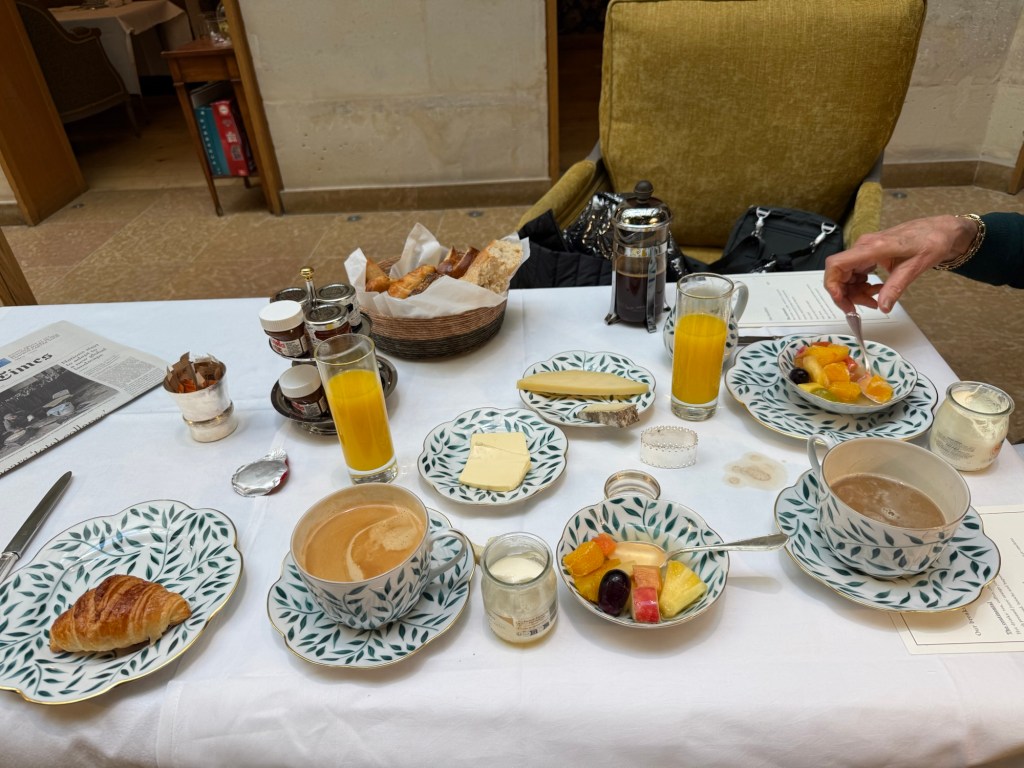
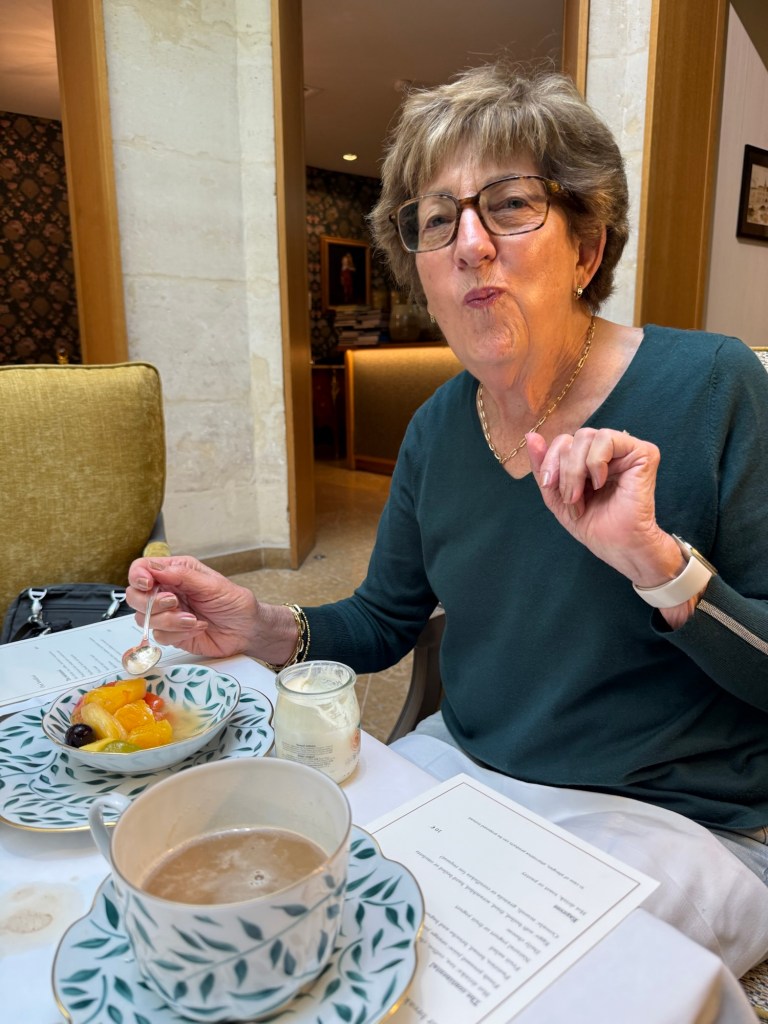
We started the day with breakfast at the hotel—fresh fruit, yogurt, pastries, and warm bread. We fumbled through our coffee order (par for the trip) and ended up with a coffee latte for me and a “normal coffee with milk” for Mom. Classic. We realized we were running late and, like true Americans, rushed through breakfast—vowing to allow more time the rest of the trip—
We grabbed an Uber to meet our group by the rhinoceros statue outside the Musée d’Orsay. On the way in we met our first “Clipboard Girl”, thankfully we read about them in the I love Paris Facebook group so we did not engage and kept walking fast.
We were the first to arrive—even though we thought we were late. Three more people showed up shortly after, and then we sat around waiting for eight more who were nowhere to be found. BTW it was COLD, remember the cold front that came through? The plan was to split the group between two guides, so the male guide stayed behind to wait for the stragglers while we went on ahead with the female guide—whose lovely French name we never quite caught.
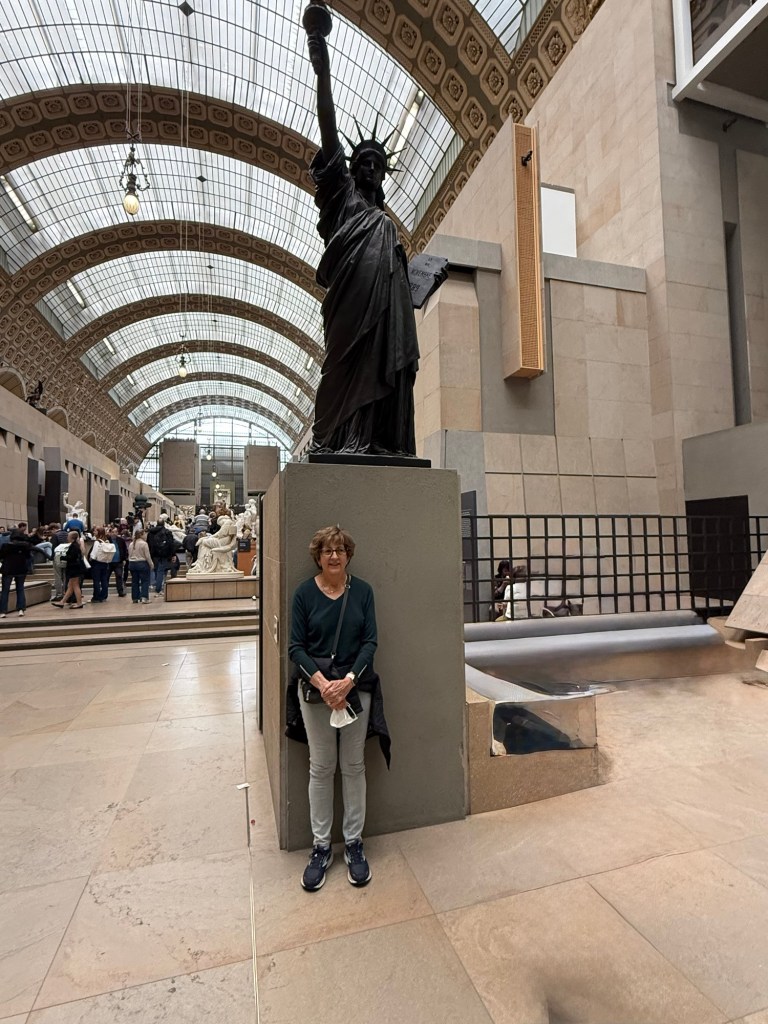
Because our group was one short of the required six, we didn’t get audio devices, which made it tricky to hear in the echoey, crowded museum. We passed a miniature Statue of Liberty,


Then paused at the work of Édouard Manet—the rebel who helped break from the rigid academic style and push art toward Impressionism.
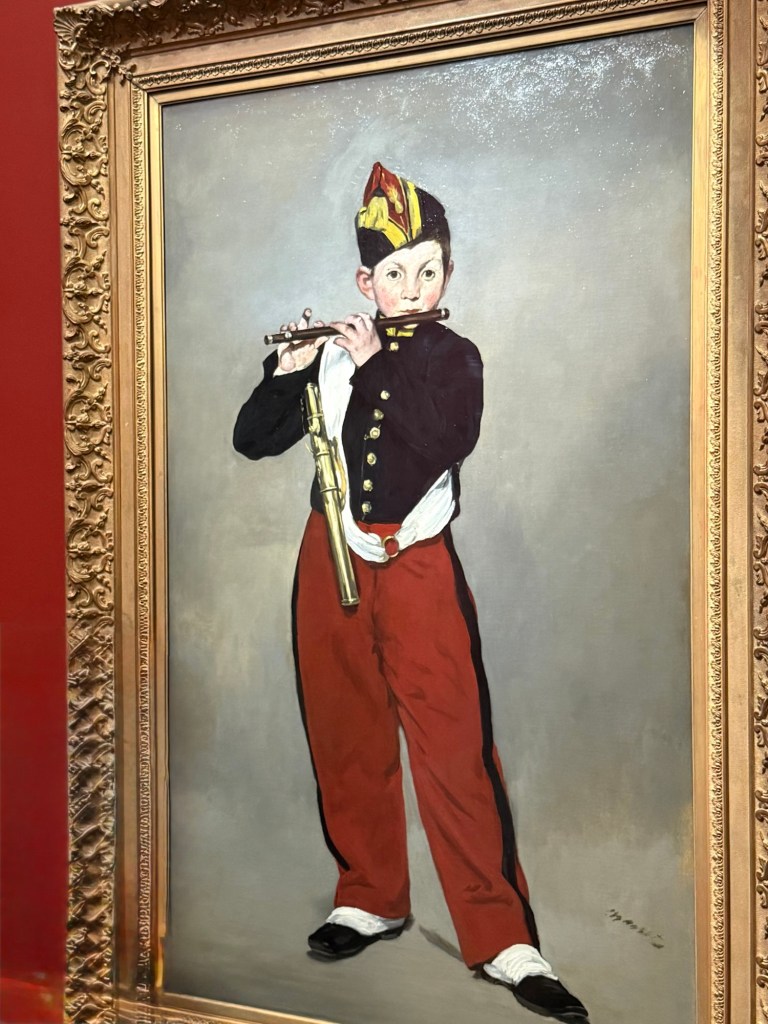
While Manet never officially identified the model as his child, some art historians and biographers have floated the theory that the boy may have been Léon-Edouard Koëlla, who was possibly Manet’s illegitimate son with Suzanne Leenhoff (whom he later married).
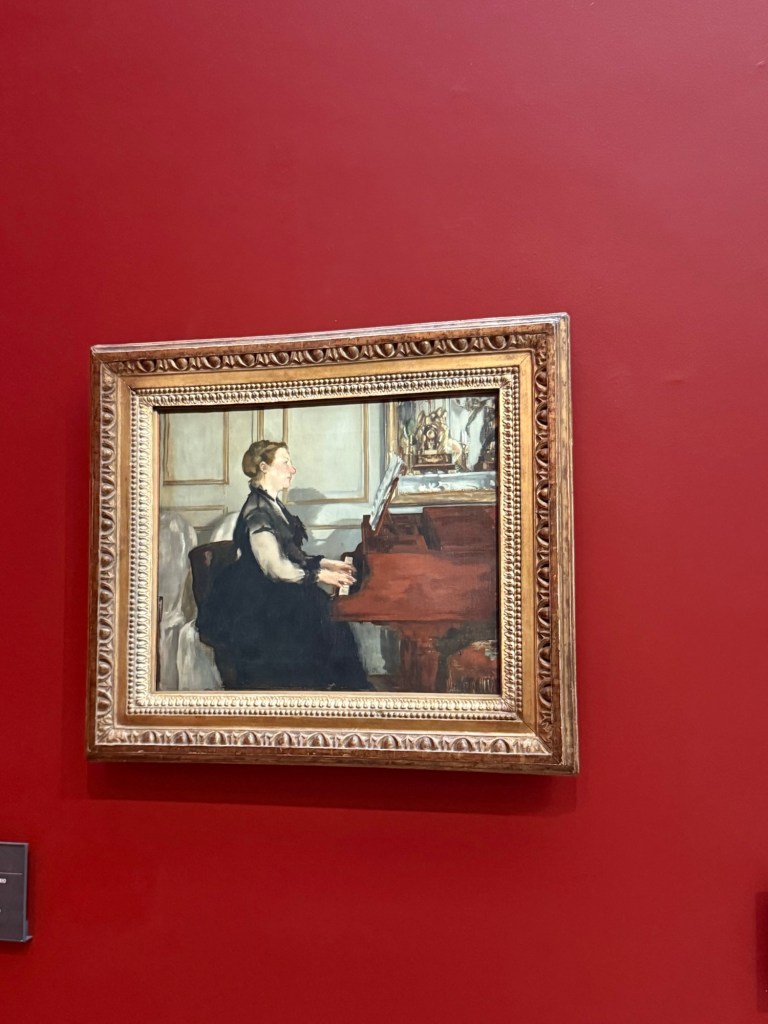
Madame Manet at the Piano
The woman at the piano is believed to be Suzanne Leenhoff, once hired as the Manet family’s music teacher—later revealed to be Manet’s longtime partner and eventual wife. Their relationship was kept secret for years, likely due to social norms and the mystery surrounding Léon Koëlla, The Fifer. They married quietly in 1863.
Next we saw a cross section of the opera house.
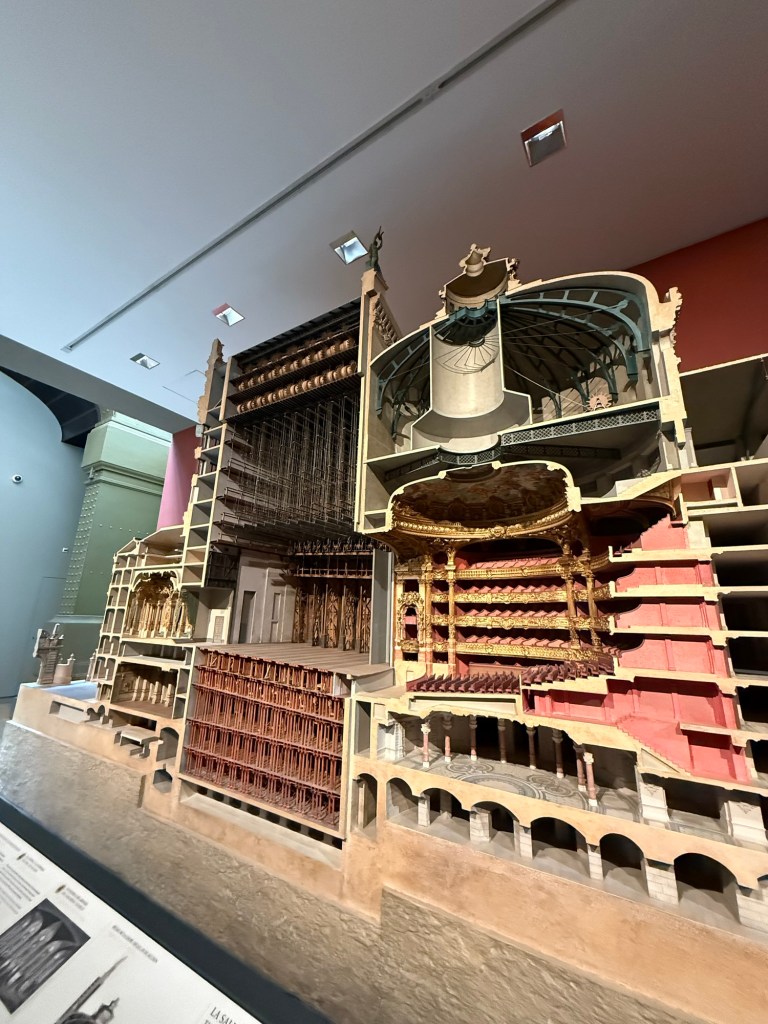
The Paris Opera House, is a masterpiece of 19th-century architecture and famously inspired The Phantom of the Opera. One fascinating feature is its 5% stage incline—intentionally designed so the audience could better see performers at the back of the stage before modern lighting and set design existed. This angled floor also enhanced perspective and added drama to ballet and opera scenes, though it posed challenges for dancers and singers.
At this point of our tour, my mom had a hard time hearing the guide over all the noise and eventually got frustrated. She decided to sit down and wait for the tour to finish.
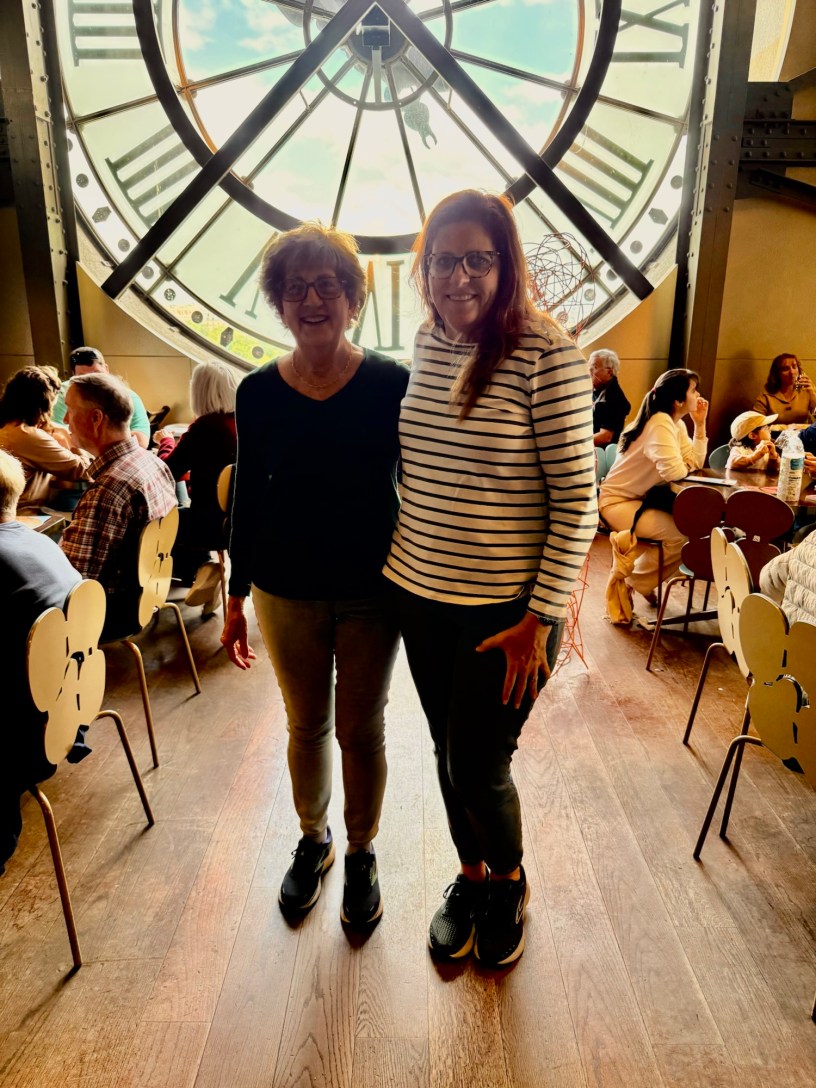
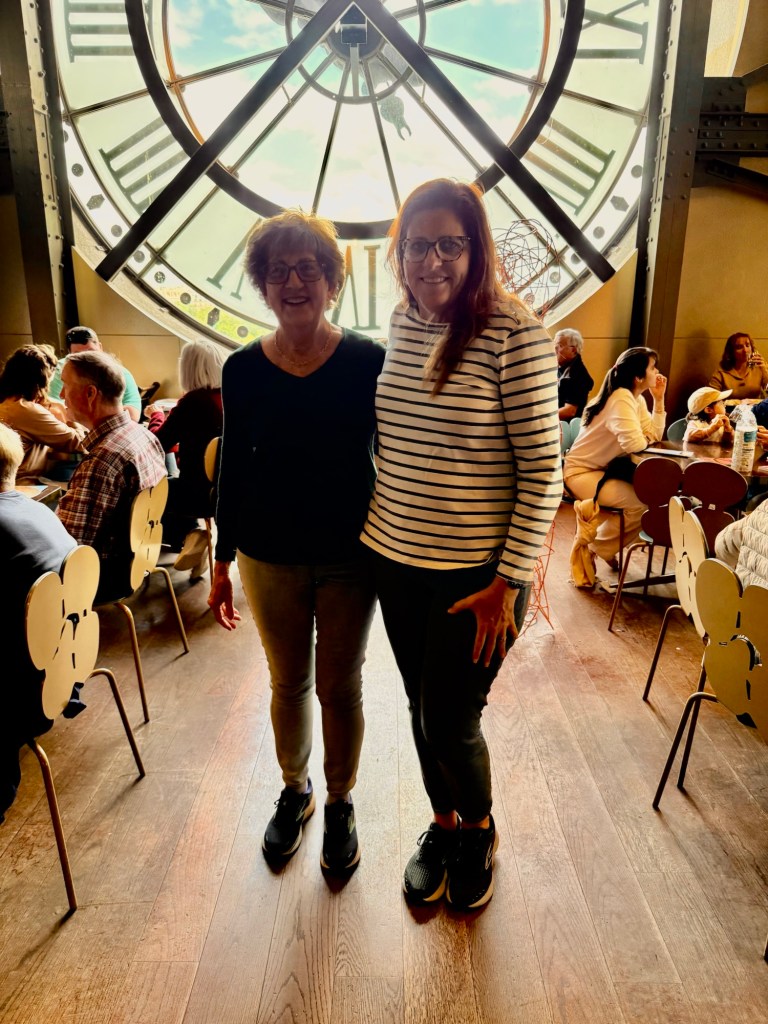
Next we headed to the Impressionist gallery on the 5th floor—the part I had waited for—I called Mom to come join us! We took the escalators and ended up seeing one of the clocks – with a spectacular view of city.

In this area, it reminded me of Versailles with people taking photos, modeling and blocking the view. Even I got mad.
Then we moved to the gallery. She finally said she couldn’t handle the crushing amount of people so she asked the guide where we would be having lunch so she could just meet us there. To our surprise, the guide told her lunch wasn’t included—despite what we’d been told. Mom left to find a spot with less people.
Meanwhile I am so excited to see these masterpieces in person I took photos and notes. Since most missed this part, I will share the highlights below.

Monet’s Poppies (aka The Promenade)
A summer stroll with his wife Camille and their son, tucked into a dreamy field of poppies.
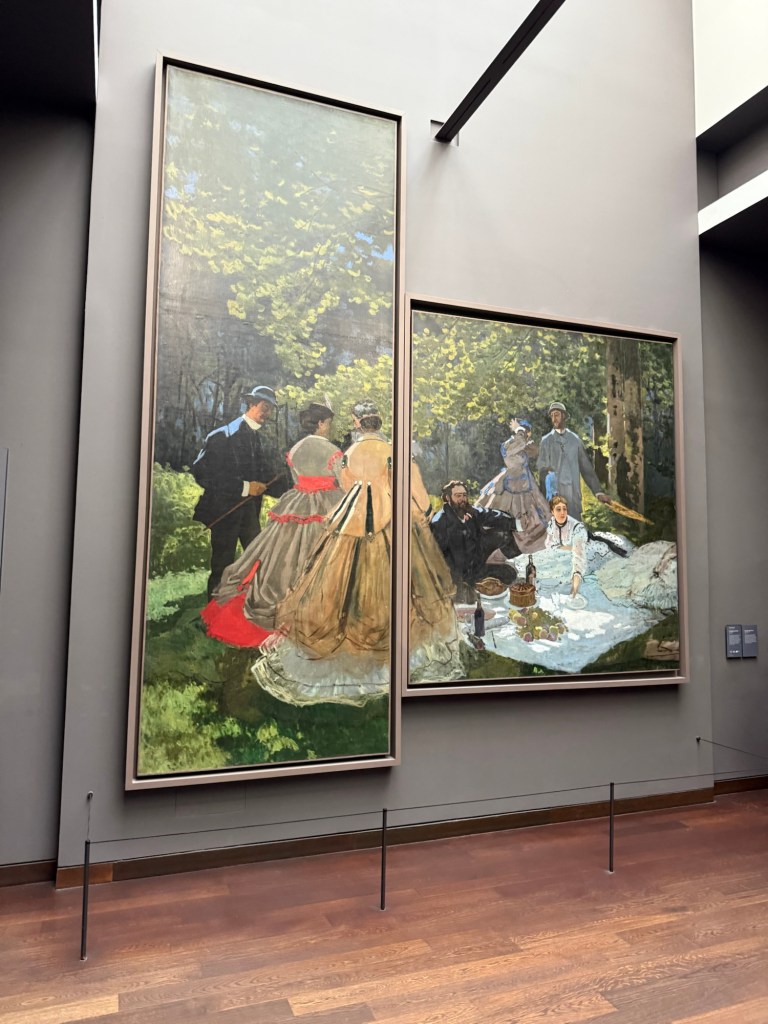
Monet’s Luncheon on the Grass (unfinished panels)
This was Monet’s bold attempt to outdo Manet’s scandalous version—except he ran out of steam (and money) and left it unfinished. Still, the way he painted light through those trees? You can already see the beginnings of Impressionism taking shape.
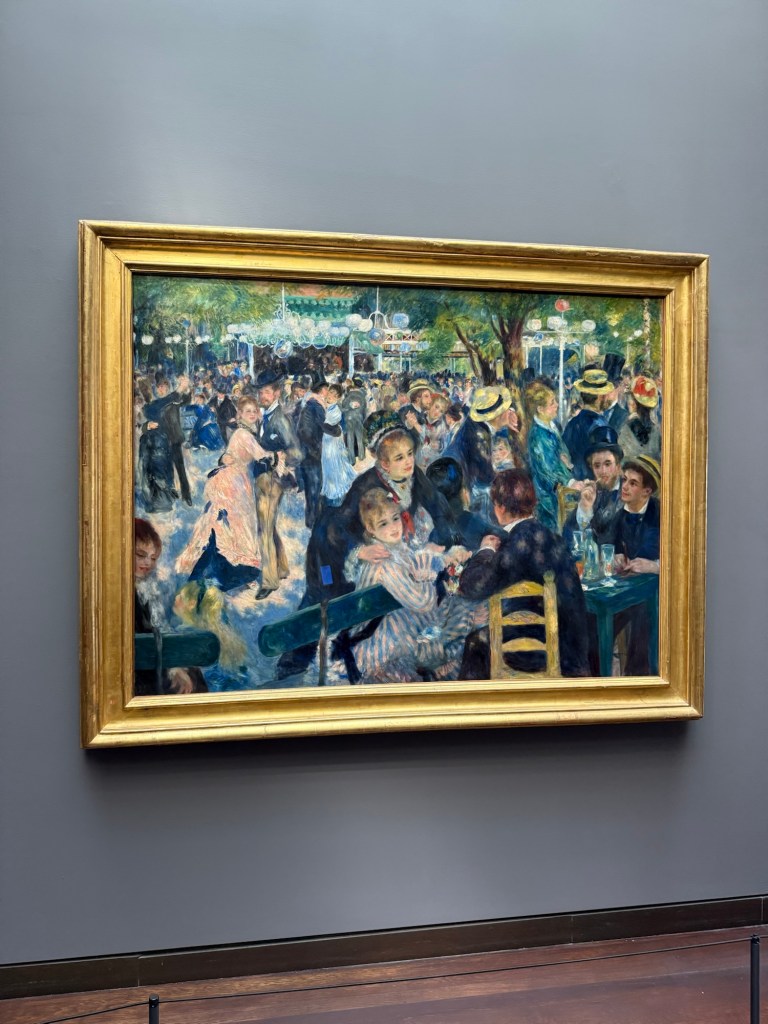
Renoir’s Bal du Moulin de la Galette
Renoir painted real friends dancing and laughing at a Montmartre hangout called Moulin de la Galette. It’s pure joy—sunlight through the trees, wine flowing, and life in motion.
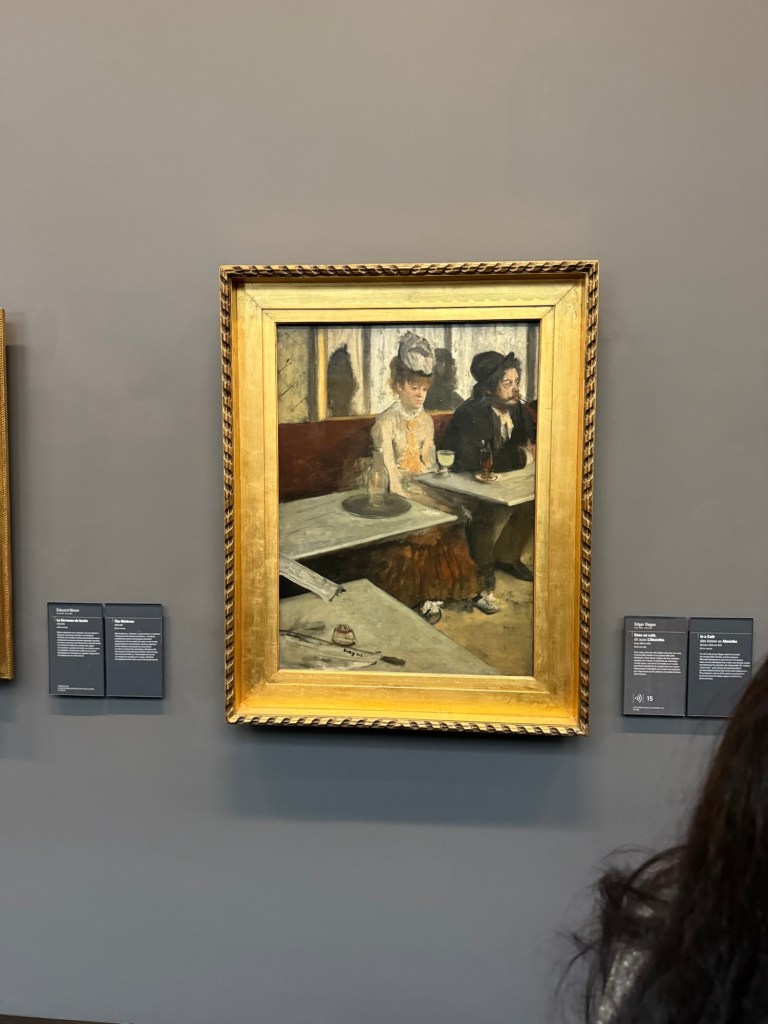
Degas’ L’Absinthe
Not every scene in Paris is romantic. This one’s raw. Degas shows two people sharing space but completely disconnected—drained, lonely, and maybe addicted.
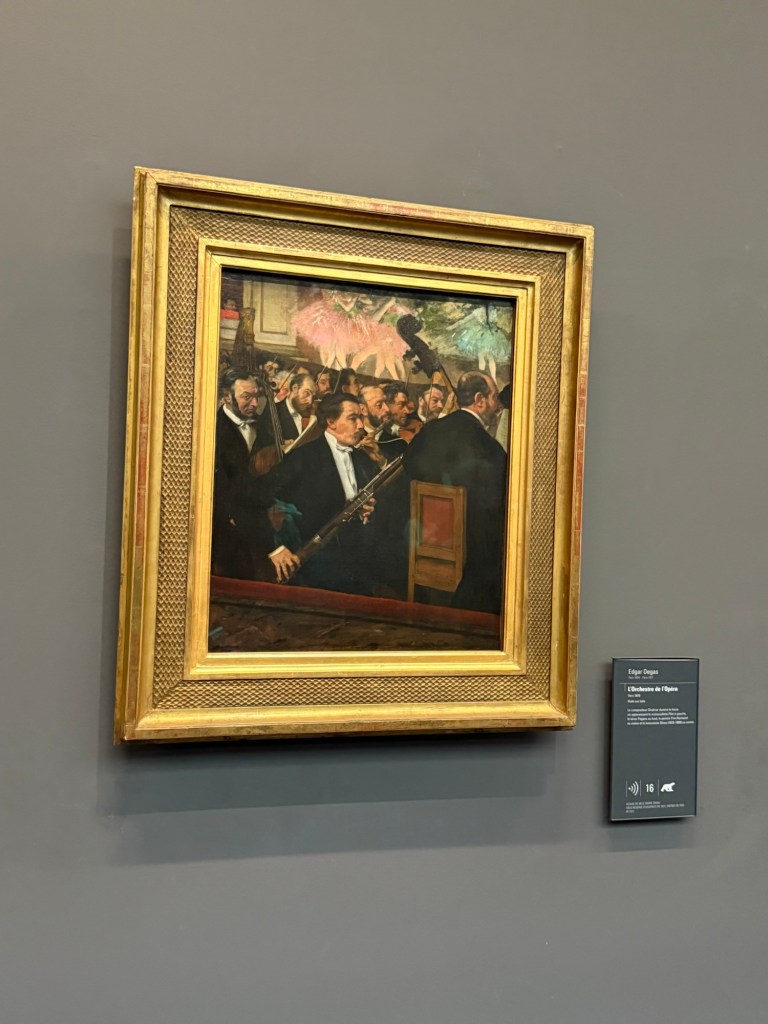
Degas’ Orchestra of the Opera
I love how Degas flips the perspective here—from the pit of the orchestra pit, it’s loud, cramped, and totally alive. You even see a glimpse of dancers at the top.
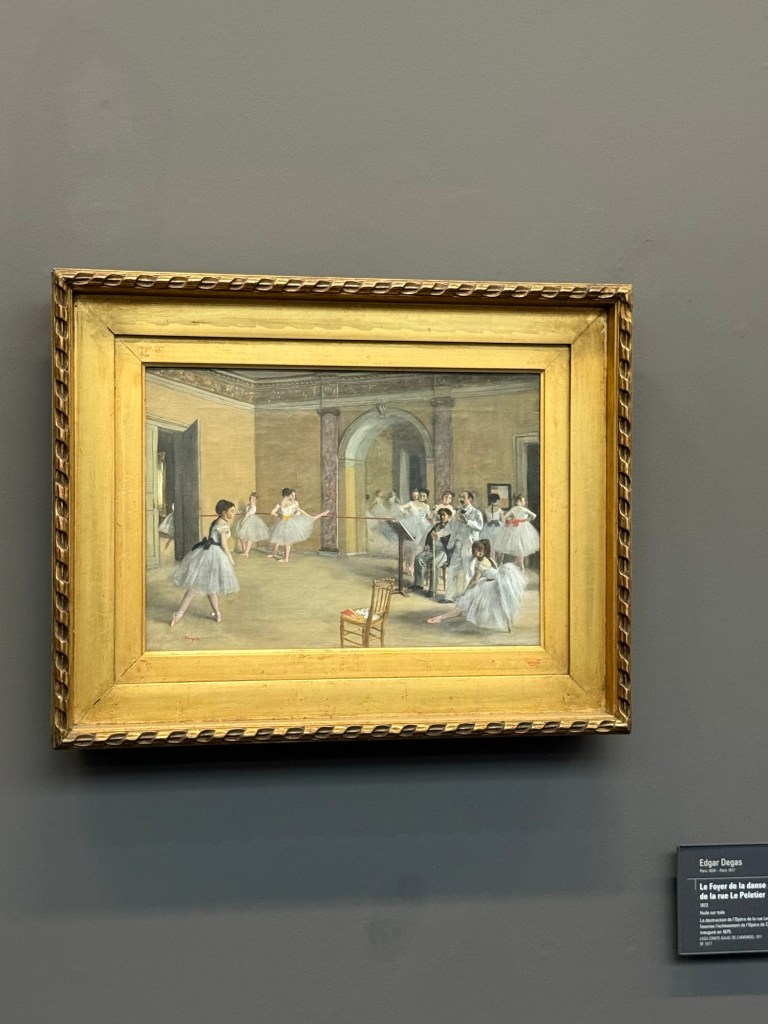
Degas’ Dance Foyer of the Rue le Peletier
Ballet isn’t all glamour—Degas shows the downtime between rehearsals: dancers resting, adjusting, waiting. It’s real and beautiful.
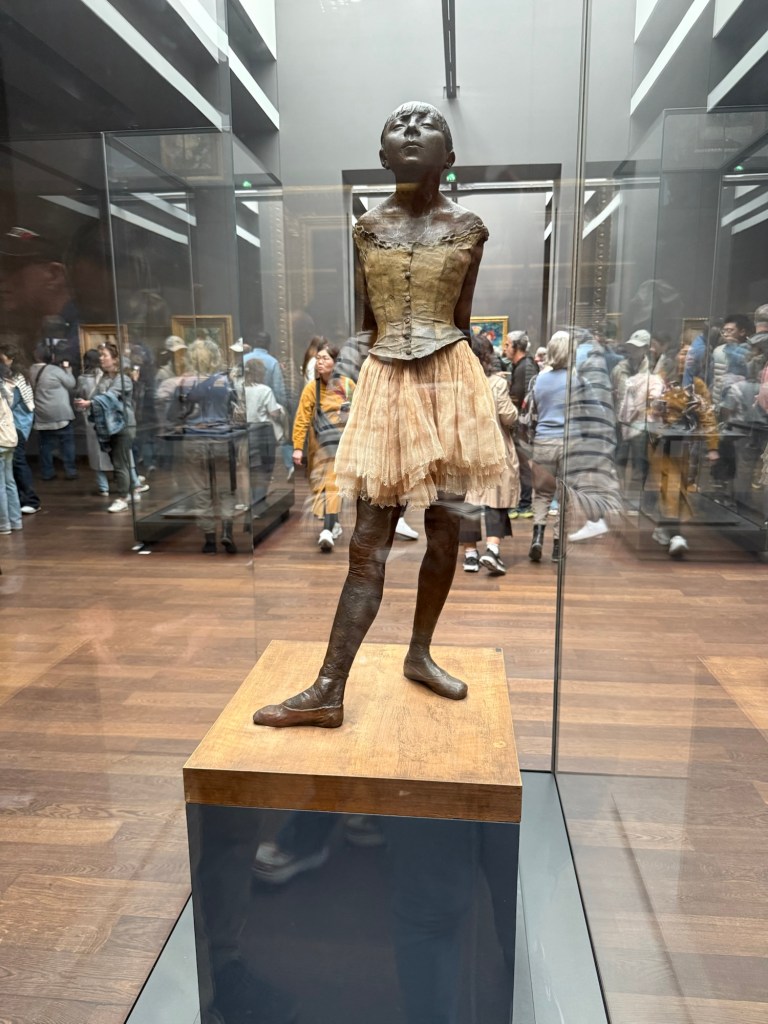
Degas’ Little Dancer of Fourteen Years
This sculpture caused a stir when it debuted—real hair, real tutu, and a working-class kid who wasn’t smiling or graceful.
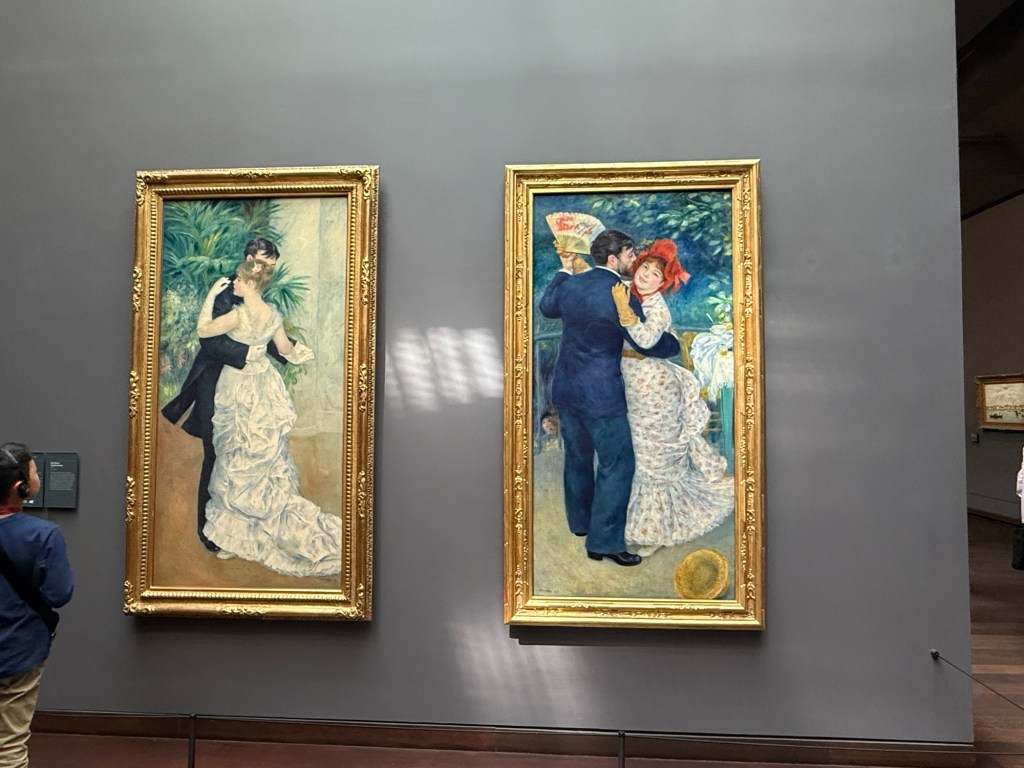
Renoir – Dance in the City (left) & Dance in the Country (right)
Renoir painted these dance scenes—same guy, different vibes. One’s formal and elegant (Dance in the City), the other’s flirty and full of life (Dance in the Country). They were meant to show how people moved through different worlds in 1880s France.

Monet – Water Lilies (Nymphéas) (blue version)
One of the late masterpieces painted in Monet’s garden at Giverny. By this point, he was nearly blind, but somehow his brush still captured mood, motion, and magic.
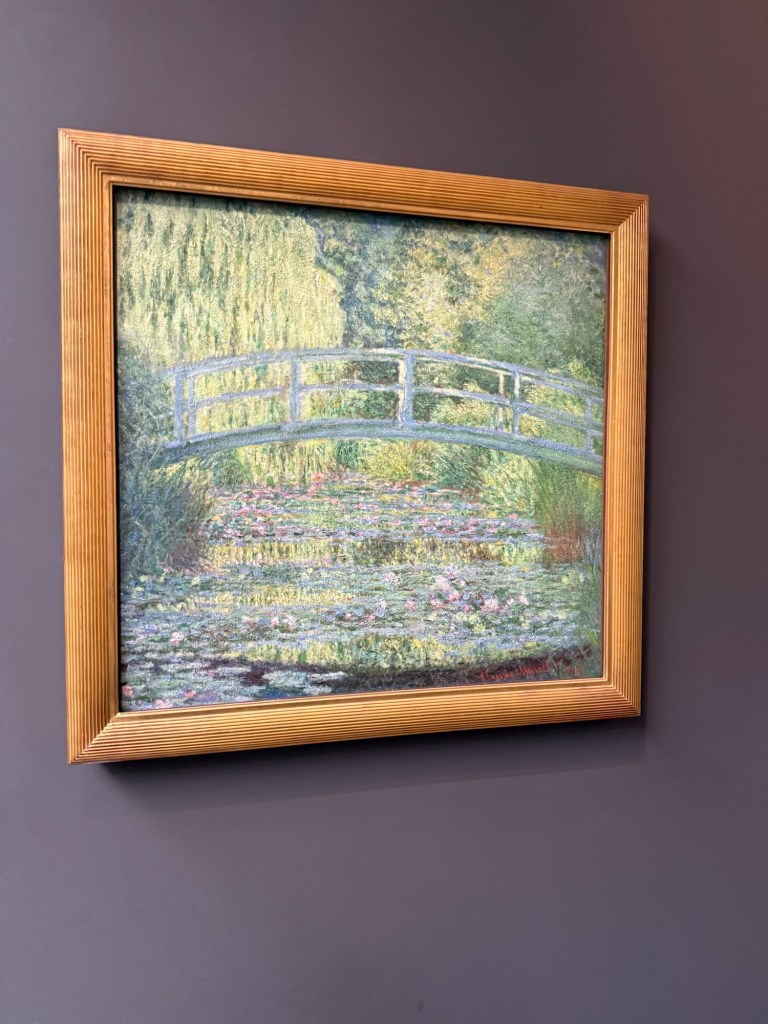
Monet – The Japanese Bridge
This bridge was in his backyard at Giverny. He planted, painted, and obsessed over this garden for decades.
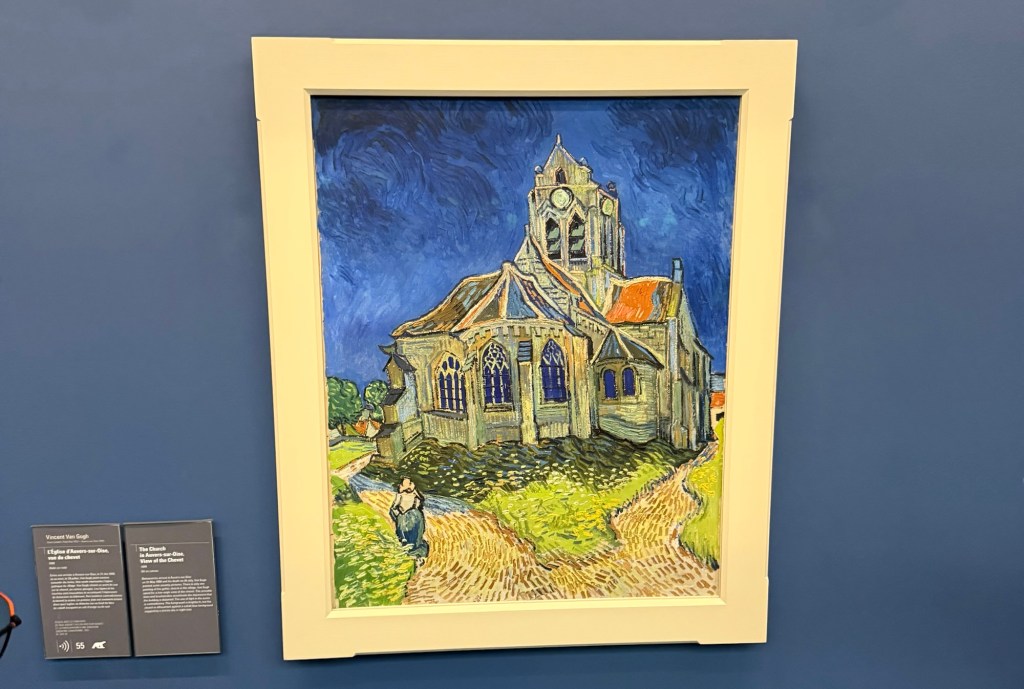
Van Gogh – The Church at Auvers
Painted just weeks before his death, this twisted, swirling church shows how Vincent felt the world, not how he saw it.
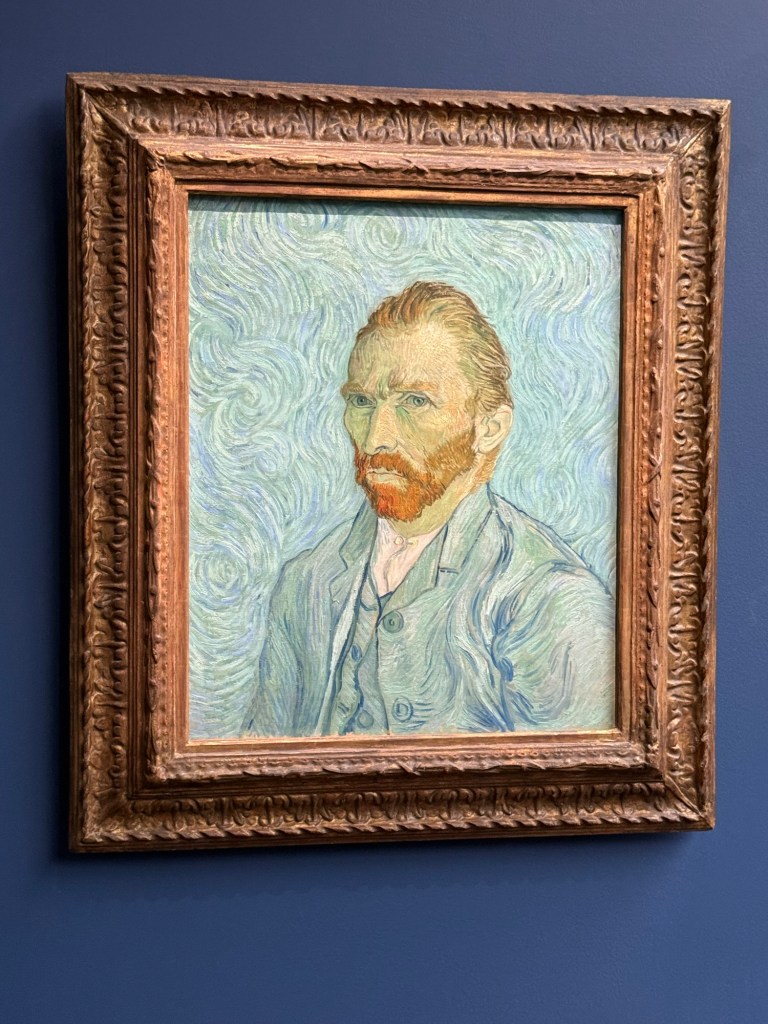
Van Gogh – Self-Portrait with Blue Background
That piercing stare. This was painted in 1889, while he was recovering in an asylum. He wanted to study his own face—to capture the intensity, the wear, the honesty.
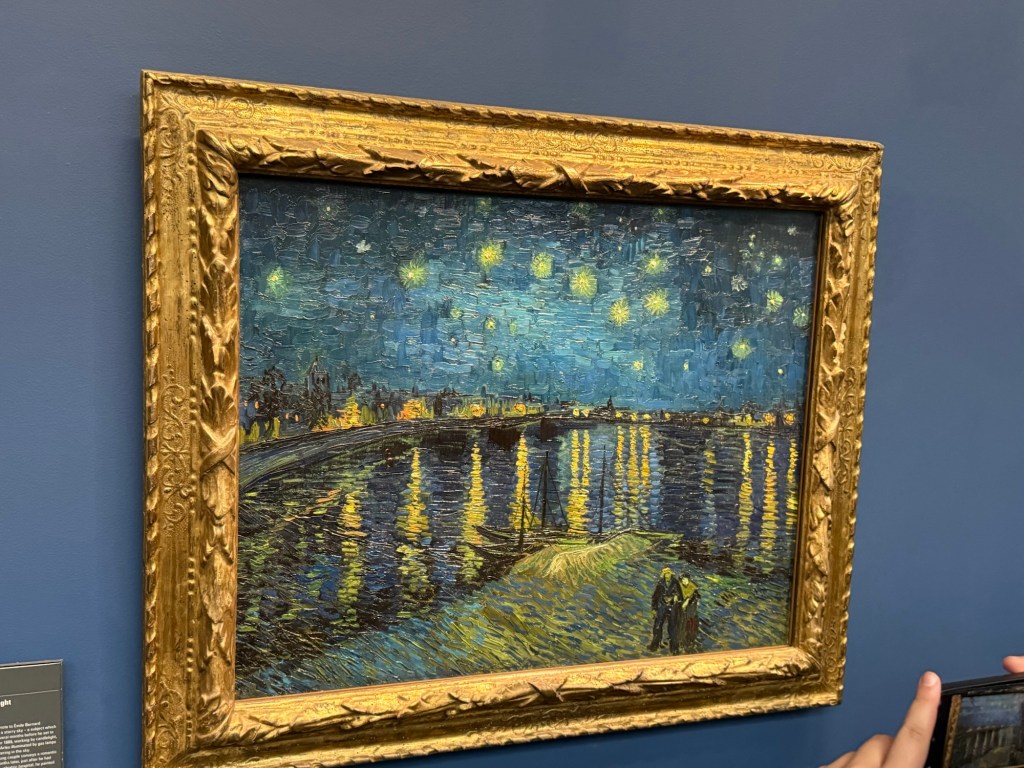
Van Gogh – Starry Night Over the Rhône
This isn’t The Starry Night, but it might be even more magical. Vincent painted it right outside his house in Arles, on the riverbank at night.
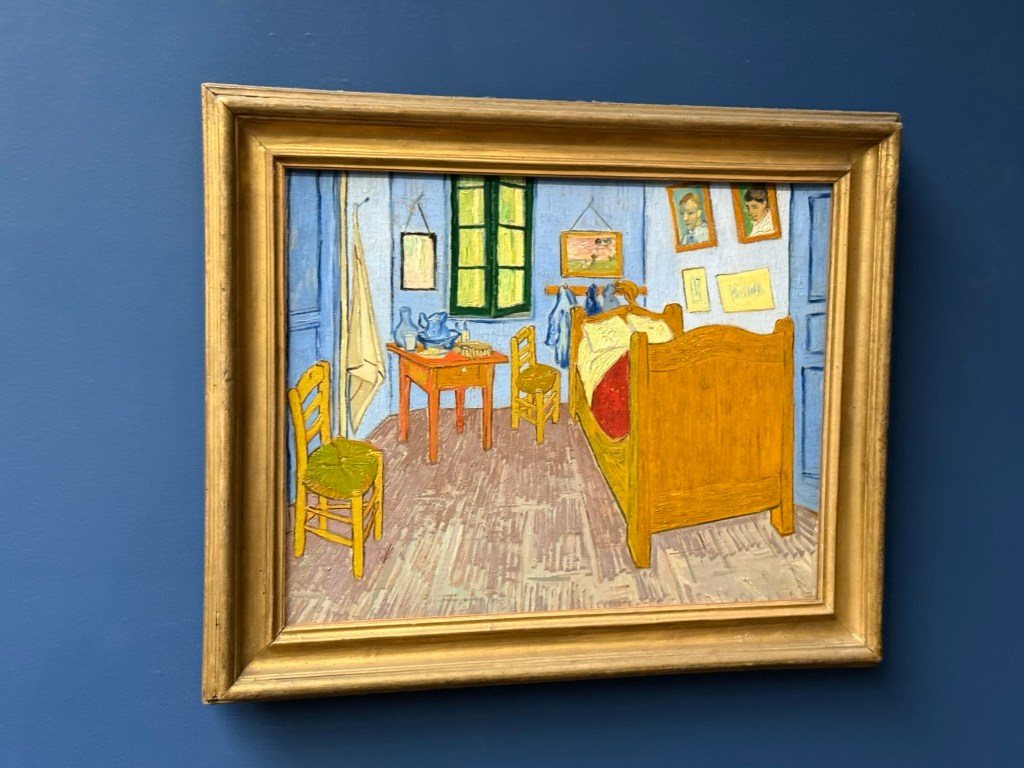
Van Gogh – Bedroom in Arles
His happy place, or at least he hoped it would be. This was the room he set up for peace, order, and calm—until everything unraveled.
Back to the lunch issue, I reached out to Naman, our travel concierge (a magical combination of travel agent and fixer), who’s available to us for any issues during the trip. He quickly responded and told us to go ahead and order whatever we wanted—they’d reimburse us for the mistake.
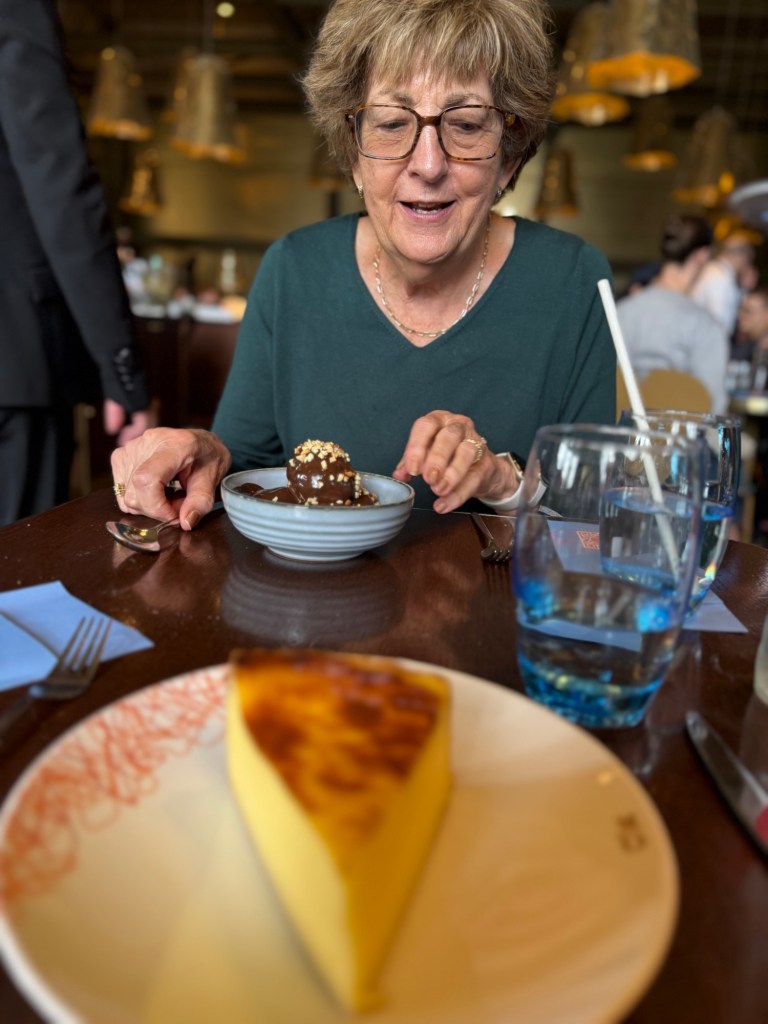
I lucked out—since we were only a party of two, they let us jump the line, so to speak. I got seated quickly while Mom was wandering around to avoid the crowds and lit up when she spotted me already in a primo seat.

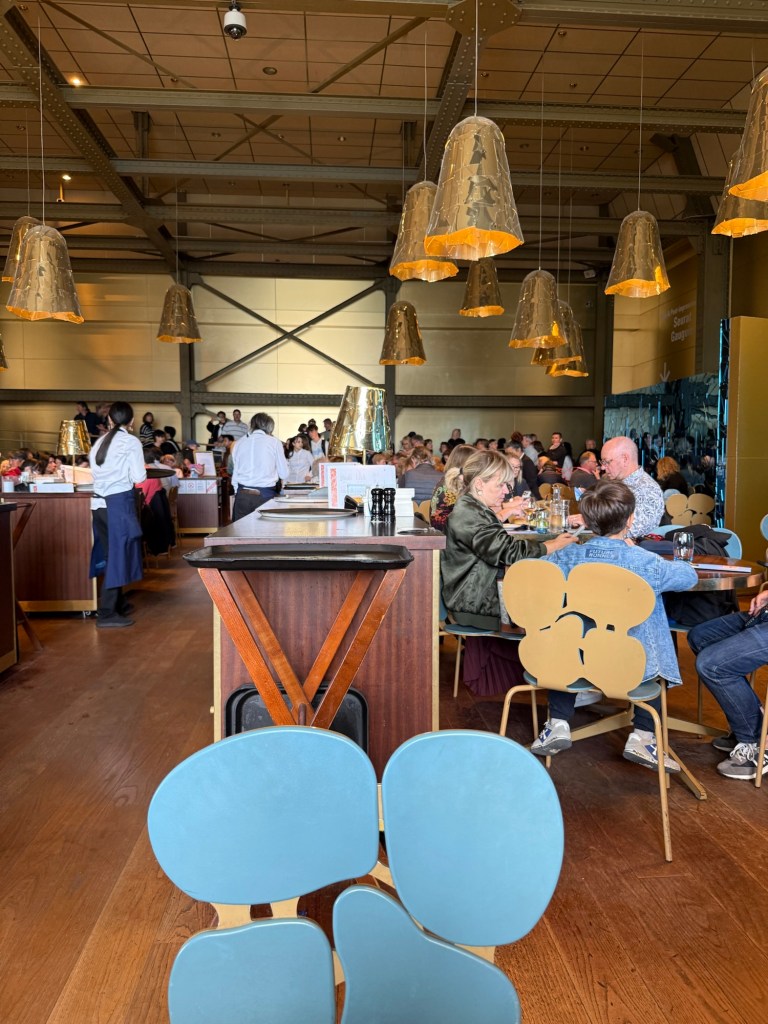
I sent the above photos to mom and she found her way to lunch, and it was delicious!
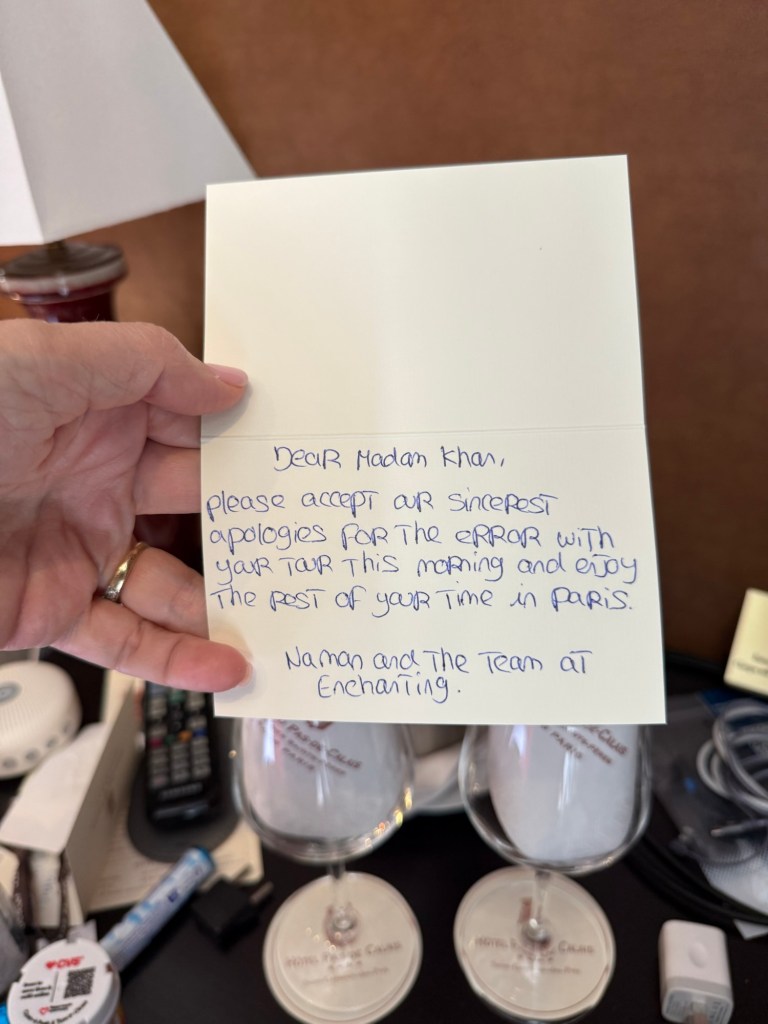
The we headed back to the hotel to shower and sneak in a nap before the evening’s plans. When we walked into the room, we found a thoughtful surprise from Naman—a bottle of wine and a handwritten apology note for the mix-up. It was such a kind gesture and made us feel truly taken care of.

Seine River Dinner Cruise
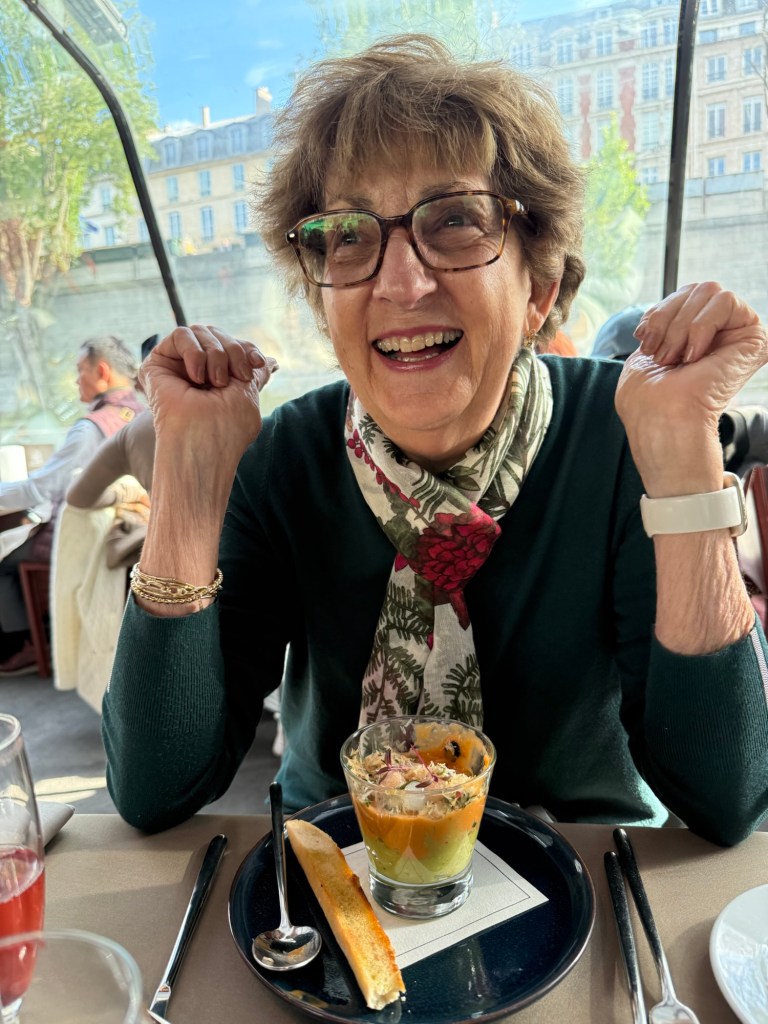
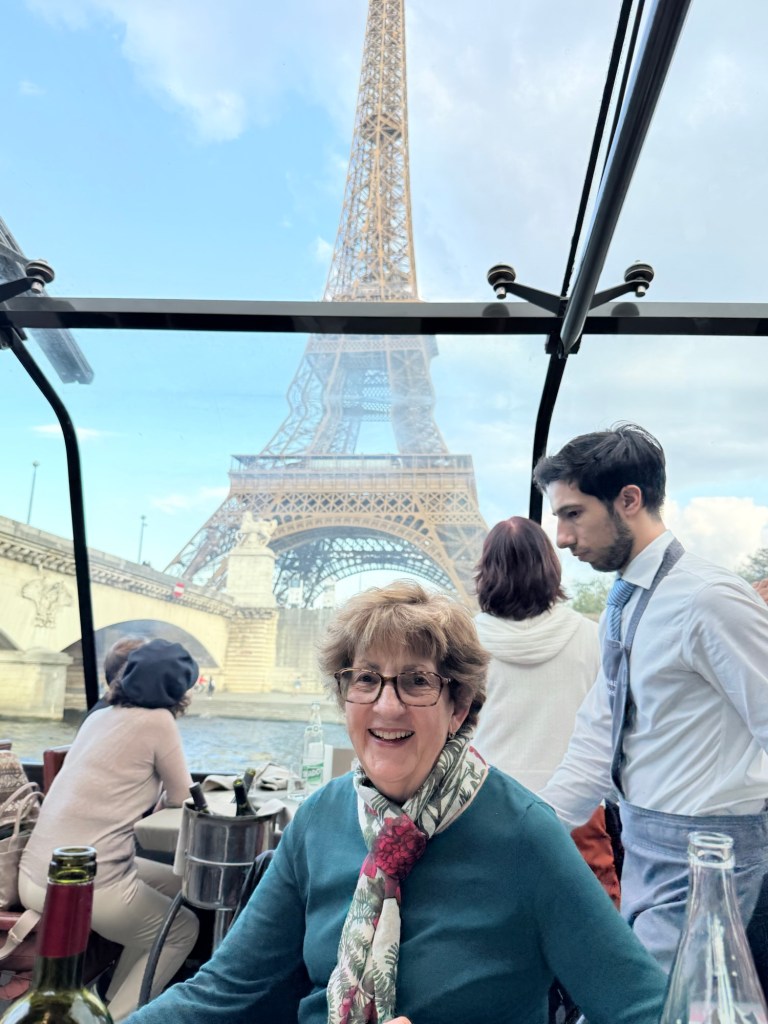
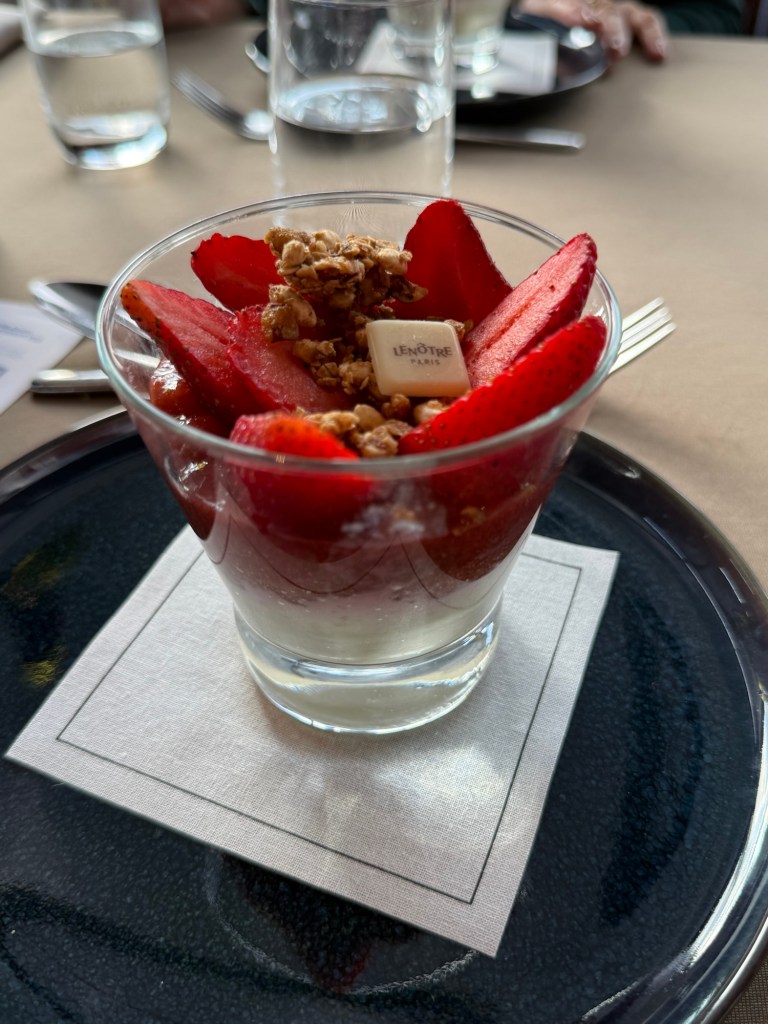
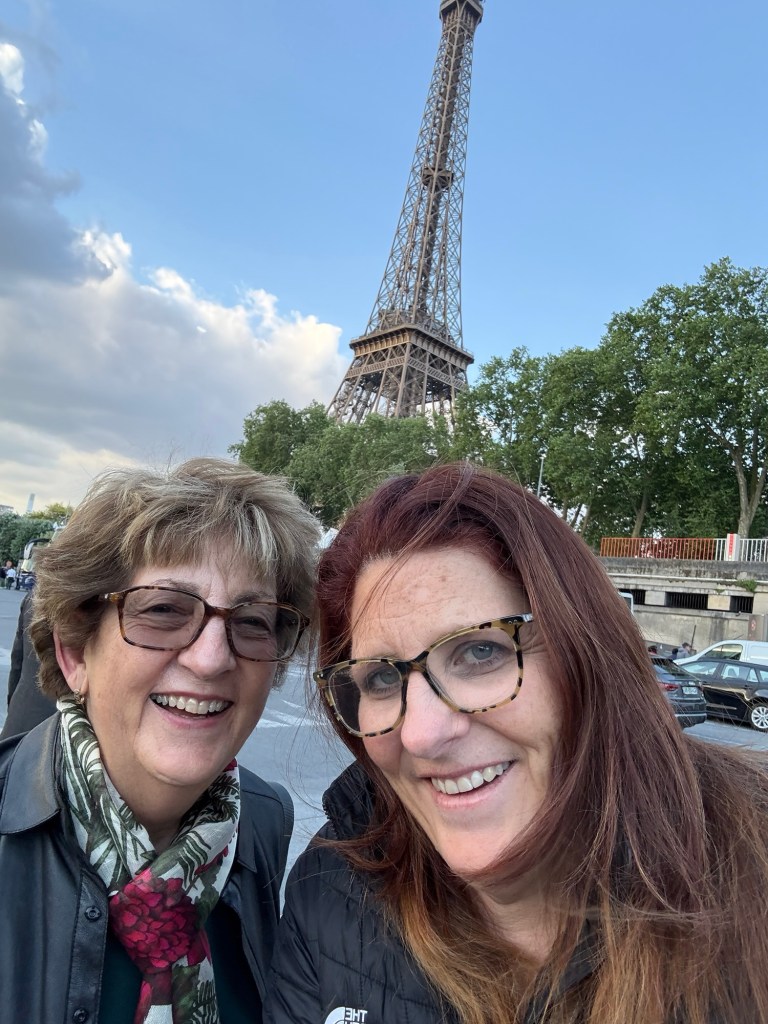
That night, we scrambled to make it to our Seine River dinner cruise—and it was fabulous. We had a fantastic waiter, a delicious multi-course dinner, and gorgeous views as we floated past the Eiffel Tower, Notre-Dame, the Louvre, and more—all beautifully lit under the Paris night sky.
The only not-so-fabulous part? Our Uber driver. He got mad when some tourists stepped in front of the car, rolled down his window, shouted “Merde!” and followed it with a loud spit-hocking noise. We were horrified—but it became our inside joke for the rest of the trip. Anytime we saw something rude or over-the-top, we’d whisper “Uber driver” or mimic the moment. He became our running example of what crass looks like, and we were extra careful to be polite, respectful, and not that tourist.
The cruise included professional photos, and honestly? They turned out better than expected—especially considering we were still slightly jet-lagged. It was the perfect ending to our first full day in Paris.
 Happiness is Possible