
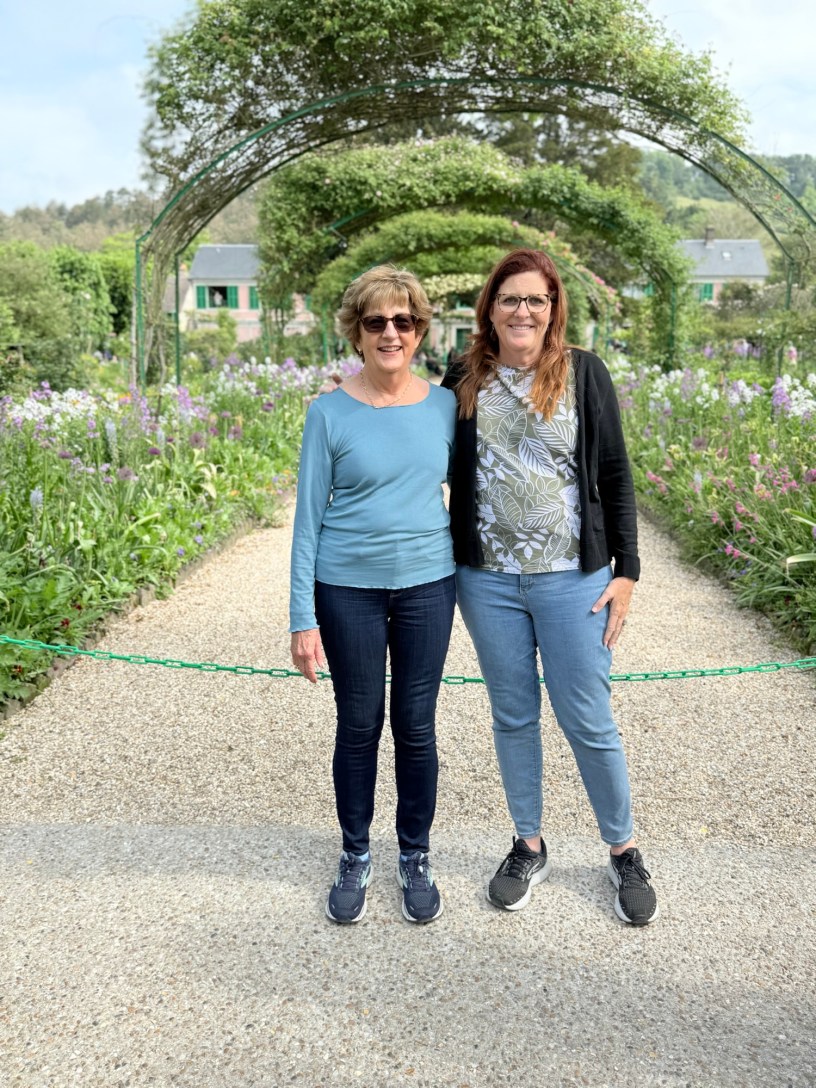
If my mom did nothing else on this trip, she said she had to see Monet’s Garden. And that came with a little history.
Back in 2017, during a Viking River Cruise through Normandy, there was an optional excursion to Giverny. Mom stayed behind to have her “crack up day.” That’s what she calls it when she knows she just needs to rest and reset so she doesn’t snap at the rest of us. So, she stayed back on the ship while the rest of us went—and of course, it ended up being the best excursion of the whole trip. We’ve teased her about missing it ever since.
So this time, I wasn’t taking any chances. I knew how much this visit meant to her, and honestly, I didn’t want to risk her getting sick. As an early Mother’s Day gift, I upgraded the trip to a private tour.
We set our alarms early to enjoy breakfast, and by 9 a.m., our driver Mehdi was already outside waiting. Dressed in a suit, totally professional, with a spotless car stocked with water and phone chargers—he made us feel like royalty.

Early in the drive, as we were leaving Paris, Mehdi pointed out a tunnel and asked if we knew what made it famous. We didn’t. He gently told us it was the tunnel where Princess Diana died, chased by paparazzi. It was an unexpected, sobering moment that settled the car into quiet reflection. Shortly after that, Mom dozed off for a bit, enjoying the smooth, peaceful ride through the countryside.
When we arrived in Giverny, our guide Mary greeted us warmly and led us straight into Le Clos Normand, the flower garden. She began by telling us that Claude Monet moved to Giverny at age 36—and lived there for another 36 years. He didn’t just live there. He designed every inch of the gardens, shaped the home, and turned the landscape into living, breathing art.
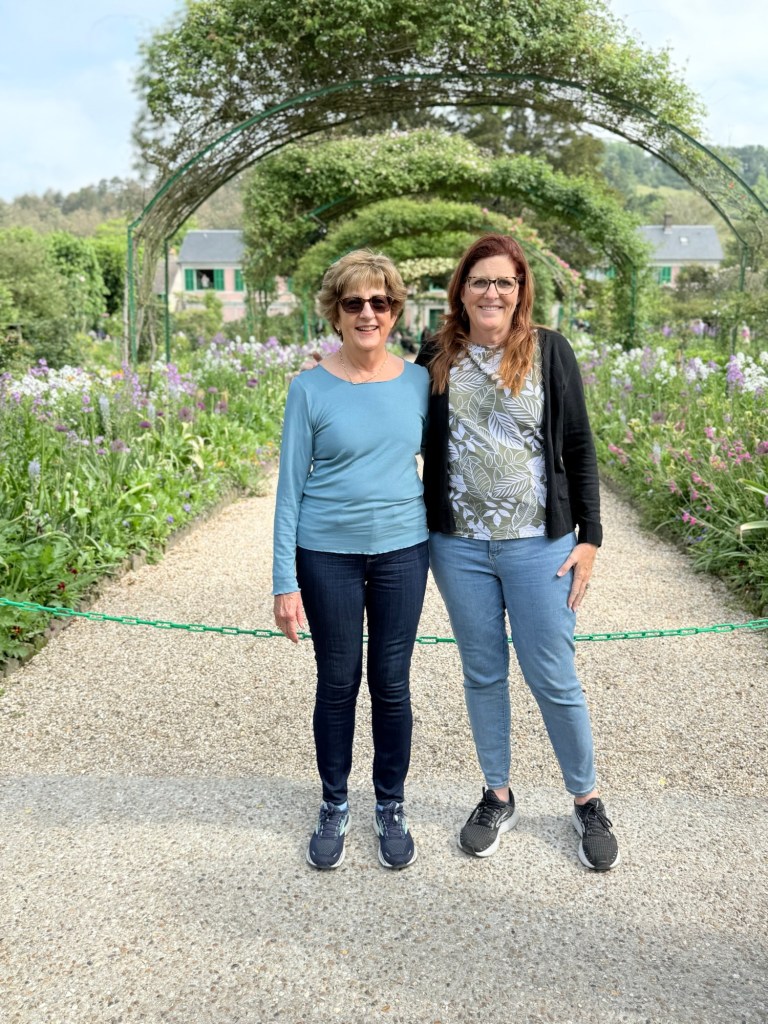
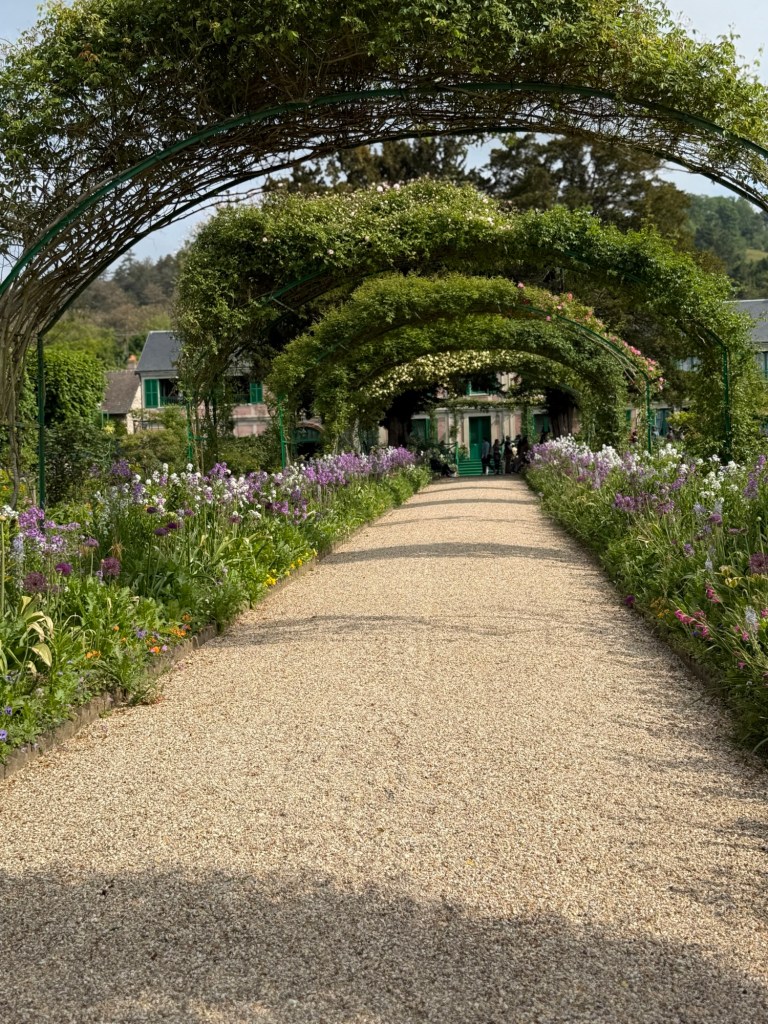
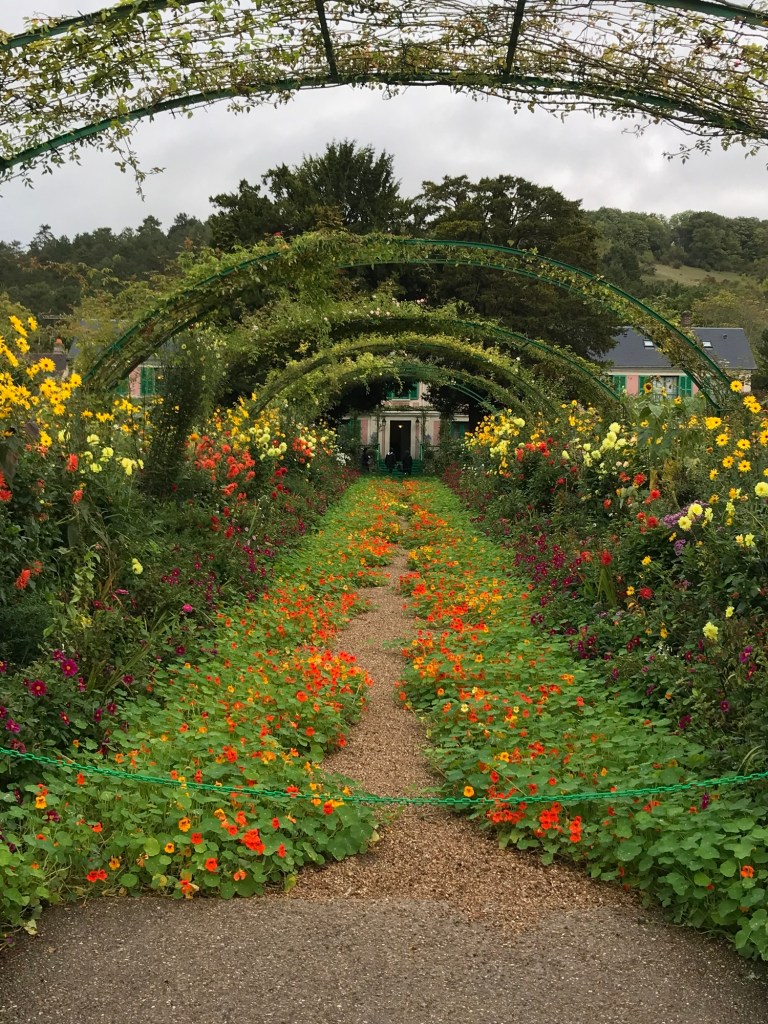
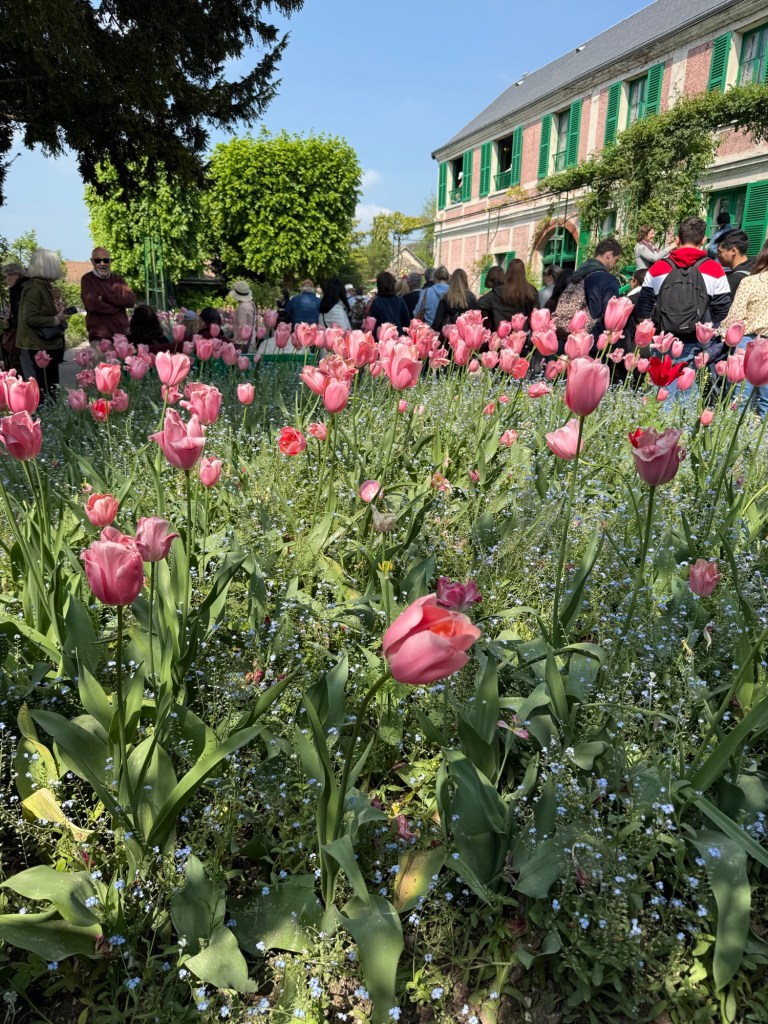
The garden was stunning. Monet planted with an artist’s eye, using contrasting colors that complemented each other, and raised the flower beds in the center to make everything pop. The absolute showstopper was right in front of the house—long beds of tall pink tulips layered over soft blue forget-me-nots. Mom was blown away. I was most curious about the arbor, since I’d only ever seen it in the fall. In spring, it was completely different—fresh, light, and full of new growth. Just beautiful.
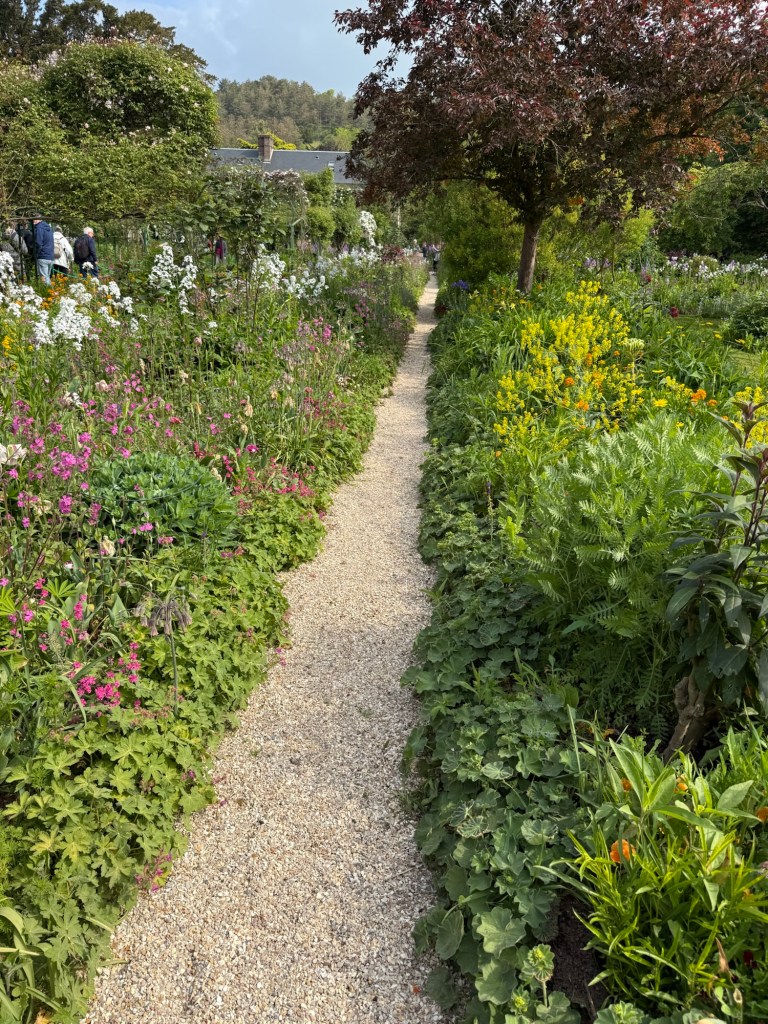
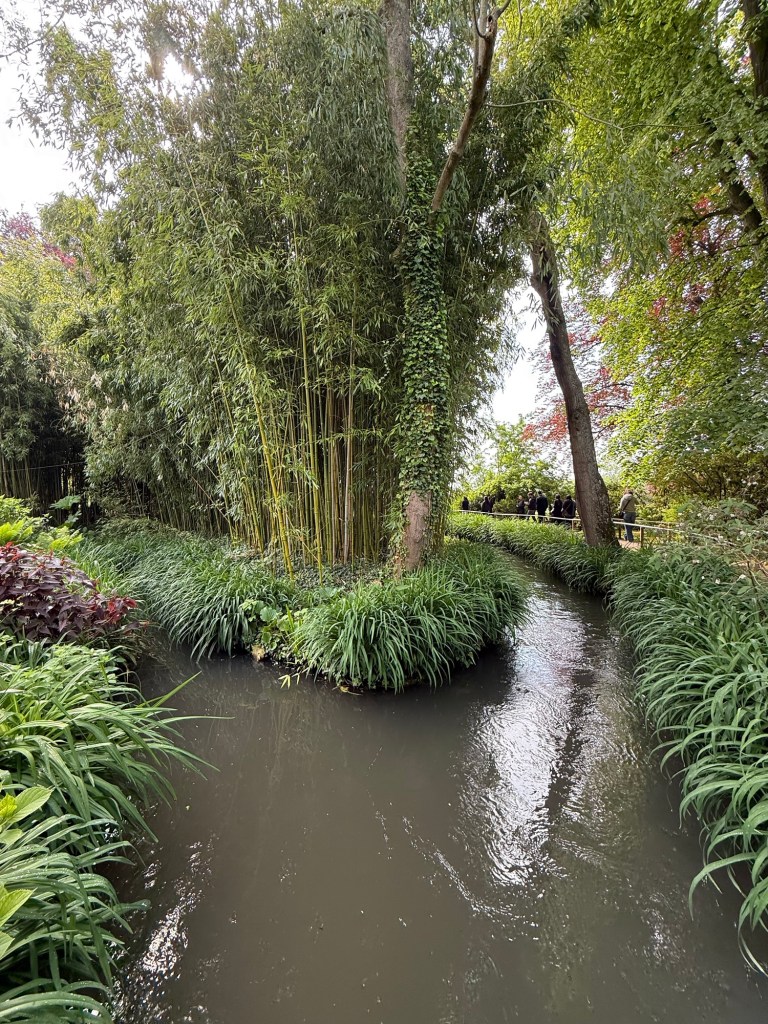
Next, we crossed under the road to visit the famous water garden. First, she explained that Claude Monet diverted water to his iconic lily pond at Giverny by obtaining permission to reroute a branch of the nearby Epte River. He had a small canal constructed to bring the water onto his property, where he carefully controlled the flow using sluice gates and channels to maintain the pond’s level. This allowed him to transform his garden into a living masterpiece, perfectly suited for the reflections and light he captured in his paintings.
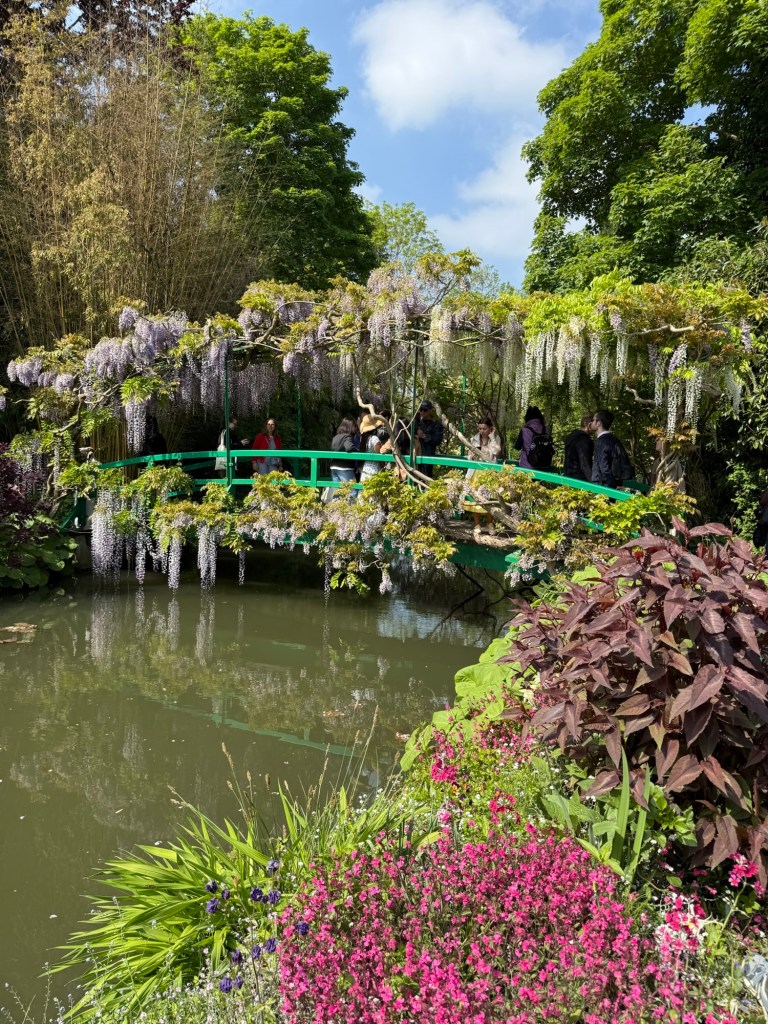
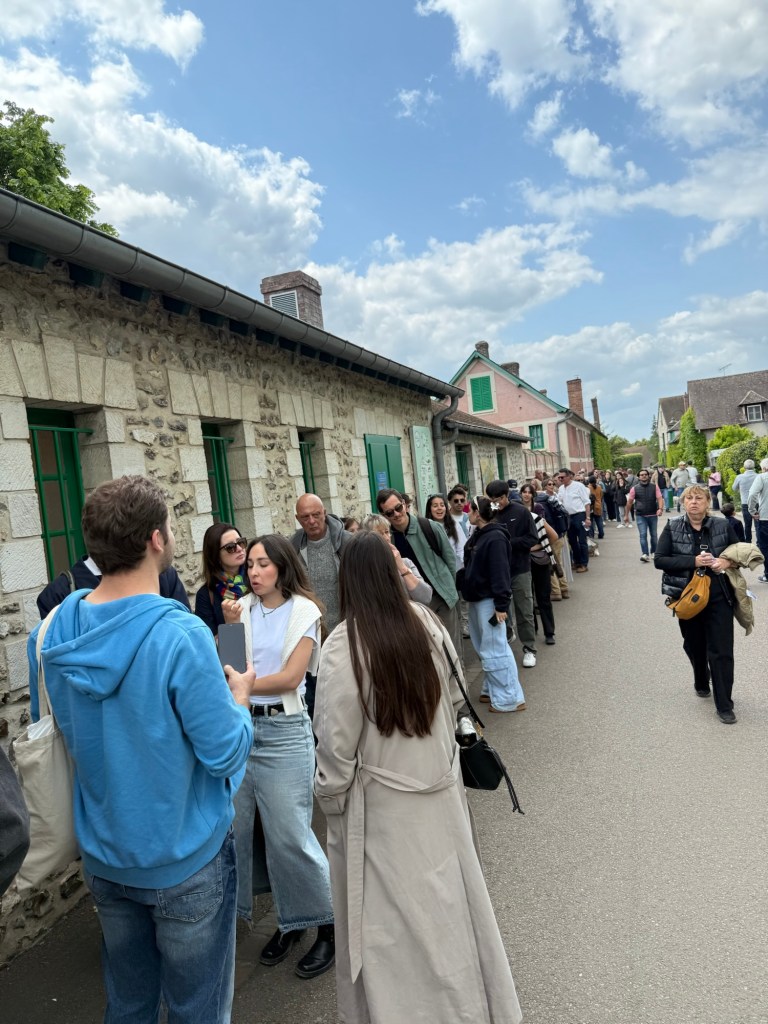
The highlight there, of course, was the Japanese green bridge. We got a special surprise—it was blooming with two types of wisteria, and one of them was fragrant. It was definitely crowded, just like I remembered, but we managed to squeeze in for a photo anyway.
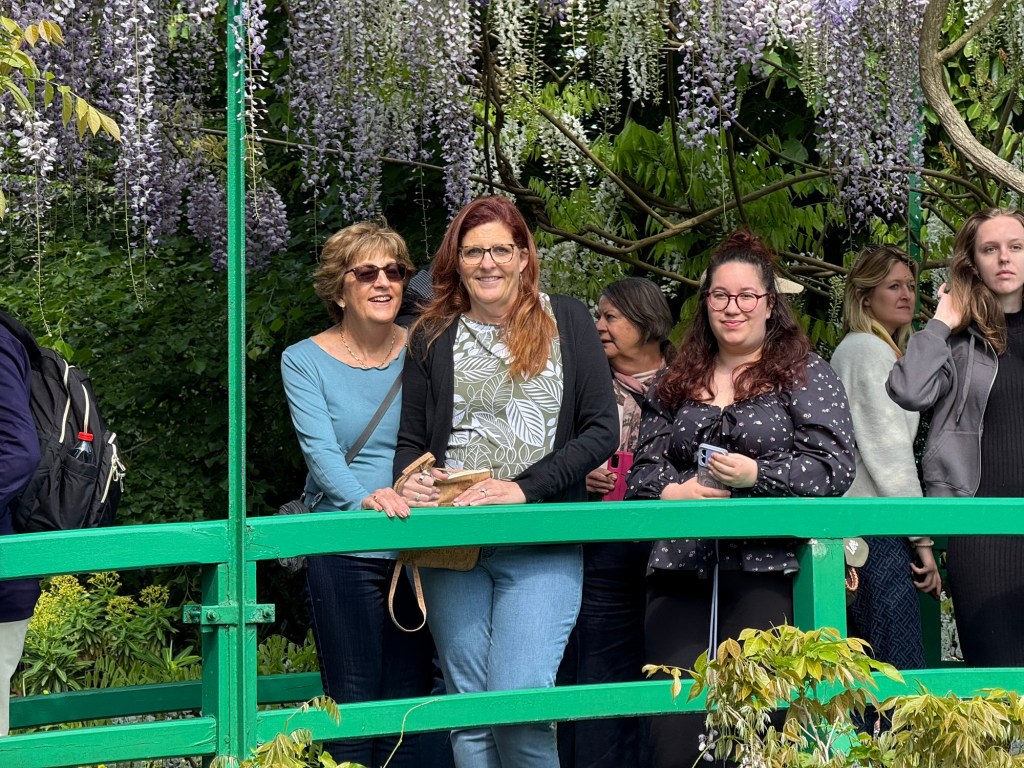
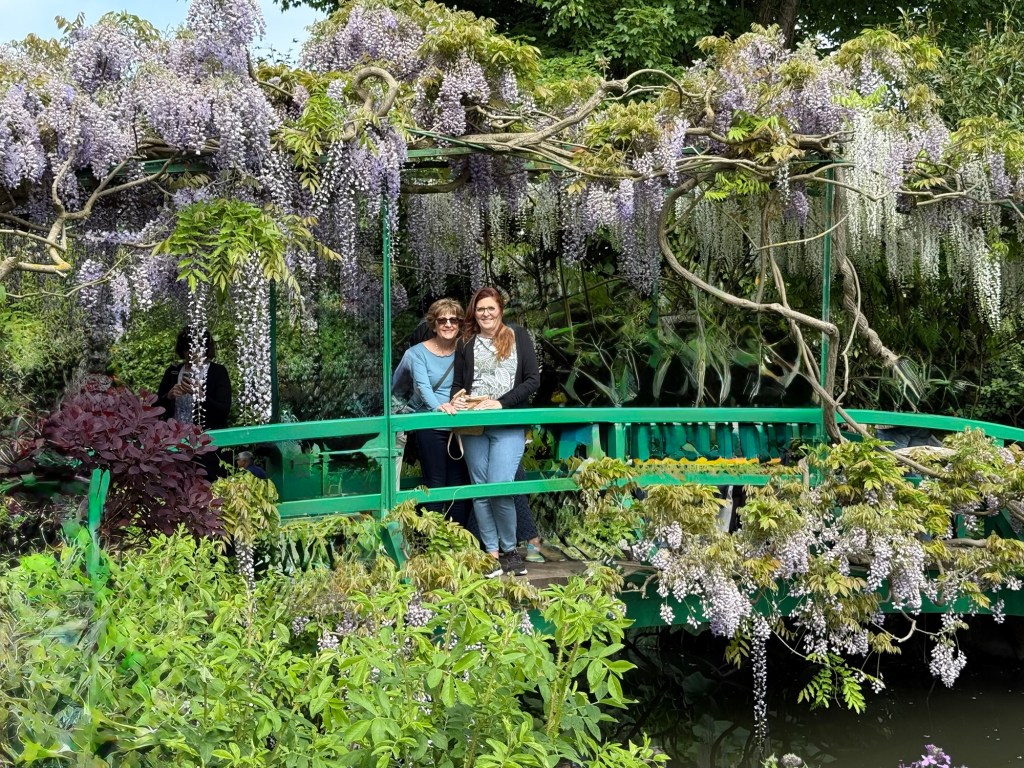
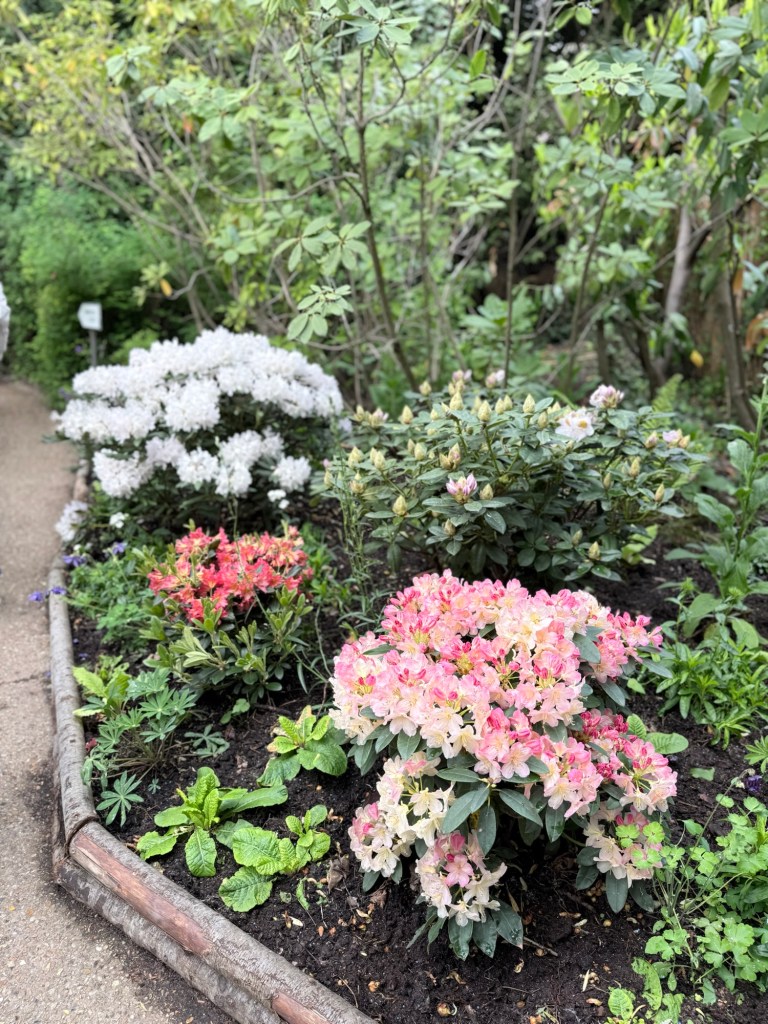

Mary also shared something new: the pond is drained and cleaned every season. Monet had lily pods planted directly into the bottom and was obsessive about keeping the water pristine. If he was having a bad day painting out on his studio boat, he’d throw his work into the pond and storm off—someone else would have to fish it all out.
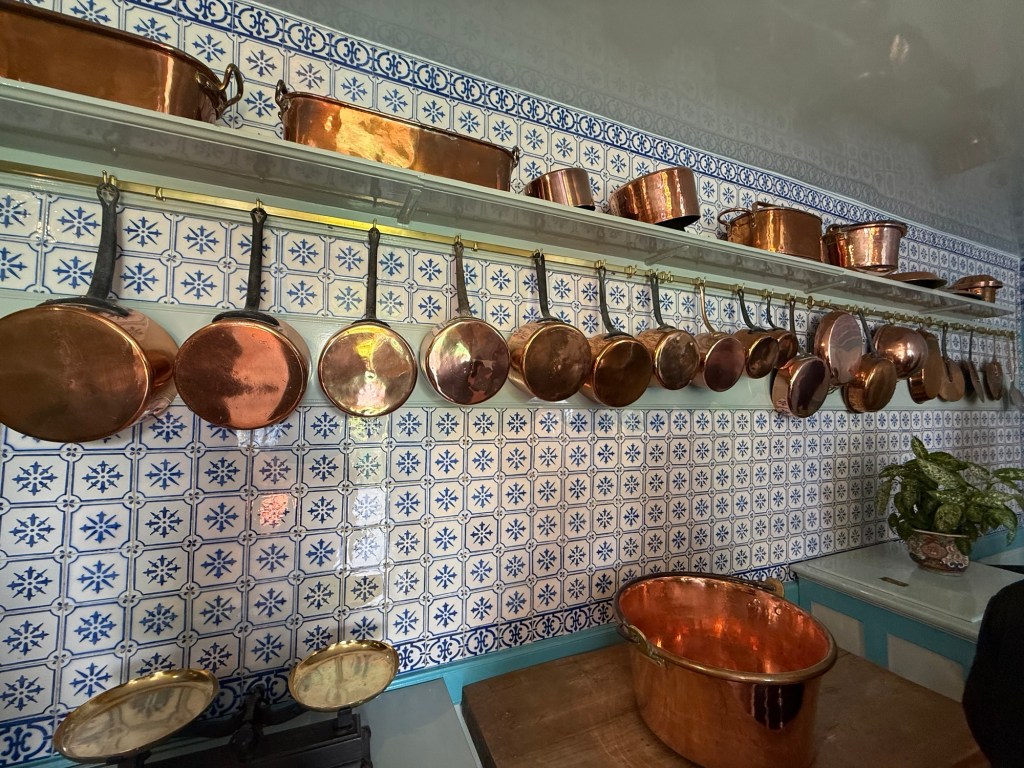
After soaking in the gardens, we went inside Monet’s house. I still love the kitchen the most—the bold blue tiles, the copper pots, the whole cozy artist vibe. Mom couldn’t stop talking about those tulips out front, though. That’s what stuck with her the most.
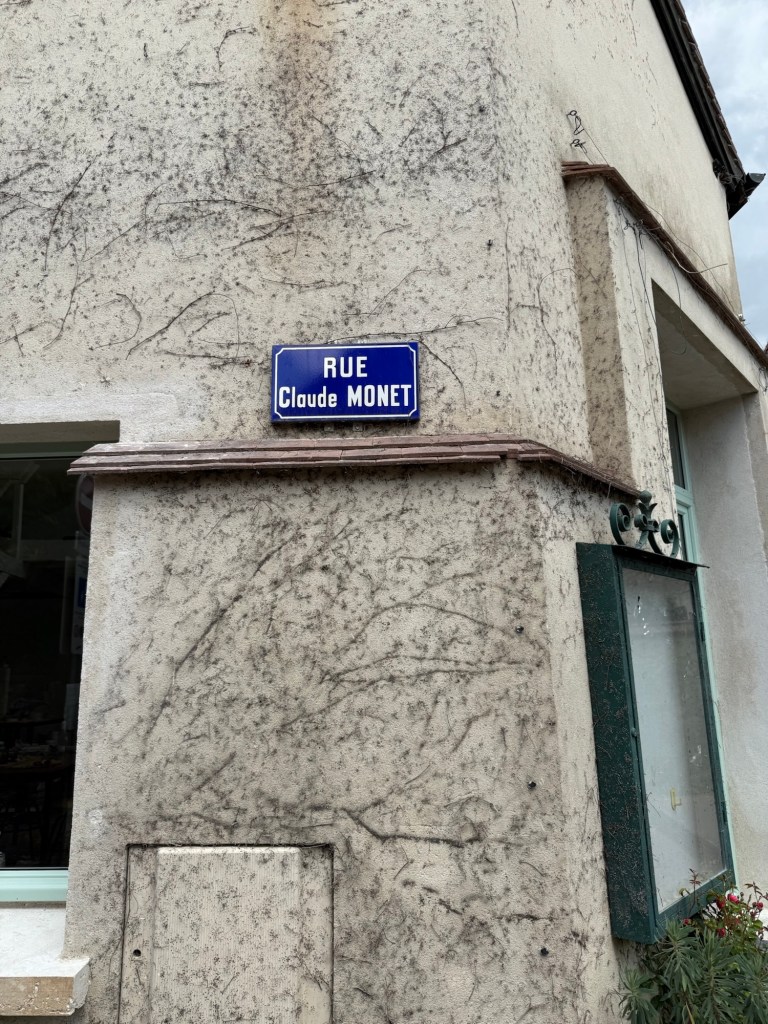
We wrapped up with a stroll through the village. We visited a charming old B&B
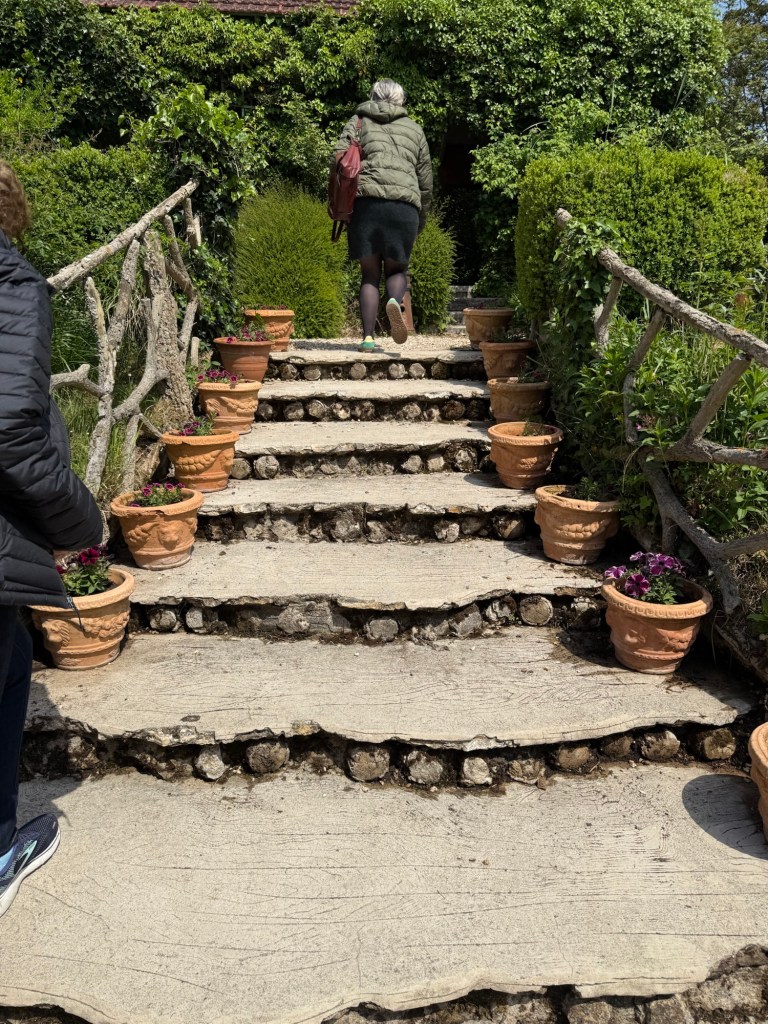
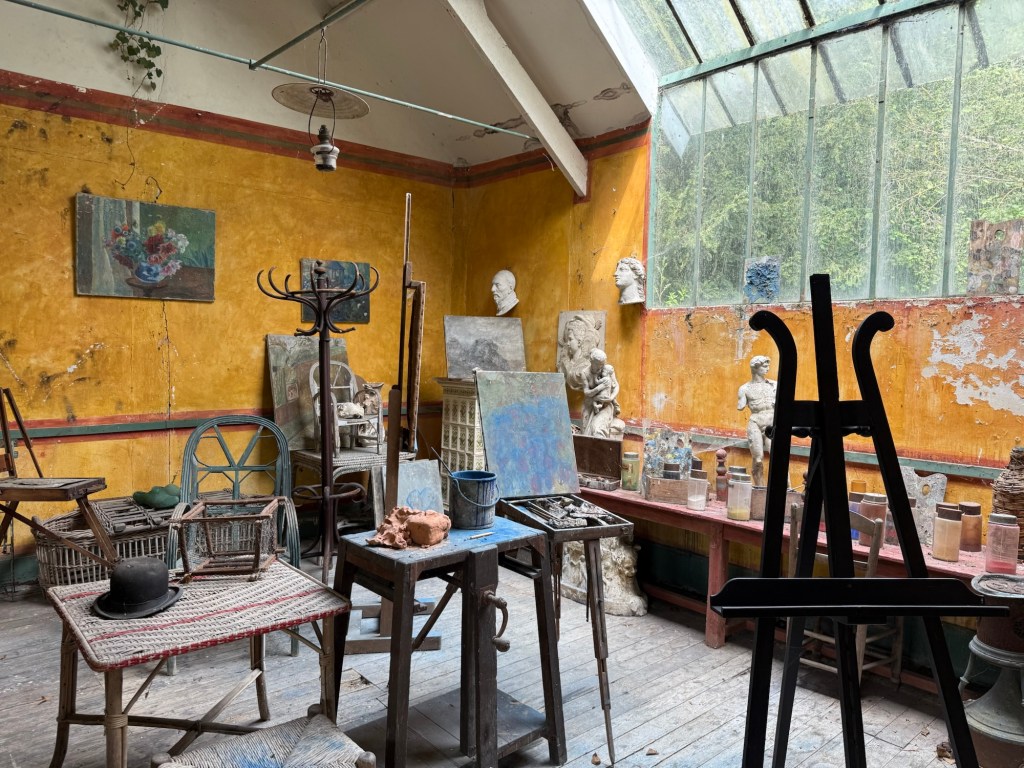
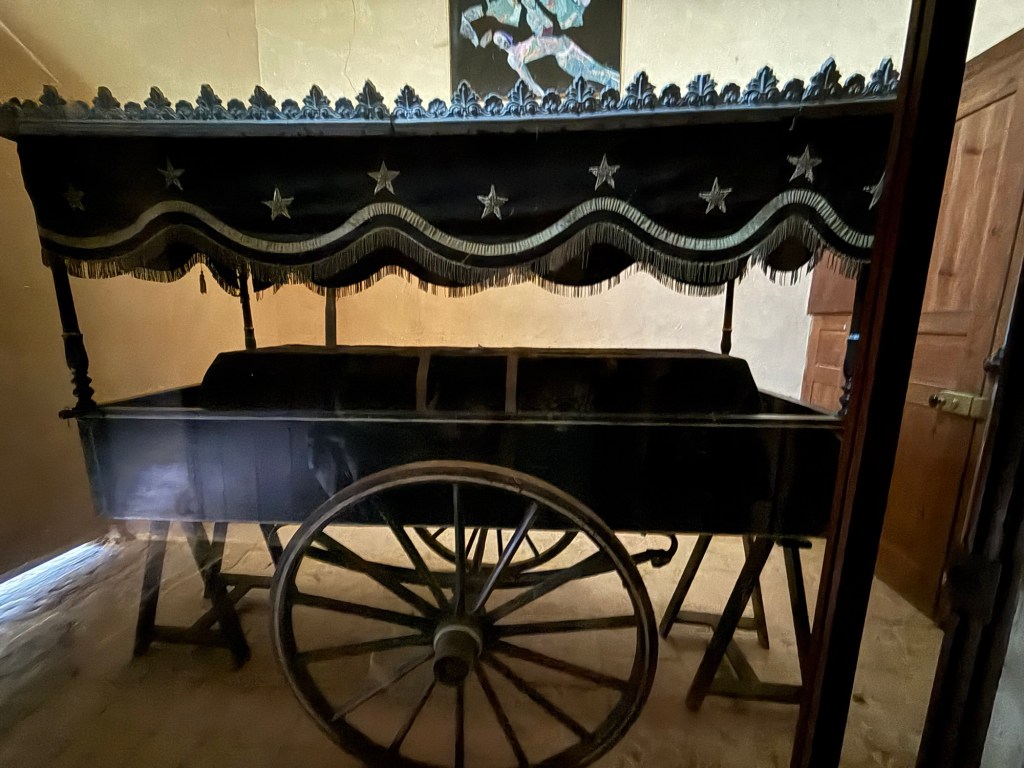
We walked to the small church where Monet is buried. The church is 1000 years old. His grave is simple, surrounded by family. Inside the church, we saw the original wooden cart that carried him to his final resting place—now preserved in a glass case. Our guide told us that when they were preparing for the procession, the cart was originally draped with a traditional black funeral cloth. But someone who knew him well ran inside and grabbed something more colorful to cover it instead—something more Monet. That small detail said everything.
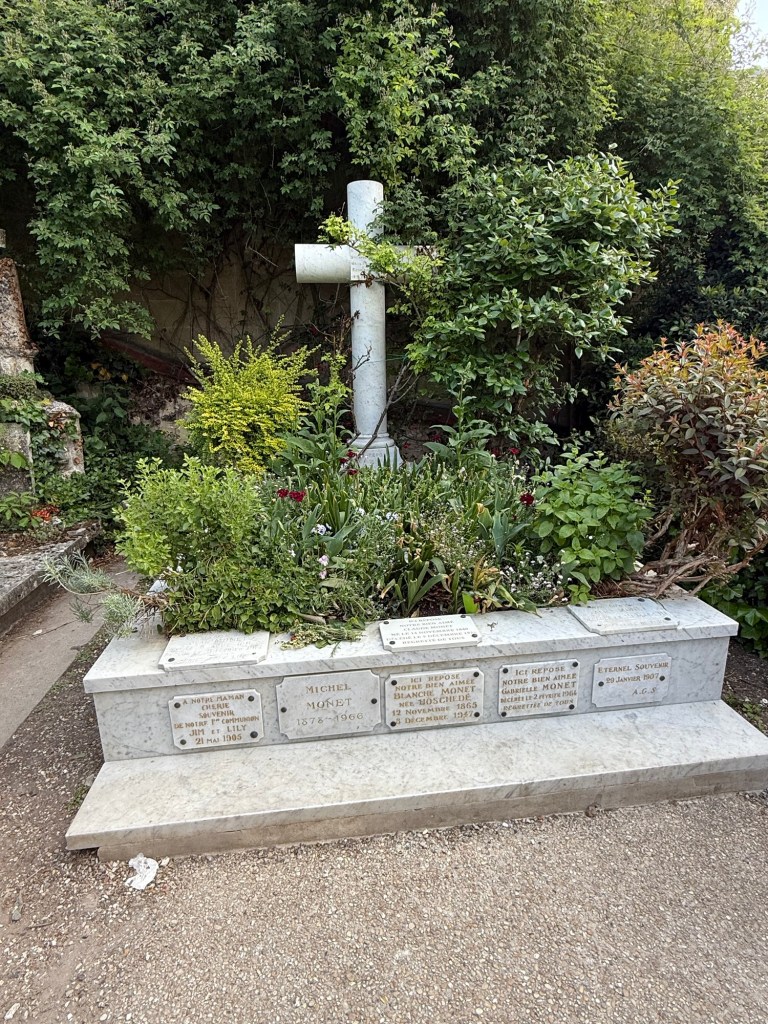
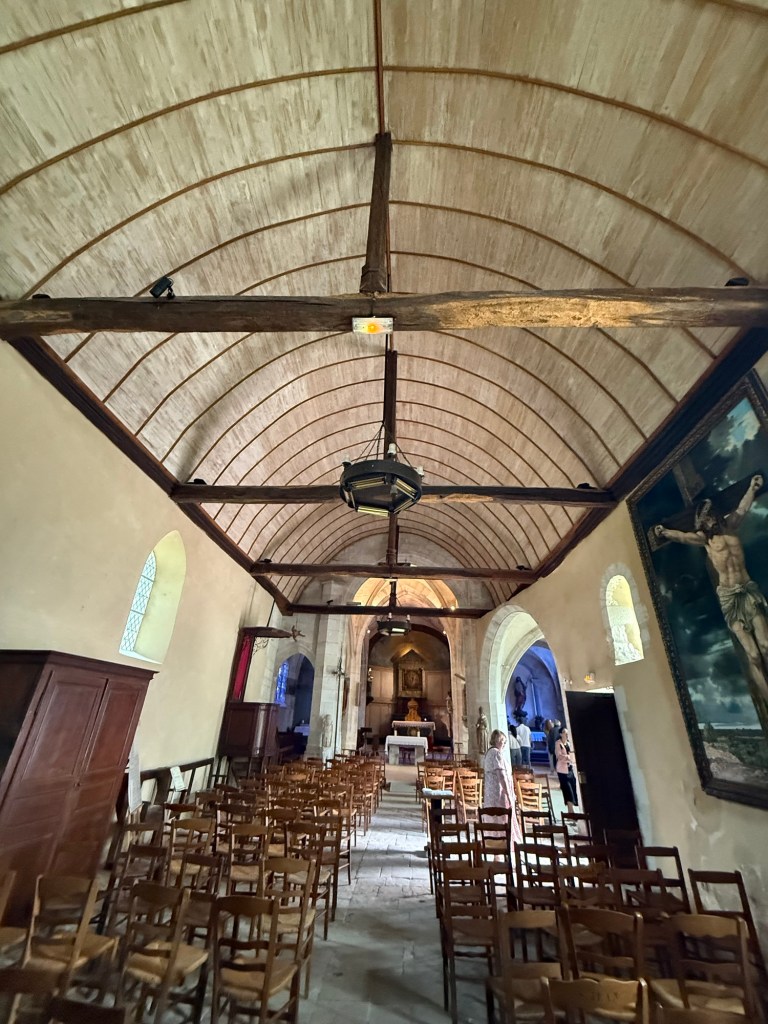
Église Sainte-Radegonde de Giverny
Mary tried hard to get us lunch at the old B&B. It was a bit of a fiasco, they did seat us, but after a while we realized no one was being served. We still hadn’t seen a waiter, and when we looked around, only one table had food. So, we got up and left. We ended up walking down the road to a little deli—Mom ordered quiche, and I grabbed a quick sandwich.
Then Mehdi brought us back to Paris.
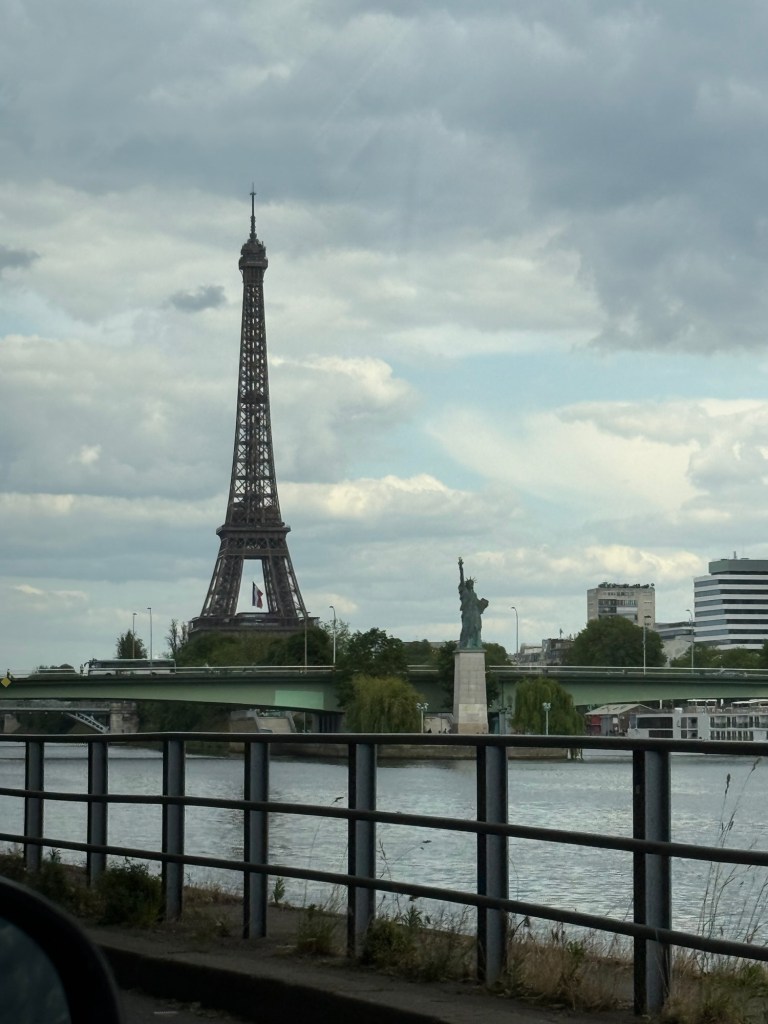
On the way back to our hotel, we passed the Eiffel Tower—and there was the French flag proudly displayed underneath. It was VE Day, and both Mary and Mehdi made sure we understood how thankful they were for the U.S. and its role in helping liberate France during World War II. It was one of those unexpected, powerful moments that brings history, gratitude, and beauty all together in one glance.
We had time to rest before dinner.
That night, we had reservations at Brasserie Vagenende on Boulevard Saint-Germain. The food was delicious, and the waiter was so accommodating—he knew we only had an hour to eat before the concert. At one point, he smiled and said, “Americans eat to live, and the French live to eat.” It’s true—we don’t slow down and savor the way they do. But he made sure we had a beautiful, unrushed meal all the same.
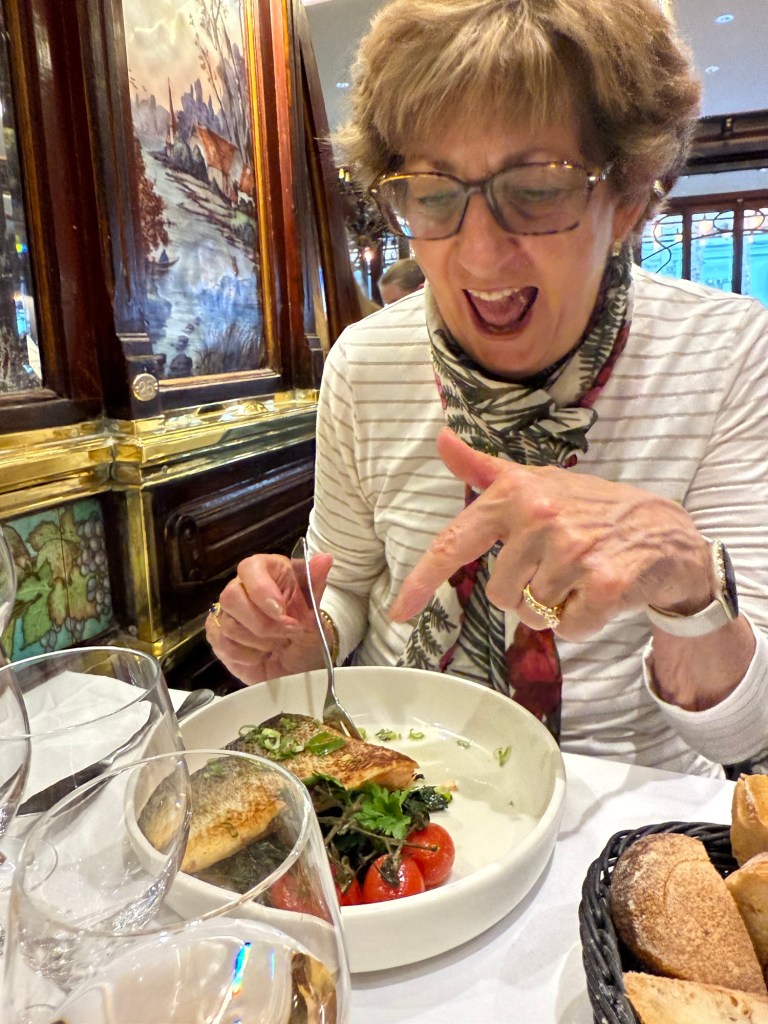
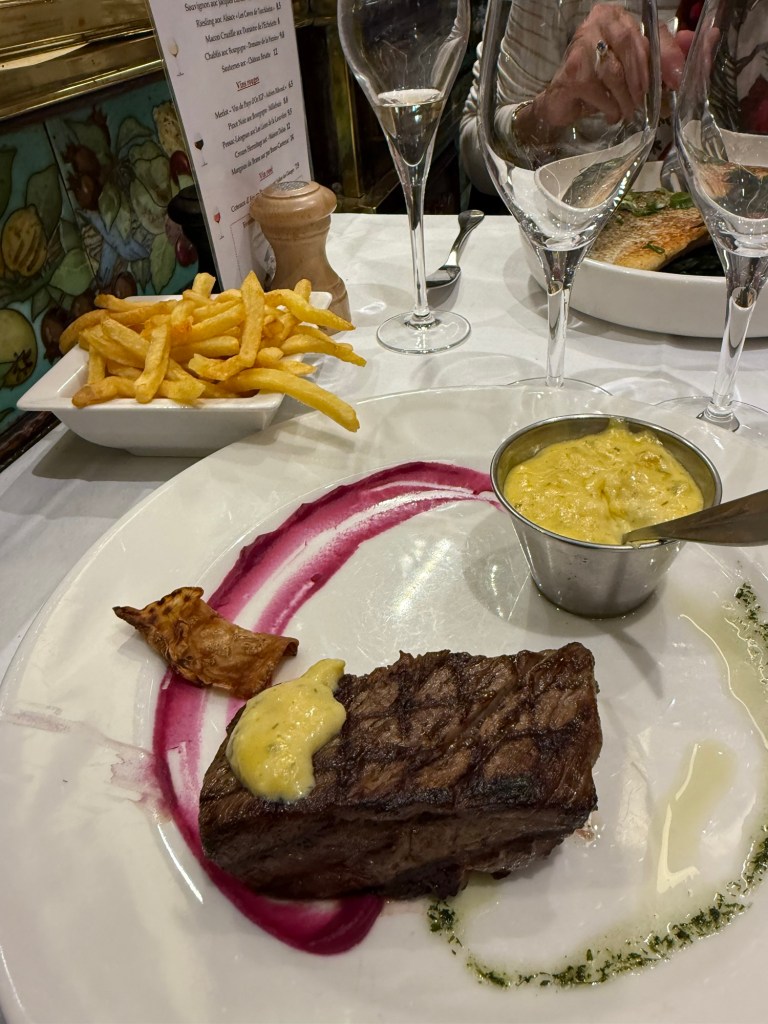
After dinner, we walked over to St. Germain Presbyterian Church for a Vivaldi concert. I was able to make reservations a few days earlier thanks to a tip I saw in the I Love Paris Facebook group. It was part of the Candlelight concert series and just happened to be taking place near our hotel on a night we were free! The setting was stunning, the music was powerful, and I recorded a few sound clips so we could relive it later.
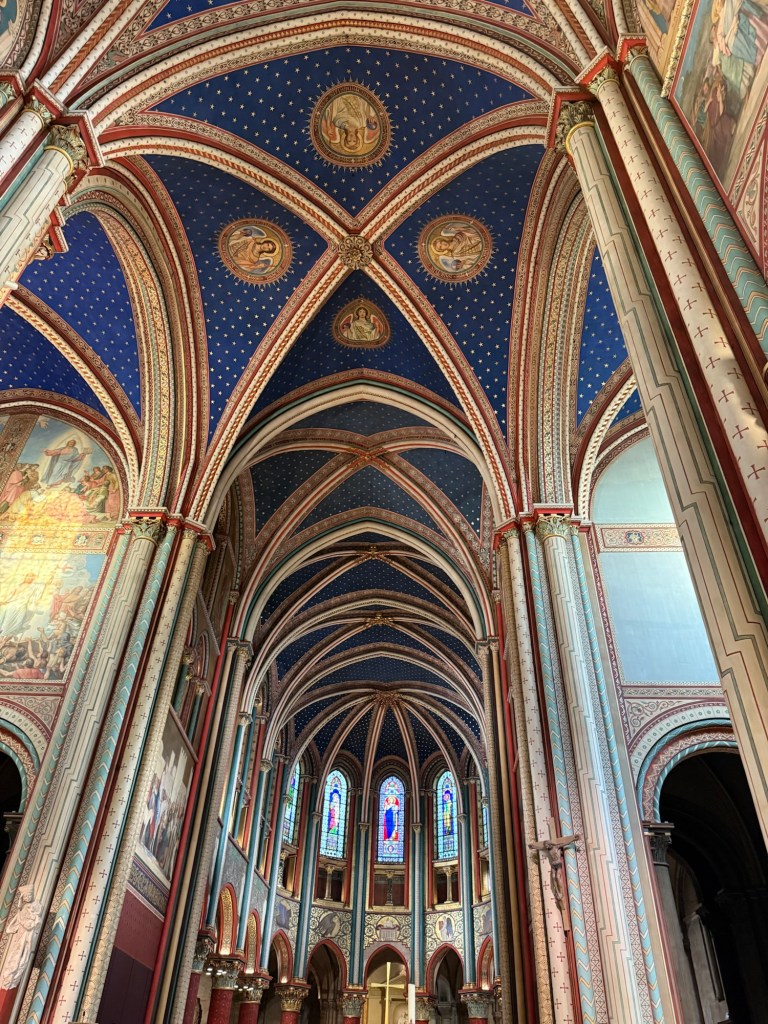
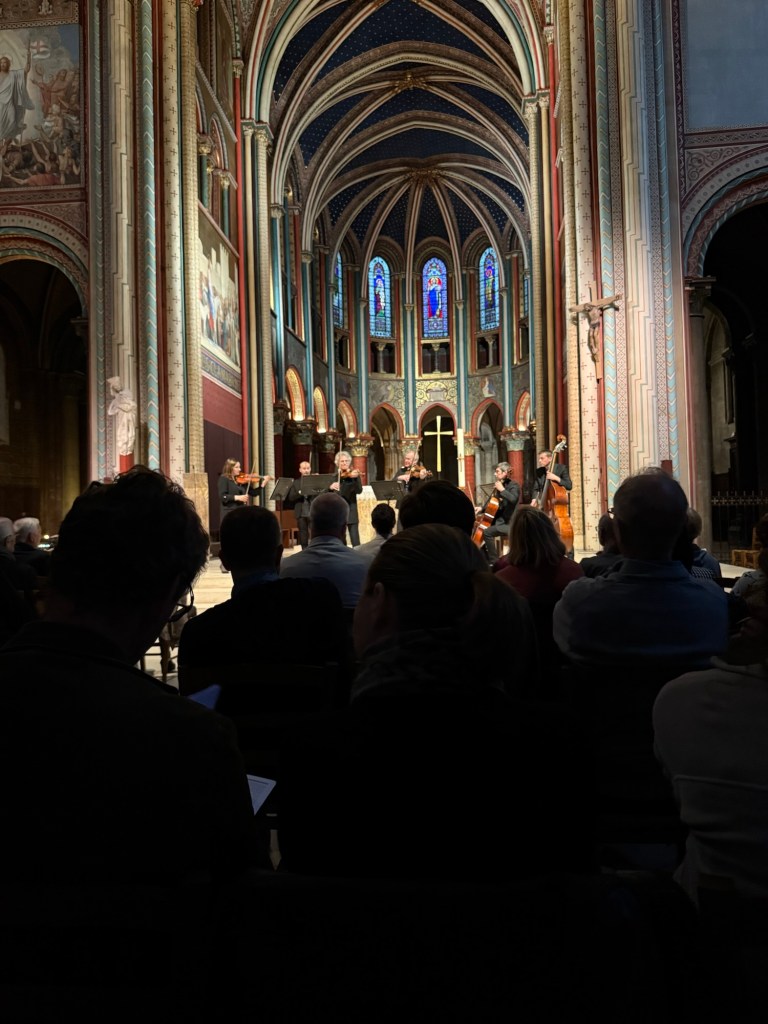
From a missed excursion in 2017 to a full-circle day filled with flowers, color, stories, and unexpected joy—this time, Mom didn’t miss a thing.
 Happiness is Possible