

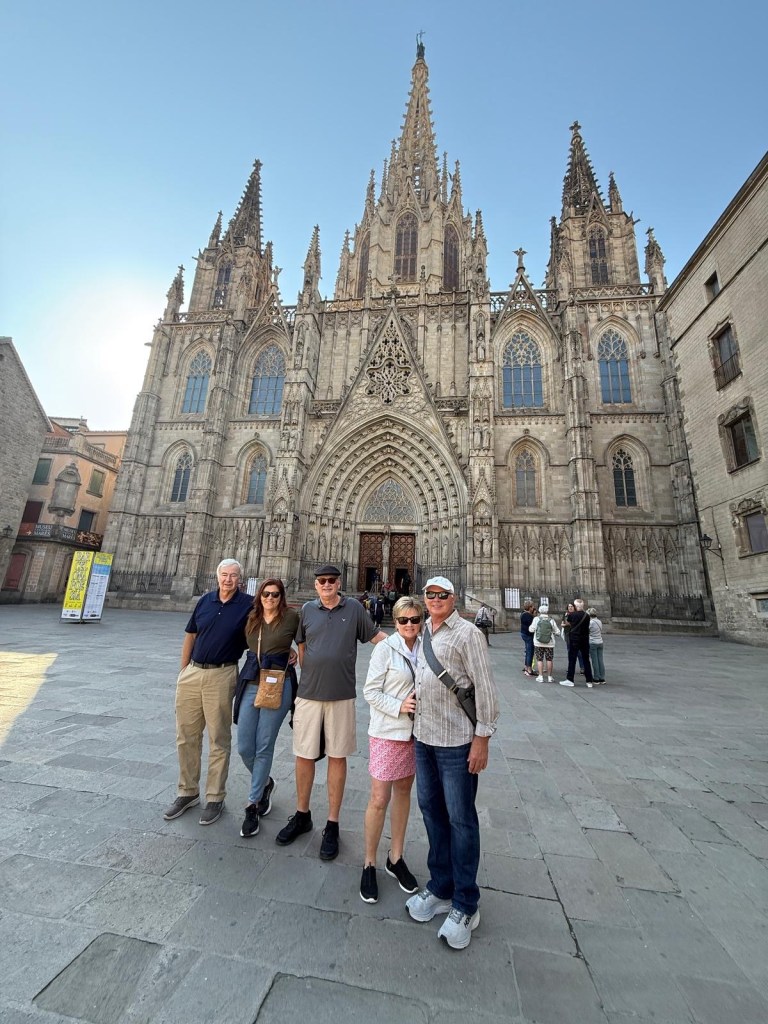
After breakfast, we met up with Kathy and Paul and started our walk through the Gothic Quarter, the oldest part of Barcelona and the historic center of the ancient Roman city of Barcino, founded in 15 BC. Our first stop was the Barcelona Cathedral, officially the Cathedral of the Holy Cross and Saint Eulàlia. It was built between the 13th and 15th centuries and named for Saint Eulàlia, a 13-year-old martyr. We didn’t go inside, but just standing in the square and seeing the spires and carved stonework was enough to understand how important it is to the city.
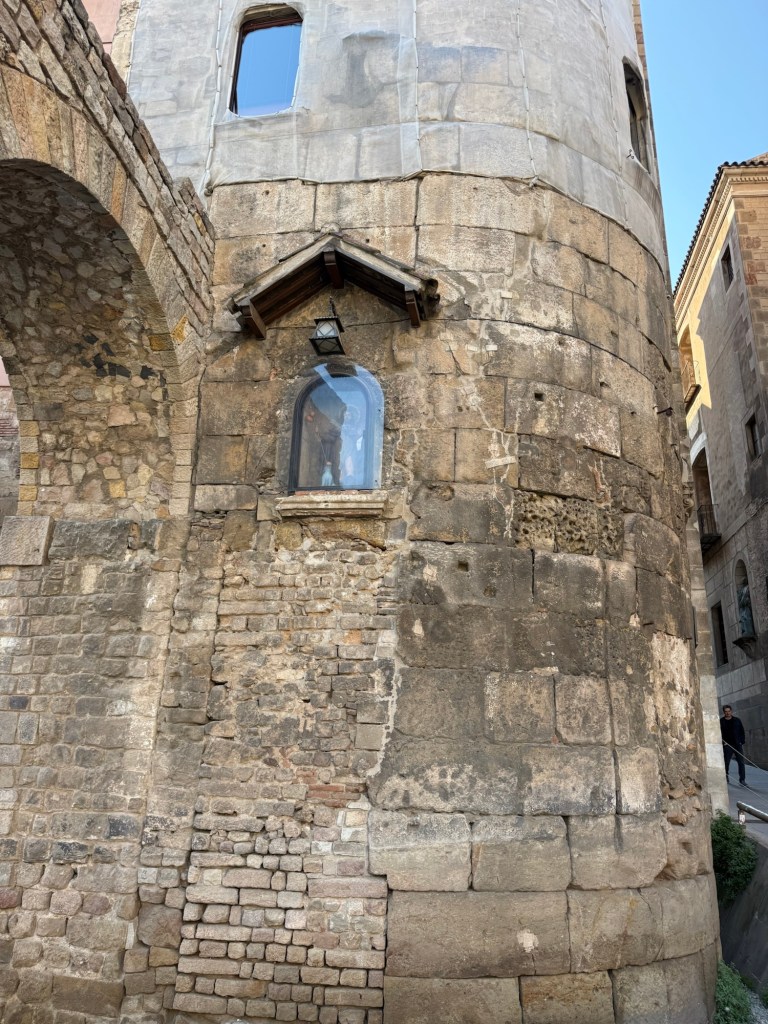
Behind the cathedral, we spotted parts of the Roman walls and towers—you can still see how later generations built right on top of the old foundation.
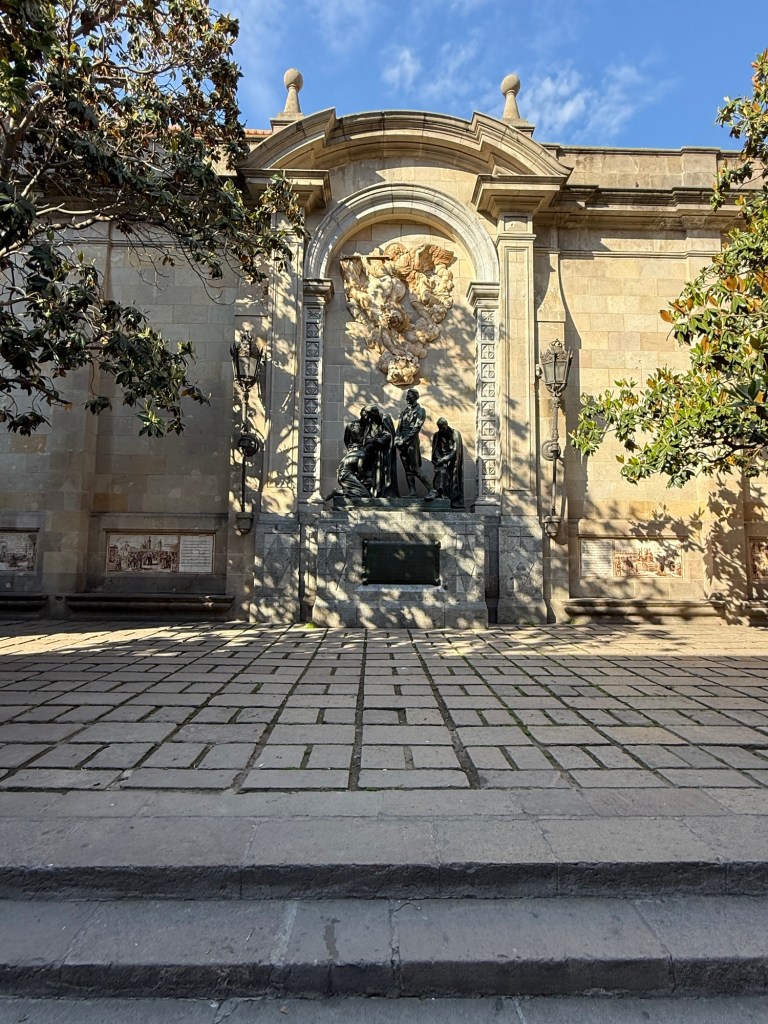
We stopped at the Monument to the Martyrs of Independence, a sculpture built to honor Catalans who were executed during the 1714 siege of Barcelona. It’s tucked into a quiet square and easy to miss if you’re not looking, but it tells an important part of the city’s story.
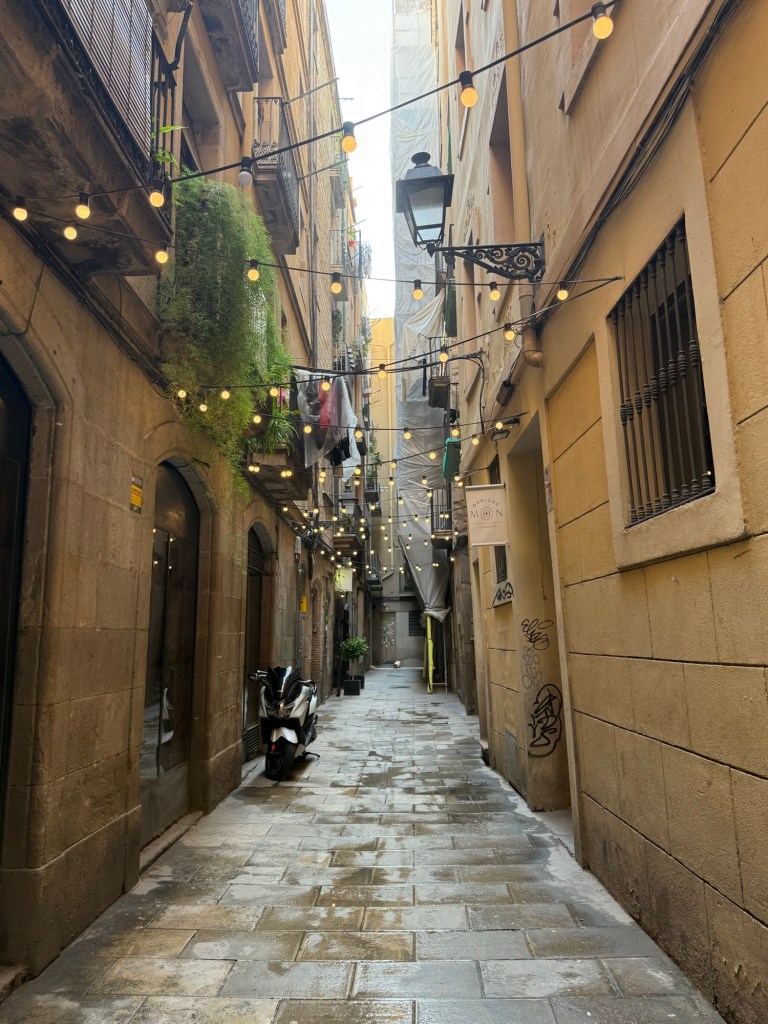
We wandered in the streets and Kathy & Paul told us they really come alive at night. I noticed lights draped across the alleys.
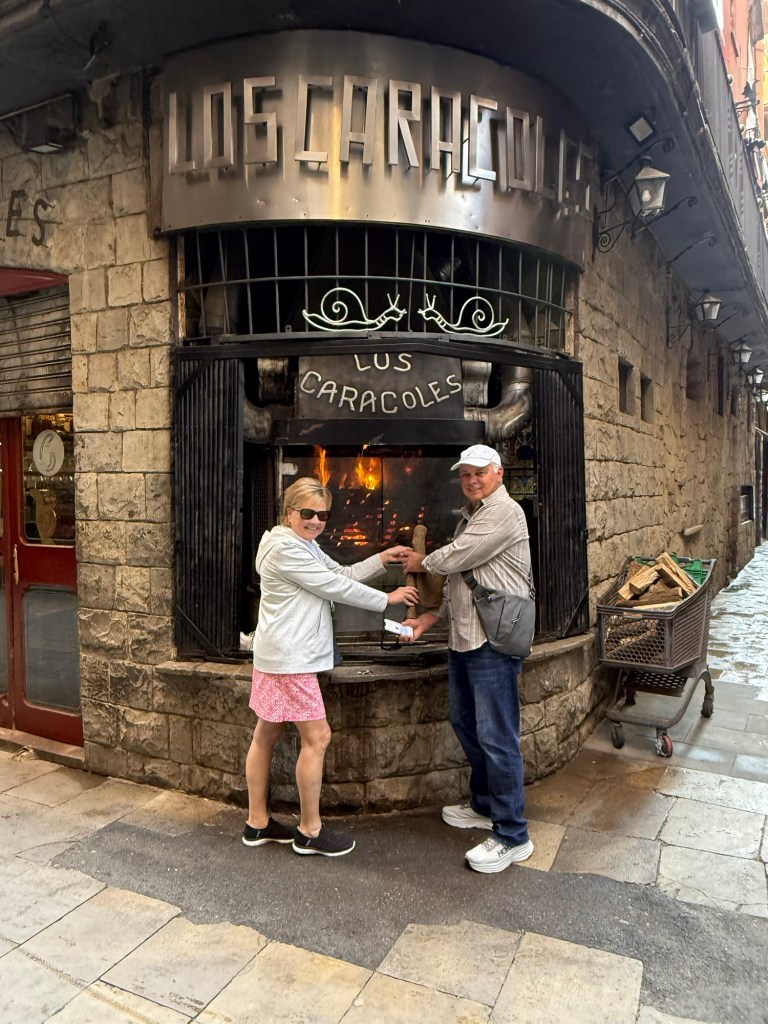
We passed Los Caracoles, a restaurant that’s been open since 1835. Even in the morning, the wood-fired oven was glowing inside the entrance. Kathy and Paul had eaten there before and said it’s great but need to make reservations!
Not far away, we stopped at the Capitania General, once a military headquarters. It stands out for its tall wooden doors and black-and-gold sentry booth—an unexpected sight on a quiet side street. The guard can see out but we cannot see inside.

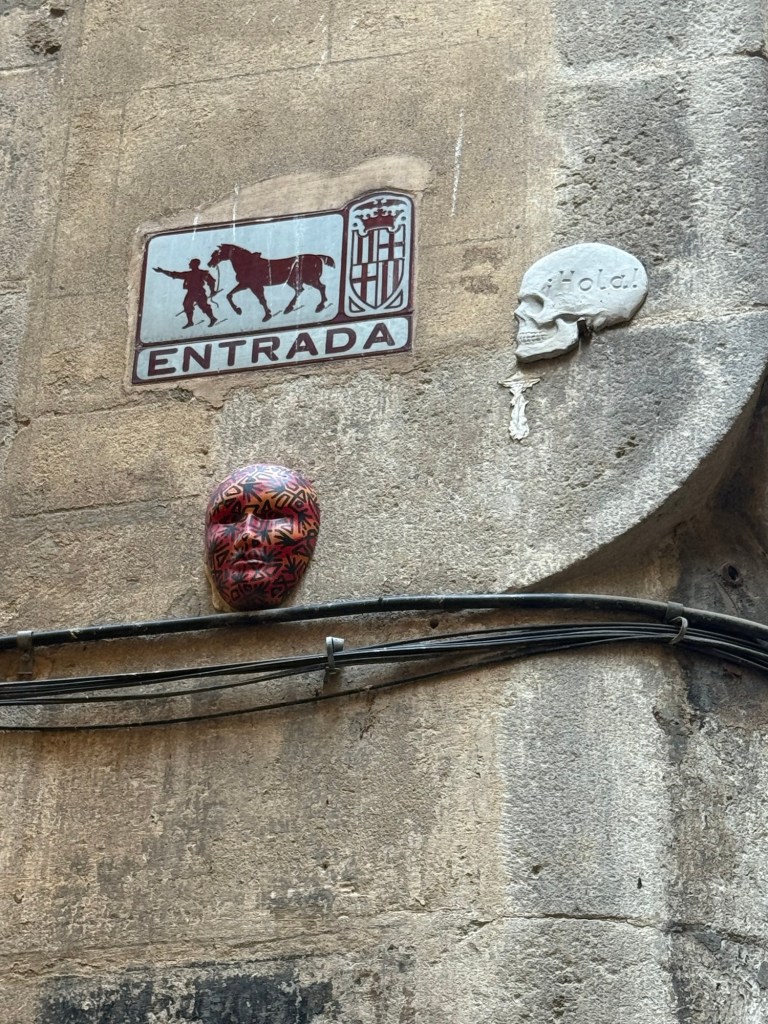
We saw plenty of small, unique details along the way too. Tucked in a corner of Barcelona’s Gothic Quarter, this old “ENTRADA” sign likely marked an entrance for horses or carts—complete with the city’s crest. But the real charm is in the street art layered beneath it. A sculpted skull casually says “Hola,” while a bold red ceramic face adds a modern twist.
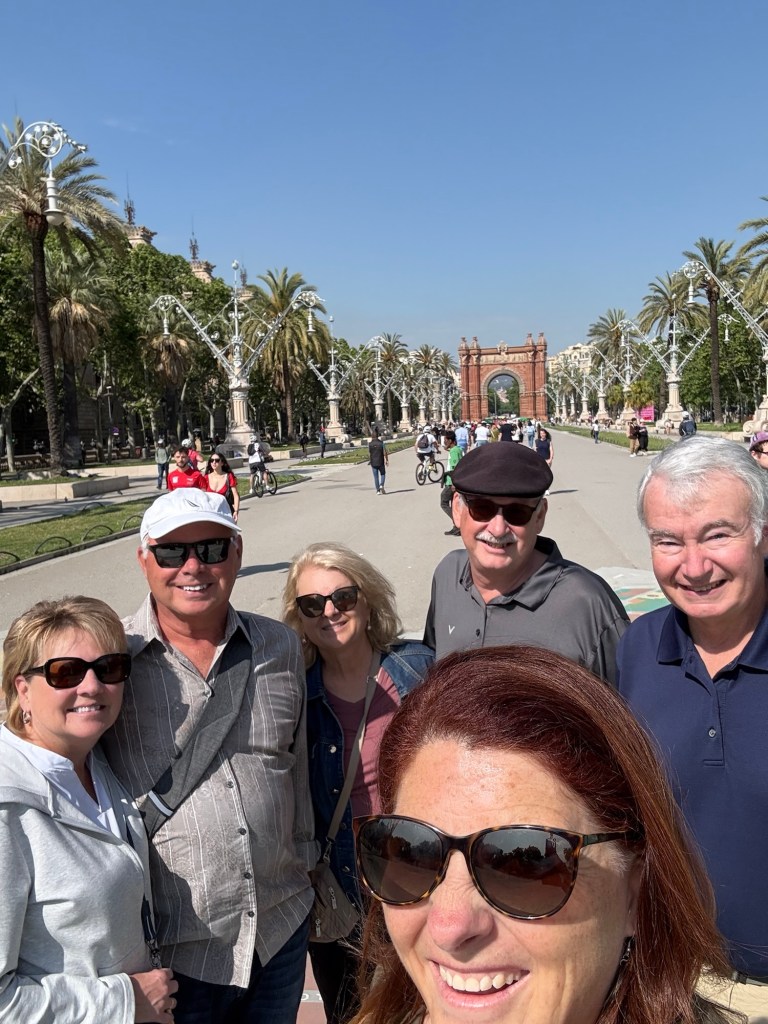
Arc de Triomf
Barcelona’s Arc de Triomf, built in 1888 for the Universal Exposition, welcomed visitors with the message “Barcelona rep les nacions.” Designed in red brick by Josep Vilaseca, it leads to Parc de la Ciutadella.
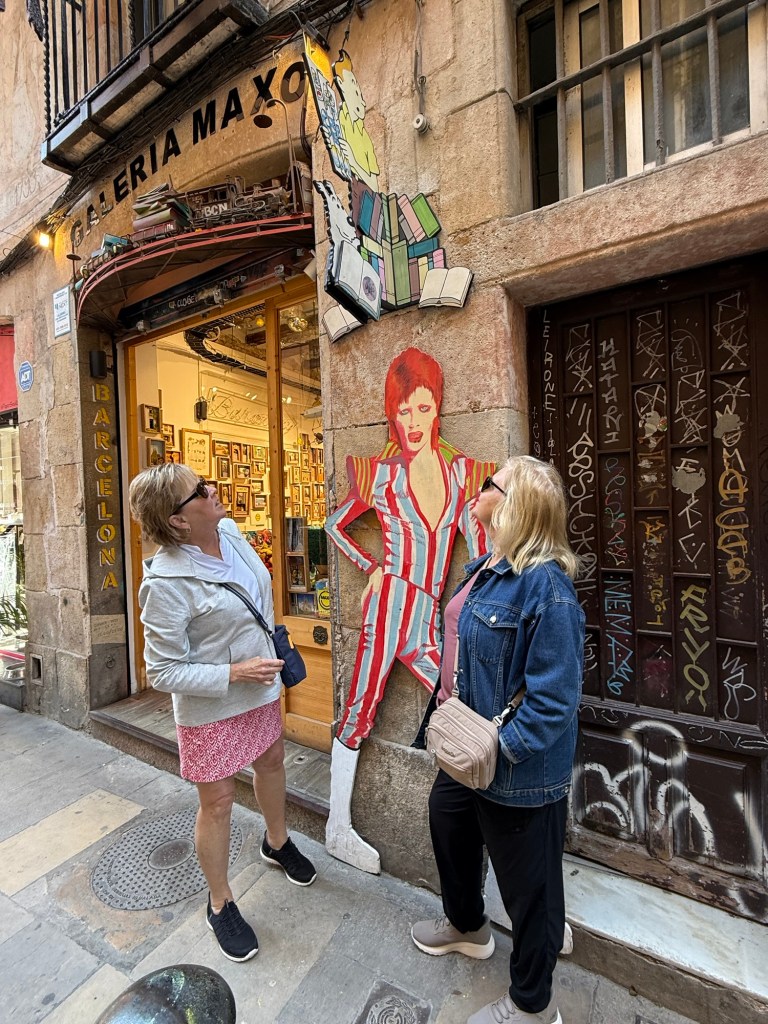
We found some more quirky art along the way.
We wrapped up our morning with lunch at Tapeo, a small Catalan tapas place in El Born.
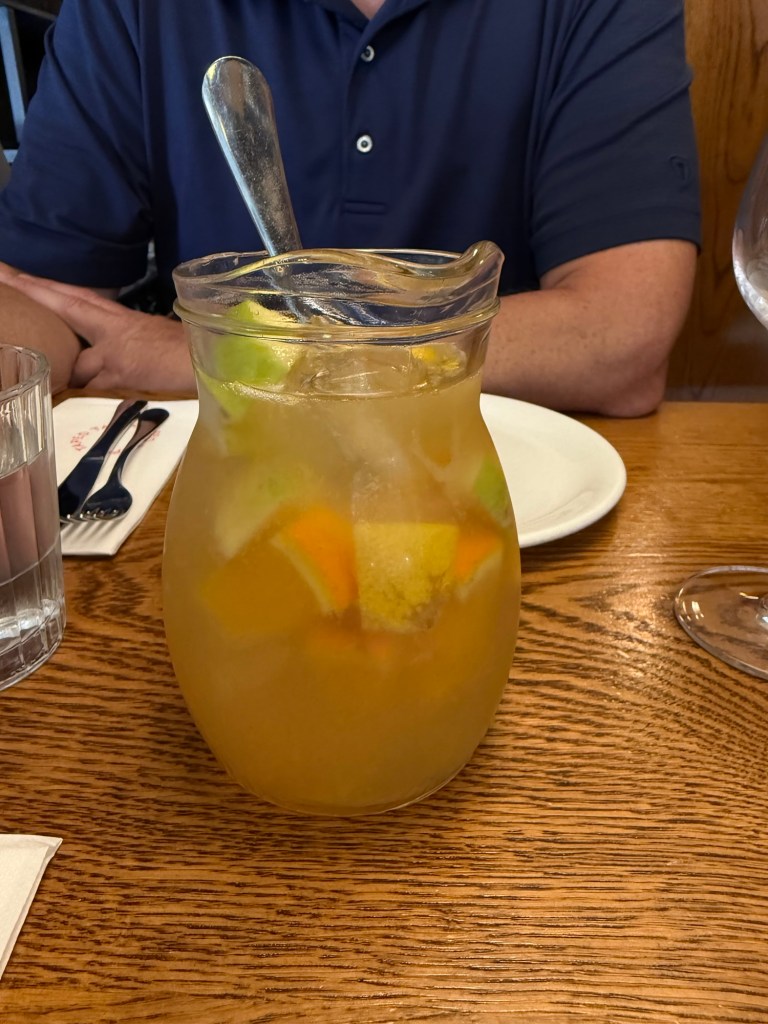
Most of us ordered omelets and sangrias.
We said our goodbyes to Kathy and Paul after lunch, since this museum visit was one of the Rick Steves tour’s suggestions during our free time.
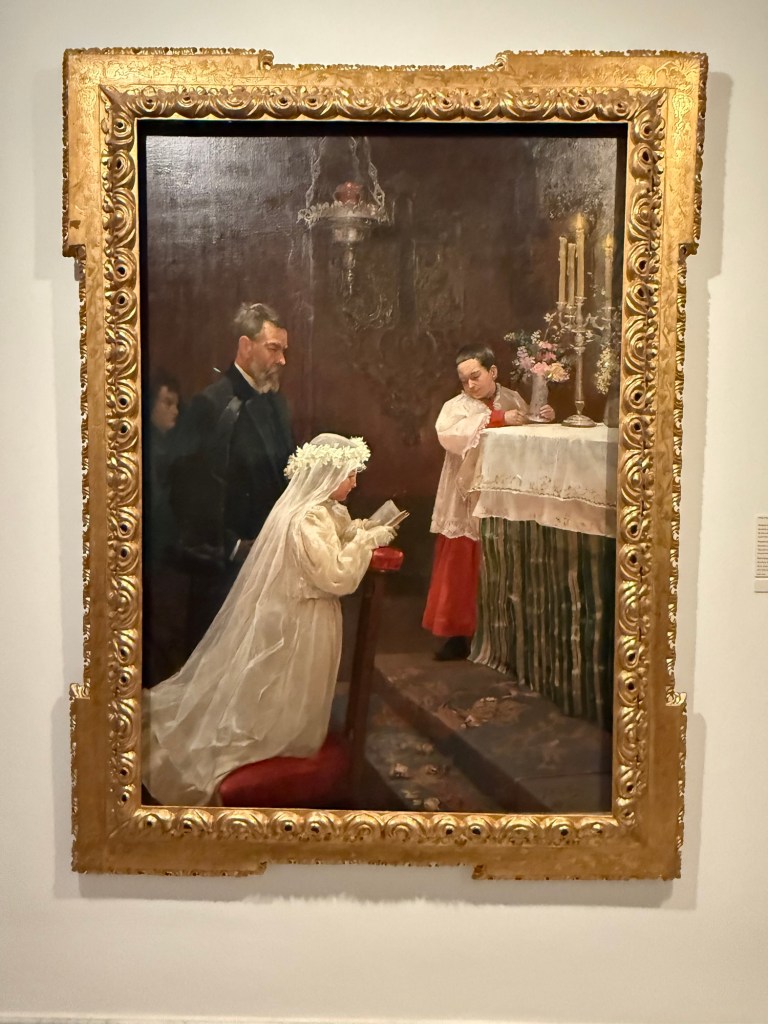
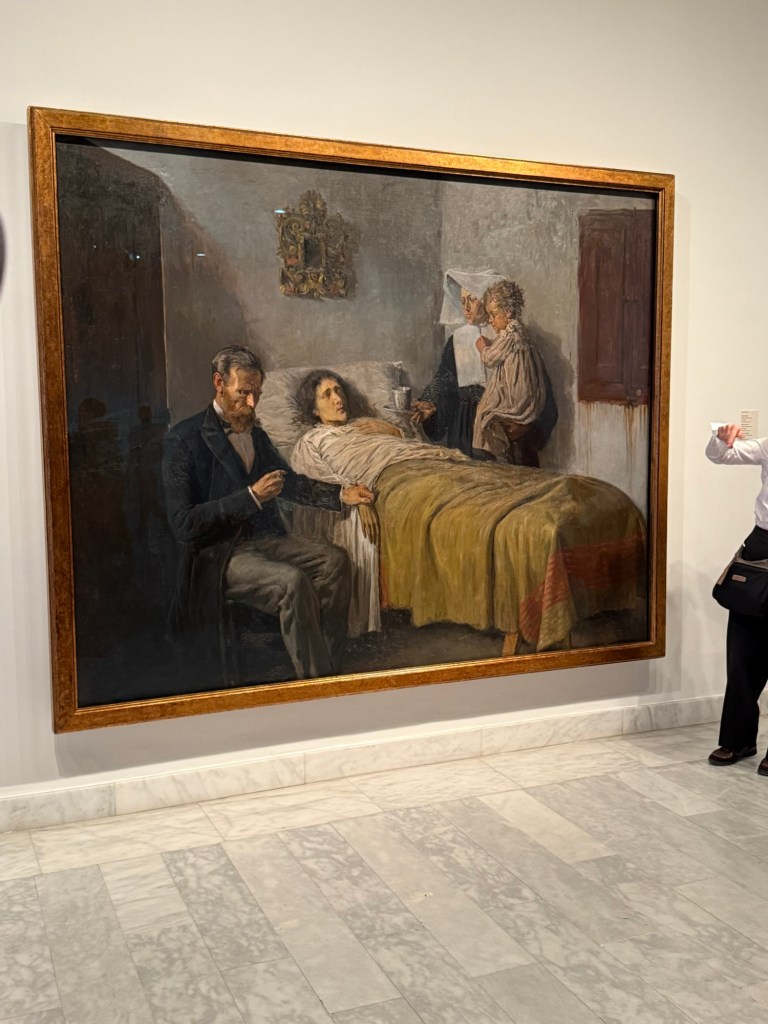
We spent the next hour or so at the Picasso Museum, which is spread across five connected medieval buildings. The museum focuses on his early work, which most people haven’t seen—realistic portraits, classical studies, and sketchbooks from his childhood and teenage years. We saw “First Communion,” painted when he was 14, and “Science and Charity,” painted at 15—both detailed and serious, showing just how skilled he was before his style changed.
As we moved through the museum, we saw how his brushwork got looser, and his subjects became more abstract. It ended with his “Las Meninas” series, dozens of reworkings of the classic painting by Velázquez. Each one broke the scene down in a different way. It gave us a clear picture of how Picasso thought—he was always reworking ideas from every angle.
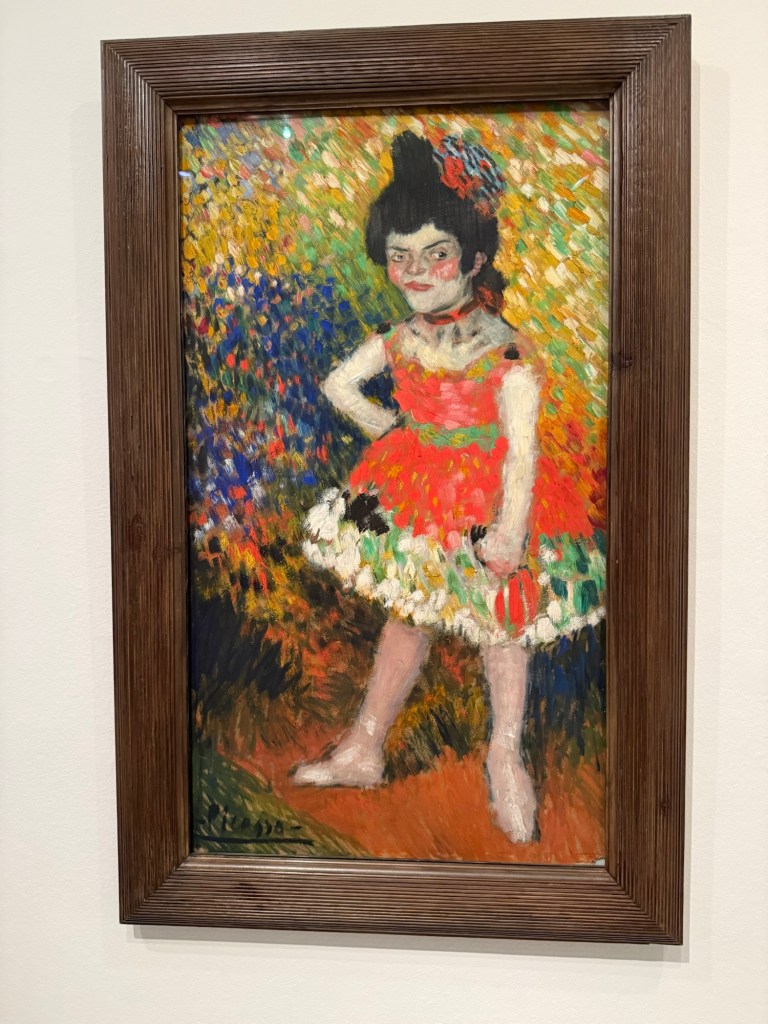
This bold, colorful piece was painted by Picasso in 1901—he was just 19. It’s called Girl in a Red Dress and shows off his Post-Impressionist phase, before he entered his Blue Period. You can see hints of Van Gogh and Toulouse-Lautrec in the brushstrokes and color. The girl’s got bare feet, a bright dress, and a look that says she knows exactly who she is.
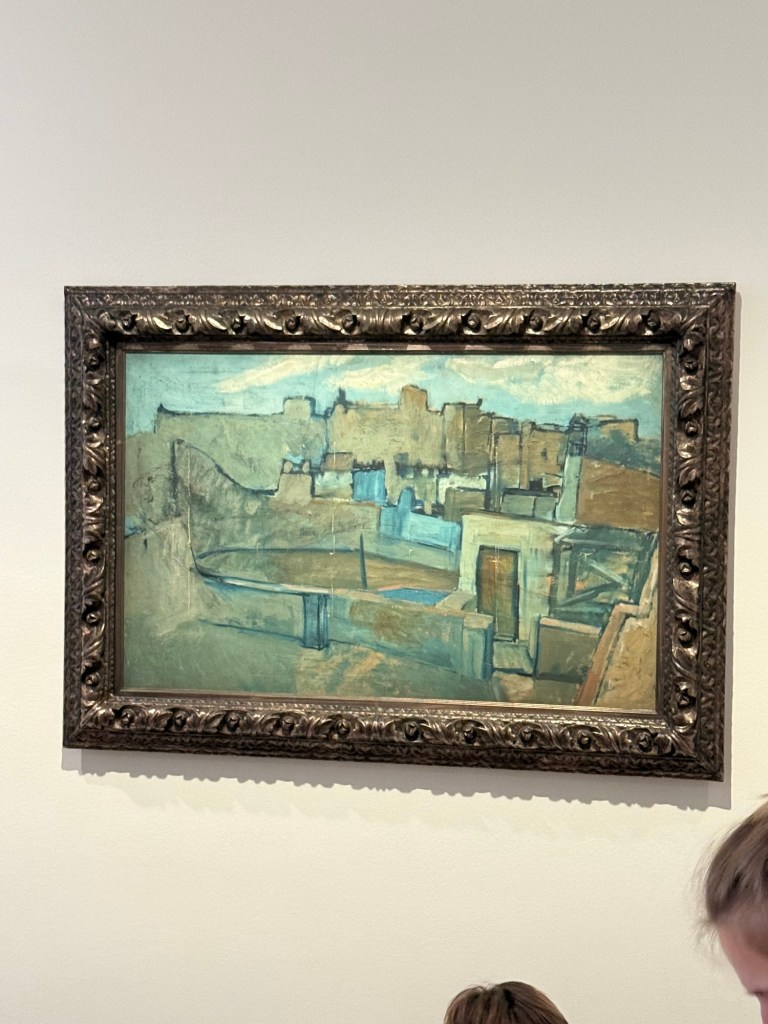
We ended with this moody cityscape—Roofs of Barcelona, painted by Picasso when he was just 20 years old. It’s stripped down, almost abstract, all cool tones and shadowy shapes. No people, no movement—just the rooftops
Now it’s time to head back to the hotel!
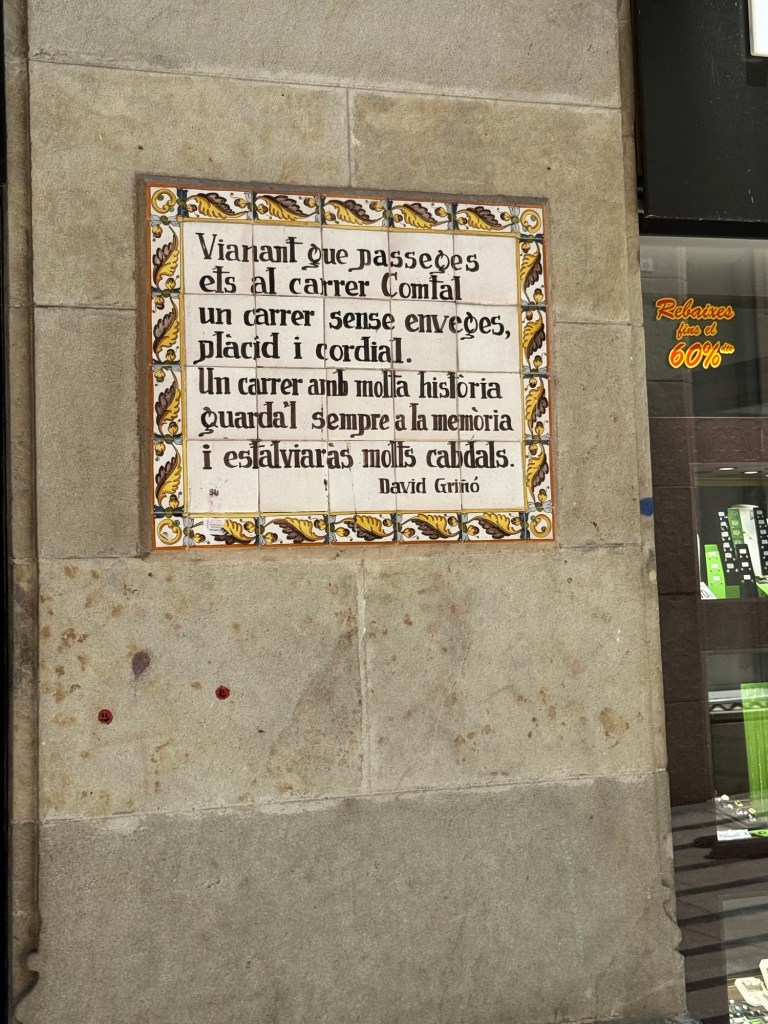
Just around the corner, we spotted this tiled poem by David Griñó on Carrer Comtal. I love this line: “A street full of history—keep it always in memory, and you’ll save yourself a fortune.” Thats why I am documenting our trip so I can enjoy it all over again.
After a quick rest, we meet up with the tour group for part 2!
 Happiness is Possible