

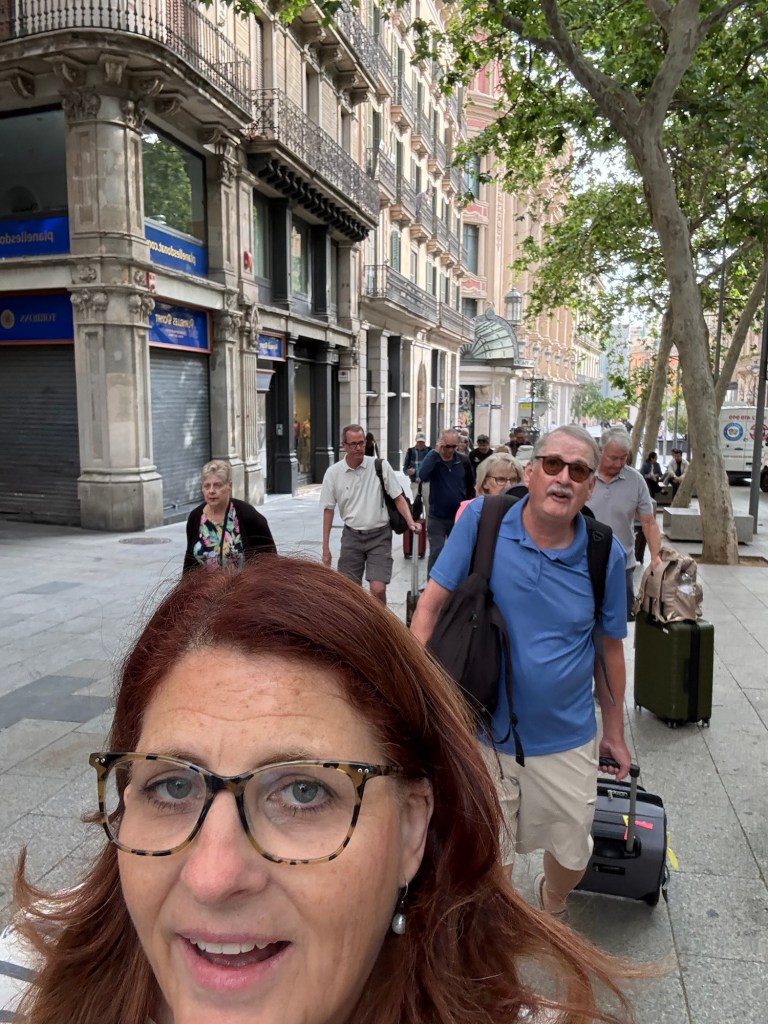
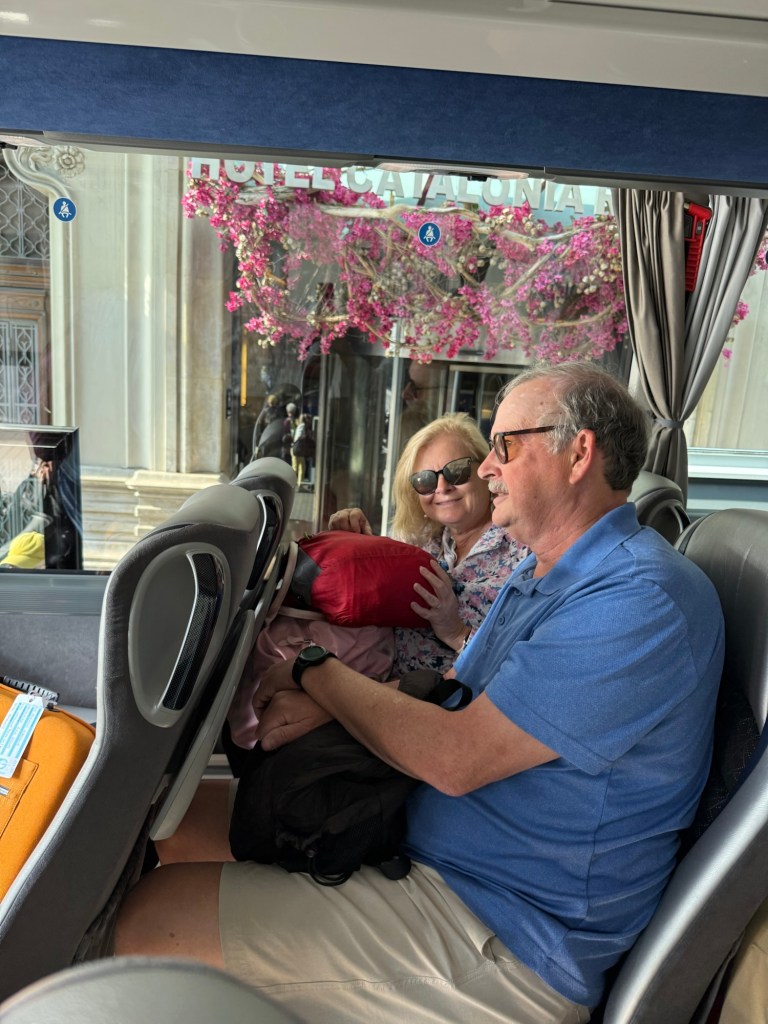
We said goodbye to our lovely Barcelona hotel and got ready for our next adventure—Madrid! We packed up, rolled our bags to the bus, and headed to the train station for the high-speed AVE train.
Spain’s AVE high-speed train isn’t how we usually travel, but I have to admit—it was fantastic. These trains can reach speeds up to 193 miles per hour, and what would’ve taken 6–7 hours by bus only took us 2 hours and 45 minutes. No stops, no traffic, just smooth and fast.
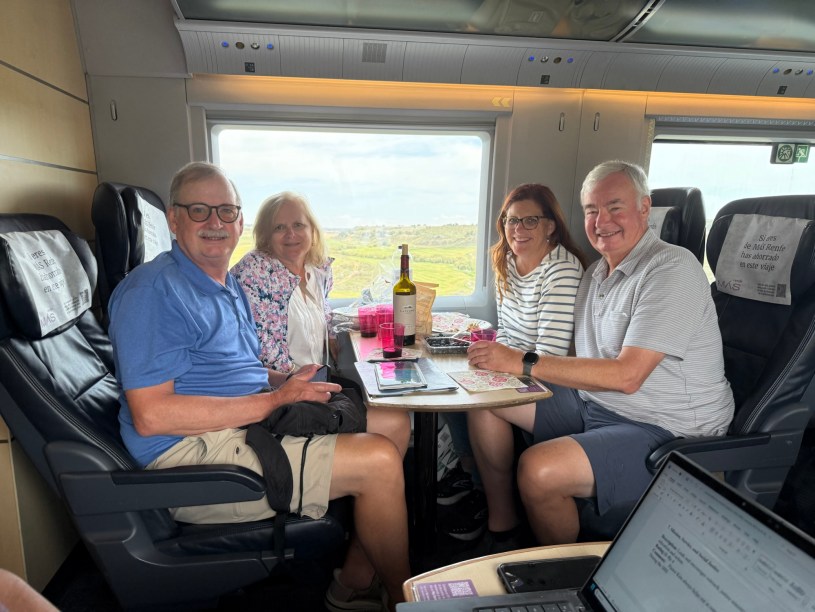
We lucked out with seating too. Each car only had two four-person tables, and we had one. Bob and Barb had the other, so we got to sit together and make it a little party on rails. We brought our own lunch—croissants with cheese and ham, pistachios, fruit, and of course, wine—and settled in.
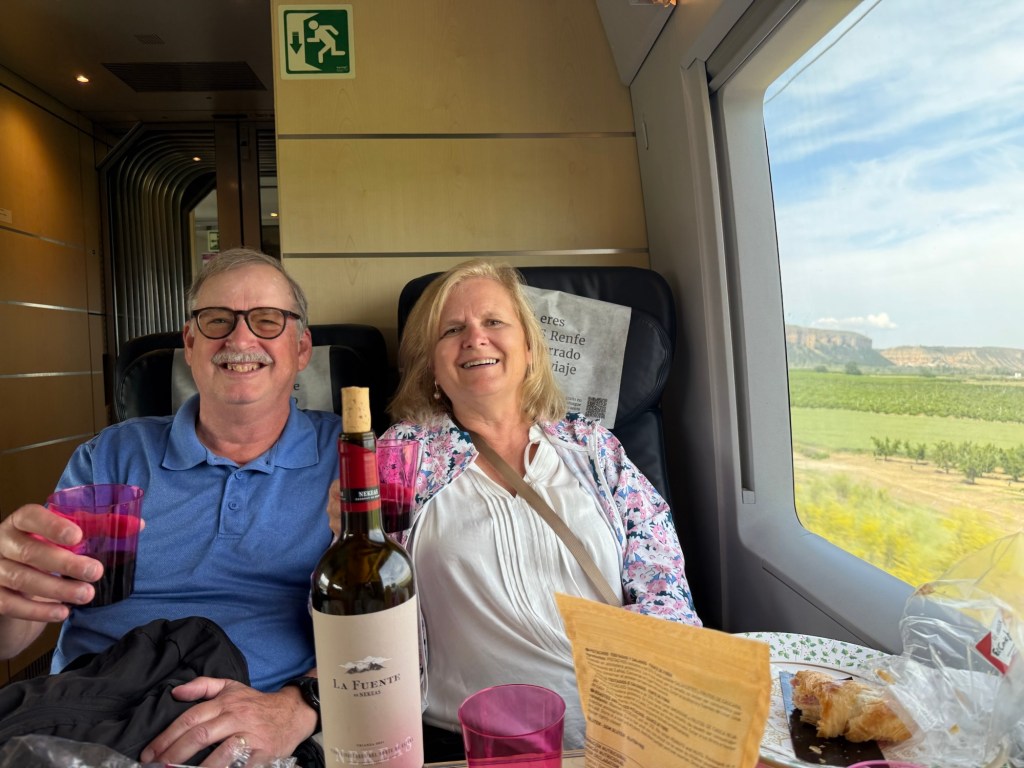
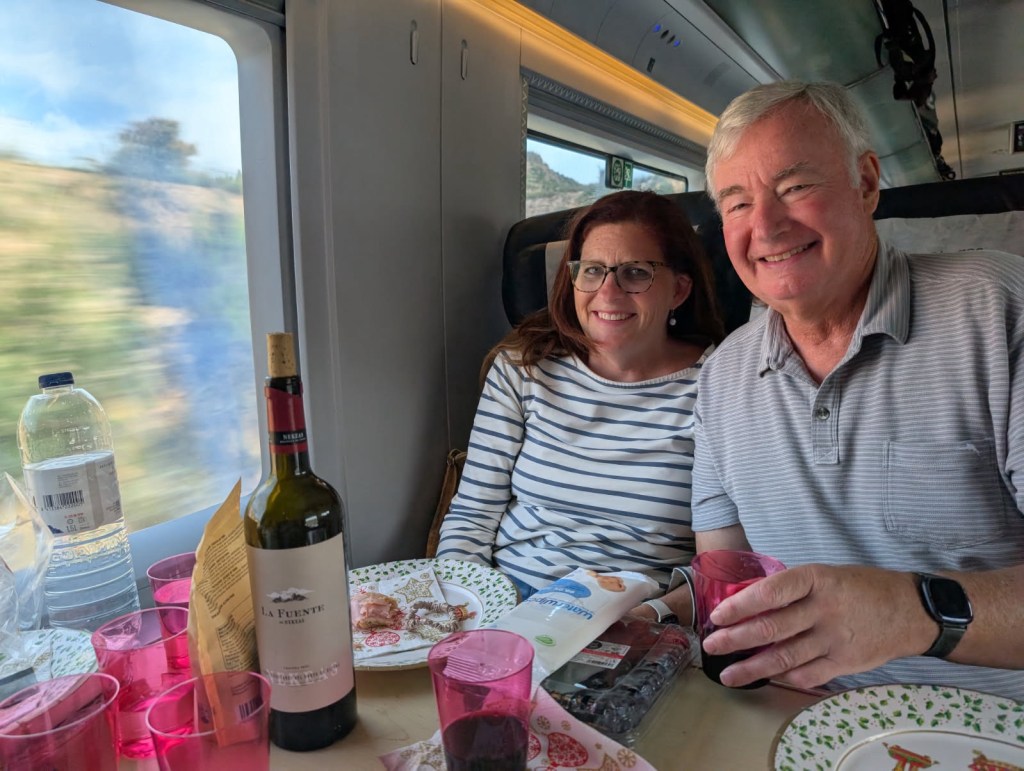
We all packed sandwiches, snacks, drinks, and treats. A whole tray table of goodness made the ride feel like a picnic on wheels.
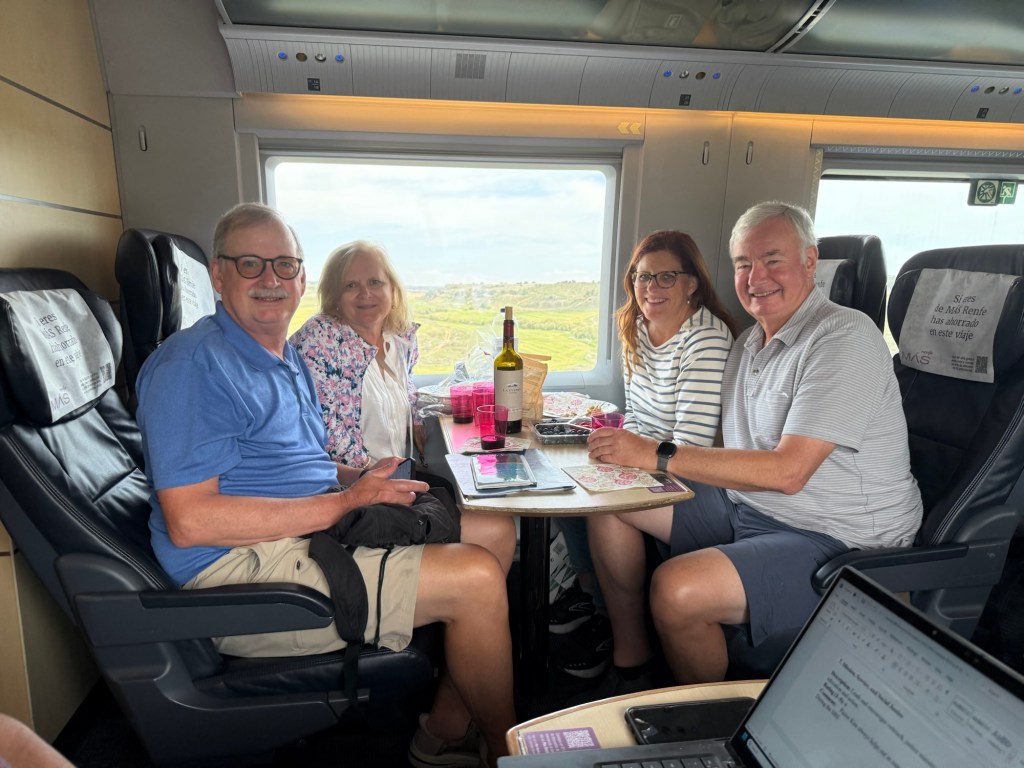
Sharing a table on the fast train through Spain—couldn’t have planned this better if we tried.
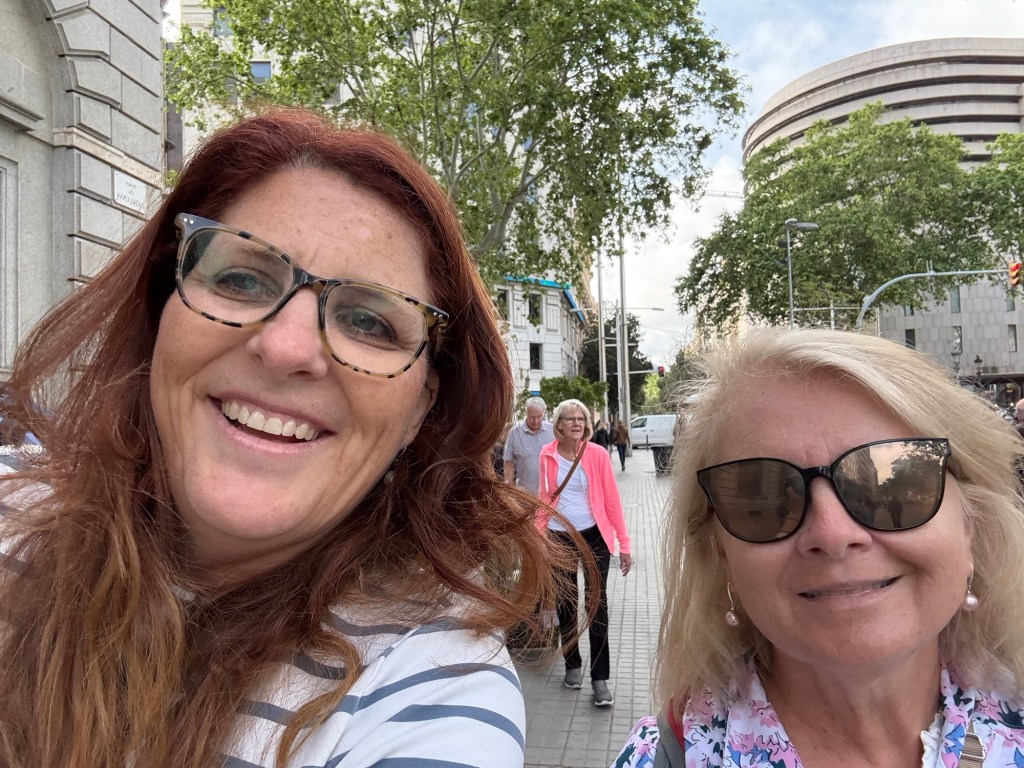
As we rolled into Madrid, the whole energy shifted. We were no longer on the coast. The air felt drier. And the city sat high above sea level—about 2,130 feet, making it the highest capital city in the European Union. What really surprised me was how green it was. I expected a dusty, sunbaked city. Instead, we found tree-lined boulevards, wide medians full of flowers, and shady parks on every corner.

Madrid’s leafy streets gave us a calm welcome. I wasn’t expecting this much green in Spain’s capital, but it was beautiful.
Madrid takes its green space seriously. The most famous is El Retiro Park, a huge royal garden that’s been around since the early 1600s. It’s about the same size as Central Park, but older and filled with fountains, sculptures, and even a glass palace. We didn’t stop today, but it’s definitely on our list to check out during our free time tomorrow.
And here’s something I didn’t know—Madrid wasn’t always the capital. That title used to belong to Toledo, a historic city known for its religious and cultural roots. But in 1561, King Philip II moved the capital to Madrid. It was smack in the middle of the country, surrounded by royal hunting grounds, and not influenced by the church the way Toledo was. It was a strategic, neutral pick—and it stuck.
As we entered the city, it didn’t just feel important—it looked it. First up was Puerta de Alcalá, a massive granite gate built in 1778 as a grand entrance for the king. It still stands like a royal welcome sign today.
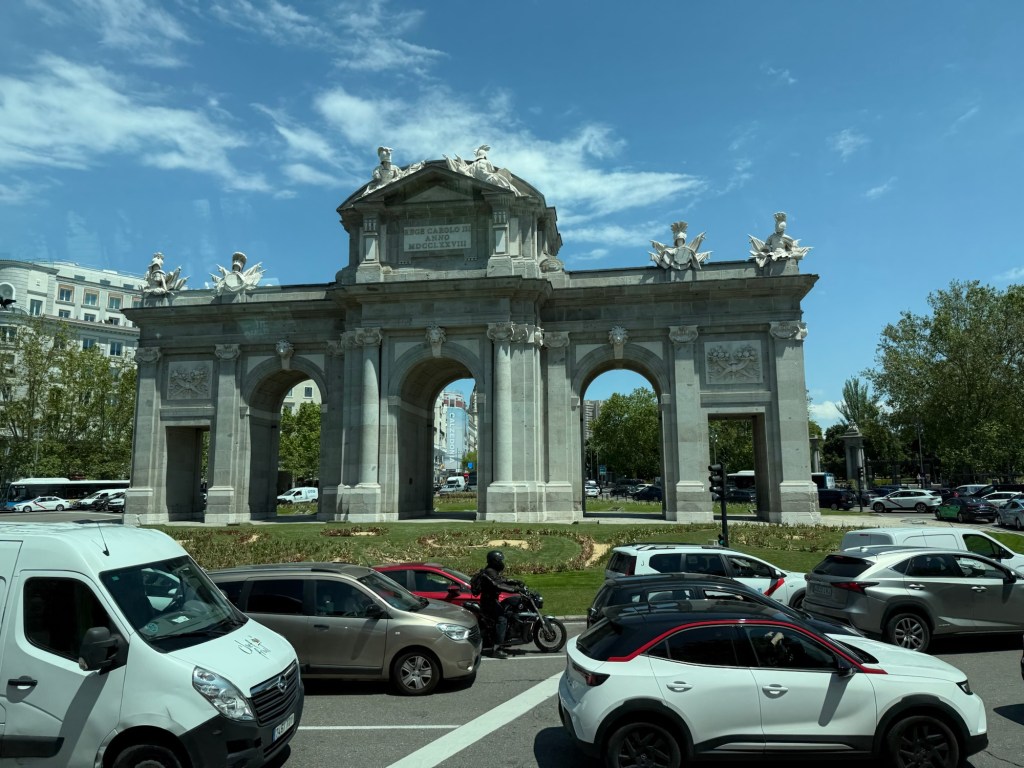
Built as a royal entry into Madrid, this gate still watches over one of the city’s busiest intersections. It’s iconic—and gorgeous.
Then we passed the Cibeles Fountain, where the Roman goddess Cybele rides in a chariot pulled by lions. Real Madrid fans flood this plaza when their team wins. The setting around it—with grand architecture and that powerful statue—makes the whole area feel like the heart of the city.
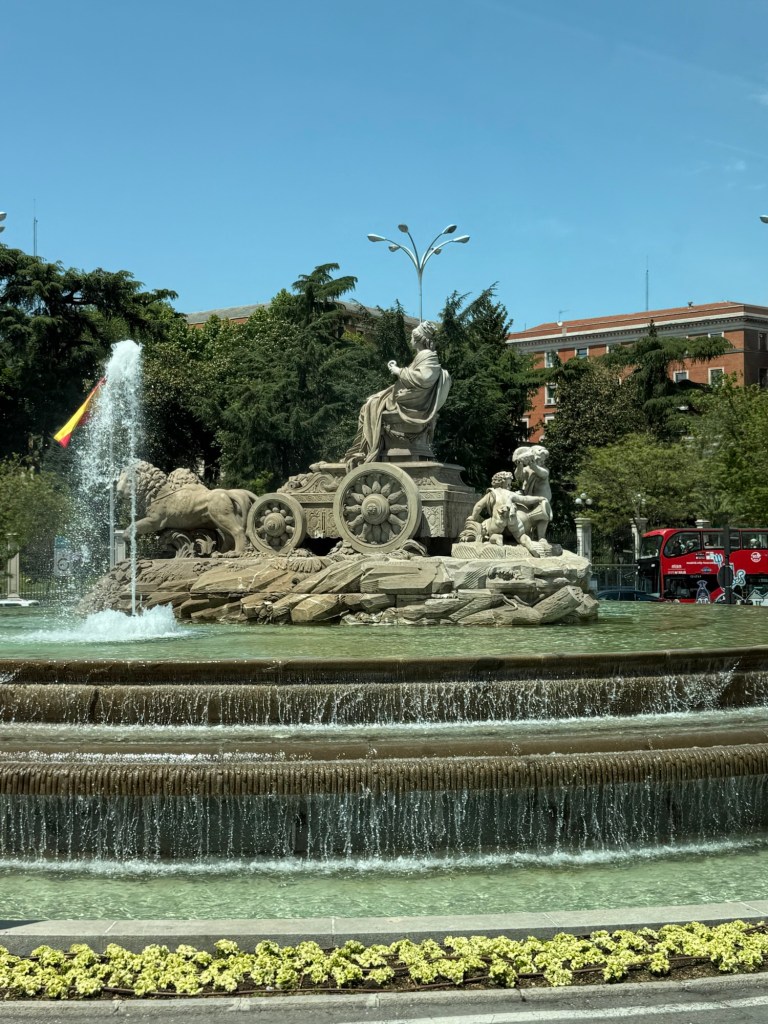
The goddess Cybele in her lion-drawn chariot is right in front of the old post office. This is where Real Madrid fans come to celebrate championships.
And of course, we saw the Columbus Monument, with Christopher Columbus pointing west and holding the Spanish flag. Spain’s exploration legacy is complicated, but there’s no denying they made their mark on world history—and this statue was built to remind you of it.
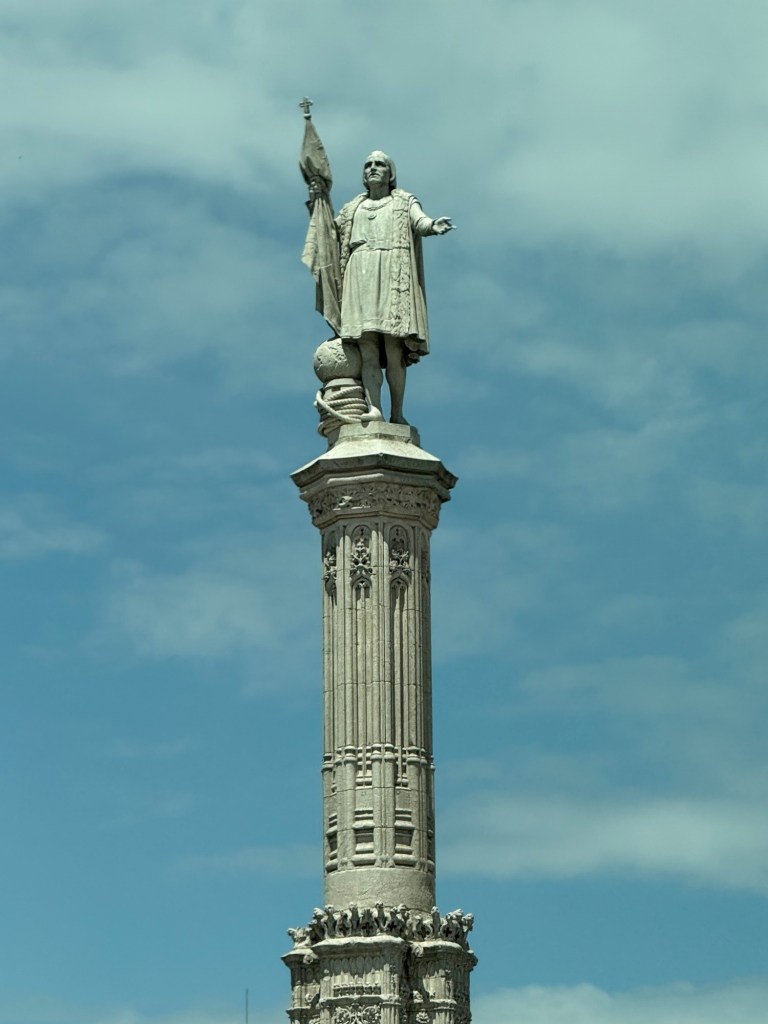
Columbus pointing toward the New World, forever mid-pitch. One hand in the future, the other gripping a royal banner.
Coming up in Part 2: parrots in the treetops, the Prado Museum, Hotel Europa check-in, and a rainy walk that led to one of the best tapas dinners of the trip (plus Bob’s one-liner that had me crying laughing).
 Happiness is Possible