


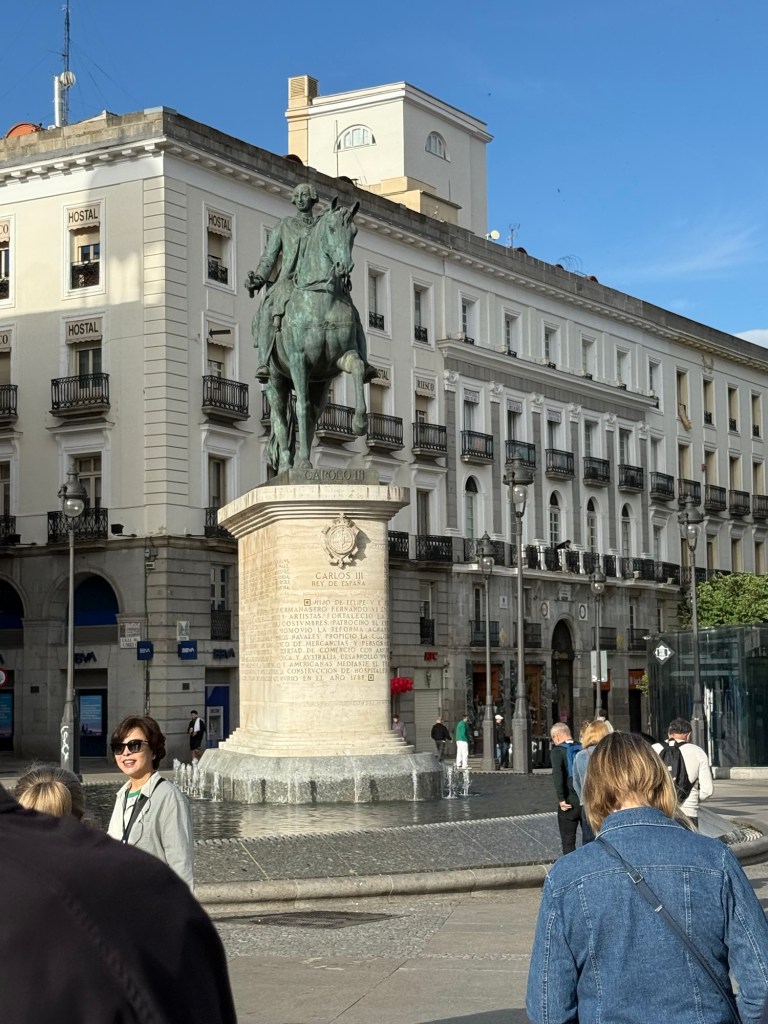
We started our day in Puerta del Sol, the center of Madrid. It was already buzzing with energy—tourists, street musicians, and the equestrian statue of Carlos III standing tall. This is where Spain’s six major roads begin, marked by Kilometer Zero right under our feet.
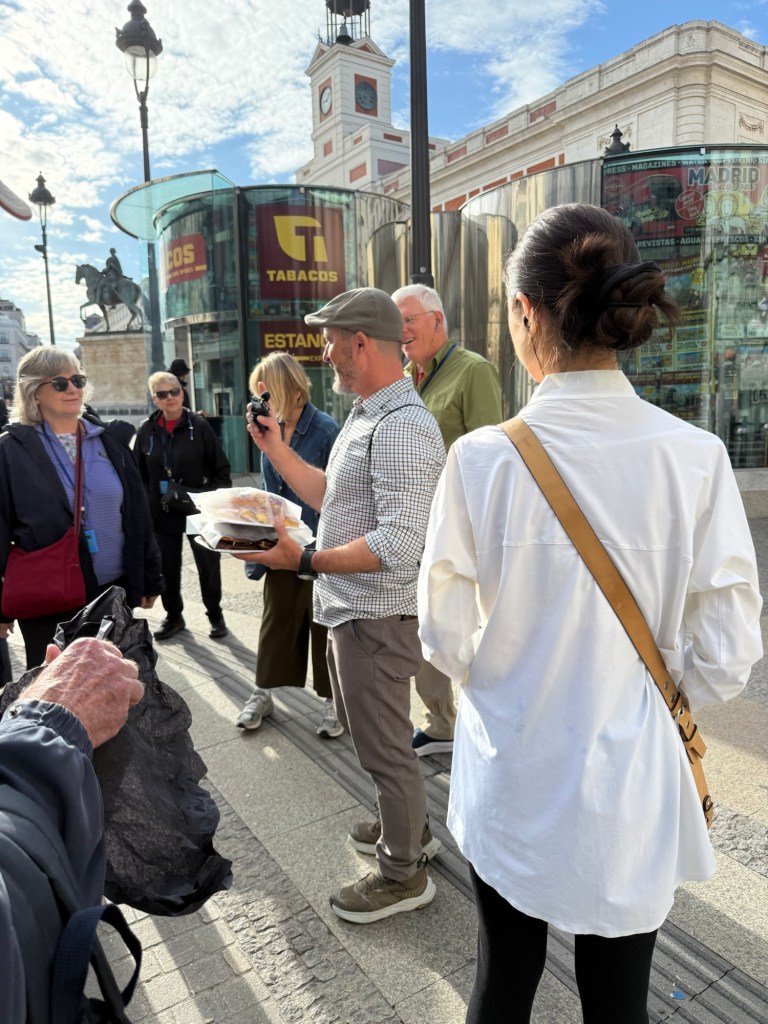
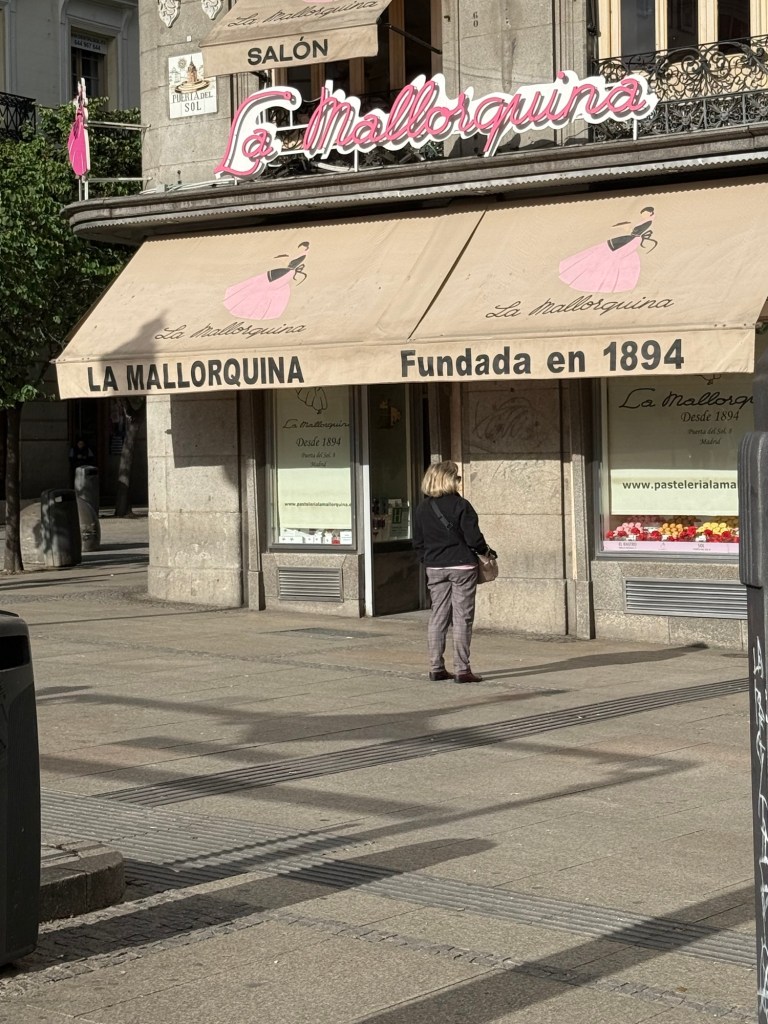
Before we headed toward the palace, Javier said wait a minute then appeared with two pastry options one chocolate and the other had custard. Tim & Bob grabbed chocolate and I went for custard. Delicious!
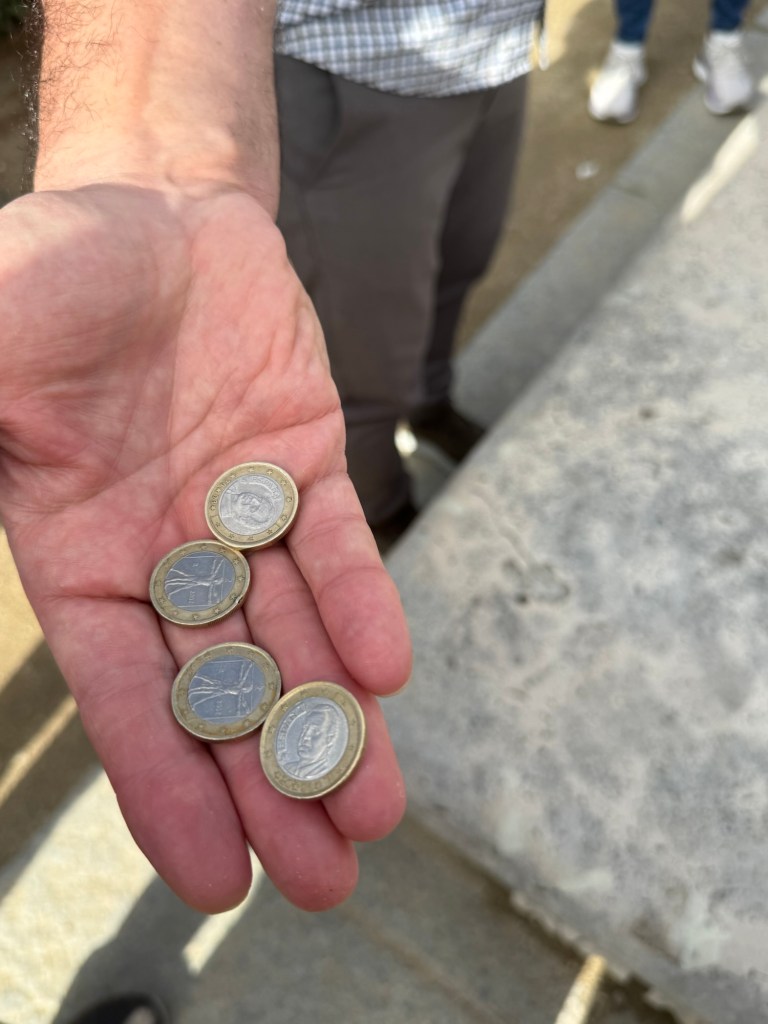
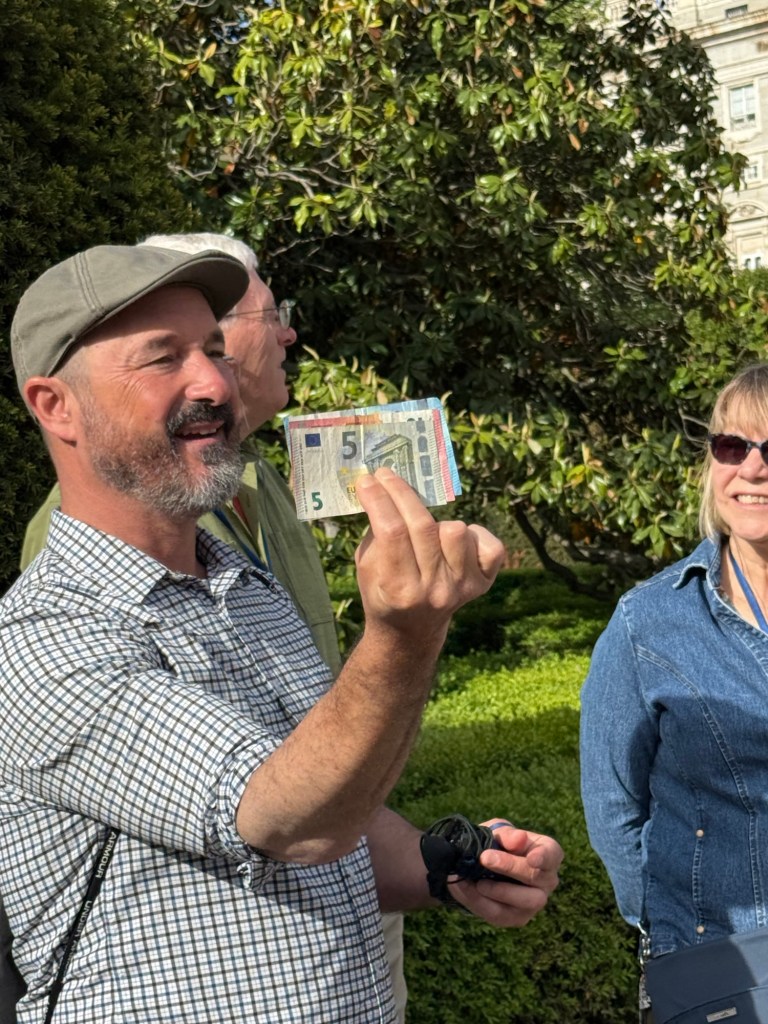
Javier gave us a quick but fascinating lesson on the euro. He opened his hand and held out coins from several EU countries, pointing out how each one has a shared side and a national one. What stood out most: every euro bill is a different size and color, which makes them easier to identify, especially for the visually impaired. It was one of those small but brilliant design choices that just makes sense.
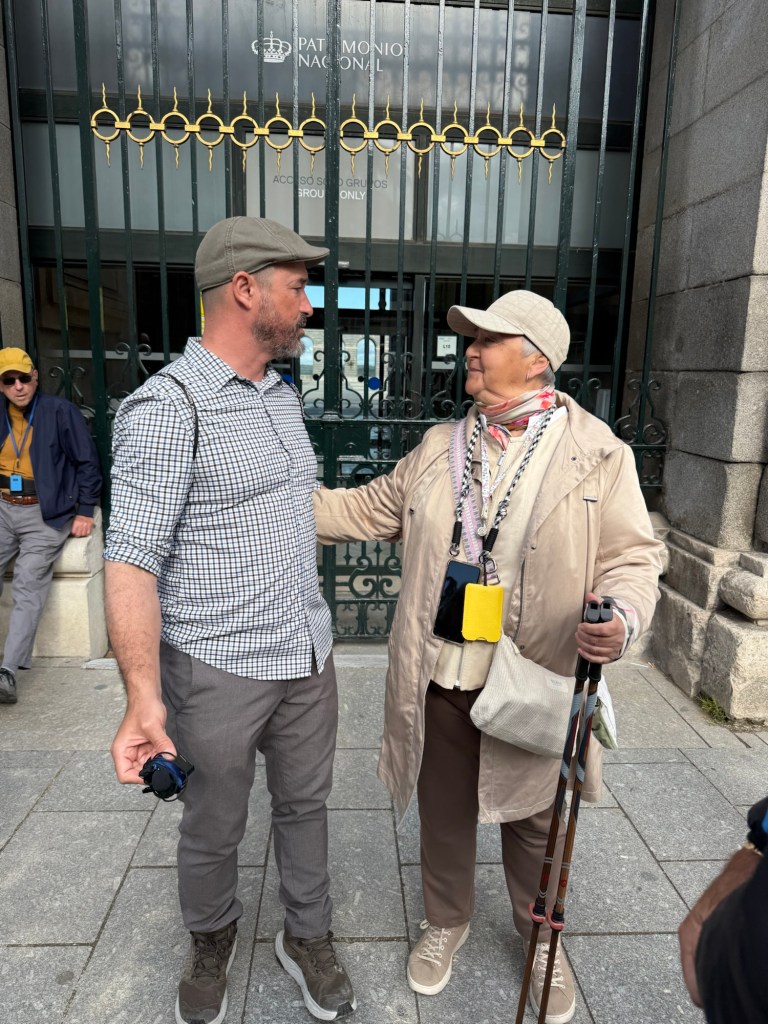
From there, we met our tour guide, Blanca.
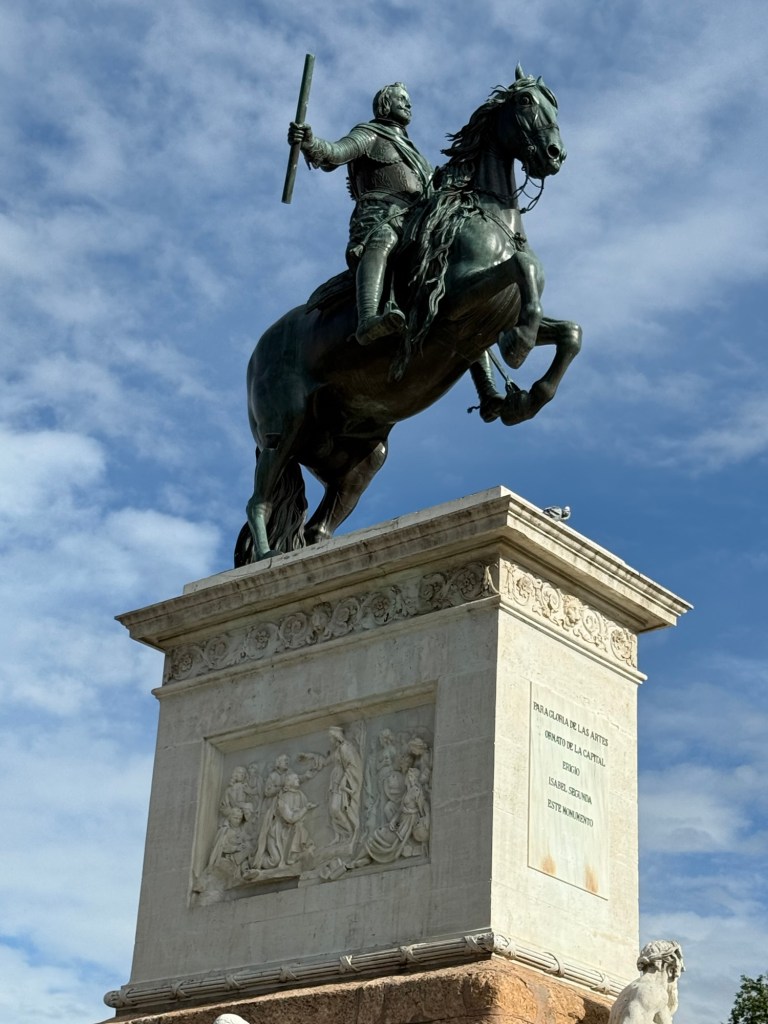
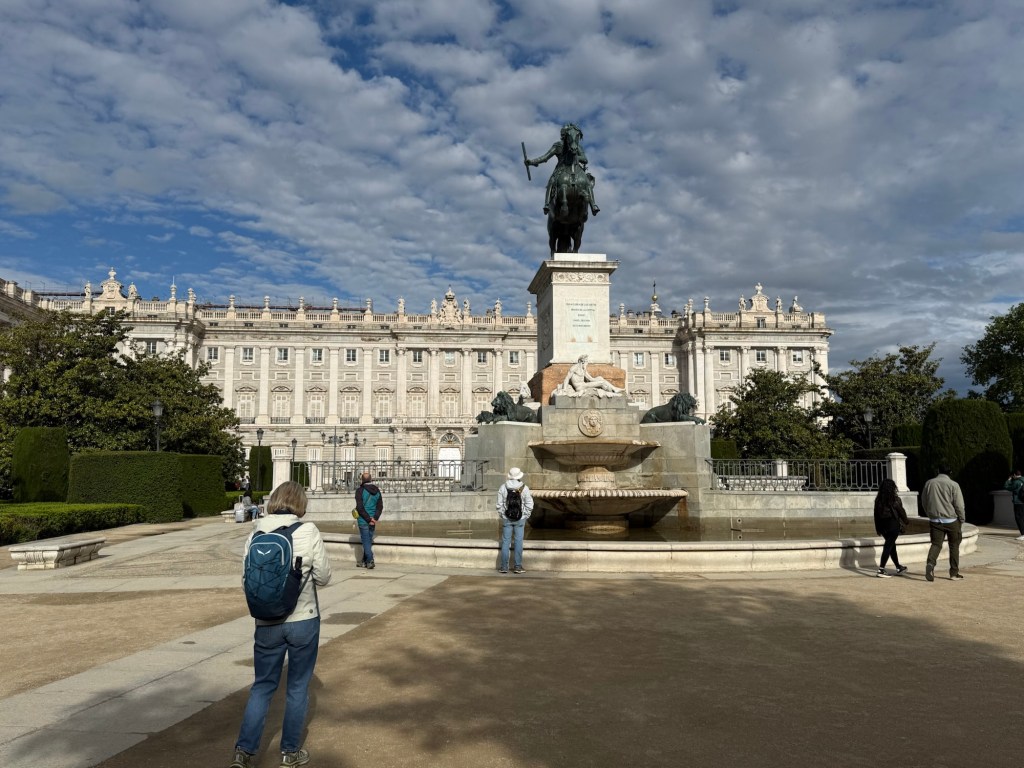
Just before we entered, we stopped at the statue of Philip IV in the palace courtyard. Blanca told us it was the first equestrian statue in the world balanced solely on the horse’s two back legs. People thought it couldn’t be done—the weight would tip it over. But Galileo Galilei helped calculate the physics, and the sculptor cleverly used the horse’s tail as a third support point. You’d never know it by looking at it—it feels like it’s defying gravity. It’s both art and engineering, working together. Blanca smiled and said, “From now on, pay attention to the legs on every equestrian statue you see.” And we have been ever since.
As we climbed the grand staircase of the Royal Palace, our guide Blanca stopped beneath the towering portrait of King Philip V, looking up with a smile.
“I love him,” she said with a dramatic sigh. “Only… he doesn’t know it yet. But it’s okay—I’m going to marry him in heaven.”
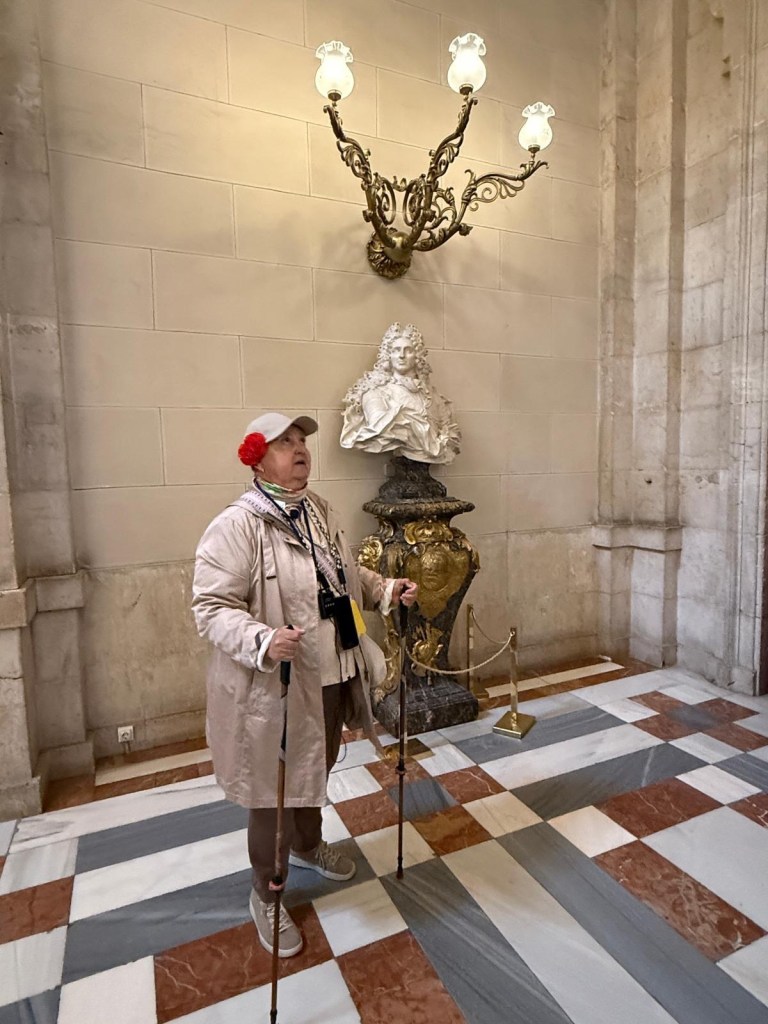
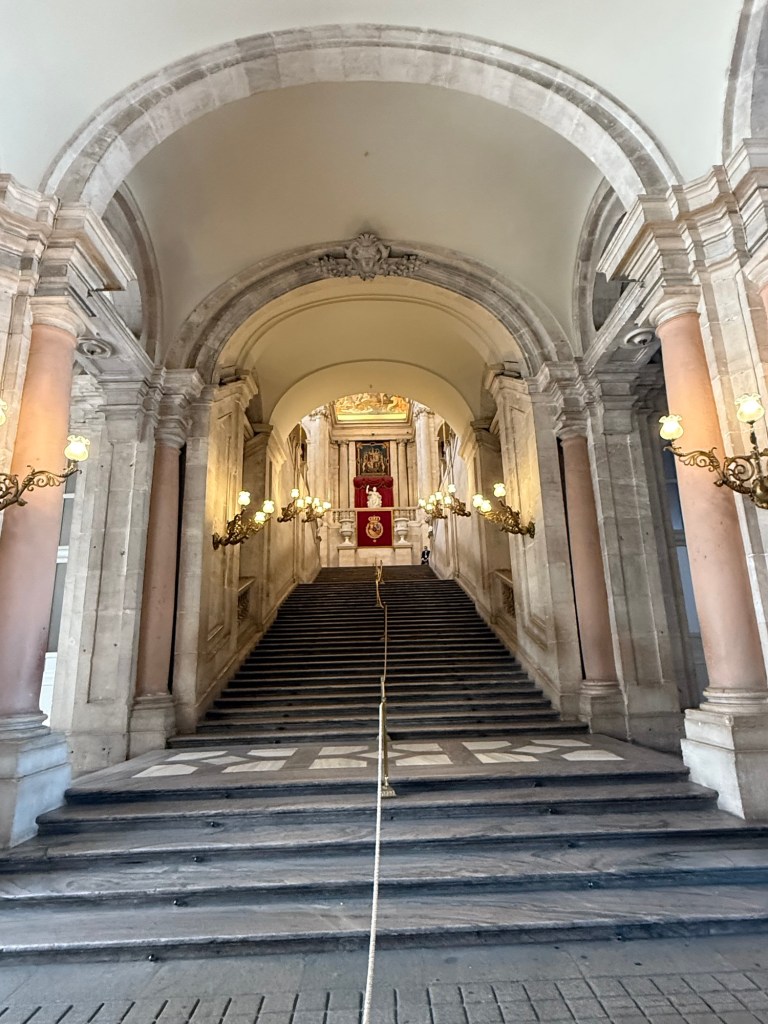
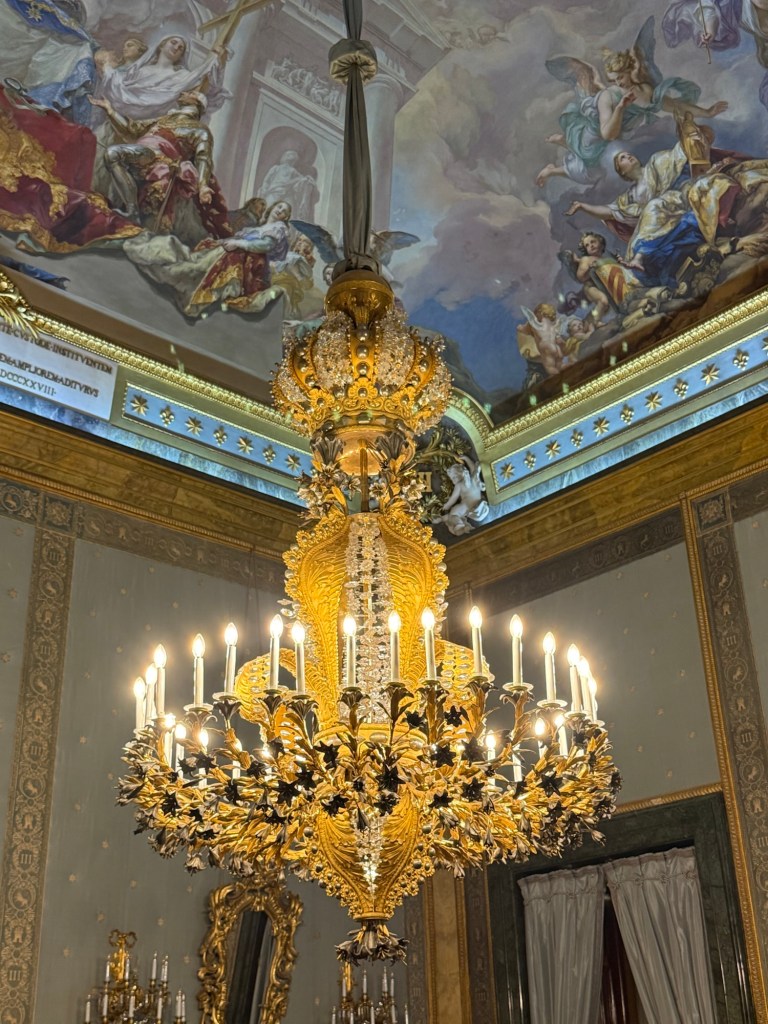
A few steps later, while pointing to a chandelier, Blanca had another story. The original palace burned to the ground on Christmas Eve in 1734. No one died, but some believe it was arson—possibly to make way for the French-style palace King Philip V had envisioned. Guards reportedly rushed in to save furniture, tapestries, chandeliers, even priestly robes. Still debated. Still scandalous.
The Spanish royal family, painted in 1994 by Antonio López García. From left to right: Infanta Elena, Infanta Cristina, King Juan Carlos I, Queen Sofía, and the future King Felipe VI. Blanca explained that while the painting looks like a photograph, it’s a hyperrealistic oil painting that took over 20 years to finish. This was the royal family before all the scandals—before Juan Carlos went into exile and Felipe became king.

Family of Juan Carlos I Portrait
We began the interior tour in the royal bedrooms. Blanca explained how Ferdinand and Isabel had separate rooms—totally normal for royalty.
The Queen’s bedroom—elegant but not overdone, with deep red silk walls and ornate trim. I took a quick video here because the texture and color were so striking in person.
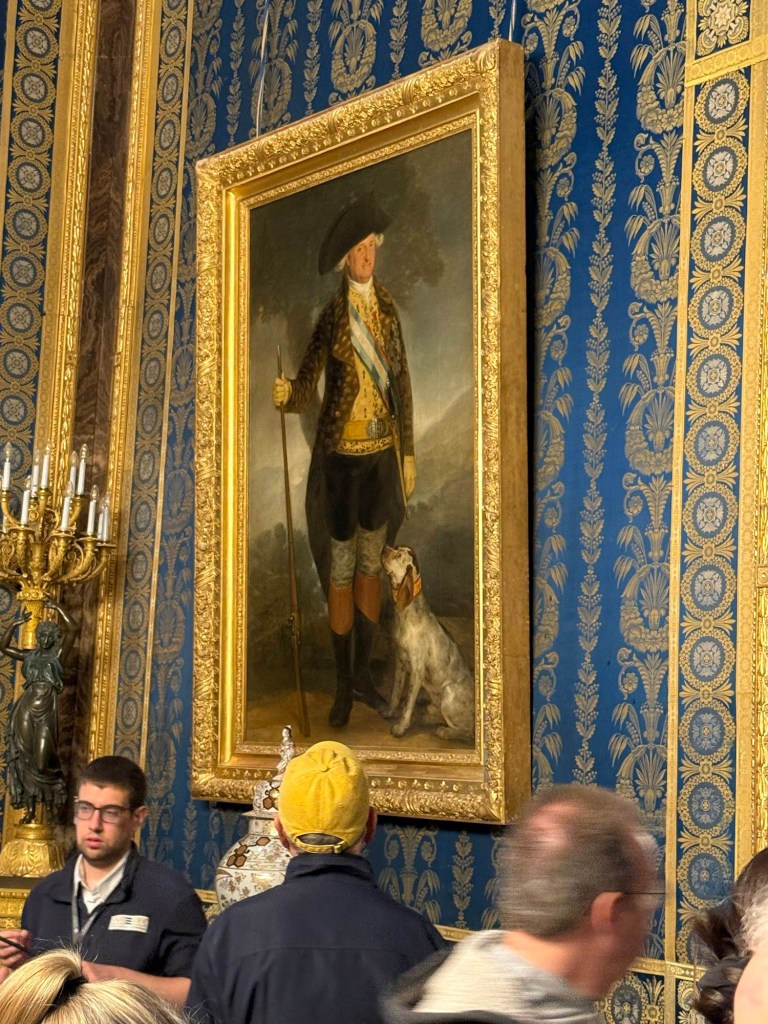
The portraits of Don Juan de Borbón and Queen Frederica of Greece are located in the Antechamber of the Royal Palace of Madrid, which flows directly into what’s often called the King’s Room or Blue Room due to the vivid blue silk wall coverings.
They’re placed facing each other on opposite walls—Don Juan (King Juan Carlos I’s father) on one side, and Queen Frederica (Queen Sofía’s mother) on the other. Blanca explained this layout was intentional—to symbolize both the king and queen’s lineage and to subtly remind visitors that royal authority isn’t just about the individual—it’s about the family legacy they carry forward.
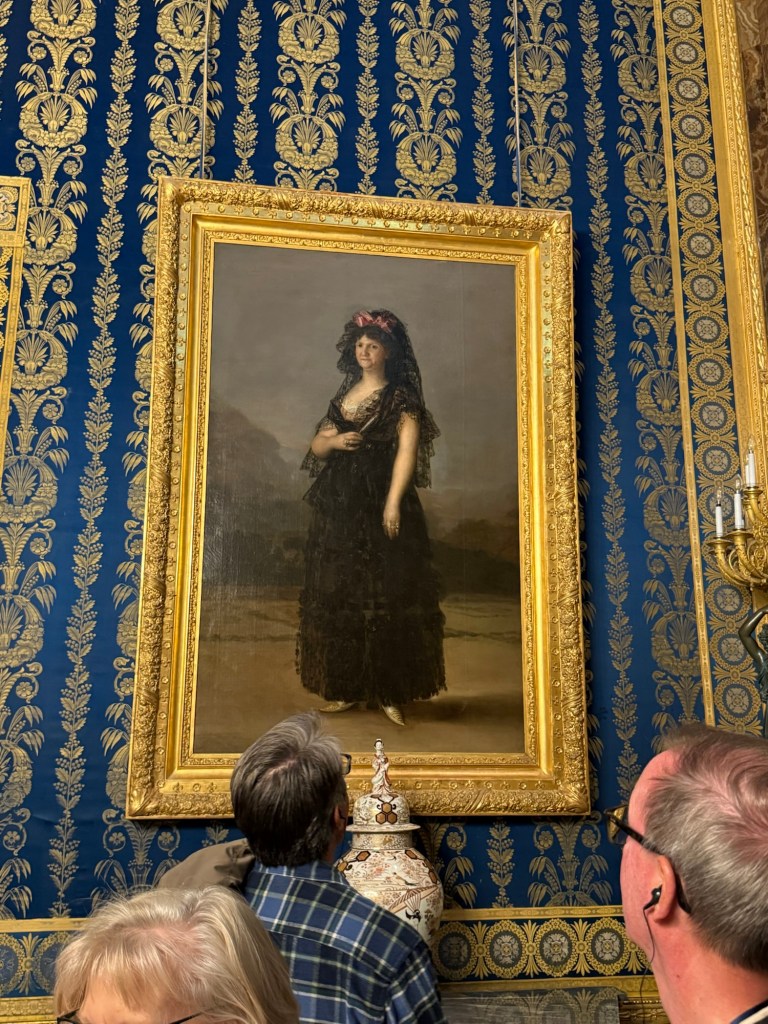
The King’s Changing Room is bright and refined, with light cream walls, gilded mirrors, and elegant furniture. It’s where the king would prepare for official duties—formal but personal, designed for function with a quiet sense of dignity.
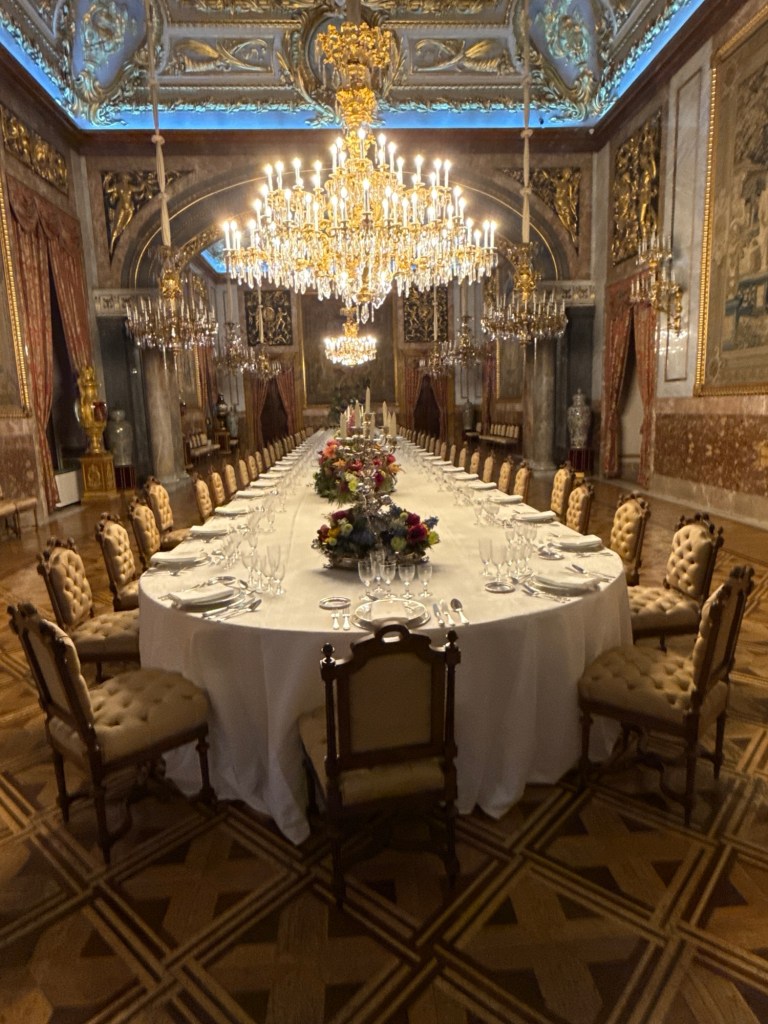
The dining hall was impossible to ignore—one long, formal table stretching through multiple rooms, set with absolute precision. This is where the monarchy still hosts official dinners, and everything from the chandeliers to the china reflects diplomacy in motion. Blanca told us the table can be extended to seat up to 140 guests, depending on the occasion. The king and queen are always seated in the fourth chairs from either end, never at the head, to maintain symmetry and balance—a small detail with centuries of protocol behind it.
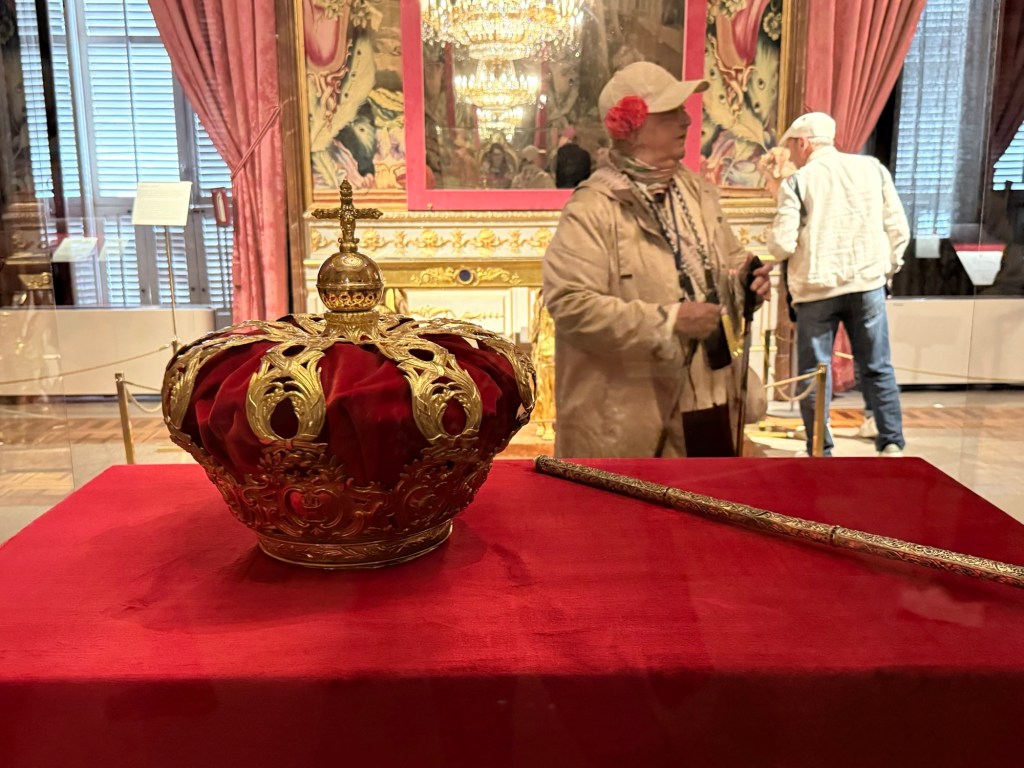
We then visited the room housing the crown and regalia. Spain’s crown is symbolic—never worn—and accompanied by the scepter and ceremonial sword. The Spanish crown weighs about 2 kilograms (4.4 pounds). It’s gold-plated silver with crimson velvet, but it’s never worn—only displayed during official ceremonies.
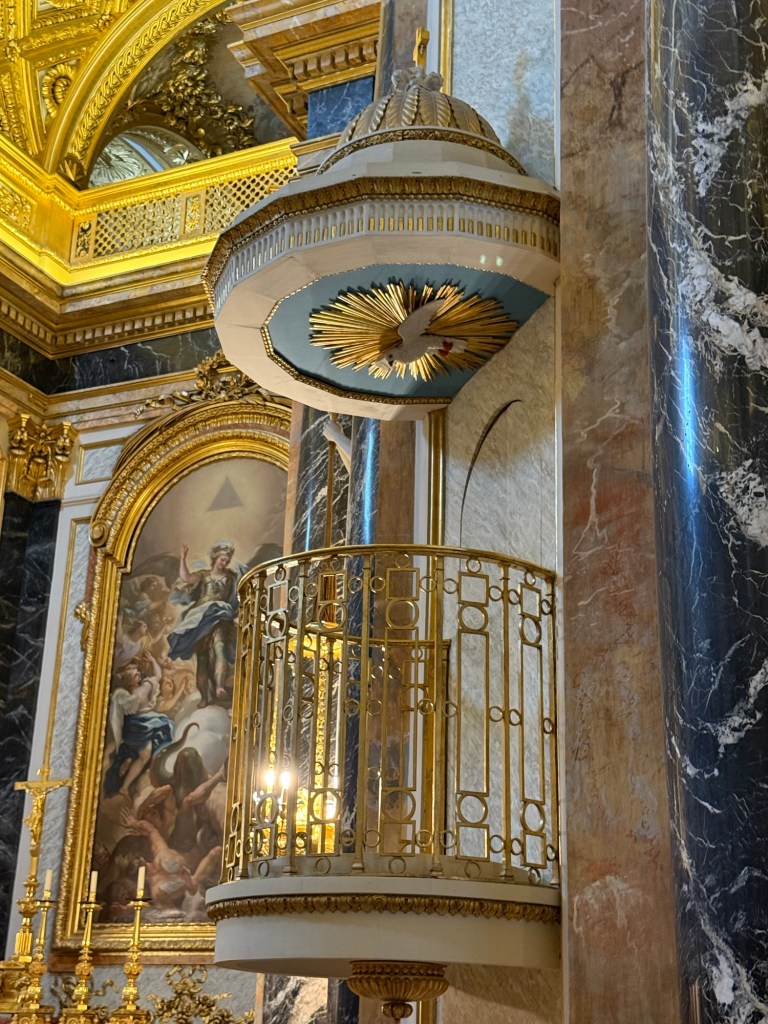
Just before entering the throne room, we paused in the Royal Chapel, which felt calm and reverent. Monarchs would observe mass from their private balcony above the main floor, present but unseen. The sunlight filtering in through the high windows made the whole space feel still.
Then we reached the Throne Room. It was grand in every way—crimson walls, massive mirrors, gilded lions, and Tiepolo’s ceiling, a swirling masterpiece titled The Greatness of the Spanish Monarchy. This is where heads of state are still received.
Most Spanish kings sat on the throne during formal ceremonies, but King Juan Carlos I, often called the “people’s king,” chose to stand beside it. Blanca explained that this simple gesture was deeply symbolic—by not sitting, he distanced himself from authoritarian rule and emphasized his role in restoring democracy. It was a quiet but powerful way to show that his authority came from the people, not just the crown.
King Felipe VI and Queen Letizia of Spain, are the current monarchs. Felipe became king in 2014 after his father, King Juan Carlos I, abdicated. Letizia, a former journalist and news anchor, made history as Spain’s first commoner queen. Together, they represent a modern chapter in Spain’s royal story—one rooted in tradition but facing forward.
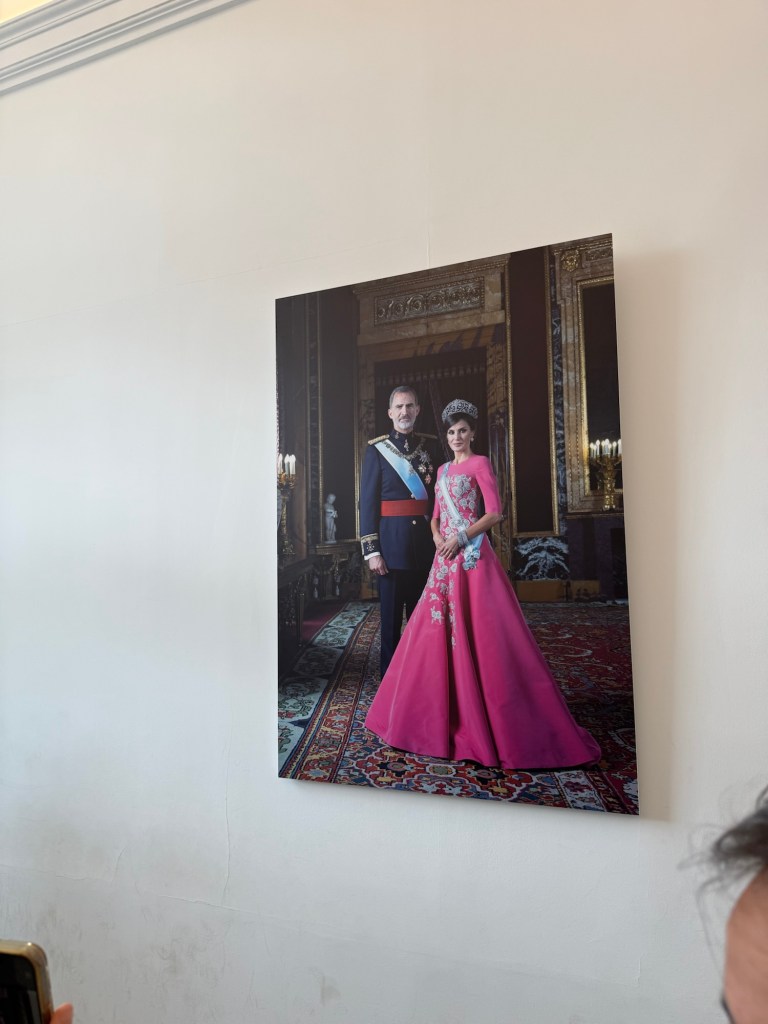
King Felipe VI and Queen Letizia don’t live in the Royal Palace of Madrid. While it’s still the official residence of the Spanish monarch, they’ve chosen to live at the more modest Palacio de la Zarzuela on the outskirts of the city. The Royal Palace is now primarily used for state ceremonies, official receptions, and public tours like the one we took. It’s a symbol of the monarchy, but not their home.
And with that, we wrapped up our tour of the palace. Stay tuned for Part 2, where we hit the streets of Madrid, pass through centuries of history, and stumble into one of the city’s most festive traditions—San Isidro Day.
 Happiness is Possible