
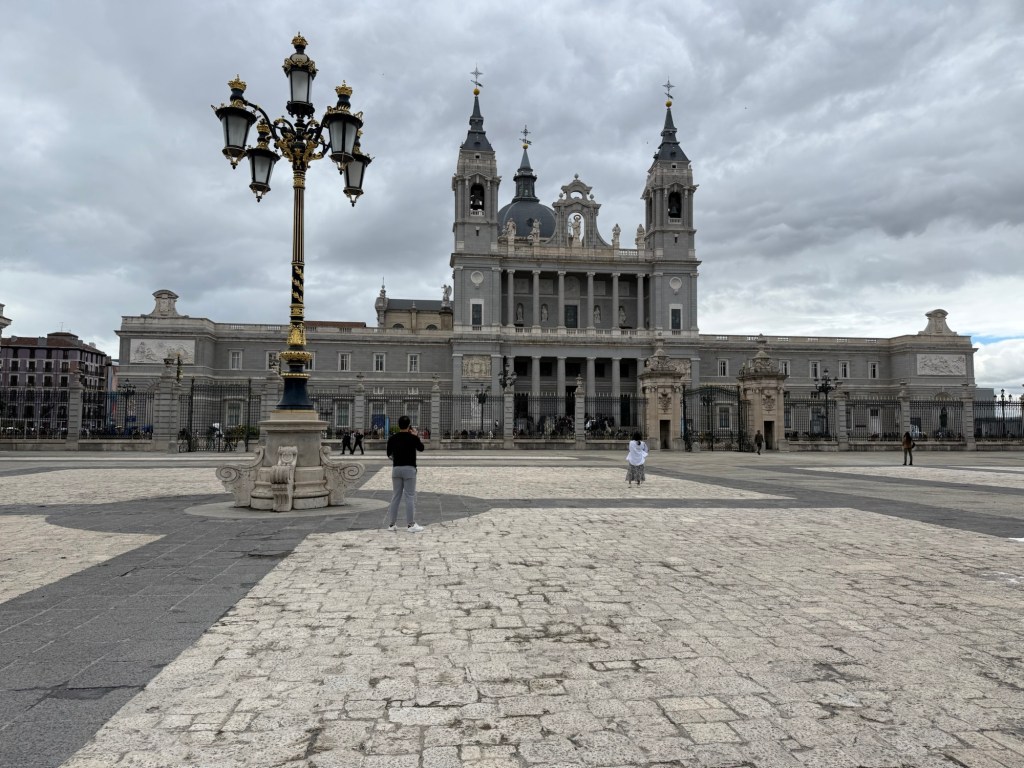
As we stepped out of the Royal Palace, Blanca pointed across the square to the Almudena Cathedral, Madrid’s modern-but-classic church. It looks centuries old, but it was only completed in 1993. Blanca told us it’s where King Felipe VI and Queen Letizia were married—a nod to tradition, but very much part of Spain’s current royal chapter.
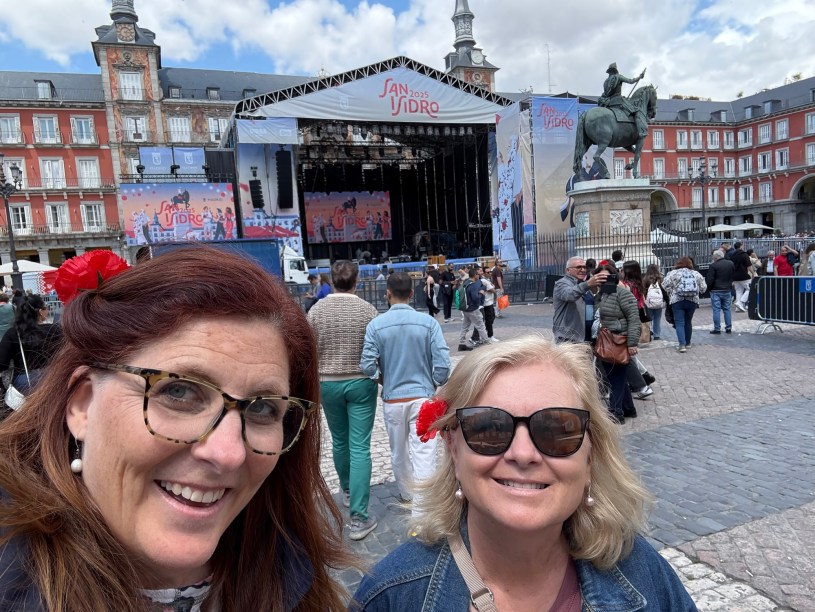
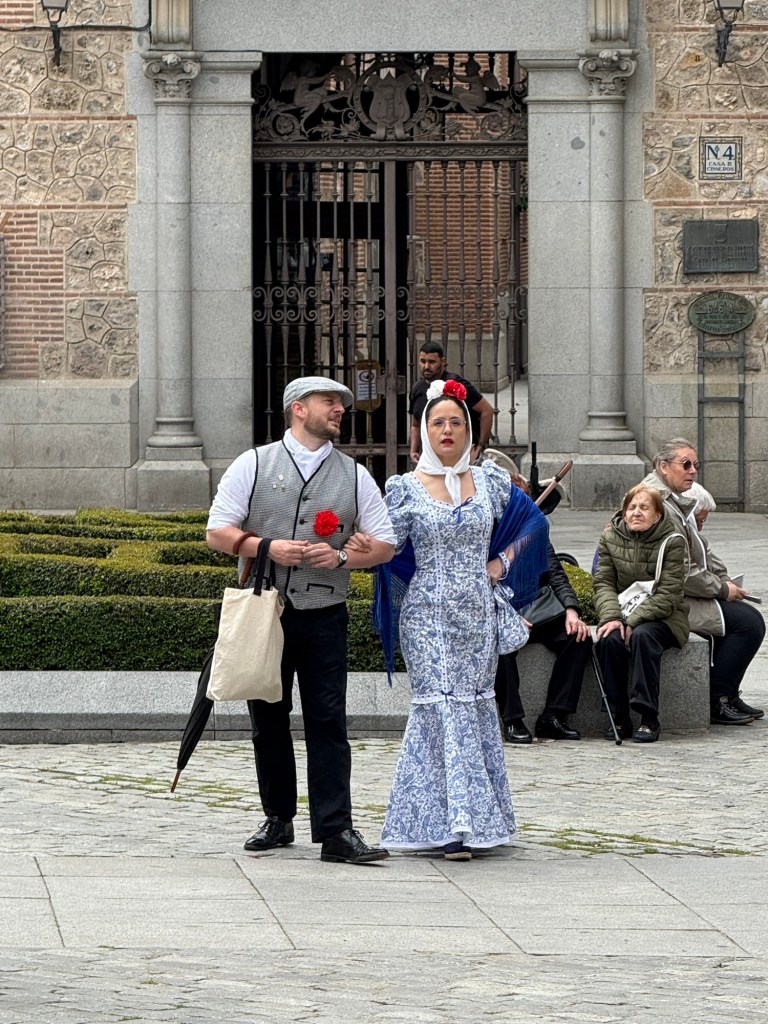
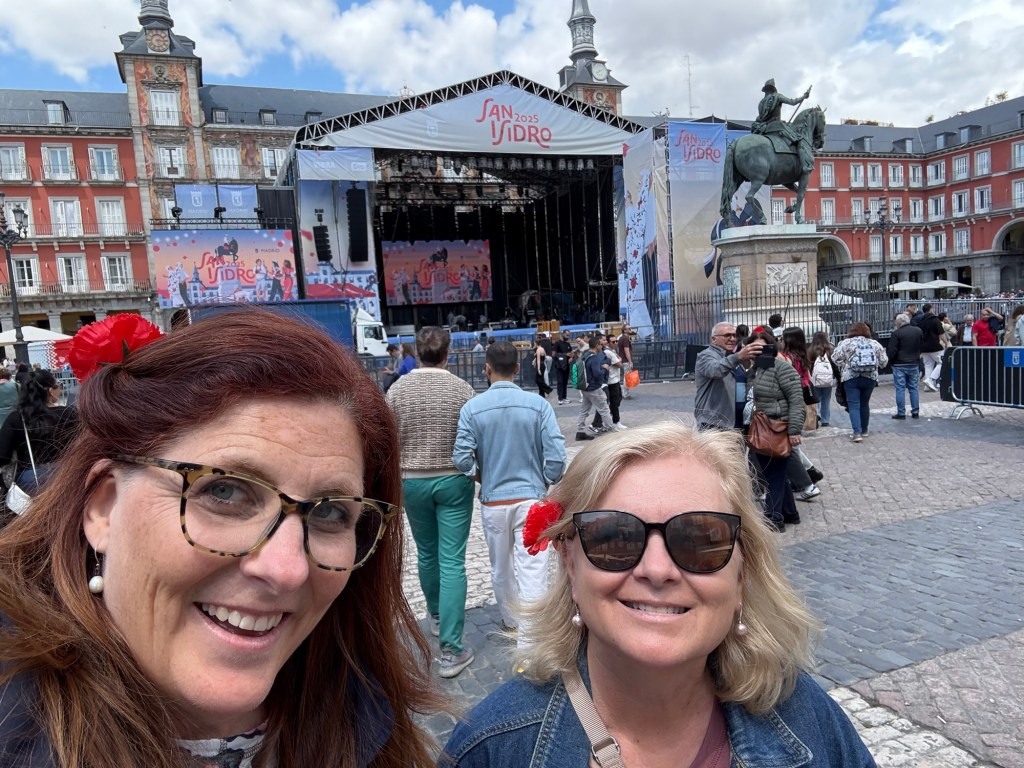
From there, we started walking deeper into the city. A couple turned the corner ahead of us, dressed in full San Isidro attire—she wore a floral dress with a red carnation in her hair, and he had on a checkered cap and vest. Blanca stopped us and smiled. She explained we’d stumbled into San Isidro Day, Madrid’s biggest local festival. Every year on May 15th, the city celebrates its patron saint, San Isidro Labrador, a humble farmer known for his miracles. There’s music, dancing, traditional clothing, food stalls—it’s one big joyful tribute to the soul of Madrid. We hadn’t planned for it, but we couldn’t have timed it better.

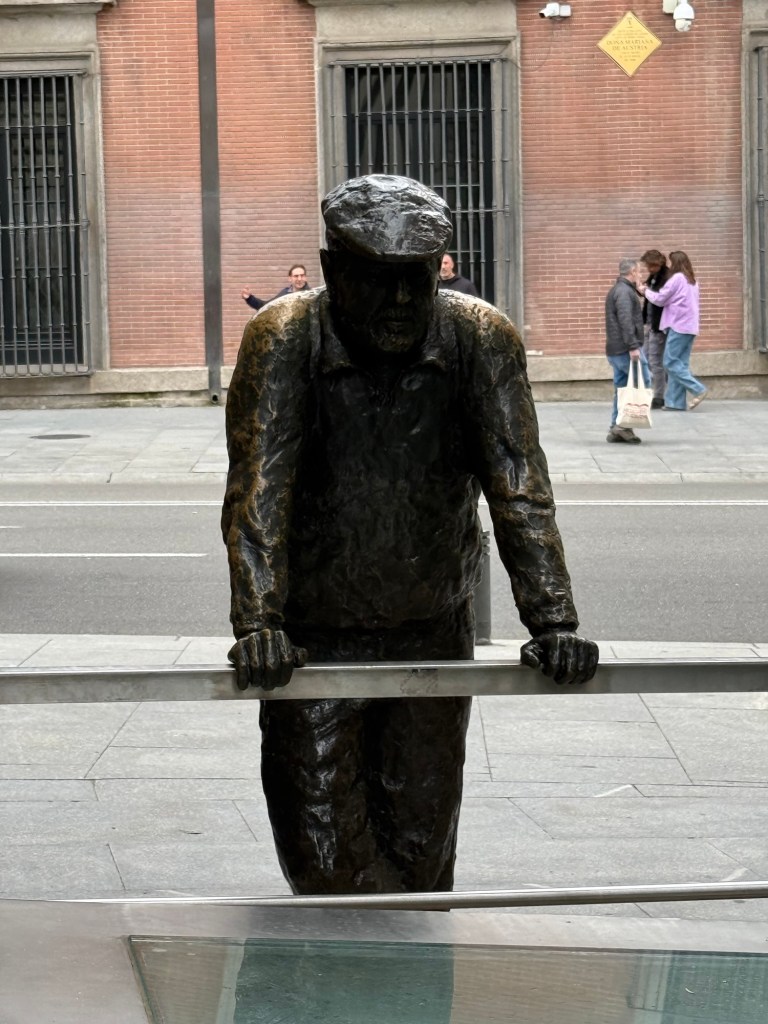
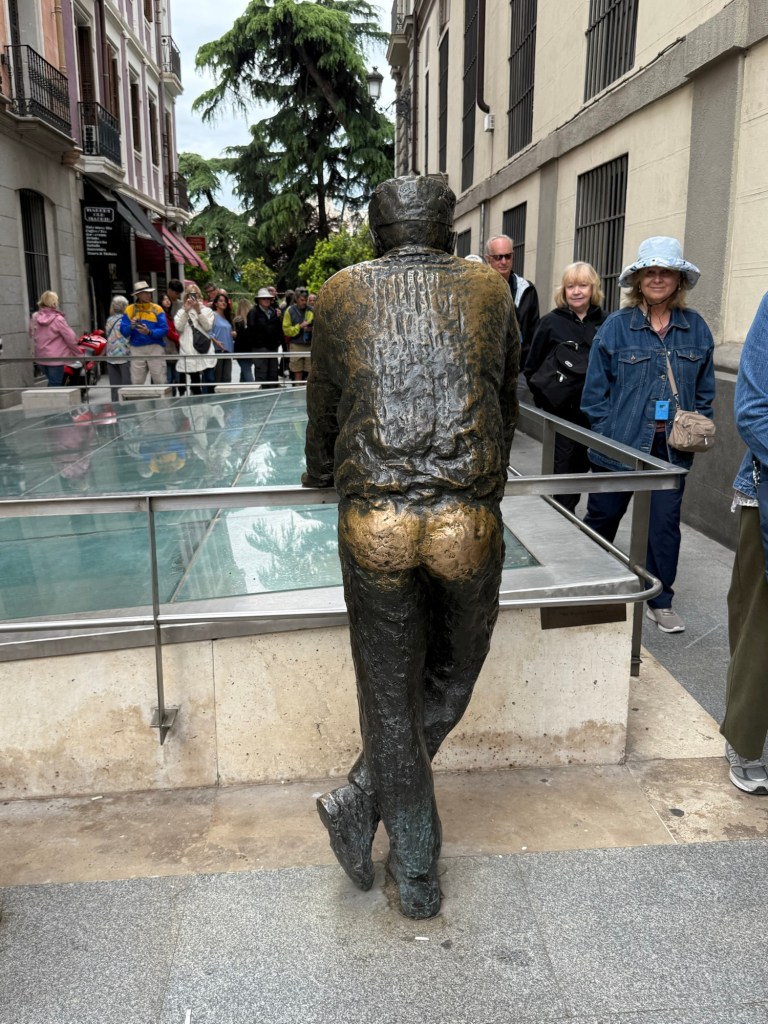
As we continued walking, Blanca pointed out a bronze figure leaning over a railing—El Barrendero, or The Street Sweeper. Beneath him, under glass, were ancient Roman ruins. Blanca explained that in Madrid, any construction risks turning into an archaeological dig. You can’t go far without bumping into the past.

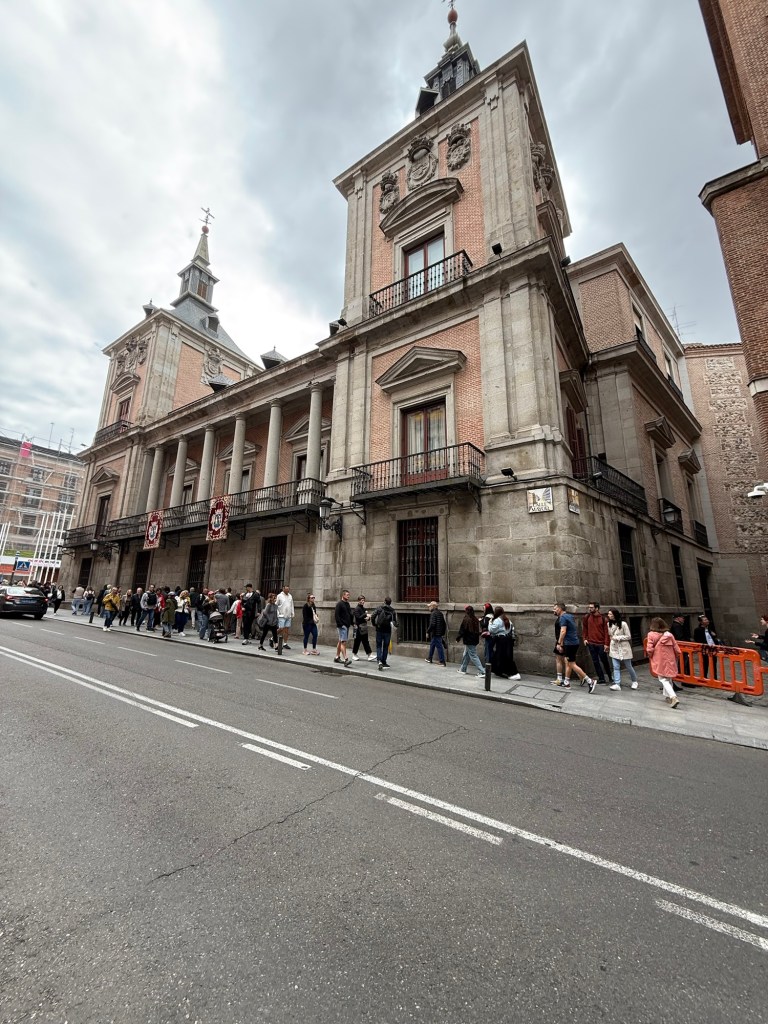
Not long after that, we reached Plaza de la Villa, one of the oldest squares in the city. Blanca gave us a quick overview: Casa de la Villa, once Madrid’s City Hall; Casa de Cisneros, a 16th-century Renaissance palace; and the Torre de los Lujanes, thought to be the oldest civic building in Madrid—rumored to have held King Francis I of France after the Battle of Pavia. These buildings weren’t just beautiful—they told the story of how Madrid was governed long before it became a modern capital.
As we wrapped up the walk, Blanca told us one last local must-do: try a fried calamari sandwich. It’s a Madrid favorite, especially during festivals. Tim and Bob perked up like kids. With a big smile and a quick goodbye, Blanca sent us off into the crowd at Plaza Mayor, where the energy of San Isidro was in full swing. This is when she bid us farewell and said if you hear music you must wiggle and she proceeded to dance.
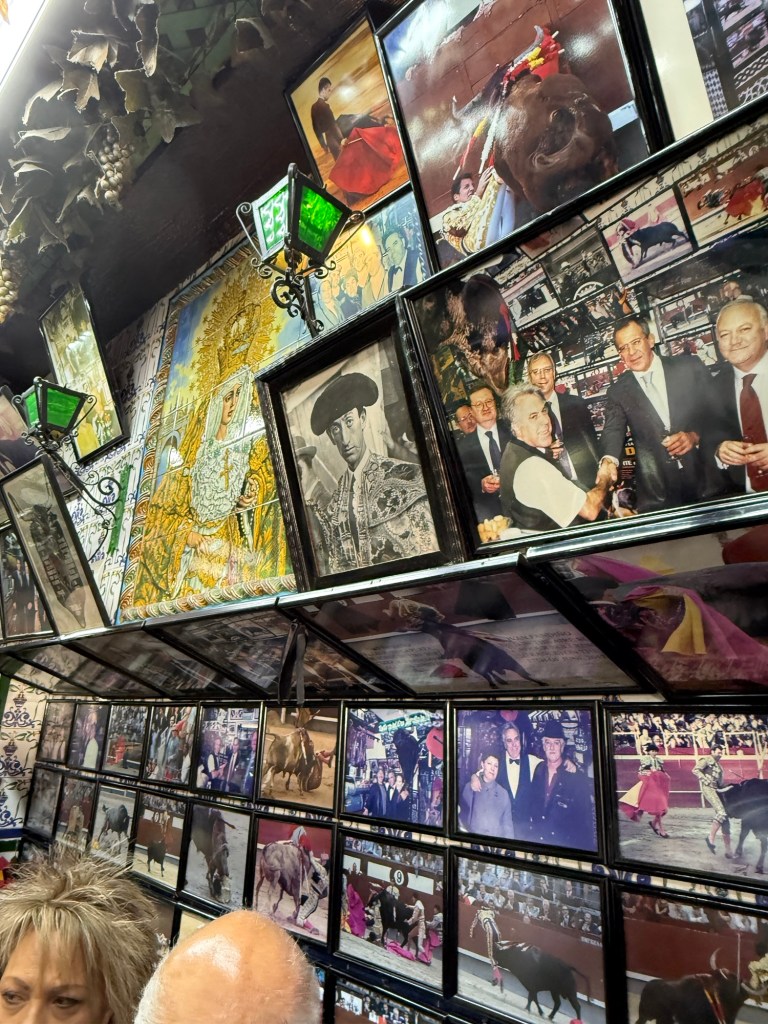
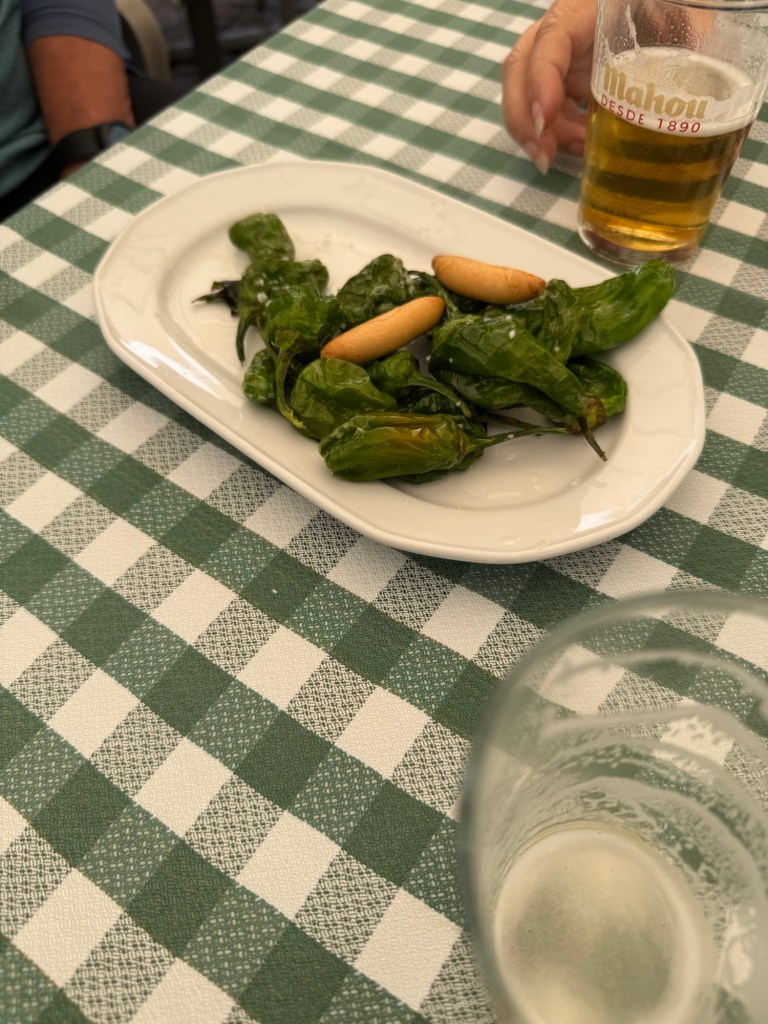
Javier took us to La Torre del Oro, a bar packed with bullfighting memorabilia just off Plaza Mayor. He treated everyone to a small beer and a plate of roasted peppers—a quick taste of local life in a spot you’d never find on your own.
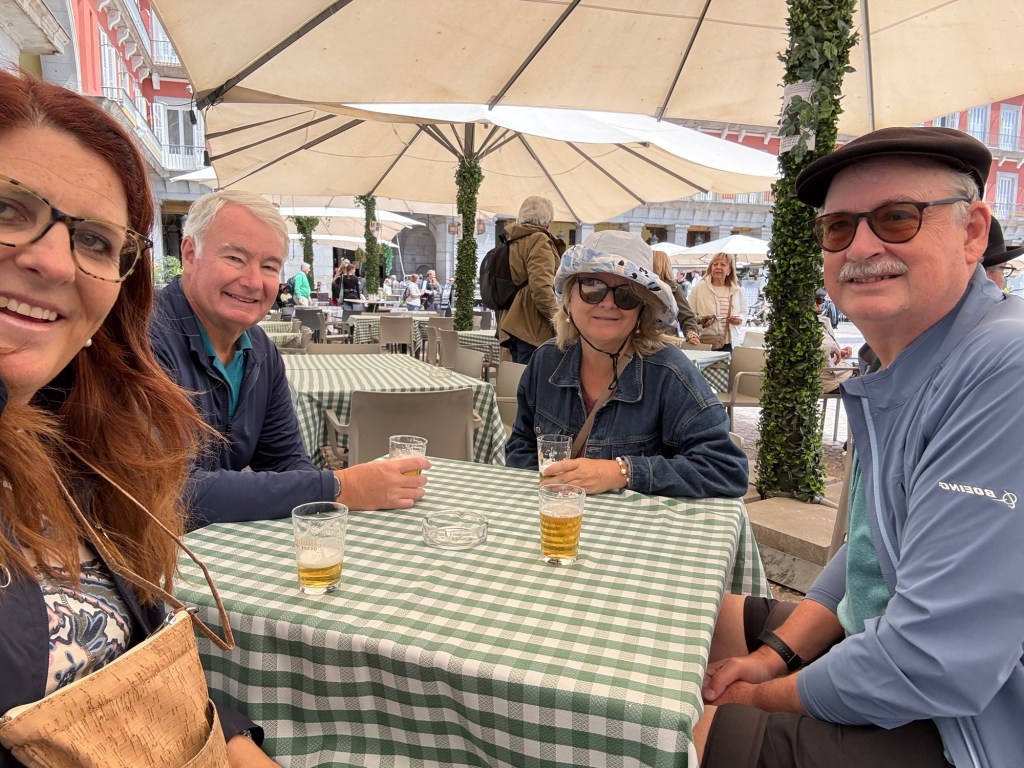
We tried to find a spot for lunch, but the square was packed. I asked the hostess at one restaurant Posada Diavilia if they had space, and she asked if we wanted tapas or to eat lunch, I answered lunch. We learned this is not the right answer.
In Spain, a white tablecloth and a “menú del día” (menu of the day) typically signal a formal sit-down lunch, which is the main meal of the day for many Spaniards. It’s served between 1:30 and 3:30 p.m. and usually includes multiple courses: a starter, a main dish, dessert or coffee, and wine or beer.
The guys had been dreaming of a simple calamari sandwich, and here we were facing a complicated menu and language barrier. We laughed our way through it, made the best of it, and swore: no more restaurants with white tablecloths.
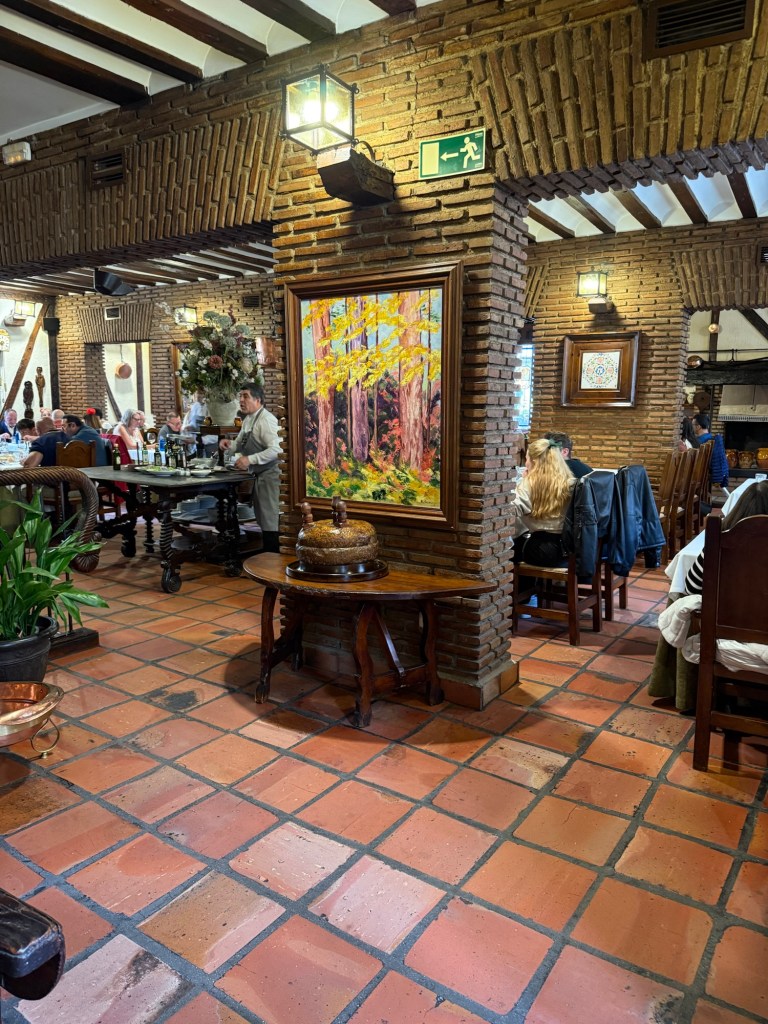
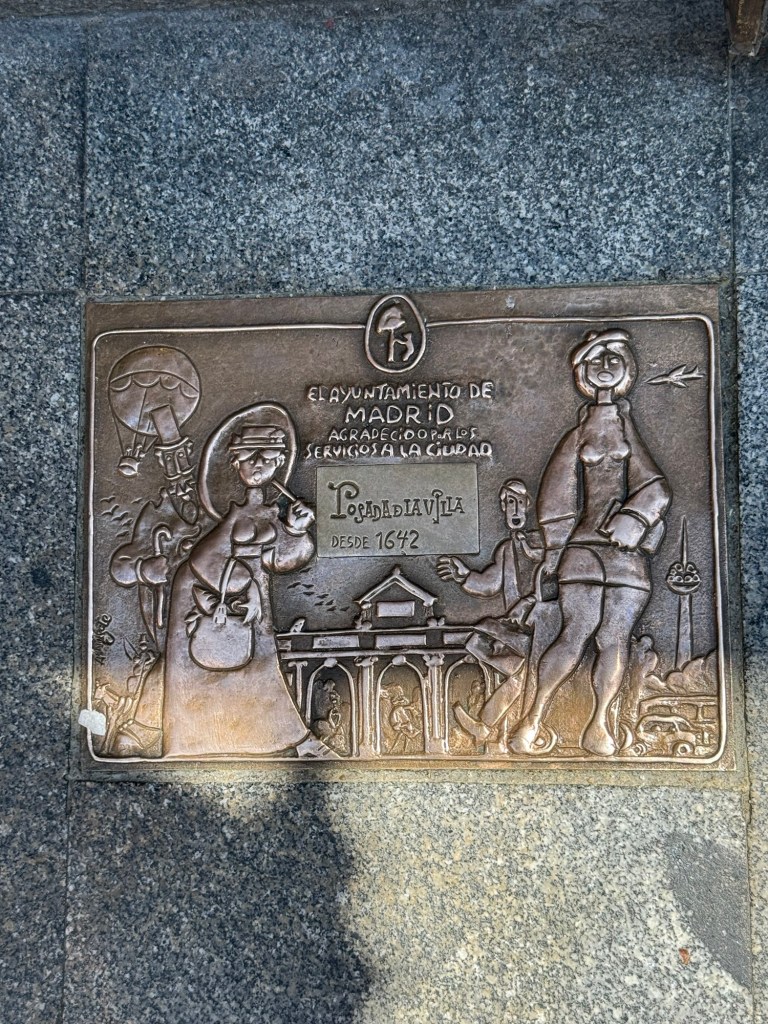
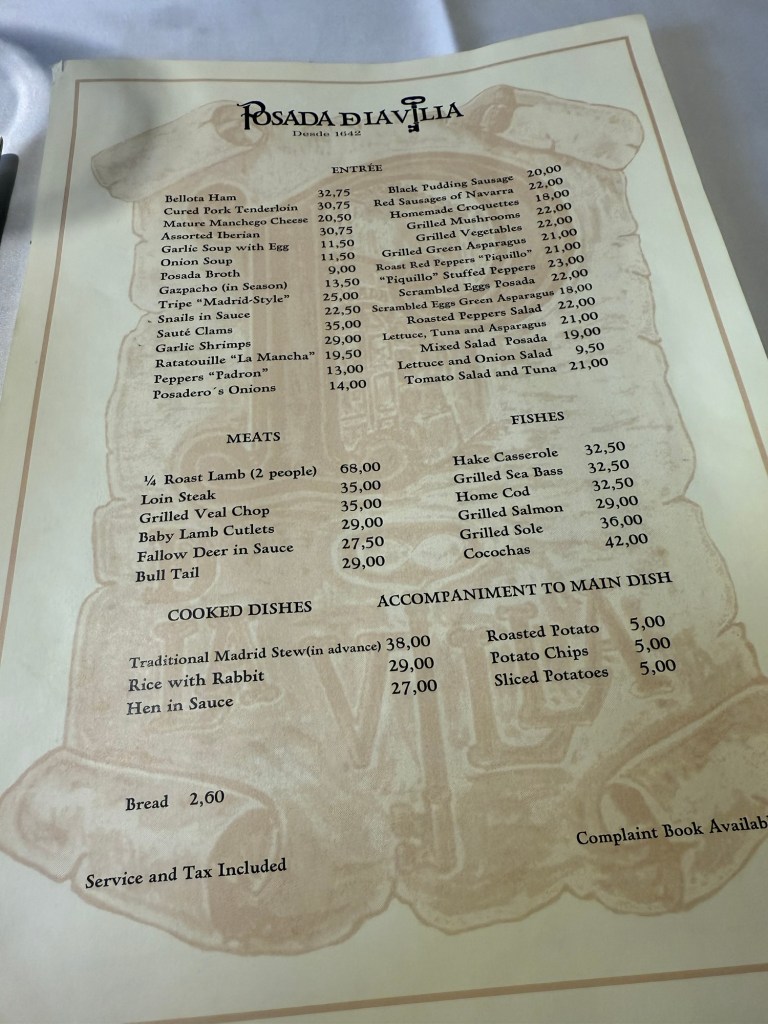
After lunch, the boys headed to Retiro Park, but they got caught in a sudden rainstorm. Meanwhile, Barb and I did a little shopping—and finally decided we were all in. We bought red carnations to wear in our hair so we could join the celebration like everyone else. Then it was time for a quick siesta before regrouping in the evening.
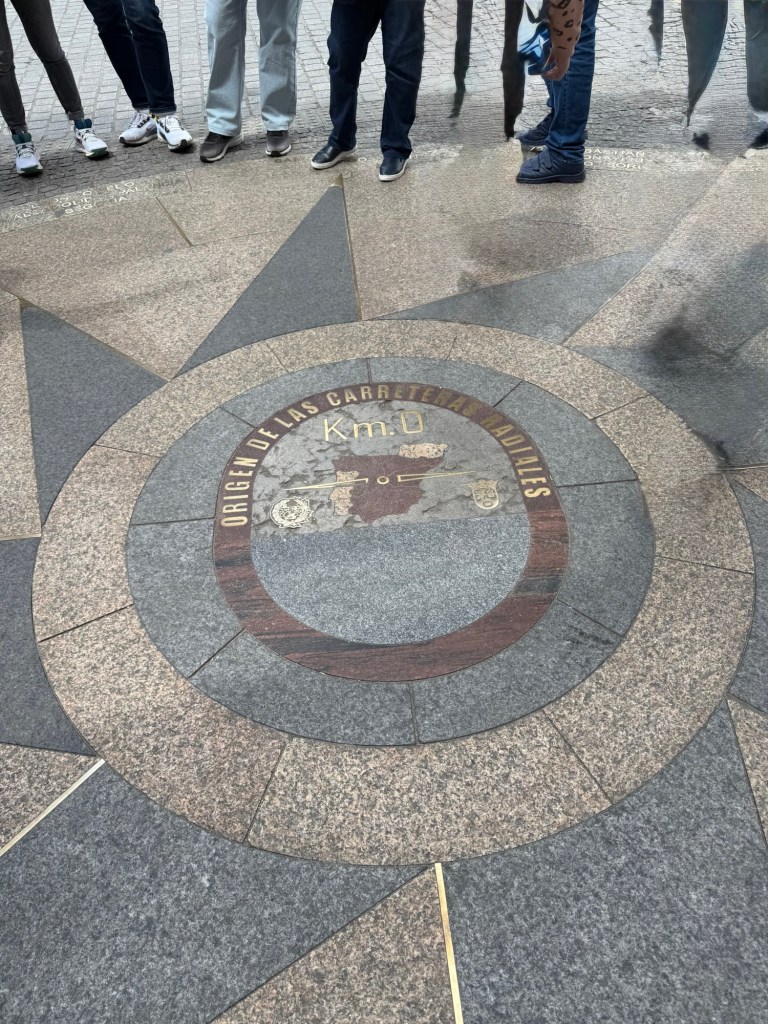
Headings back to the hotel we found KM 0 (Kilómetro Cero) in Madrid marks the exact spot from which all of Spain’s national roads are measured. It’s located in Puerta del Sol, near our hotel.
That night, we returned to Plaza Mayor hoping to catch the San Isidro parade. At first, we thought we’d missed it, but just as we finished our tapas at a no-tablecloth spot, the music started—and the parade came right through the square. Dancers, singers, and a Spanish band playing what sounded like The Rolling Stones filled the space with life. It was spontaneous, loud, and full of joy.
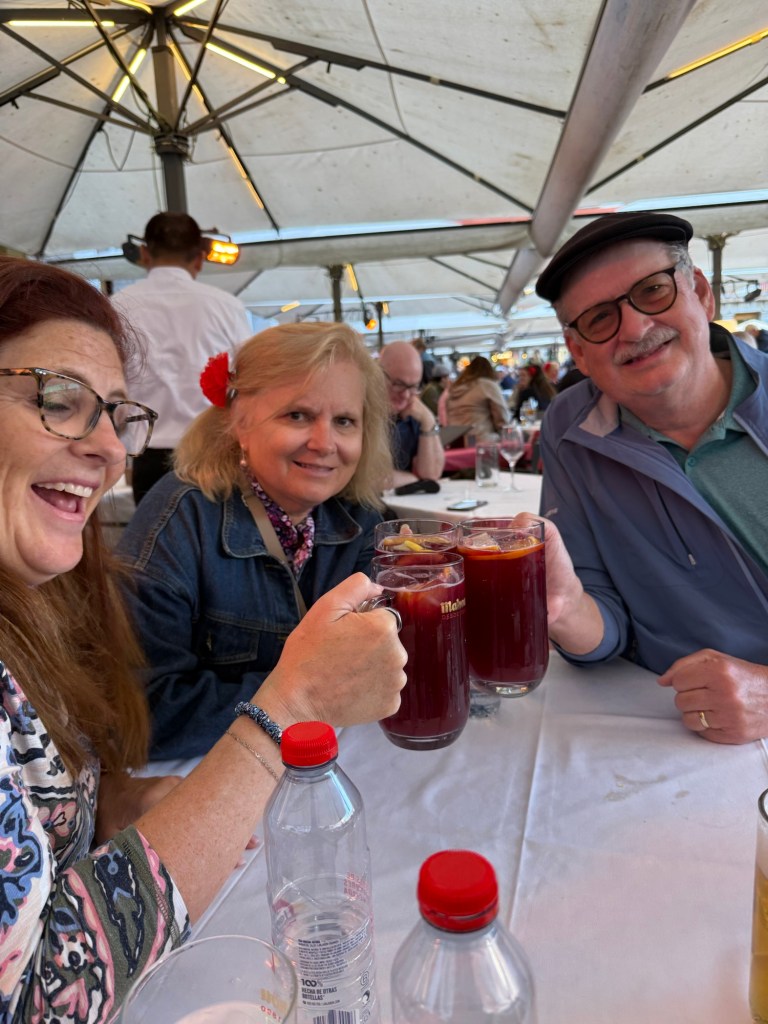
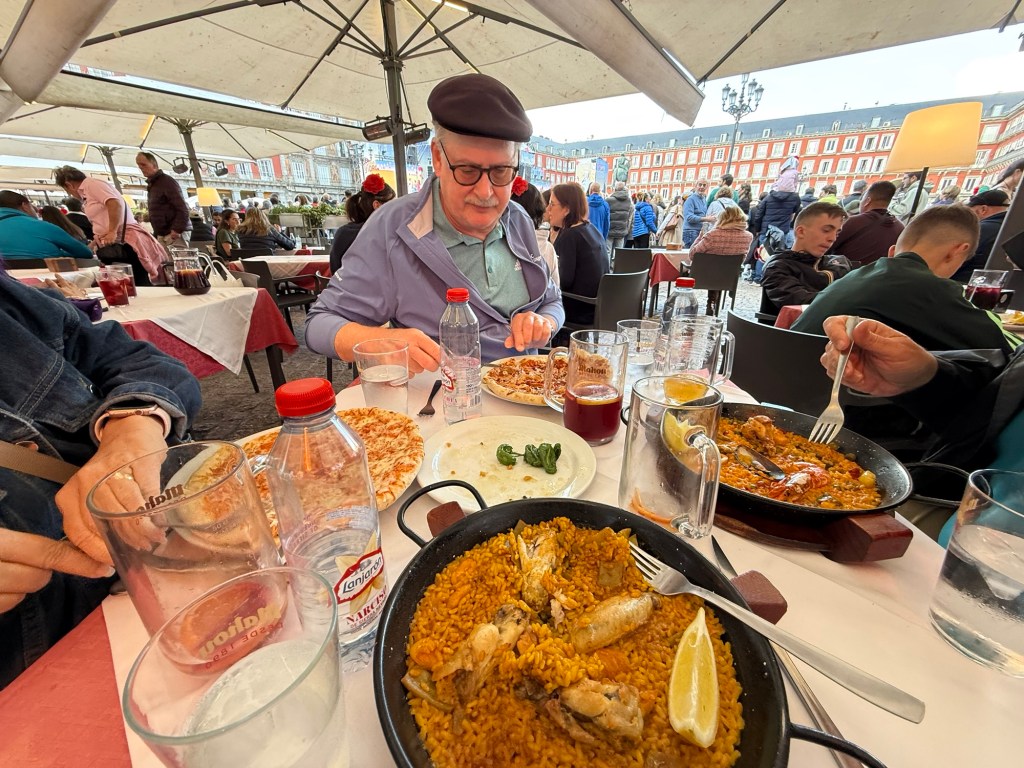
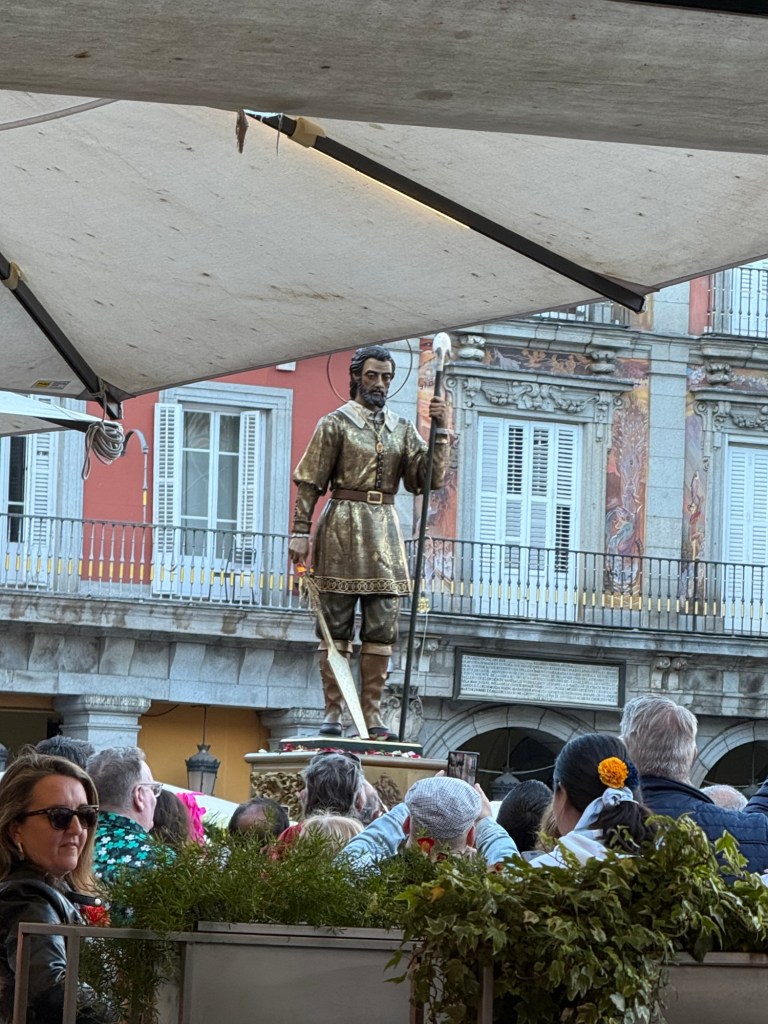
San Isidro Day wasn’t something we planned—but it ended up being one of the most joyful surprises of our trip. From spotting locals in traditional dress, to accidentally sitting down for a formal lunch, to the music-filled parade we thought we missed but somehow caught perfectly—it all felt spontaneous and full of life. The red carnations, the dancing & clapping in the streets, the music echoing through Plaza Mayor… it was a celebration of Madrid’s heart and history, and we were lucky to be right in the middle of it.
 Happiness is Possible