
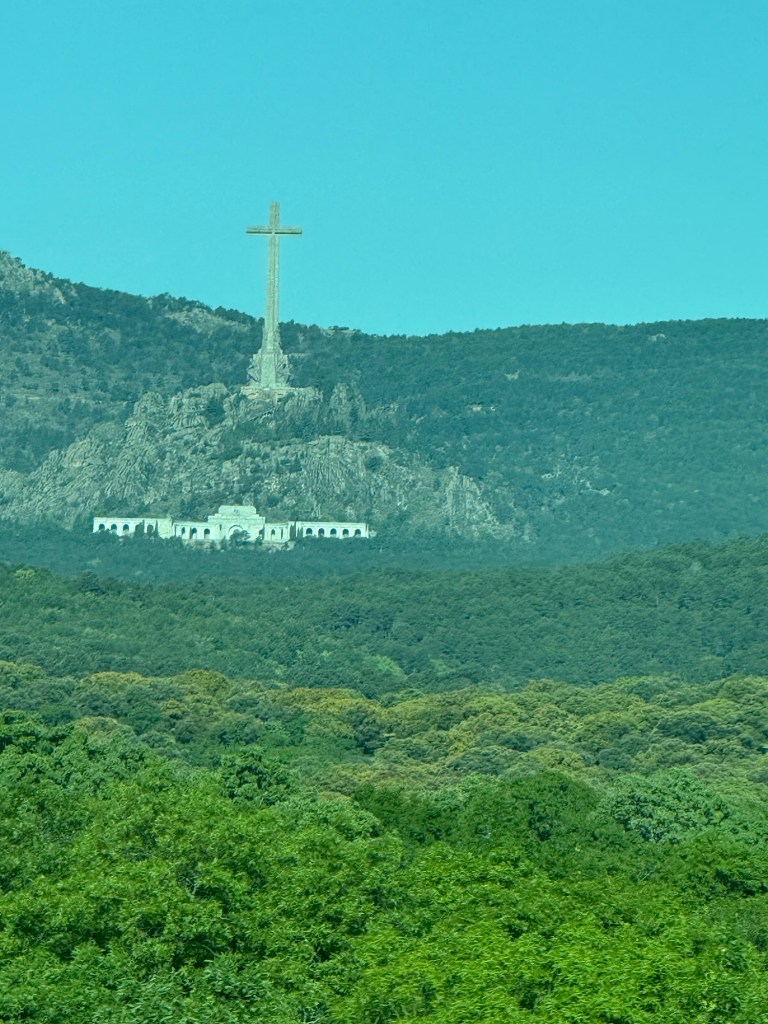
Before we arrived in Segovia, we passed this striking sight—the Valley of the Fallen. Set high in the mountains, it features one of the tallest crosses in the world and a basilica carved into the rock. Built after the Spanish Civil War, it was meant to honor the fallen but remains controversial due to its ties to Franco’s dictatorship. His remains were removed from the site in 2019, but the monument still sparks strong emotions across Spain.
When we pulled into Segovia, the massive 2,000-year-old aqueduct immediately caught our eye. It rises out of the city—stone arches stretching for nearly half a mile, towering over rooftops. At its tallest point in Plaza del Azoguejo, it reaches about 93 feet high—roughly the height of a 9-story building. And not a drop of mortar holding it together.
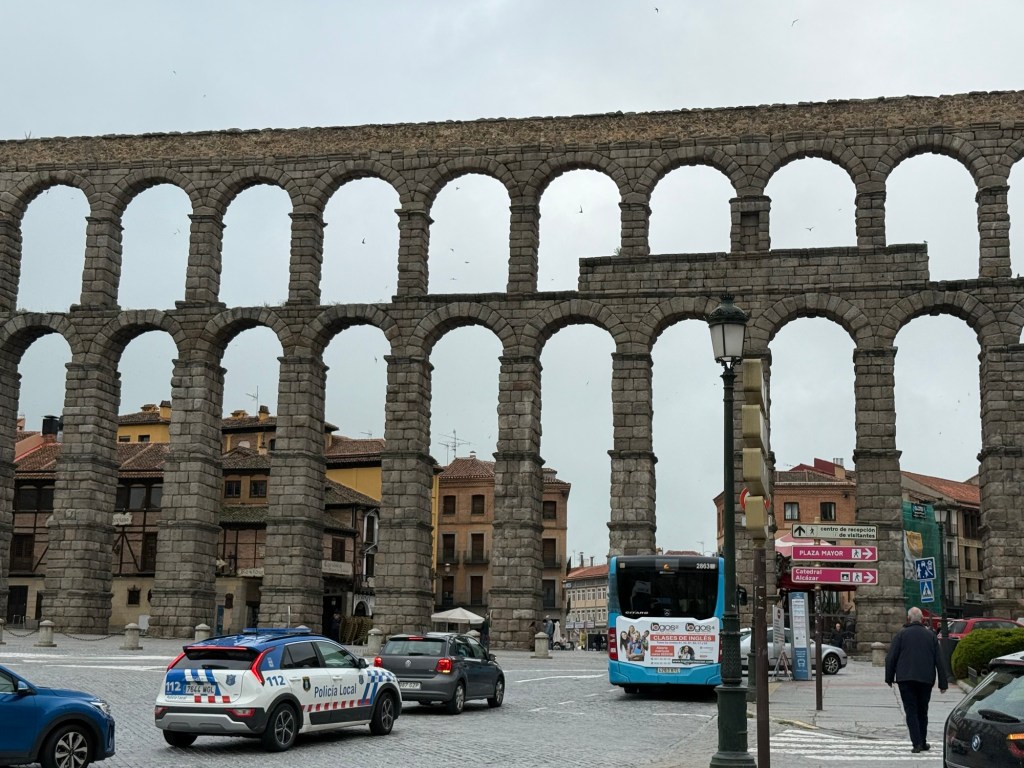
The Romans built it to carry mountain spring water into the city, angled so precisely that gravity did all the work. Just balance and perfectly cut granite. When you see it in person, it’s hard to believe they pulled this off without modern machines. It’s one of the best-preserved Roman aqueducts in the world, and standing next to it makes you feel tiny.
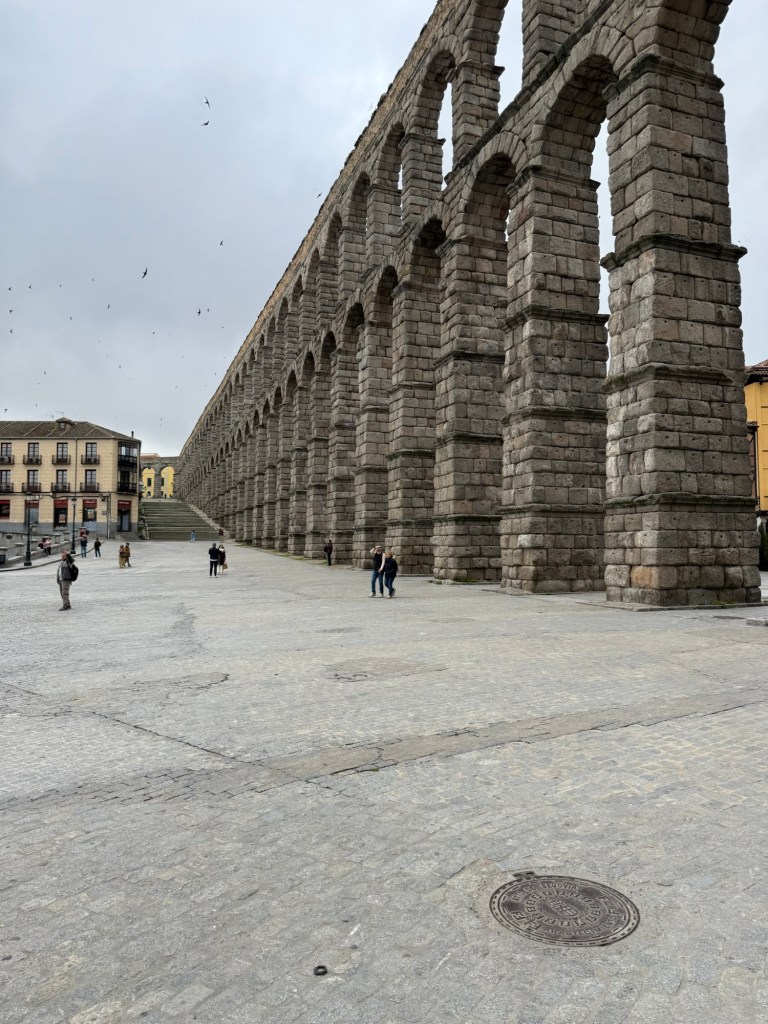
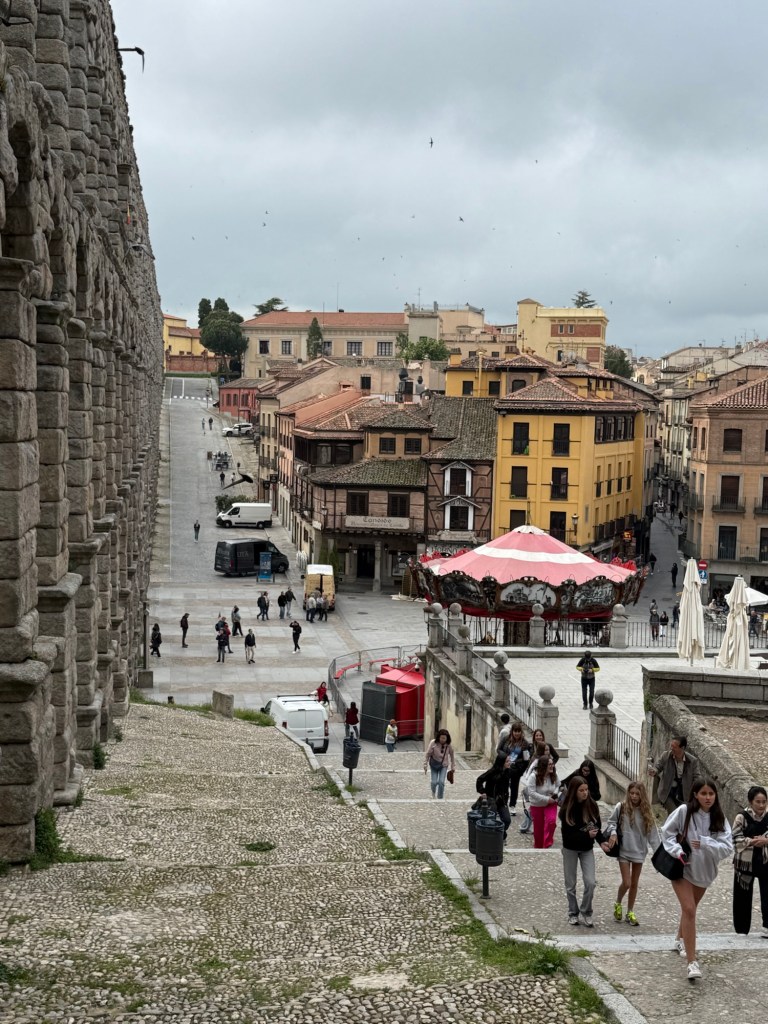
After learning how it was constructed, we walked underneath the arches to the other side. Then we climbed the stairs to explore more of the city. Javier pointed out a tiny flaw high up in the stonework—barely visible unless you knew where to look.
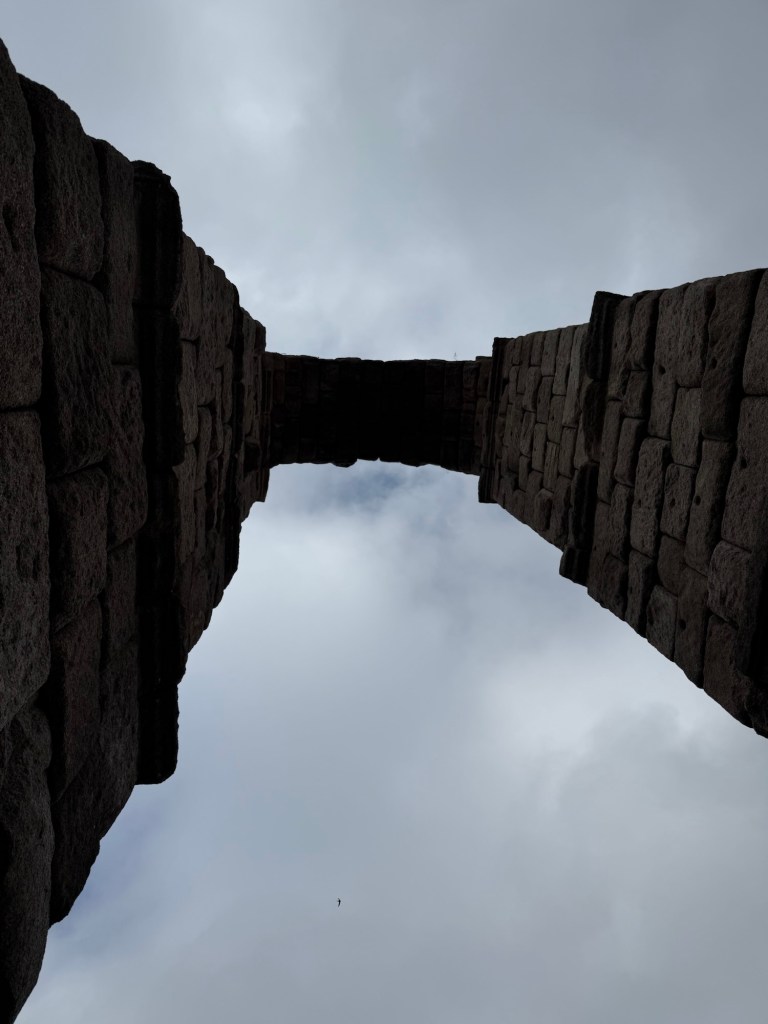
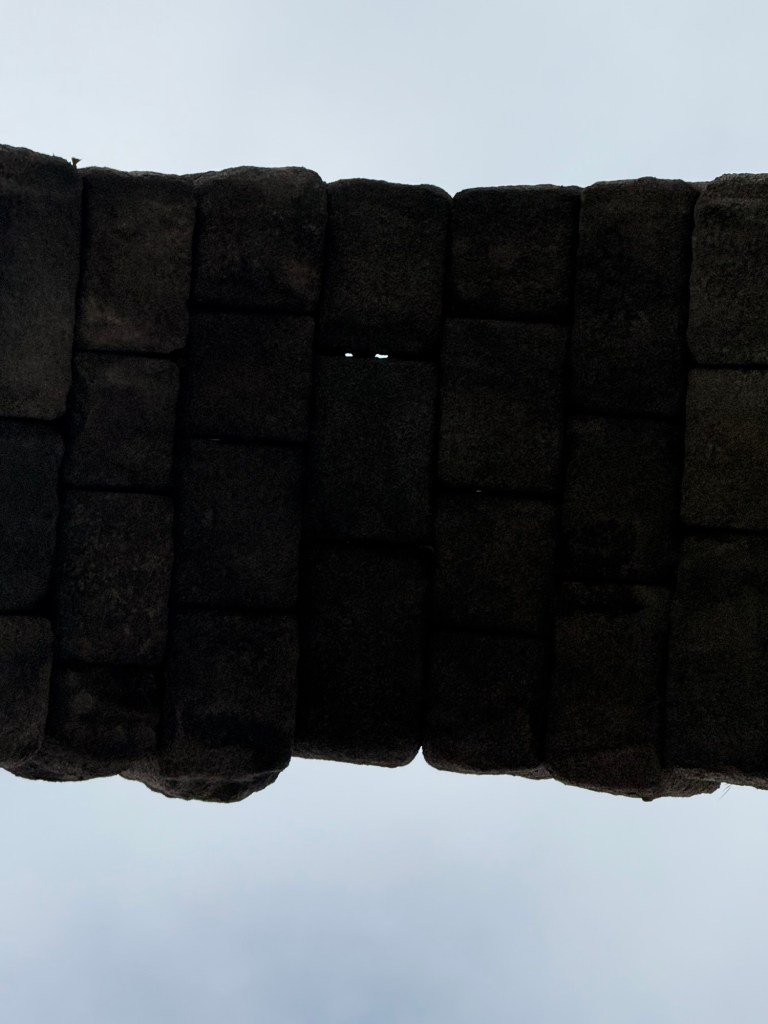
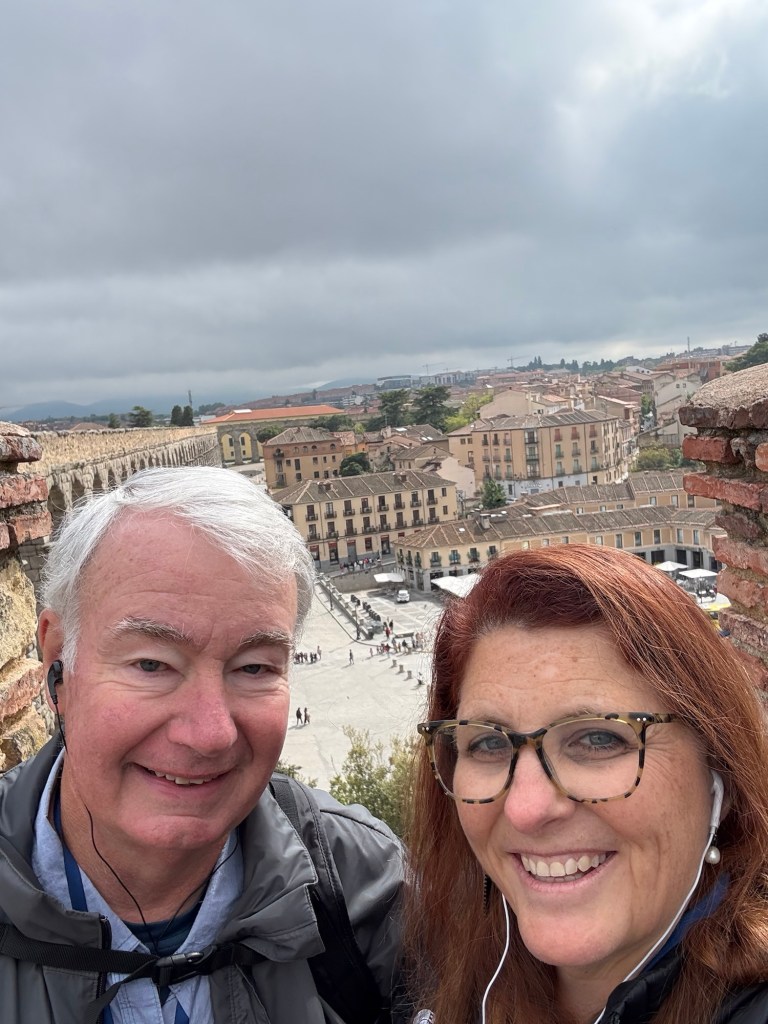
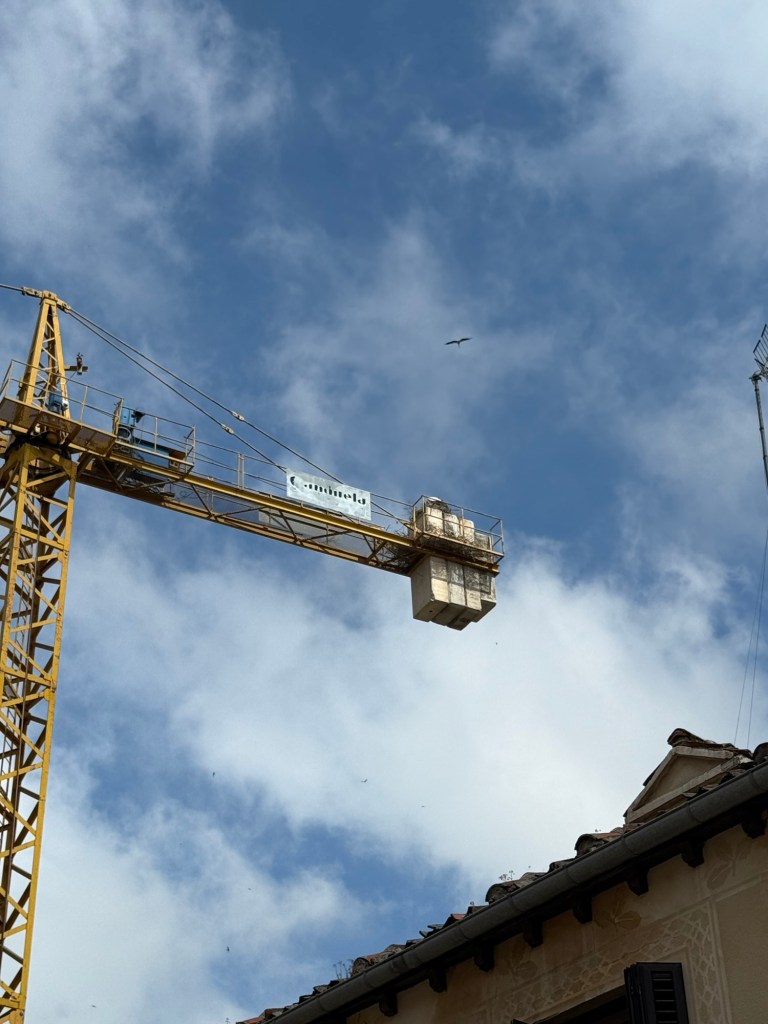
We headed up the stairs to explore. It was also in the news recently after someone fell trying to take a selfie sitting on the railing at the top in front of the entryway arch where you see part of a small tree.
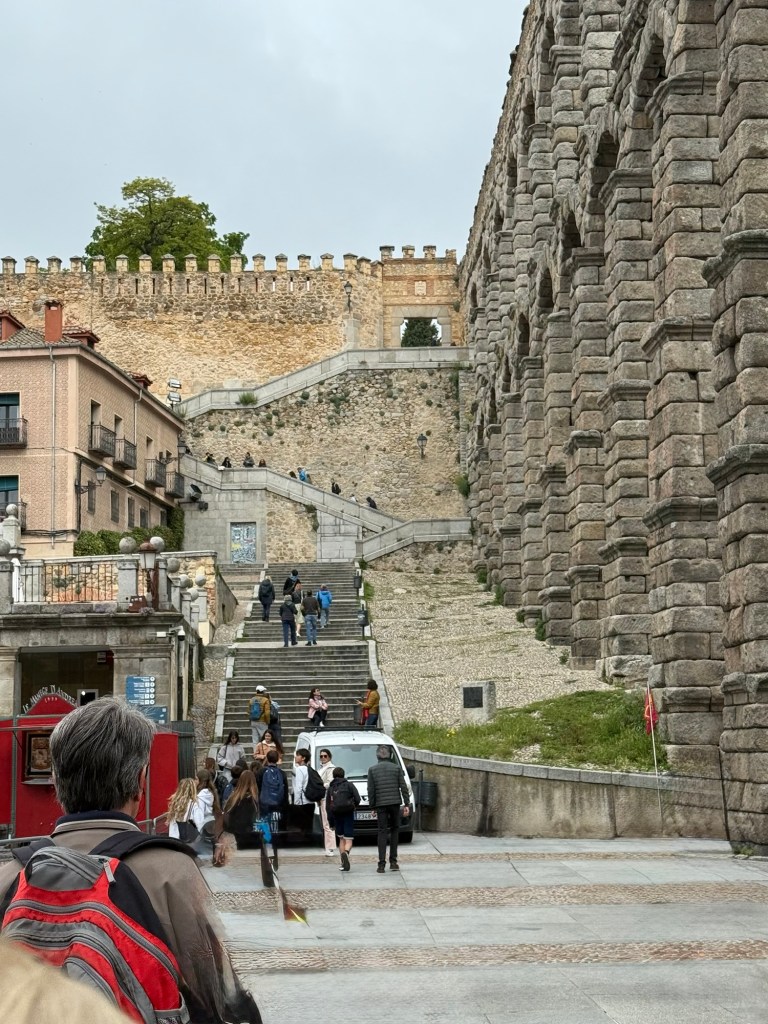
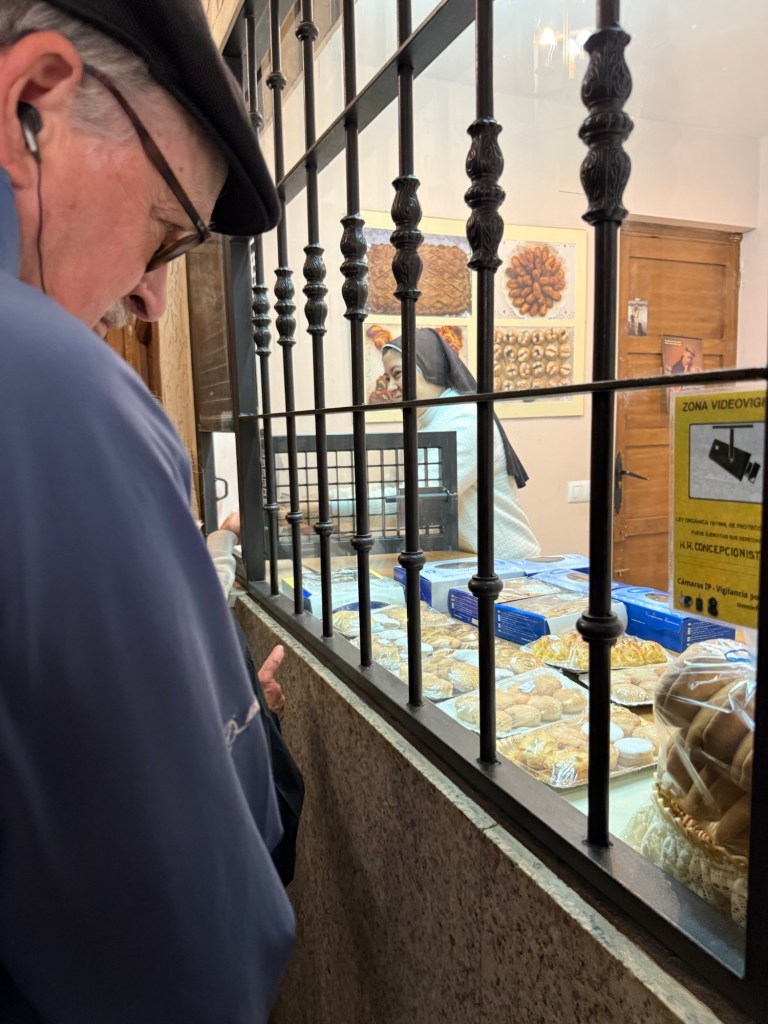
From there, we wandered through the streets—Javier wanted us to grab some cookies from the Nuns bakery but they were closed. Thankfully he was able to get them to open for us. The nun that sold us cookies does not speak English but she had the most appreciative way about her and adorable dimples when she smiles.
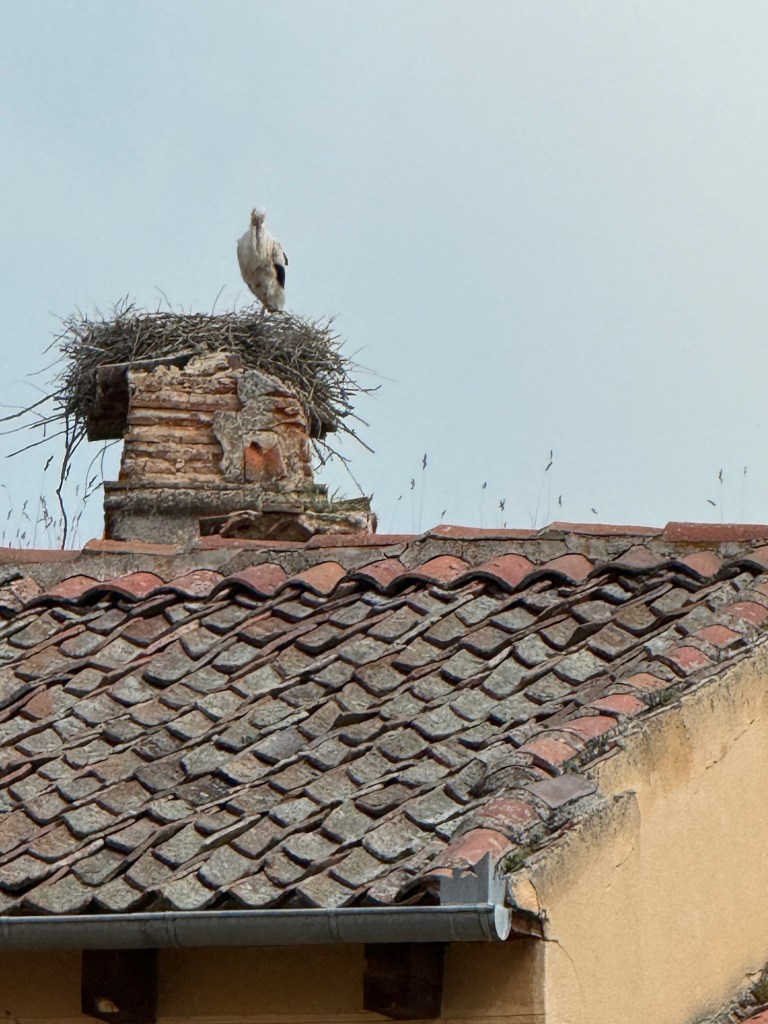
Very unexpected, Javier point out a Stork. These are the same ones from the old legends about delivering babies. They migrate to Africa in winter but return each spring to the same nest, adding to it year after year. These nests can weigh over 500 pounds. Locals see them as a sign of good luck
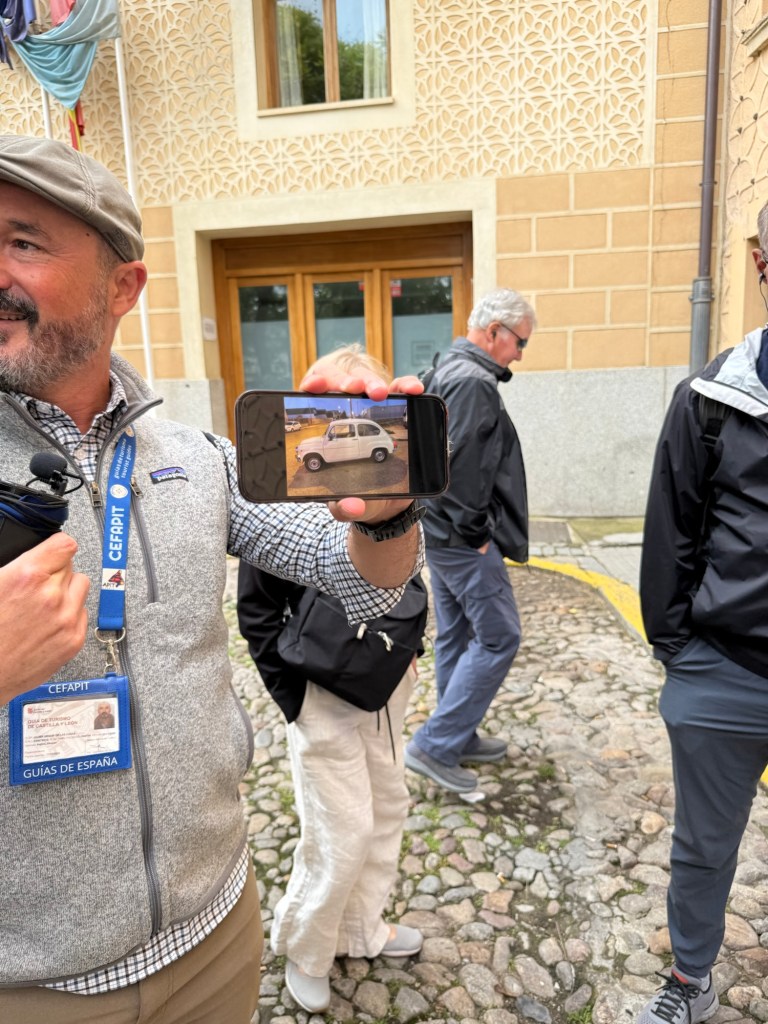
As we navigated narrow walkways, several times we had to move out of the way for the occasional car. “Most people in Spain drive stick,” Javier said, pulling out a photo of the tiny car his mom used to drive. Then he explained the license plate system—like other EU plates, Spain’s start with a blue band and an “E” for España on the left, followed by four numbers and three letters.
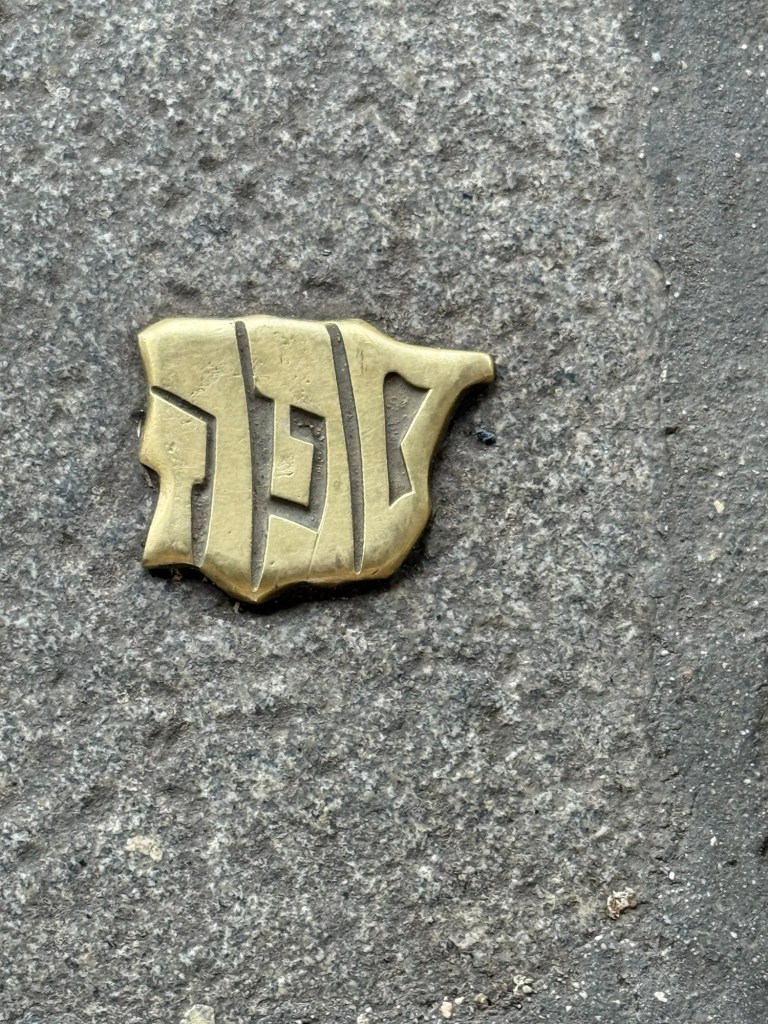
Javier pointed out this small gold marker—shaped like Spain and inscribed with “Sefarad,” the Hebrew word for Spain. It marks the path of Segovia’s old Jewish quarter, honoring the Sephardic community once here.
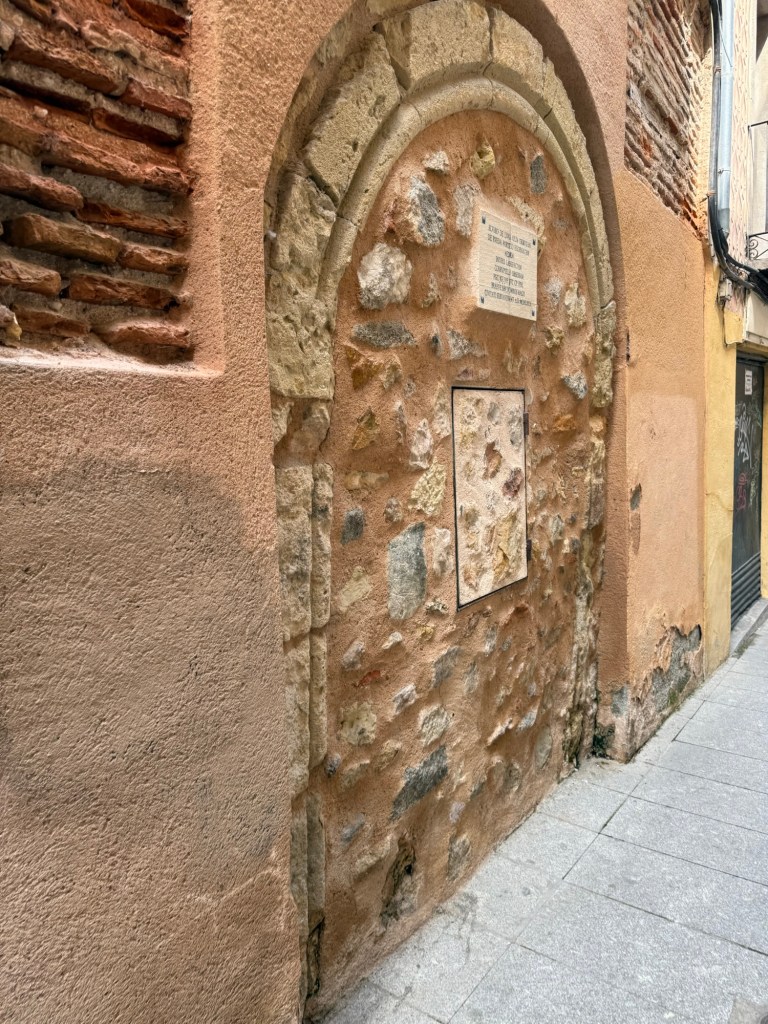
This walled-up doorway belongs to the Old Main Synagogue of Segovia, now the Convent of Corpus Christi—where we also bought cookies.
Once we reached the square, Plaza Mayor, we saw a staged children’s performance with adults dressed as puppets, using exaggerated movements—Javier said these shows are part of local tradition and often pop up on weekends, and apparently Friday counts.
While Javier had our attention he pulled out a 10-euro bill and held it up, pointing to the arch printed on it. “This,” he said, “is the aqueduct you just saw.” I’d never paid attention to what was actually printed on the euro bills before!
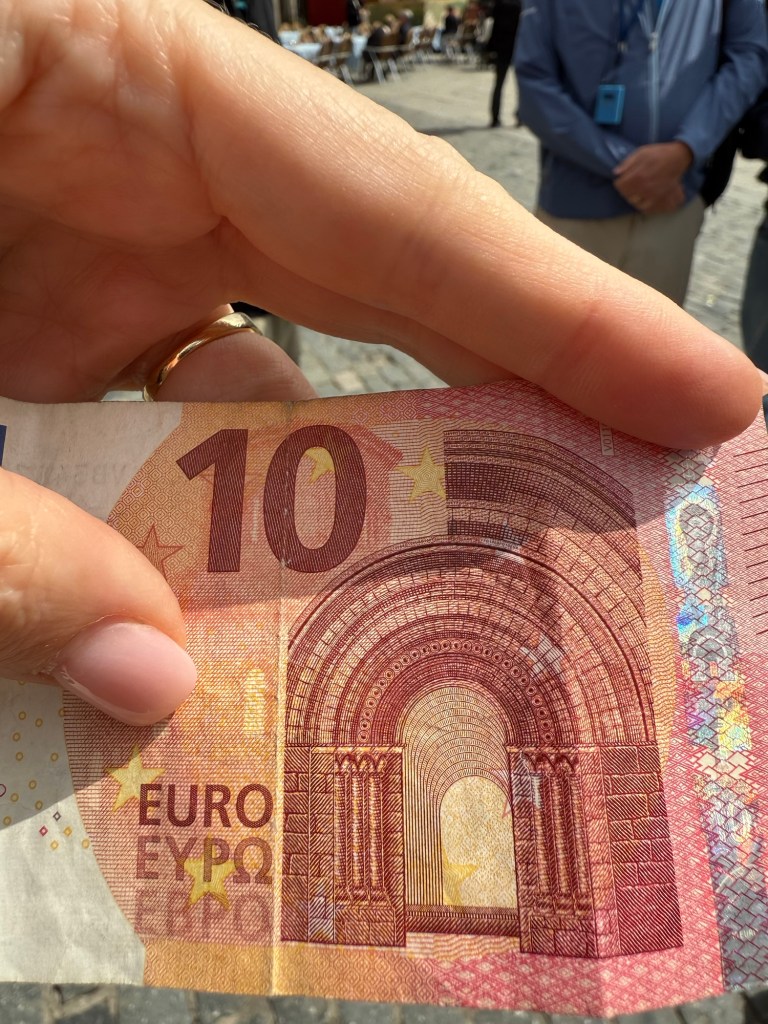
€10
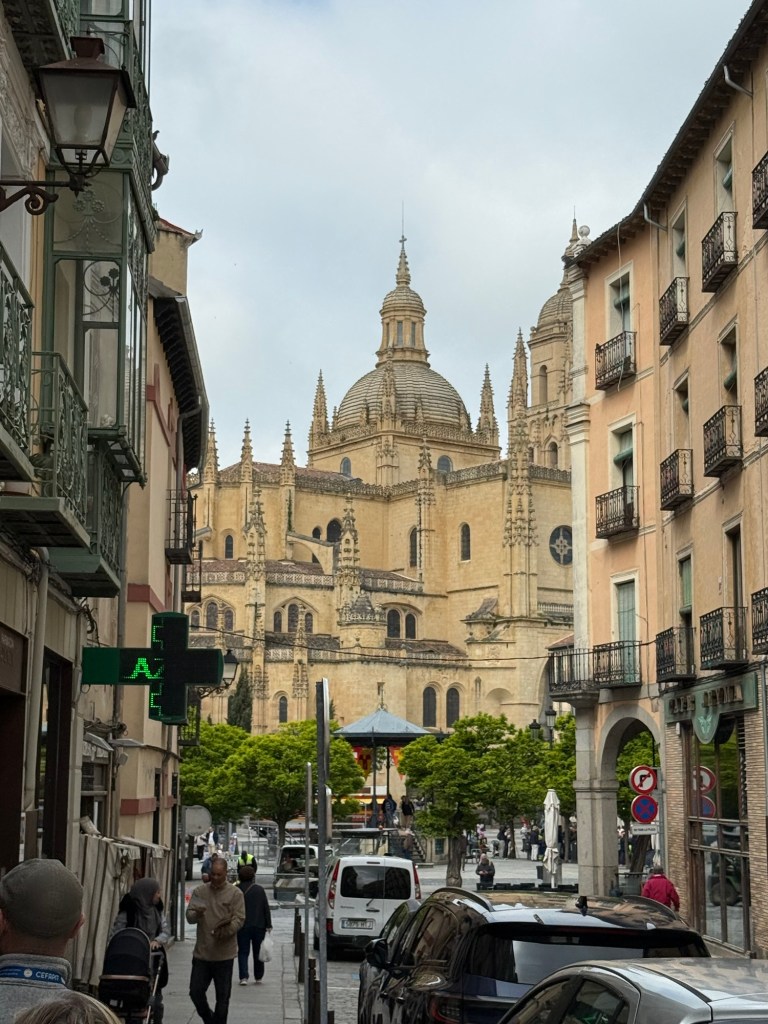
We walked by the cathedral, known as The Lady of Cathedrals—the last Gothic cathedral built in Spain. We didn’t go inside just admired it from the square.
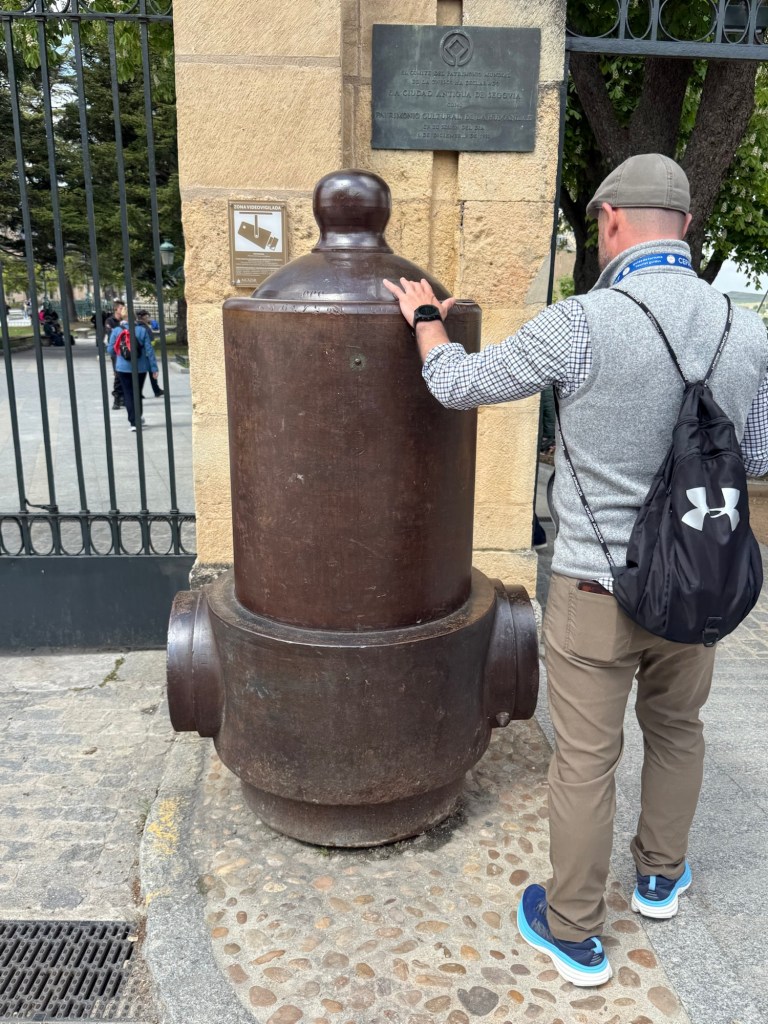
Our last stop before lunch was the Alcázar of Segovia. Just outside the entrance to the Alcázar, we spotted this massive iron relic—what looked like part of an old artillery cannon or breechblock. It’s not just random decor. The Alcázar wasn’t only a royal palace; it was also used as a military academy for many years.
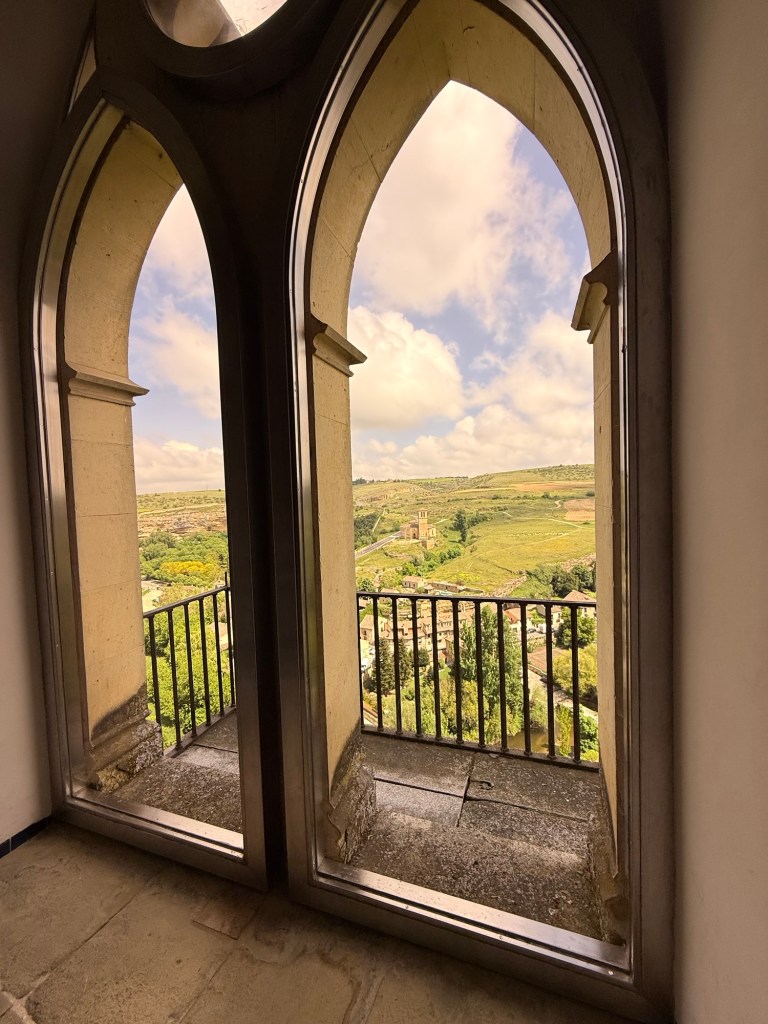
Built high on a rocky ridge with pointed towers and sweeping views, it’s easy to see why people say it inspired Disney’s Cinderella castle.
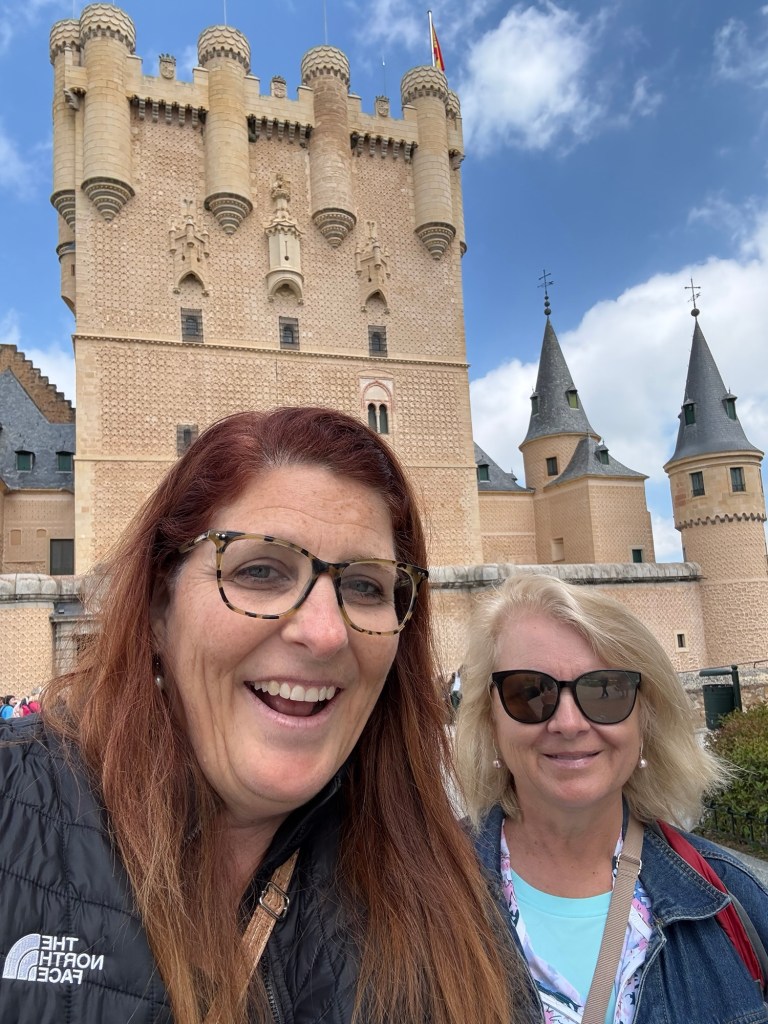
It even had a moat! Not one you want to fall in!
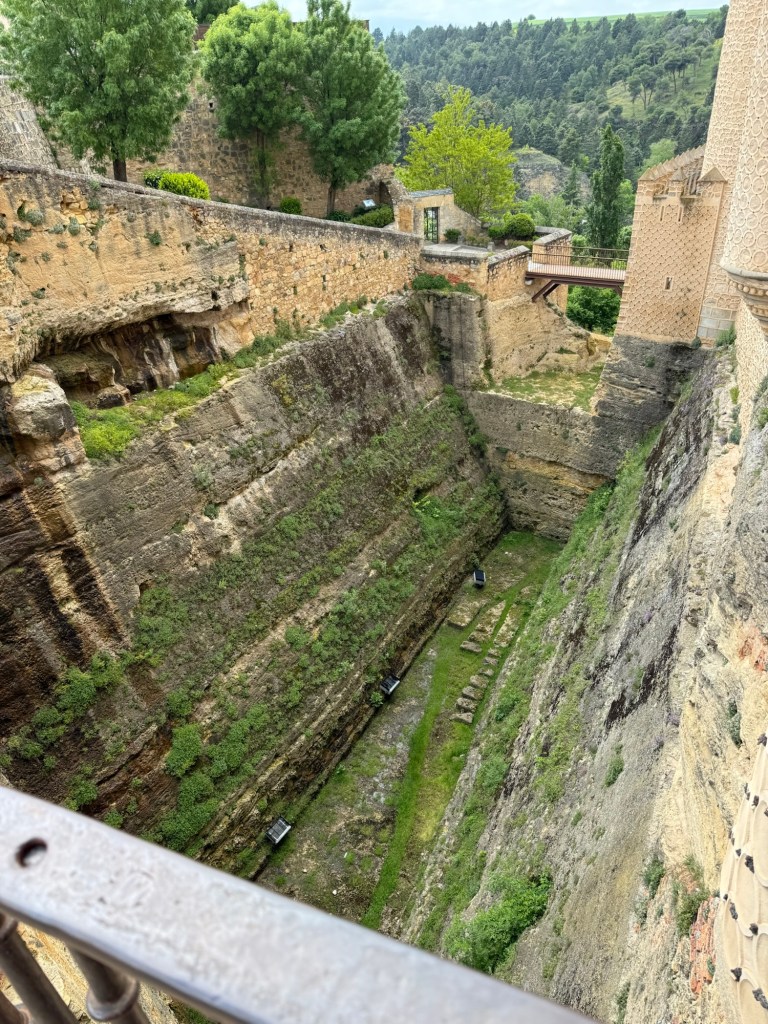
But what really struck me wasn’t just the view—it was the history.
In 1474, Isabella I of Castile was crowned right here. She later married Ferdinand of Aragon, and together they unified Spain. She was smart, devout, and politically sharp. One of her most lasting decisions happened in this very place—she agreed to fund Christopher Columbus’s voyage across the Atlantic in 1492.
He thought he was sailing to Asia to open up new trade routes. But he ended up in the Caribbean—and believed until his death that he had reached part of India. That’s why the people he met were called “Indians.” A mistake that stuck. That’s where the term came from, and it followed the people he encountered for centuries after.
Standing in the Alcázar, it felt surreal to think about how much of our world today was shaped by choices made right here.

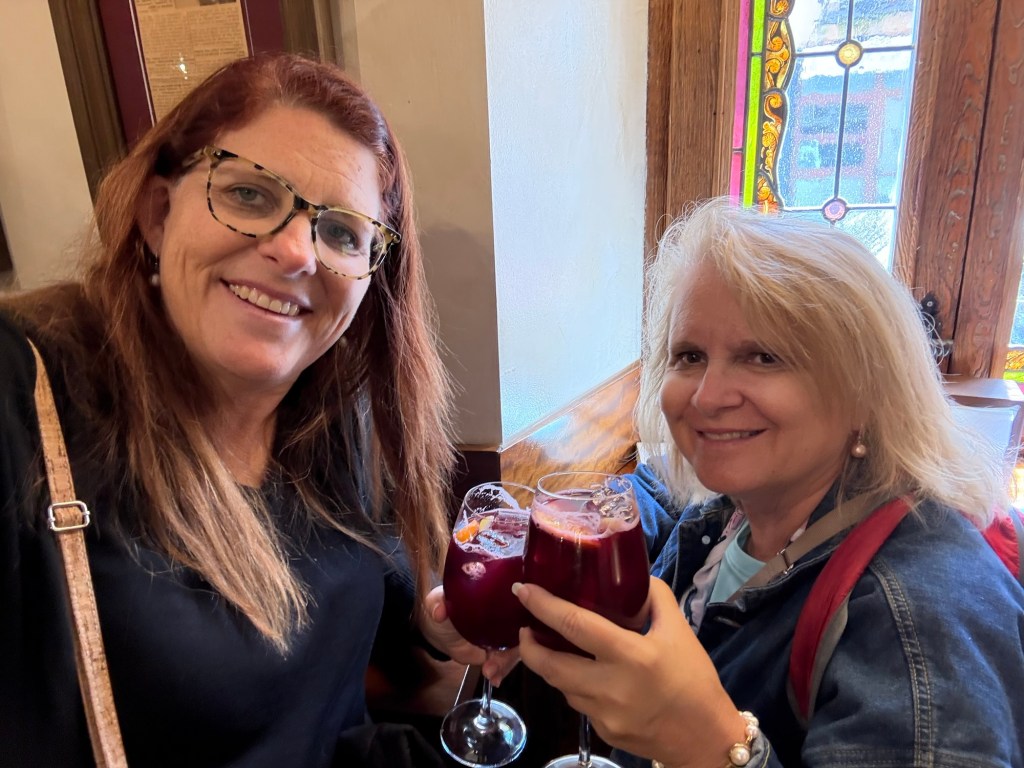
Before we were seated for lunch, we waited in the bar area of Restaurante José María and toasted sangria by a stained-glass window.
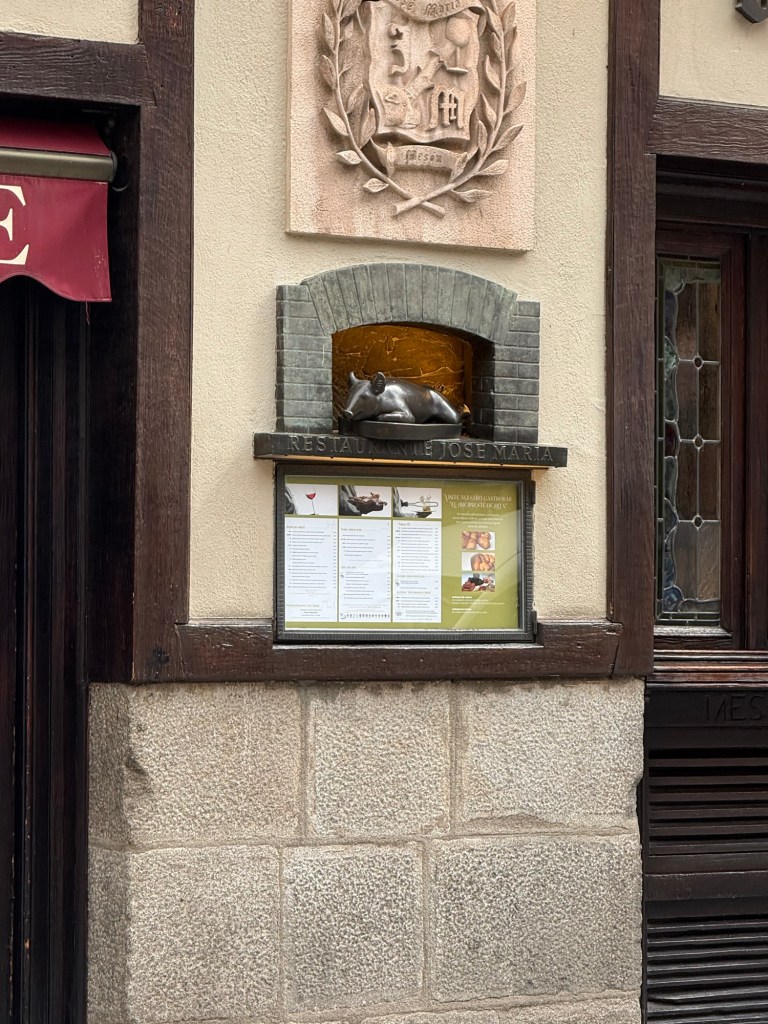
The restaurant, founded in 1982 by José María Ruiz and now run by his children, is one of the most iconic spots in Segovia for cochinillo asado—roast suckling pig prepared in a wood-fired oven and served with ceremony.
Lunch started with a ventresca salad layered with tomato and onion, Iberian ham croquettes, and grilled asparagus with zucchini and Maldon salt.

Then came the star of the show—the suckling pig. Scott was handed the ceramic plate and did the honors of carving. True to tradition, Javier followed by smashing the plate on the floor.
Cindy and Charlie sat with us, and the table was full of quiet nods and happy sighs—until Bob, in his usual dry tone, said, “I got the foot.” I asked, “Did you eat it?” He shrugged and replied, “Well, I ate the meat around it… but I didn’t eat the toenails.” Classic Bob.

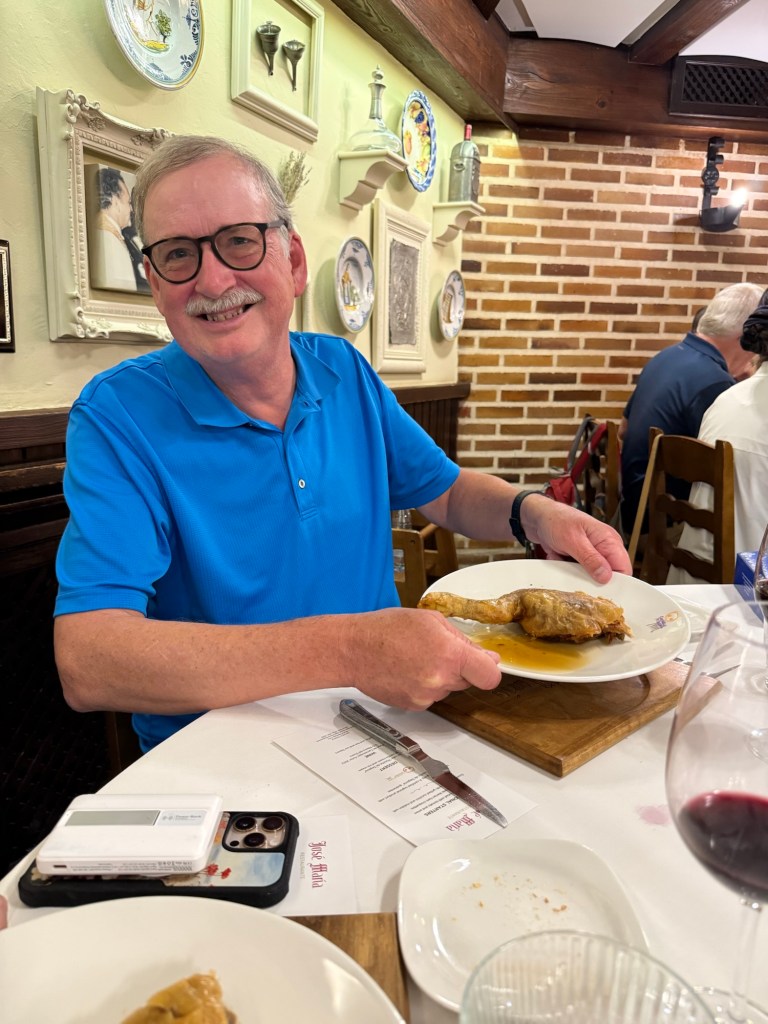
We finished with Ponche de Segovia, a local layered cake with vanilla cream and ice cream, followed by espresso.

Every part of the meal felt like it belonged to the day—unhurried, full of flavor, and unforgettable. We were full, lots of wine and an after drink like baileys, we were ready for the bus ride aka nap home.
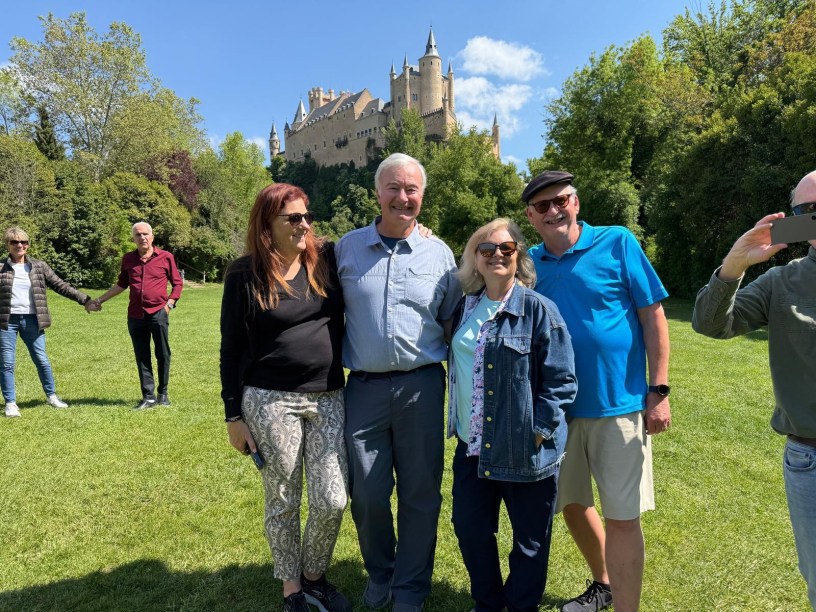
Before we could leave and nap, our bus stopped so we could see the castle one last time.
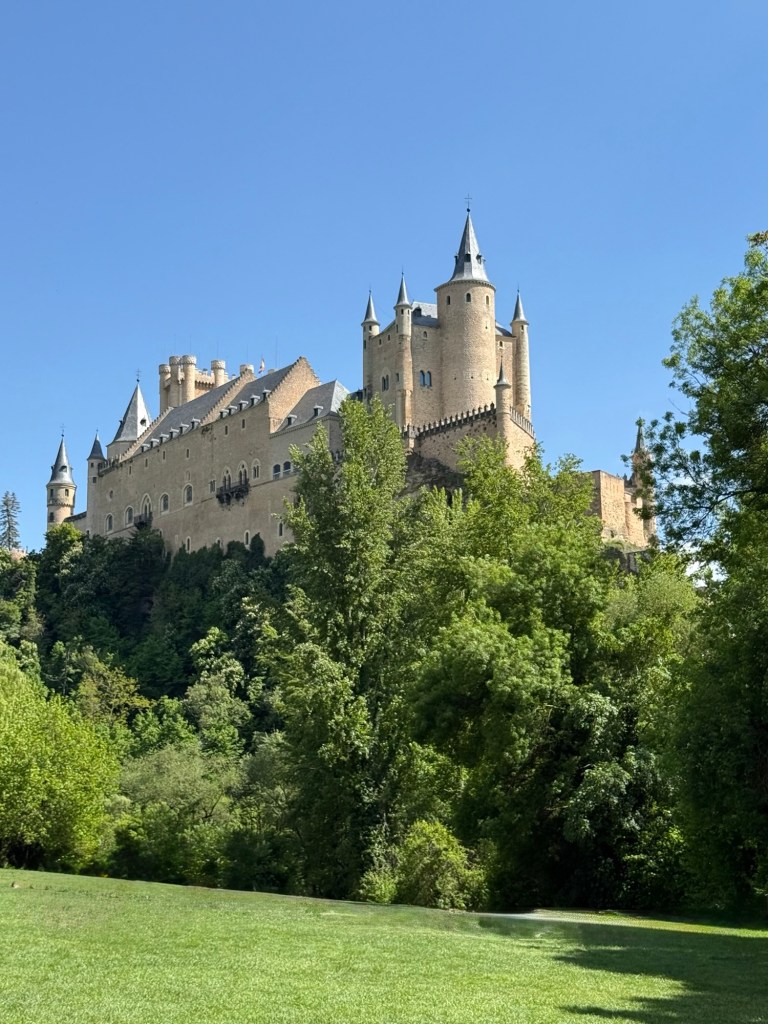
Alcázar of Segovia

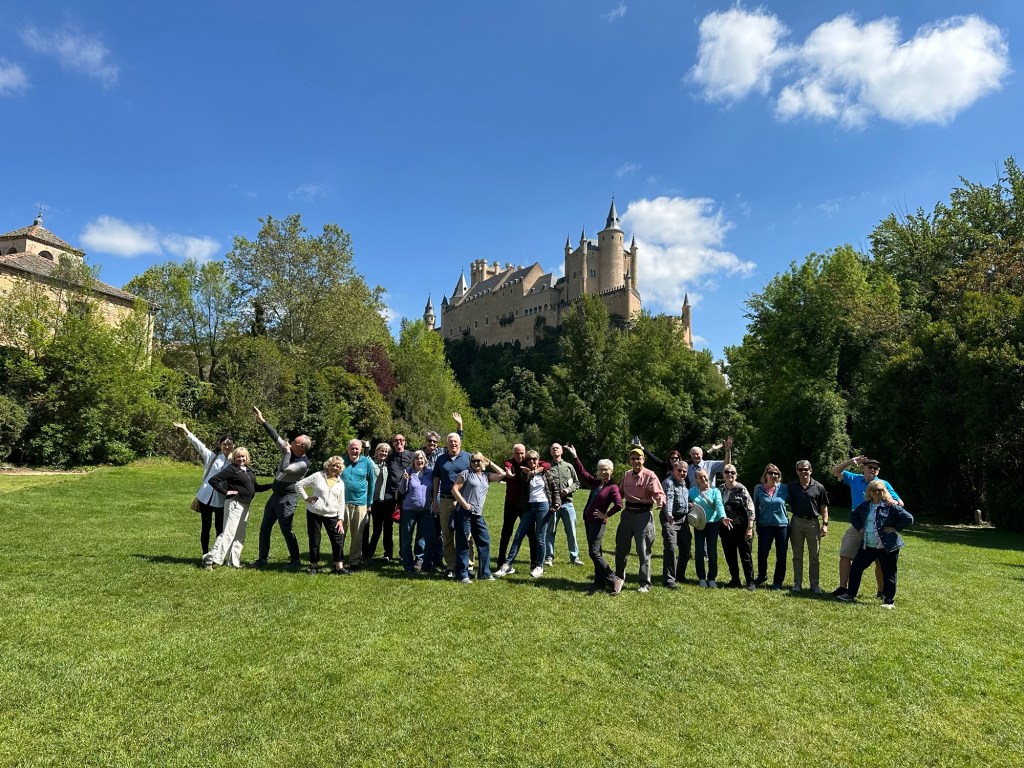
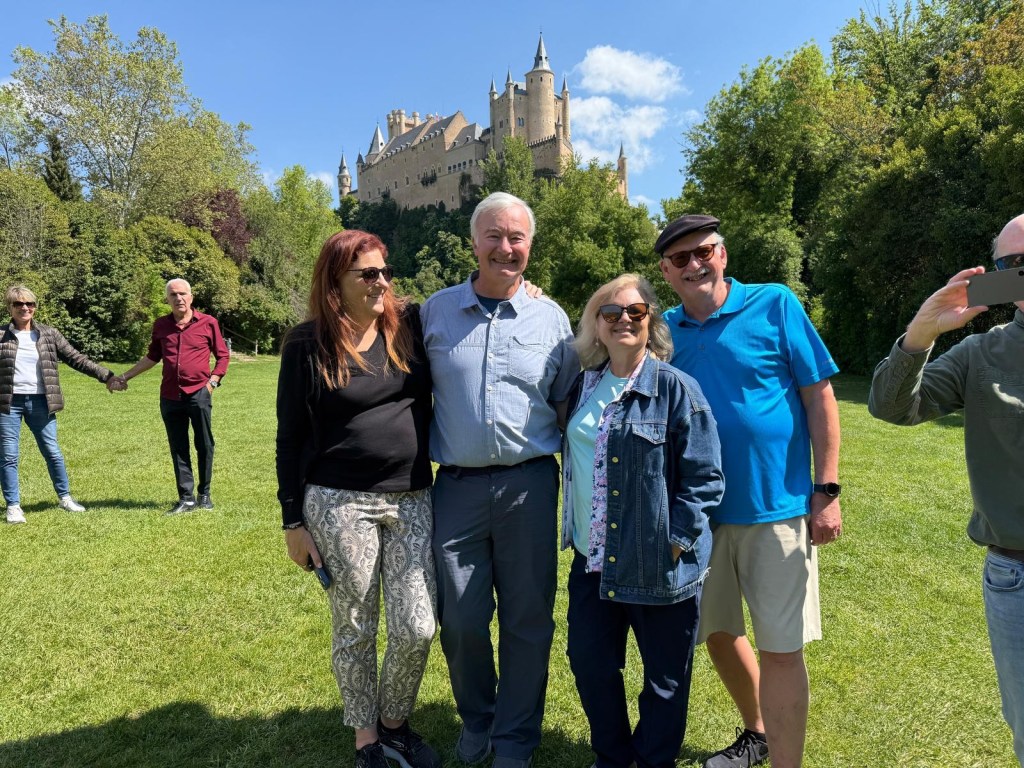

Javier finally herded the cats and got us back on the bus for our trip back to Madrid. We all napped. When we hopped off the bus we headed for a bull fight which will encompass part 2.
 Happiness is Possible