
Bob understands how Rick Steves plans these trips—he gives you just enough structure to see the major sights, but also builds in gaps so you can explore on your own. Bob pays close attention to those windows of free time and likes to look ahead at what’s possible. One of the options he found for Madrid was a bullfight.
So he reaches out and asks if we’re interested. Barb was really curious about it, and I figured, sure, why not? When he brought it up, he casually referred to Barb as “bloodthirsty,” which I wasn’t quite sure how to take. Barb and I were both picturing the Disney version of a bullfight—some pageantry, maybe a little drama, but mostly a cultural show. So I sort of brushed off that little clue.
Next thing we know, Bob tells us he’s gone ahead and bought the tickets. They were in the sun, which meant they were the cheaper ones, but that was fine—we were in. Then, after he secures the seats, he adds, “You know they kill the bull, right?”
Wait. What?
Like, actually dead?
“What do they do with the bull afterward?” I asked. “Do they eat it?”
“No idea,” he said. “We’ll find out.”
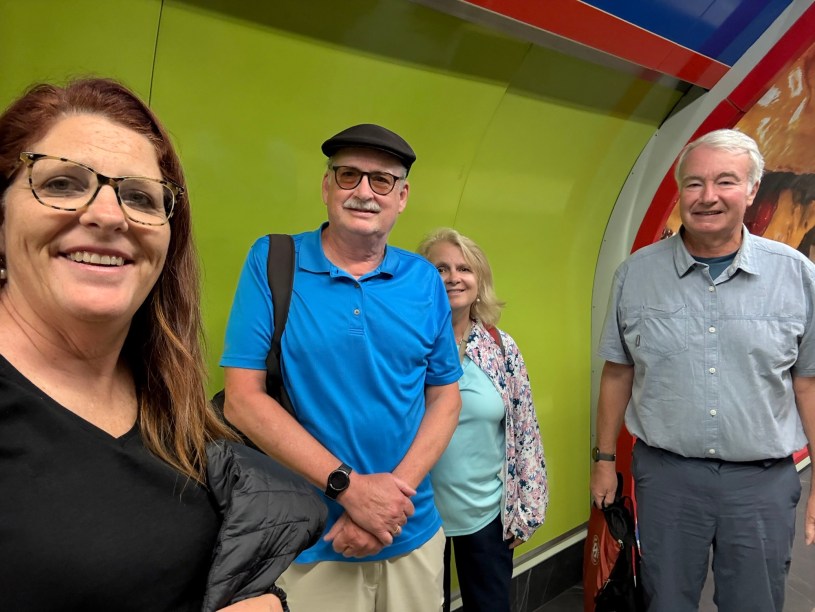
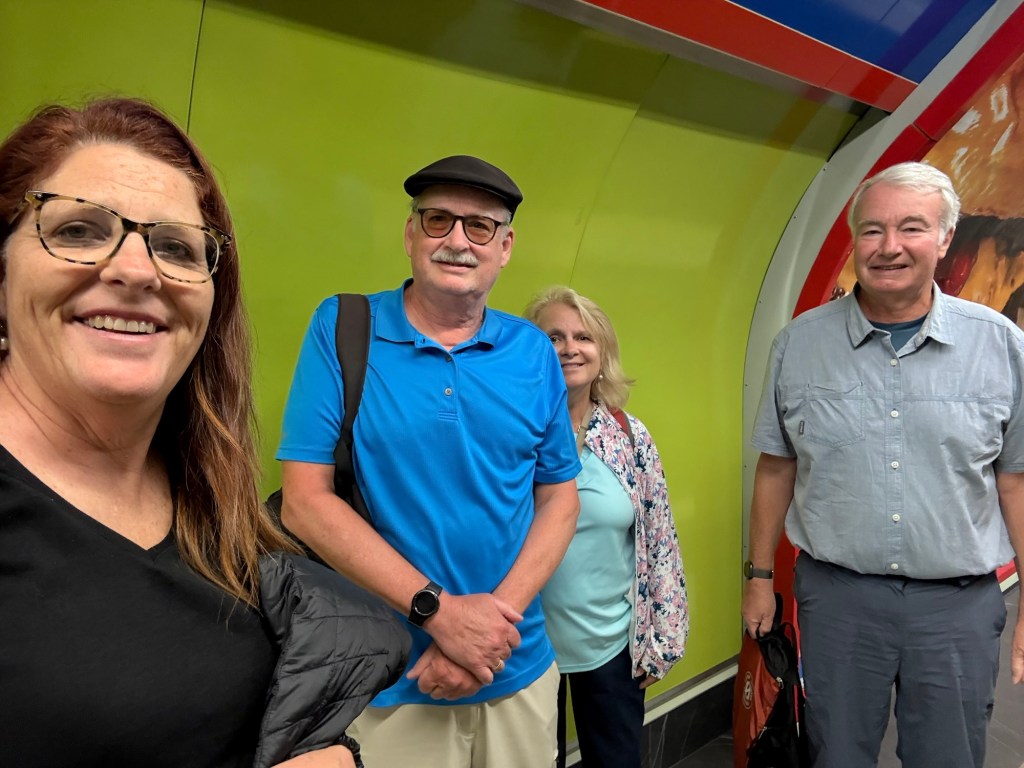
So that’s how we ended up boarding the Metro after a Segovia-style lunch of roast suckling pig, heading straight from one intense experience to another. We started our journey from near the Four Seasons Hotel, where the bus had dropped us off. The nearest Metro station was Sevilla, just a short walk away. From there, we boarded the train and navigated through the late-afternoon crowds, hoping it wouldn’t be as packed as Barcelona had been. No such luck—it was rush hour. Cheek to cheek with strangers, we held our breath (literally and figuratively) and rode all the way to Las Ventas, the stop for Madrid’s famous bullring.

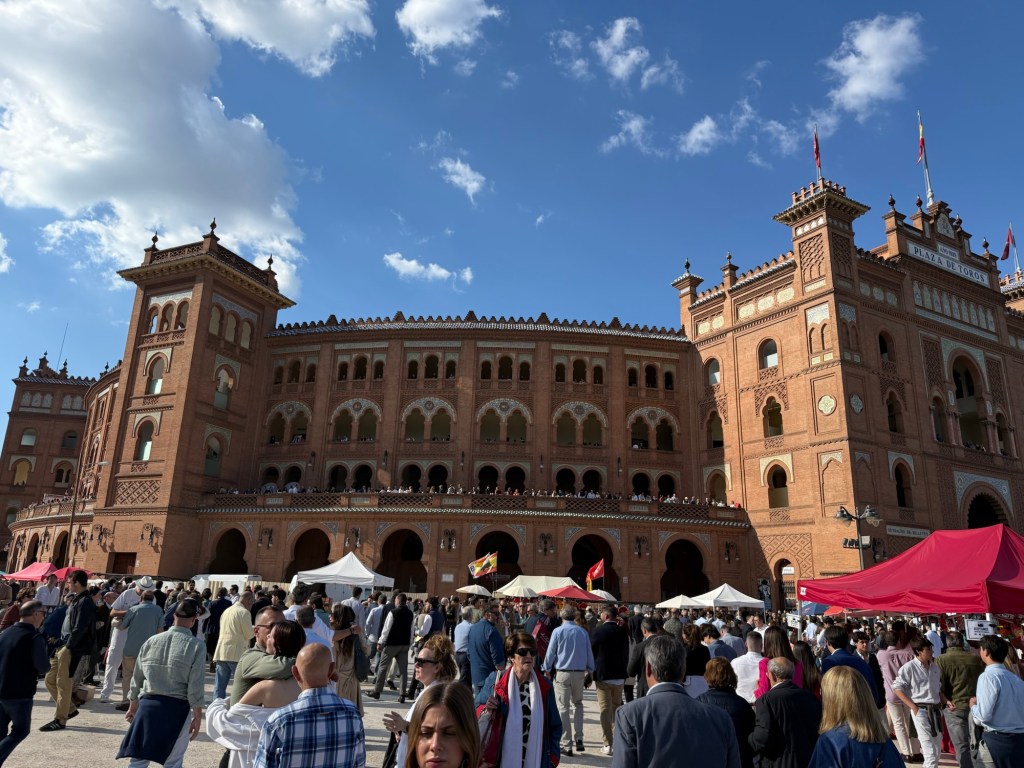
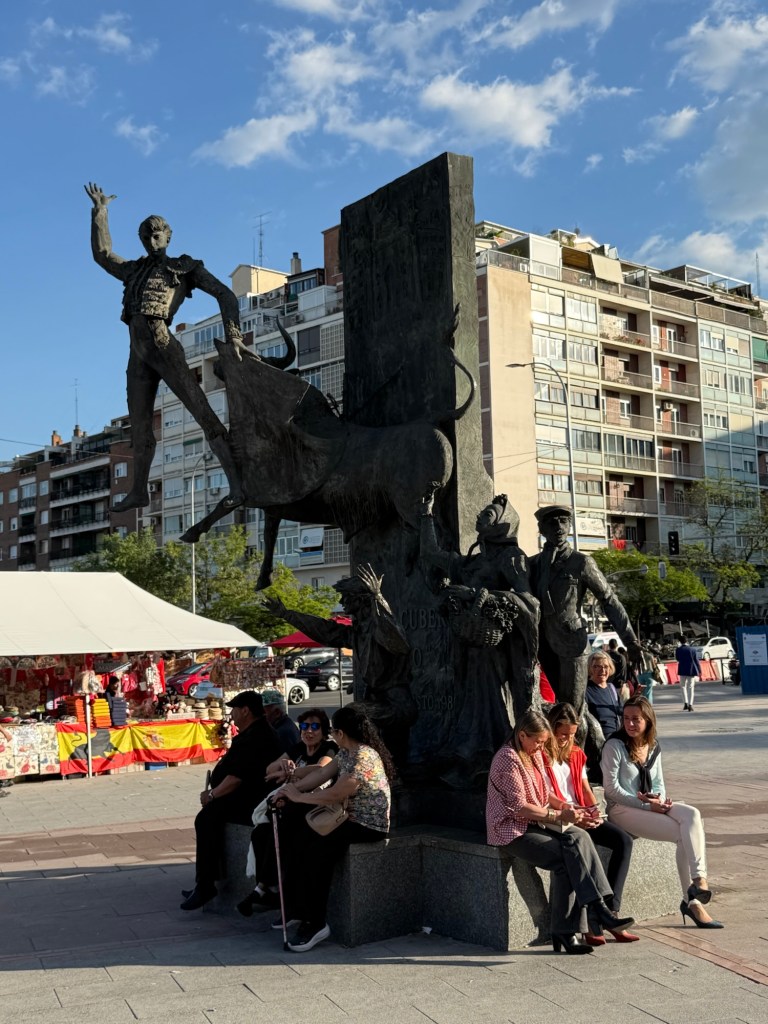
We emerged into sunlight at Las Ventas, which seats nearly 23,800 people.
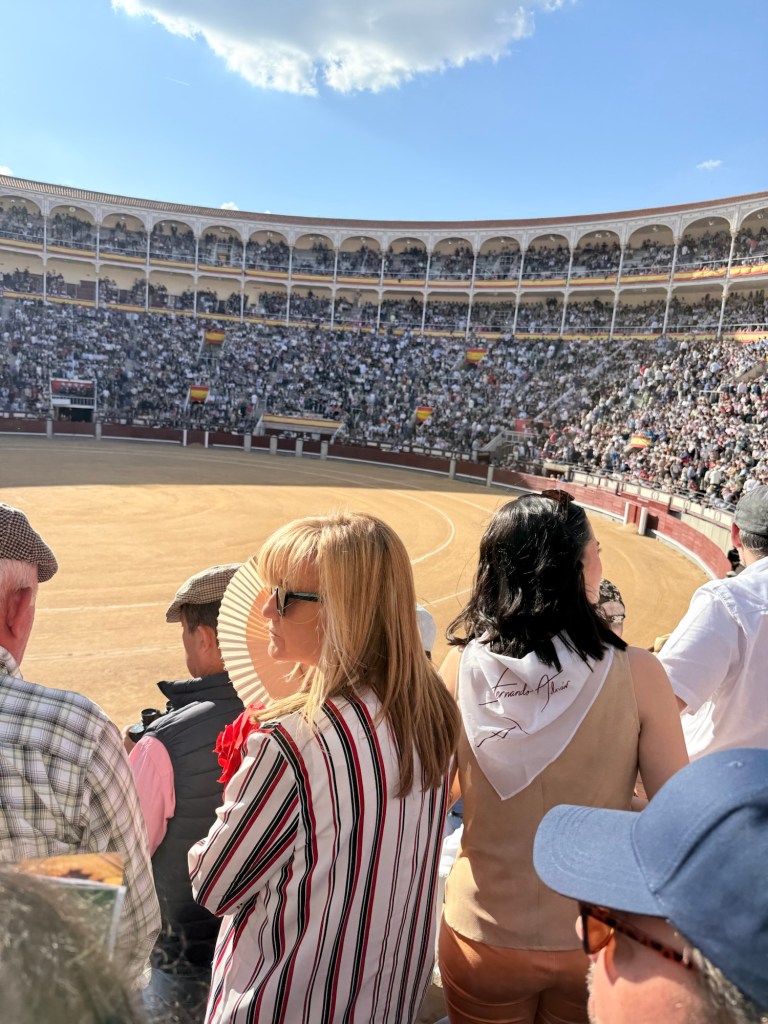
We followed the Rick Steves rule: go to the bathroom when you can. Tim, Barb, and I made our stops—Bob didn’t. On our way in, I spotted these little cushions you could rent for €1.50. The seats were plain concrete, so thankfully we grabbed a few. The guys were glad I did—those things were lifesavers.
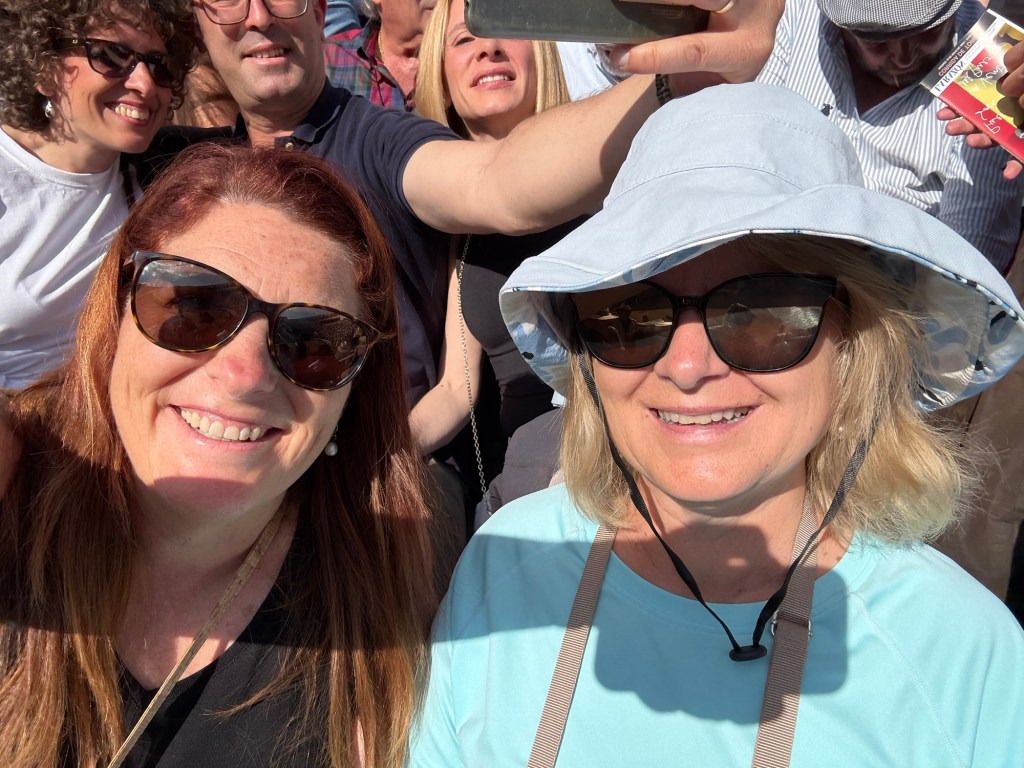
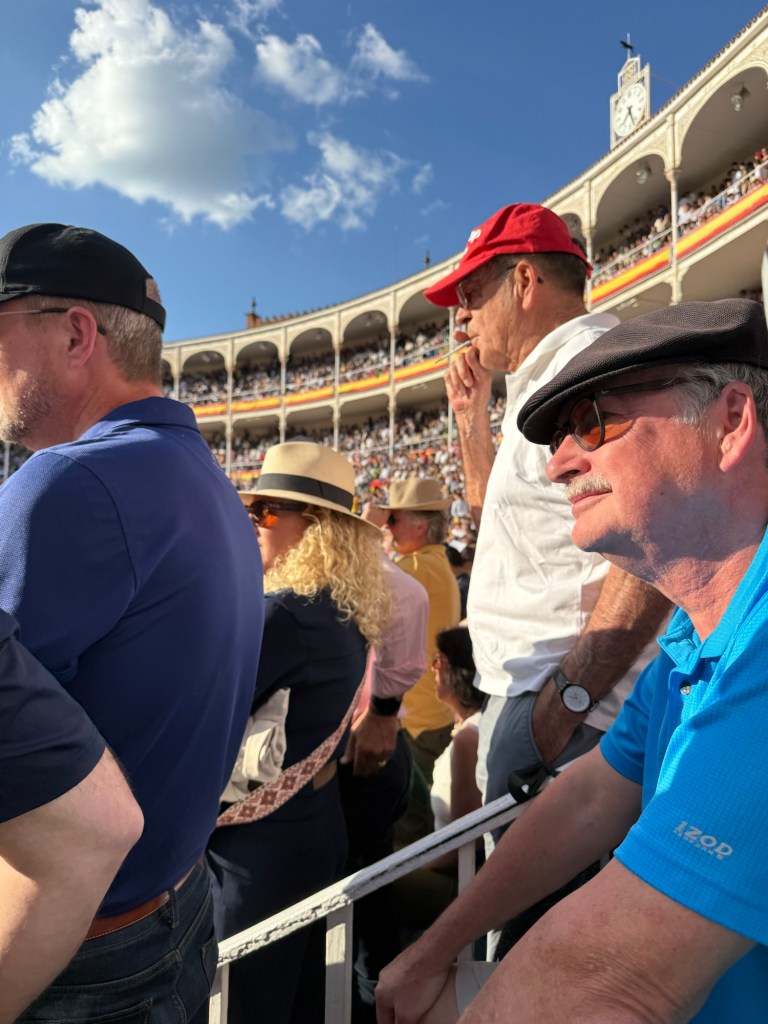
We climbed into our seats. It was packed, elbow to elbow, full of energy. Everyone knew what was coming. The crowd was buzzing. Some men wore fedoras, women were dressed up, there were cigars in the air. It felt more like a ceremony than a sporting event.
The performance started with a procession: picadores on heavily padded horses, banderilleros in their ornate outfits, and finally the matador himself—though he’d return later for the final act. It was dramatic and proud—an artful introduction to what was about to unfold.
And then—silence. No announcements, no music, just quiet. Thousands of people, completely still. It wasn’t formal, but it felt sacred. I’ve since learned that many matadors pause to pray before the fight begins. In that moment, it was as if the entire arena held its breath with them.
Then the bull entered.
It charged into the ring, disoriented, running in circles. You could see the braided tail, carefully tied with a ribbon, and the brand on its side—marking the ranch that raised it. It came out looking ceremonial, almost honored. But also… innocent. It had no idea why it was there.
And then—it looked up at me. Big black eyes, wide and confused. And for a second, it reminded me so much of Emma’s dog, Scout. There was something in its face that just said, “Help me. What am I doing here?”
And I looked back, horrified, thinking, Someone should tell the bull what’s about to happen.
TRIGGER WARNINGS ON THE VIDEOS Proceed with Caution
The banderilleros moved first, distracting the bull, darting behind wooden barriers as it chased them.
Then came the picador on horseback. The horse was blindfolded and draped in a heavy, padded armor called a peto. Even the rider’s leg and stirrups were reinforced with metal.
That’s when it turned. The picador drove a long spear—the vara—into the back of the bull’s neck. The sun hit the wound just as blood sprayed out. I gasped. The crowd cheered. I blinked away tears, stunned.
The bull rammed the horse again and again. But the armor held, and the horse barely flinched. Then the horse exited the ring.
At that point, the banderilleros returned. This part caught me off guard. One by one, these miniature-matador-looking men ran up and stabbed the bull with banderillas—barbed sticks with colorful paper decorations that hang off the bull’s back like streamers. The bull kept charging, now wounded and bleeding more with each pass. It was brutal. Because his fur was black, you couldn’t always see the blood, but you knew it was there. The bull ran around the ring with these sticks flapping from his shoulders, confused, angry, and clearly in pain. The crowd kept shouting, clapping—completely invested.
The Matador arrives! At first, the matador—or sometimes one of his assistants—enters the ring with a large pink-and-yellow cape called a capote. It’s used to test the bull’s movements and energy early on, with sweeping passes that look almost like a dance.
This time, he held the muleta—the small red cape—and began the final dance. For the record, bulls are red-green colorblind. The red cape doesn’t enrage them—it just hides the blood. What draws the bull in is movement.
Behind that cape is a sword, the estoc. And after a series of elegant, taunting moves, when the bull was weak and bleeding, the matador lifted the sword and drove it between the shoulders, aiming for the heart.
The bull dropped. The crowd roared.
Then the horses returned, ropes were tied around the bull’s legs, and it was dragged from the ring as the audience clapped.
It was hard to watch. I sat still, absorbing it. Part of me wanted to leave. Part of me wanted to understand. I had no idea what a bullfight truly was. Somehow, I’d made it this far in life never realizing the bull dies.
The crowd was completely in it. Not distracted—present. They clapped in rhythm when they were impressed. They shouted “¡Olé!” when the matador executed a particularly graceful pass. There were no winners or losers in the way we’re used to. No score. No time clock. The art, the bravery, the ritual—that’s what they were responding to. They’ve likely grown up with this tradition, understanding the subtle cues, the pacing, the meaning. I didn’t know the rules, but you could feel the shifts in energy with every movement in the ring.
Then came a second bull. A different matador. A different performance, but the same ending. Another life taken. Another round of applause.
After the second one, Bob stood up and said, “I need to take a bathroom break.”
I looked at him and said, “I think we’re done now. Can we go?”
And just like that, we made our way out.
Was I glad I went? Yes, in a complicated way. I didn’t enjoy it. But I didn’t look away either. I came here to understand Spain—and this is a part of it. A tradition layered with history, beauty, and yes, brutality. And as much as I struggled with it, I also understood that it wasn’t mine to judge in the moment.
Later in the trip, we’d visit a bull ranch and learn more about how the animals are raised—and how it all ties into this ritual. That post is coming soon. If you’re horrified reading this, I understand. I was horrified too. But don’t turn away just yet. There’s more to it than one night in the arena.
I can now say I’ve seen a bullfight in Spain. Bucket list checked off.
And I’ll never forget it.
 Happiness is Possible