
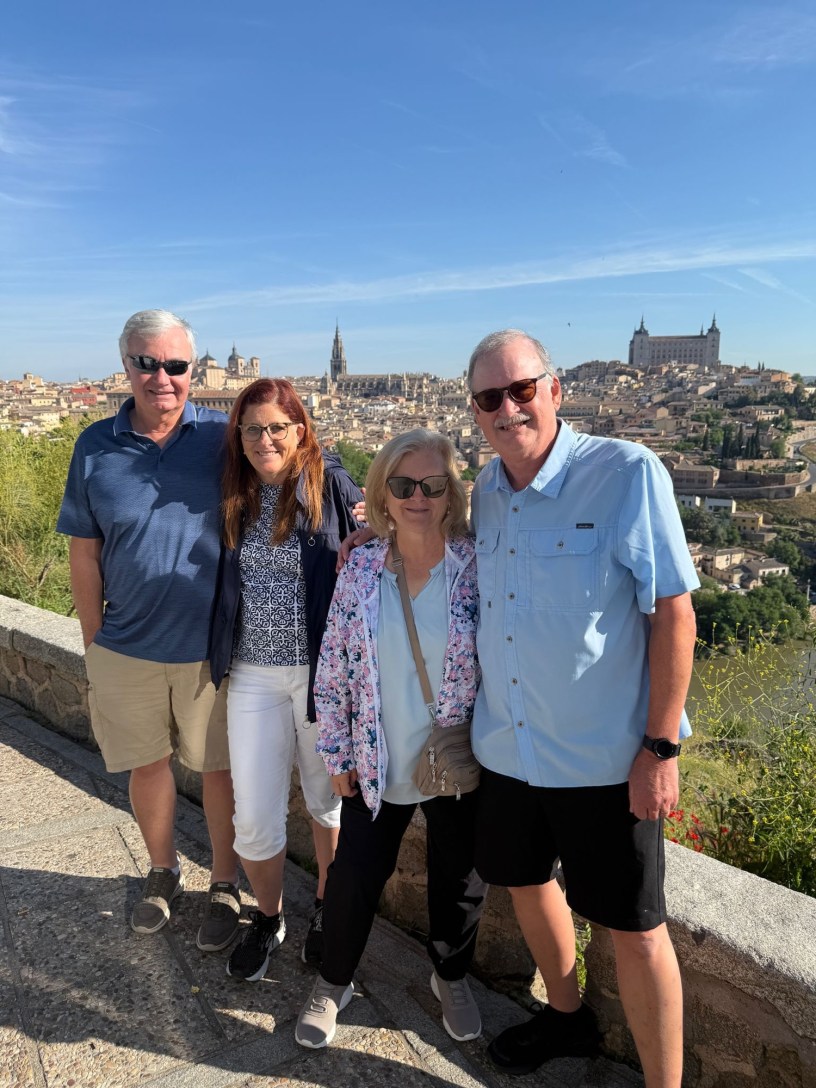
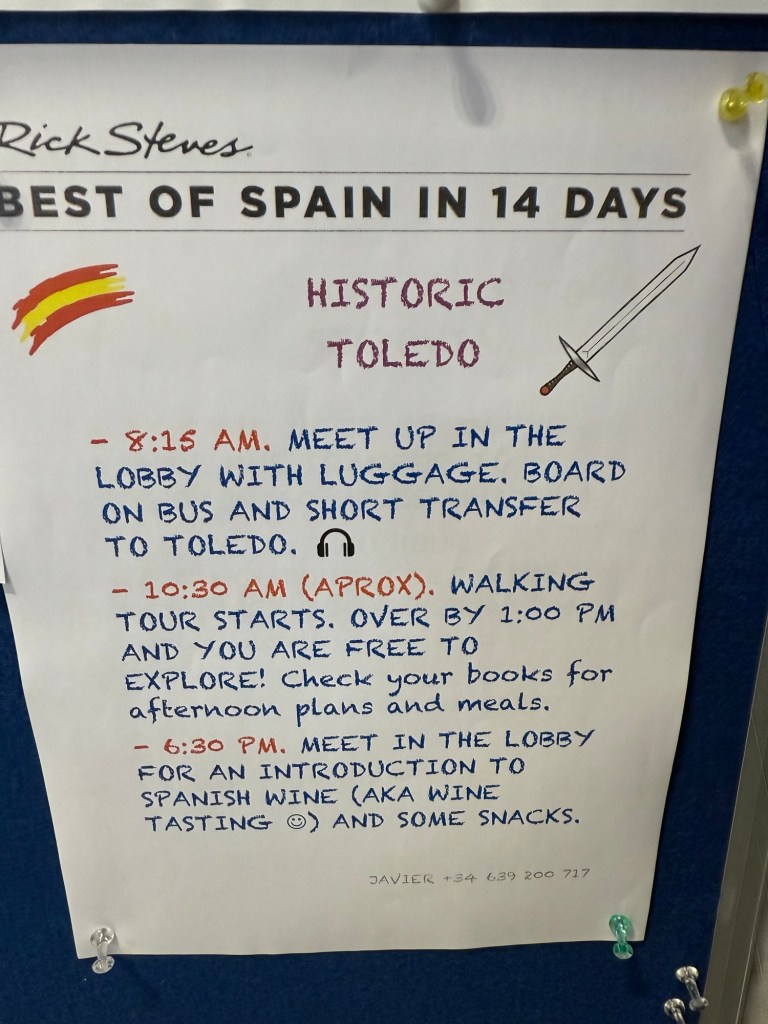
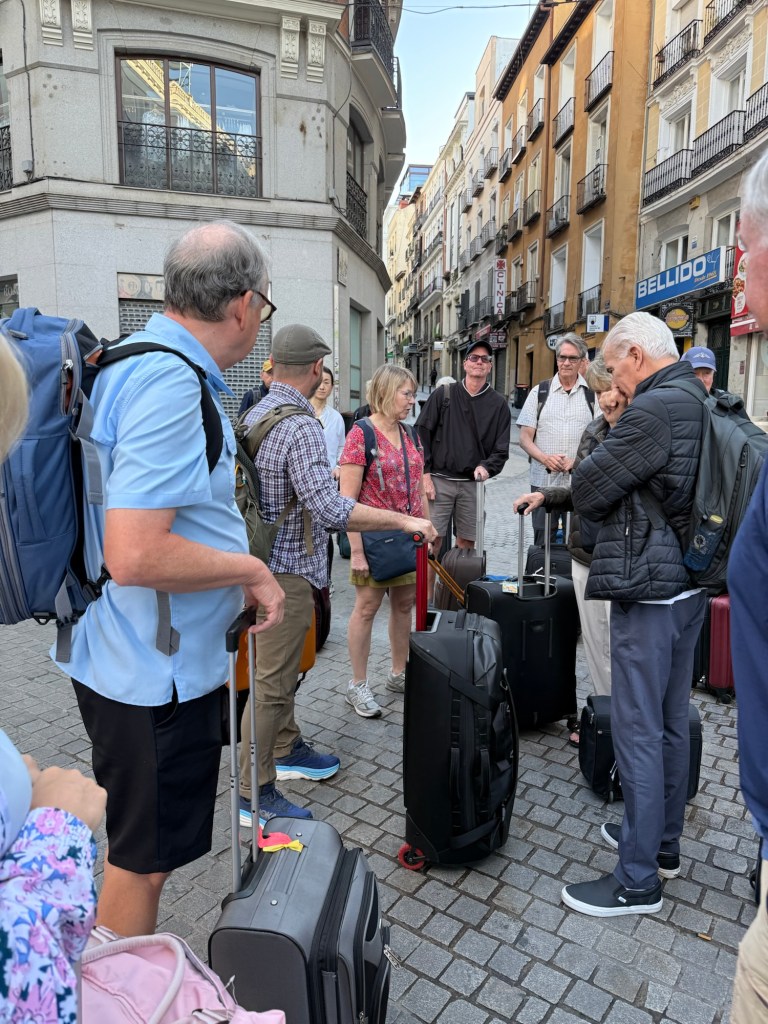
We left our hotel in Madrid and boarded the bus, bidding the capital goodbye.
As the city faded behind us, Javier launched into a history lesson, setting the stage for our day in Toledo, a city layered with faith, power, and centuries of cultural exchange.
Toledo’s story stretches back more than 2,000 years. Originally a pre-Roman settlement, it was developed into a city by the Romans in the 2nd century BCE, who named it Toletum. Then in the 6th century CE, the Visigoths—a Germanic tribe that took over after the fall of Rome—made Toledo their capital, laying the foundation for Christianity in the region.
But that foundation shifted in 711, when the Moors—Muslim forces from North Africa—crossed the Strait of Gibraltar and swiftly took control of most of the Iberian Peninsula. Within a few years, Toledo became part of Al-Andalus, a Muslim territory where culture, learning, and architecture thrived. Javier described this era not as a time of oppression, but as a period of growth: the Moors brought advances in science, medicine, architecture, and literature, transforming Toledo into a vibrant, multicultural city.
For centuries, Muslims, Jews, and Christians lived here in relative peace—each group with its own quarter, each contributing to the fabric of the city. This is when Toledo earned its enduring nickname: the “City of Three Cultures.”
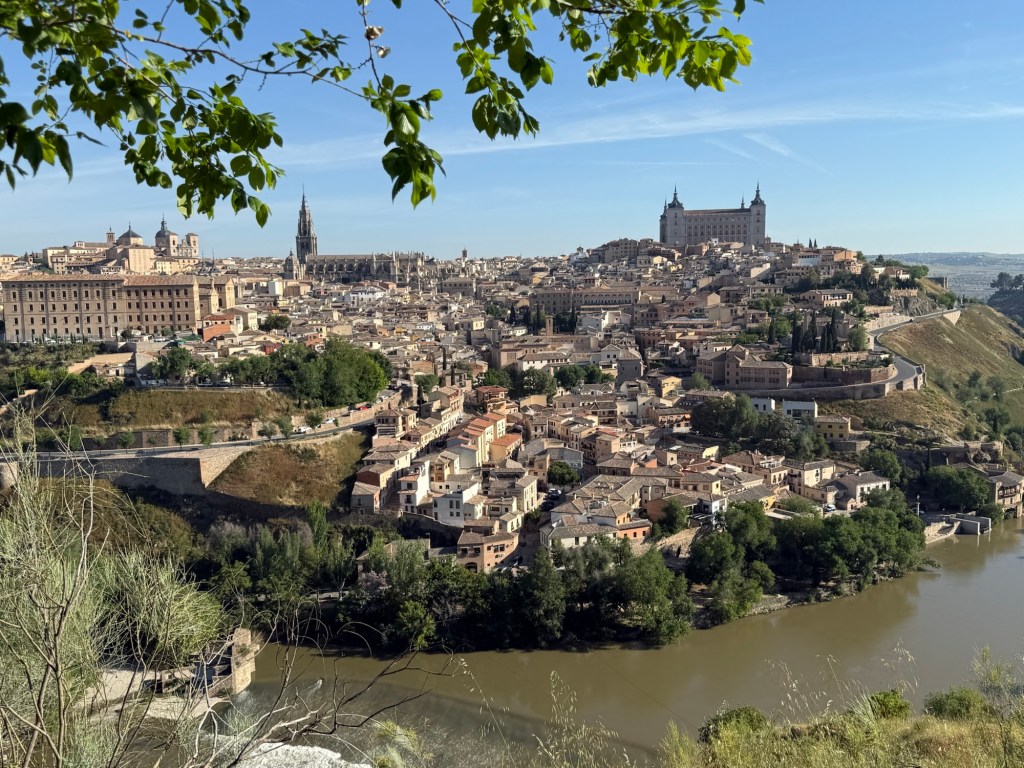
As the bus wound its way along the final 7-mile stretch of road into Toledo, the view opened up and we all reached for our cameras. The city seemed to rise out of the cliffs—fortified stone walls, tightly packed rooftops, and the cathedral tower piercing the skyline above the Tagus River. We stopped briefly at a scenic overlook to take it in.

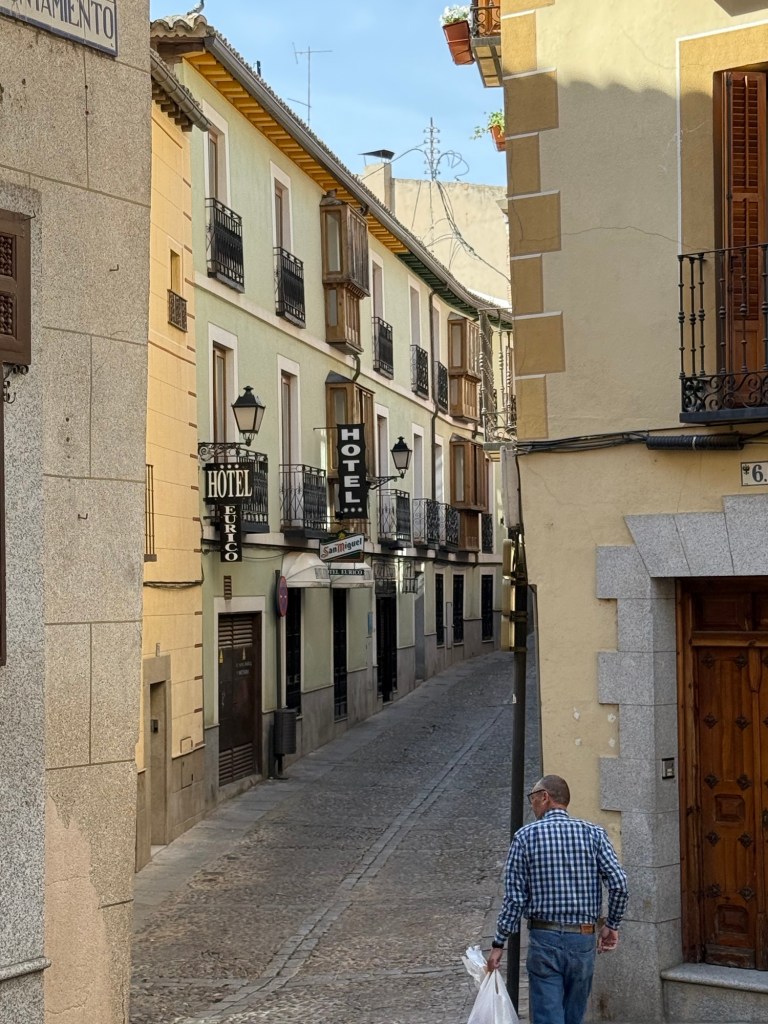
From there, the bus dropped us outside the city walls, where a van took our luggage ahead to Hotel Eurico. Toledo’s interior streets are too narrow and steep for tour buses, but the city has adapted beautifully. We entered via a modern series of outdoor escalators, cleverly hidden behind brickwork that mimics the medieval city walls. If you didn’t know better, you’d think you were still walking through 15th-century Toledo.
As we rose into the old town, Javier continued weaving history into the landscape around us. He explained that in 1085, King Alfonso VI of Castile reclaimed Toledo for the Christians. But rather than dismantle what had been built, Alfonso allowed the Jewish and Muslim communities to remain. The result was a new Christian capital layered over a rich multicultural base.
Toledo would go on to become the religious capital of Spain. The Archbishop of Toledo was the most powerful church official in the country—second only to the Pope. And although Spain was not yet unified, Toledo’s influence stretched far beyond its walls.
That changed in 1474, when Isabella I of Castile was crowned in Segovia—a moment we remembered from just days earlier. Her marriage to Ferdinand of Aragon brought the two largest kingdoms together, creating a more centralized Spain. But it came with a price: in 1492, they issued the Edict of Expulsion, forcing all Jews to convert to Christianity or leave. Muslims would face the same demand not long after. And to enforce it, they established the Spanish Inquisition, which especially targeted conversos—those who had converted but were suspected of secretly practicing their former faith.
By the time Philip II came to power, Toledo was still revered—but not ideal as a seat of government. It was crowded, tightly built, and heavily under Church control. So in 1561, Philip made a practical—and political—choice: he moved the capital to Madrid, establishing the modern power center of Spain. But Toledo remained the spiritual heart of the country.
Back in the present, we walked under fabric canopies strung between buildings—set up for the upcoming Corpus Christi festival in June. During the celebration, the cathedral’s massive gold monstrance is carried through these streets. Javier pointed out the meaning behind it, and suddenly, the decorations made perfect sense.

Javier pointed out a gourmet shop along our walk—great for picking up local specialties like wine, marzipan, and Manchego cheese.
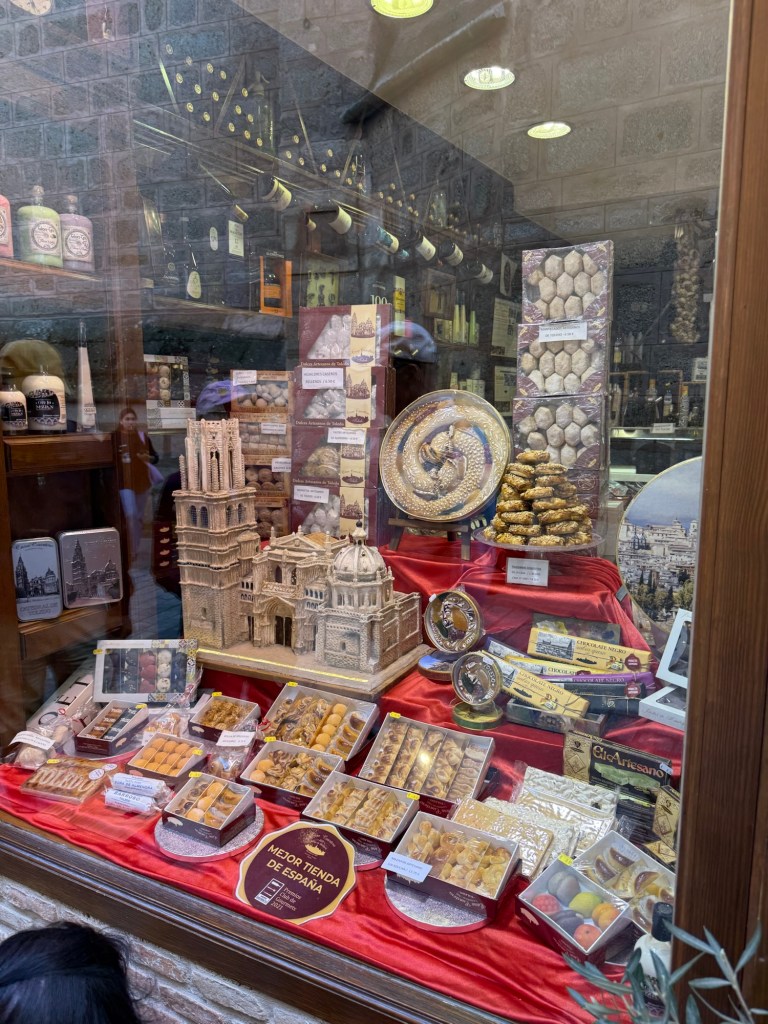
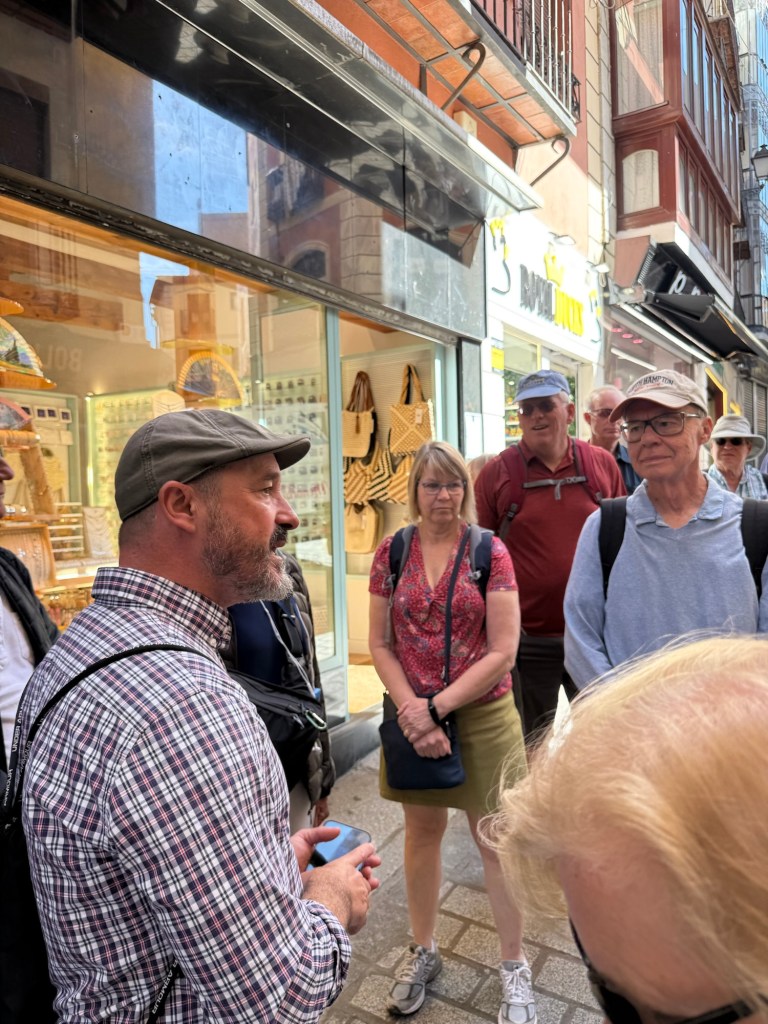
He gave us a few lunch tips as well as landmarks too.

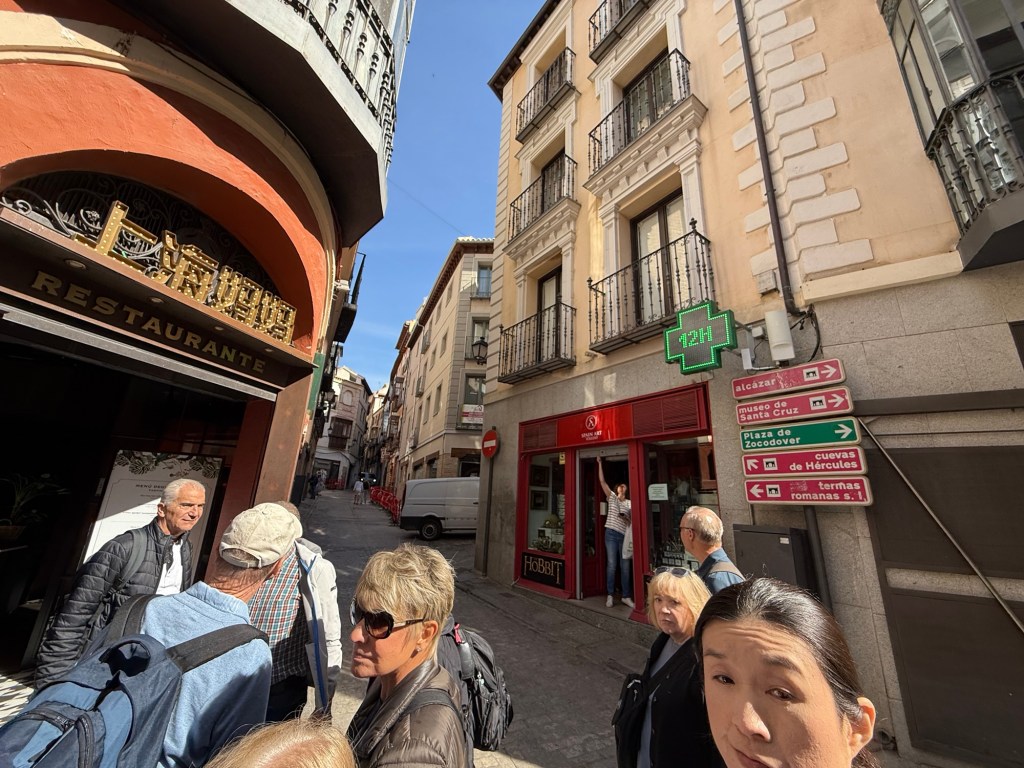
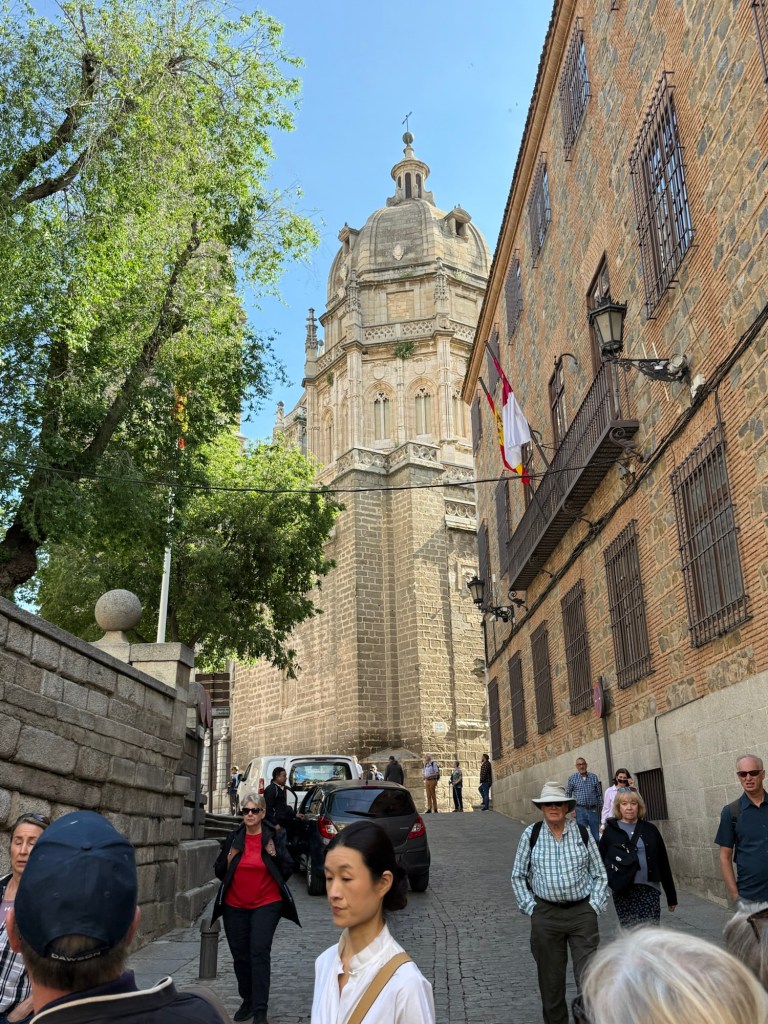
We passed the towering Toledo Cathedral, which we’d explore later.
Finally, we arrived at our home for the night—Hotel Carlos V, right in the heart of the old city. Our rooms weren’t quite ready, so we dropped our bags and took a moment to catch our breath. The walk into Toledo had already brought history to life—and we hadn’t even started the official tour.

 Happiness is Possible