
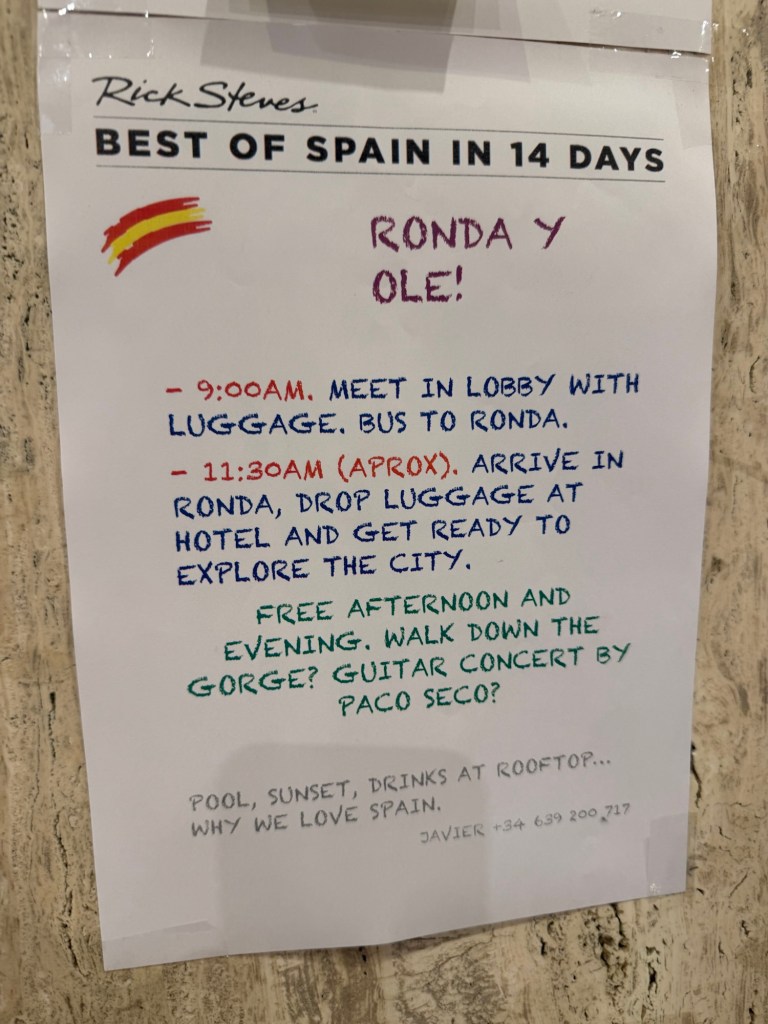
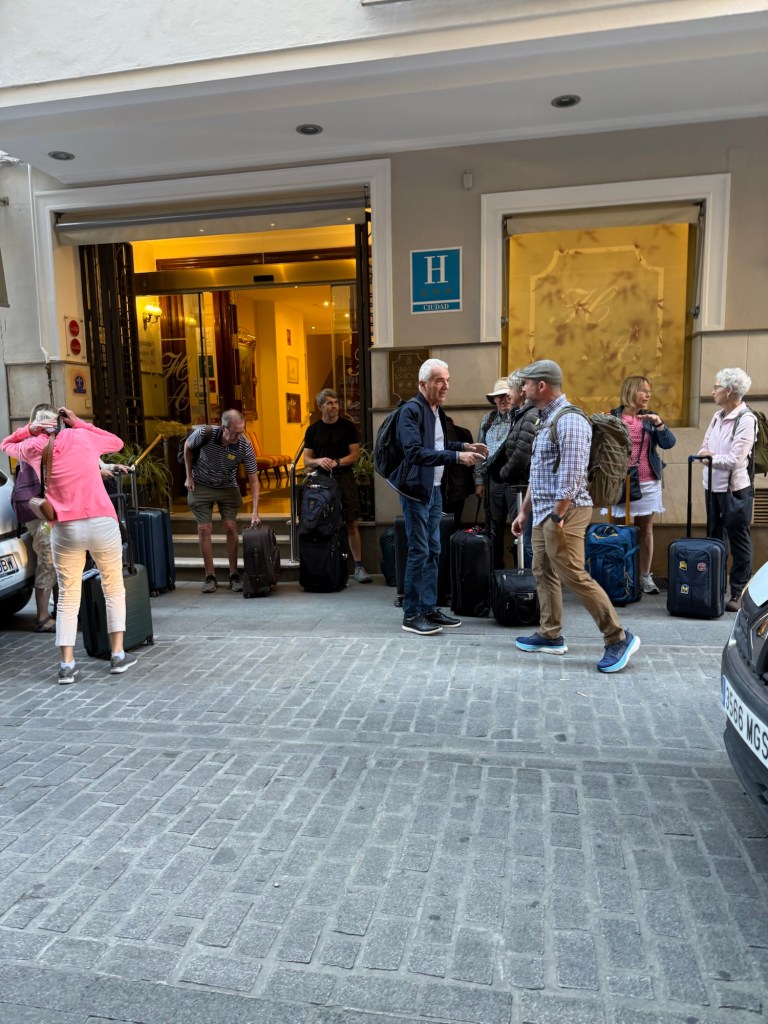
We said farewell to Granada at 9:00 AM sharp, rolling our bags into the lobby and grabbing our usual seats on the bus.
Today’s destination: Ronda—famous for its dramatic gorge, historic bridges, and Spain’s oldest bullring.
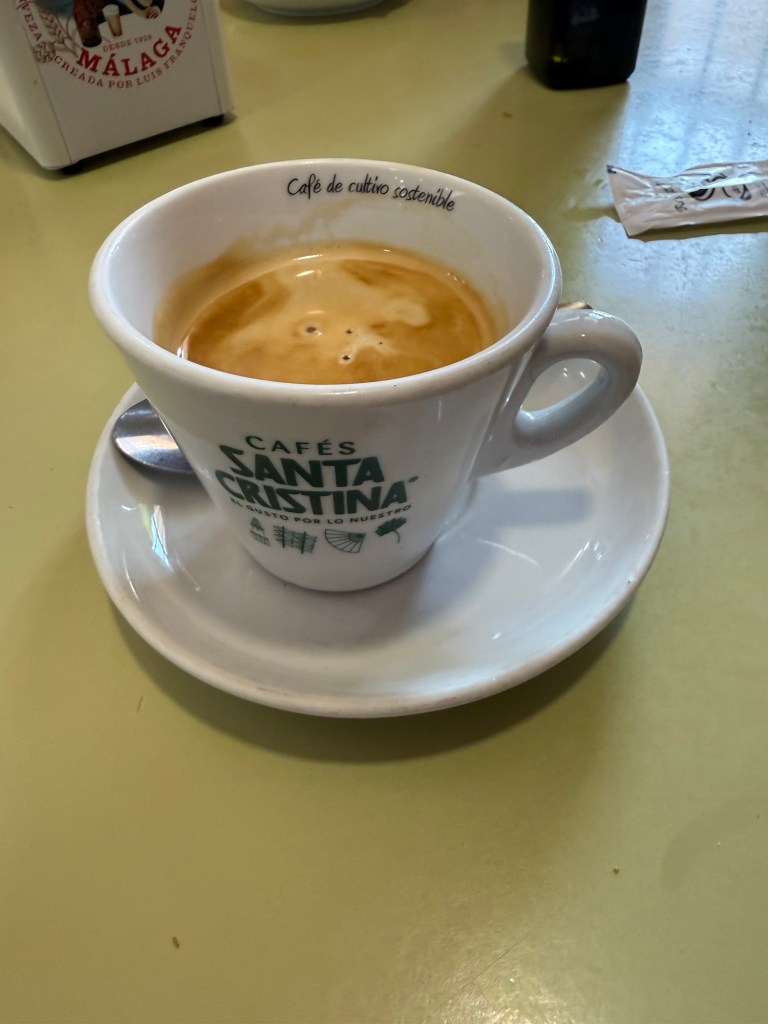
About halfway into the three-hour drive, we stopped at A.S. El Canal, a roadside café that gave us a quick chance to stretch and fuel up. Coffee in Spain continues to be an adjustment—always a tiny shot of espresso, never the full mug we’re used to. I’ve learned to order mine with milk (“café con leche”) to stretch it out and mellow the intensity.
Javier offered a traditional Andalusian snack: toasted flatbread topped with lard—one plain, the other with a red peppery spread called zurrapa de lomo. I didn’t try it, but it definitely added a splash of local flavor to our morning break.
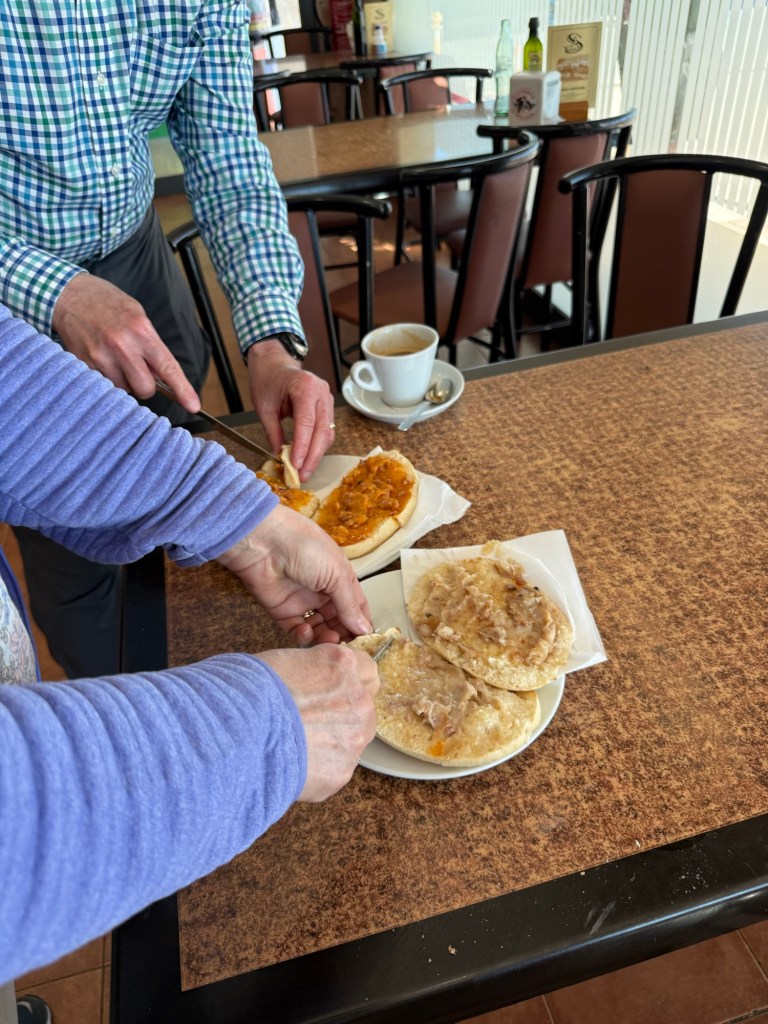
While we sipped coffee on the terrace.
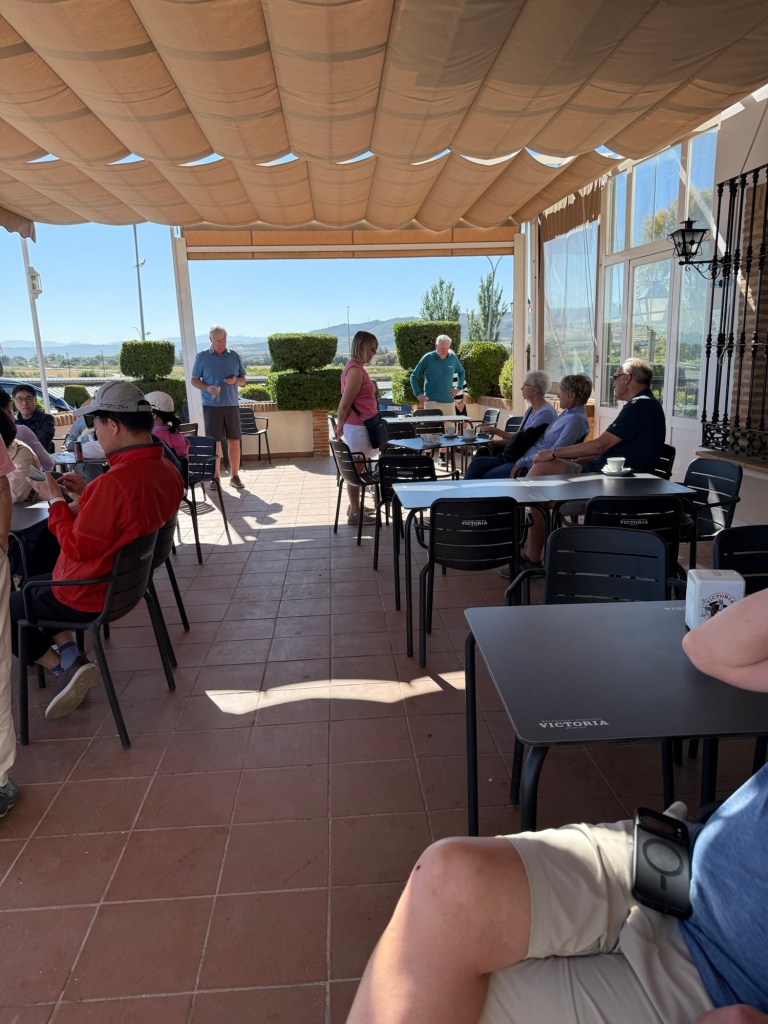
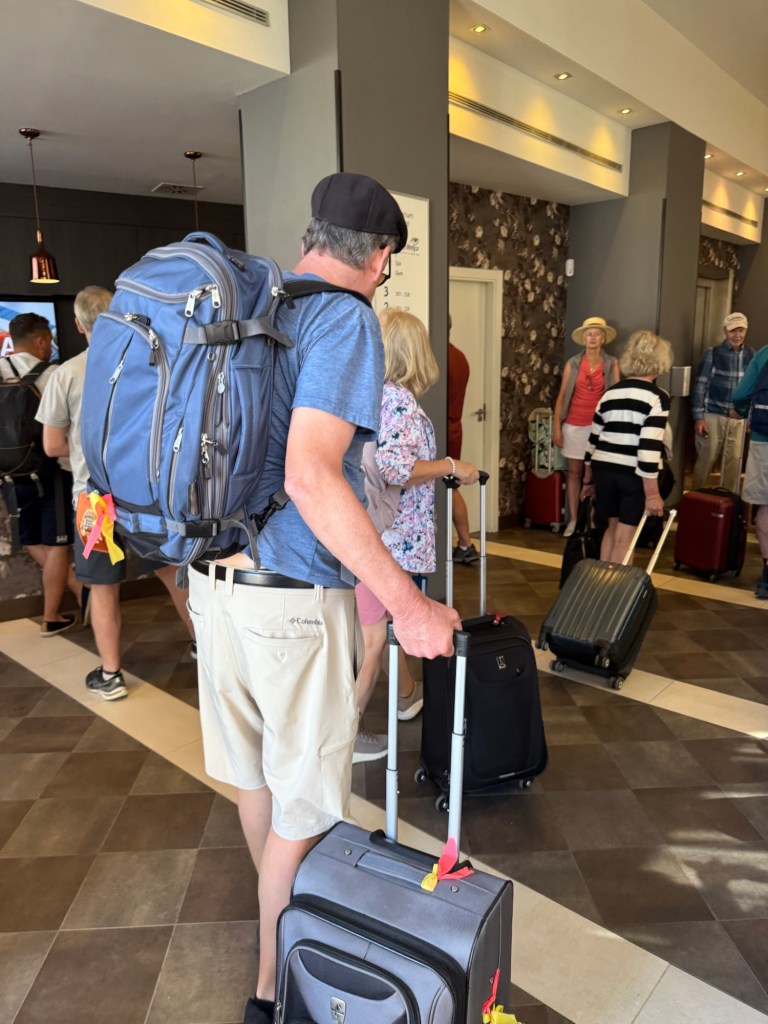
Once we arrived in Ronda, we dropped off our bags.
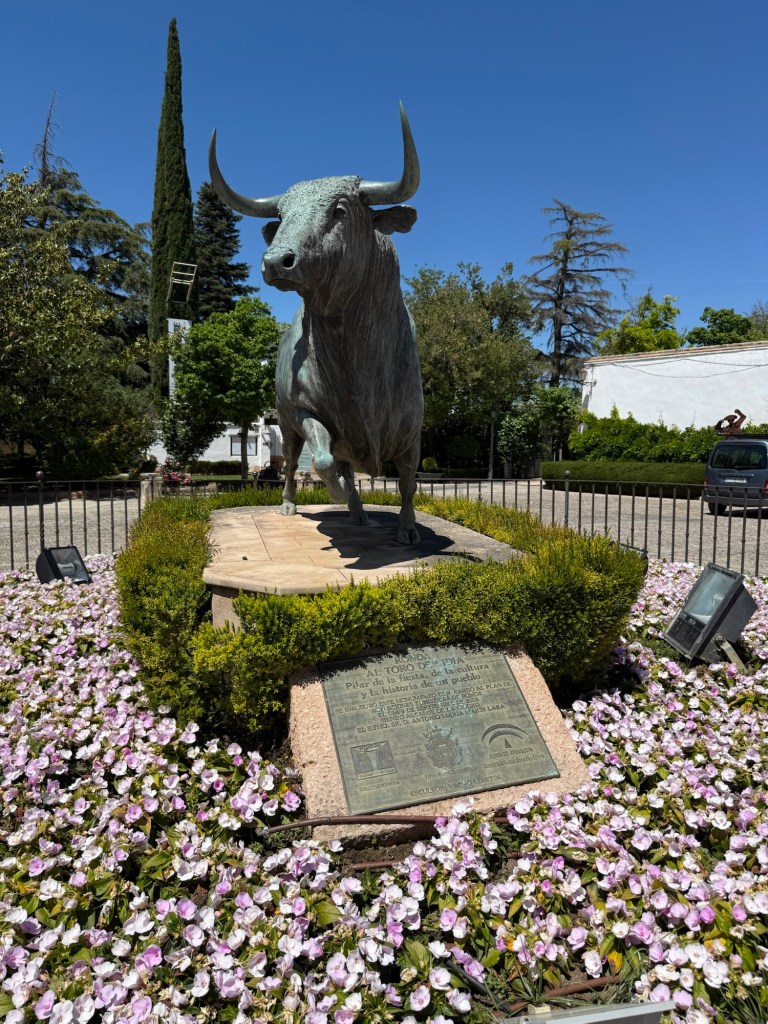
Next we headed straight to the Plaza de Toros, the oldest bullring in Spain, completed in 1785. It felt surprisingly small—just 5,000 seats—but it’s one of the most historically important. For context, Madrid’s Las Ventas bullring holds nearly 24,000 spectators, so Ronda’s ring felt more like a quiet theater than a stadium.
The Plaza de Toros is more than just old—it’s the birthplace of modern bullfighting. Built by the Royal Cavalry of Ronda, it was originally used to train noblemen in horsemanship and mounted combat. Over time, it became central to a new form of bullfighting on foot, pioneered by Ronda native Pedro Romero, who famously fought over 5,000 bulls without serious injury. The ring is constructed entirely from local sandstone and features elegant double rows of columns.
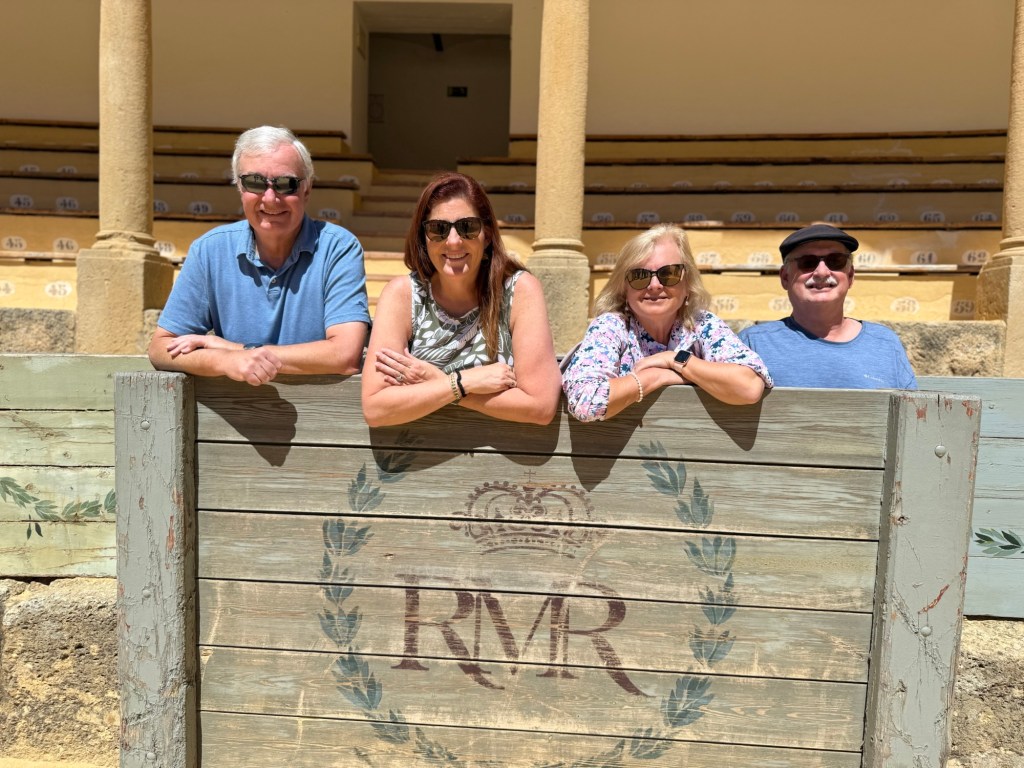
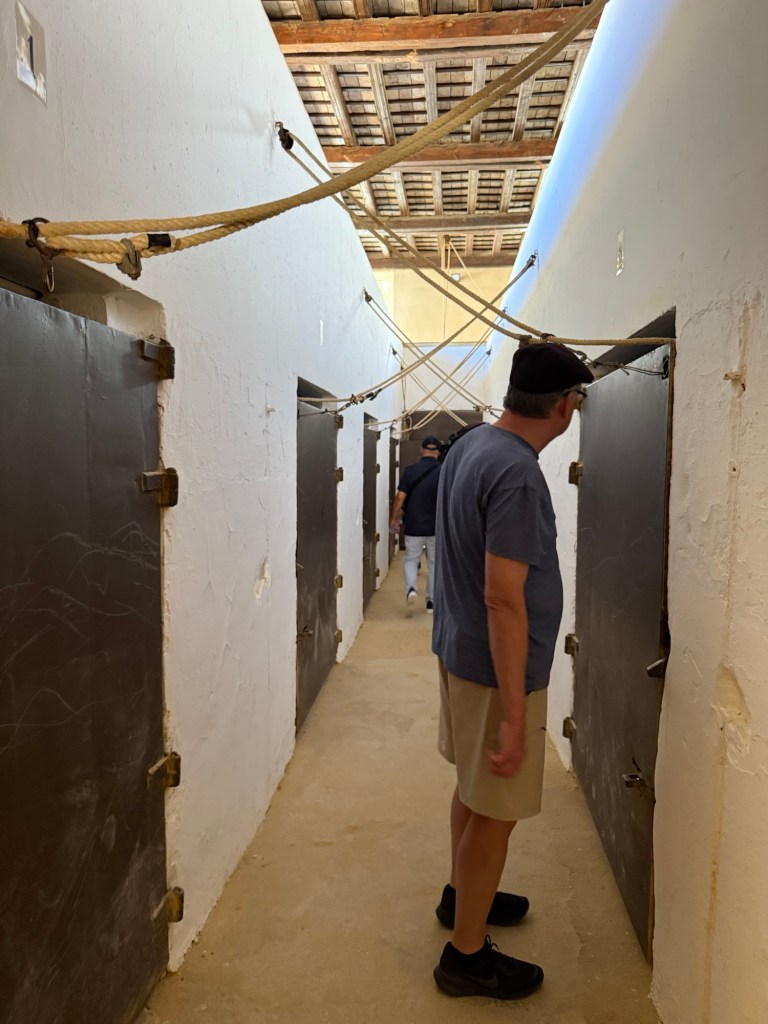
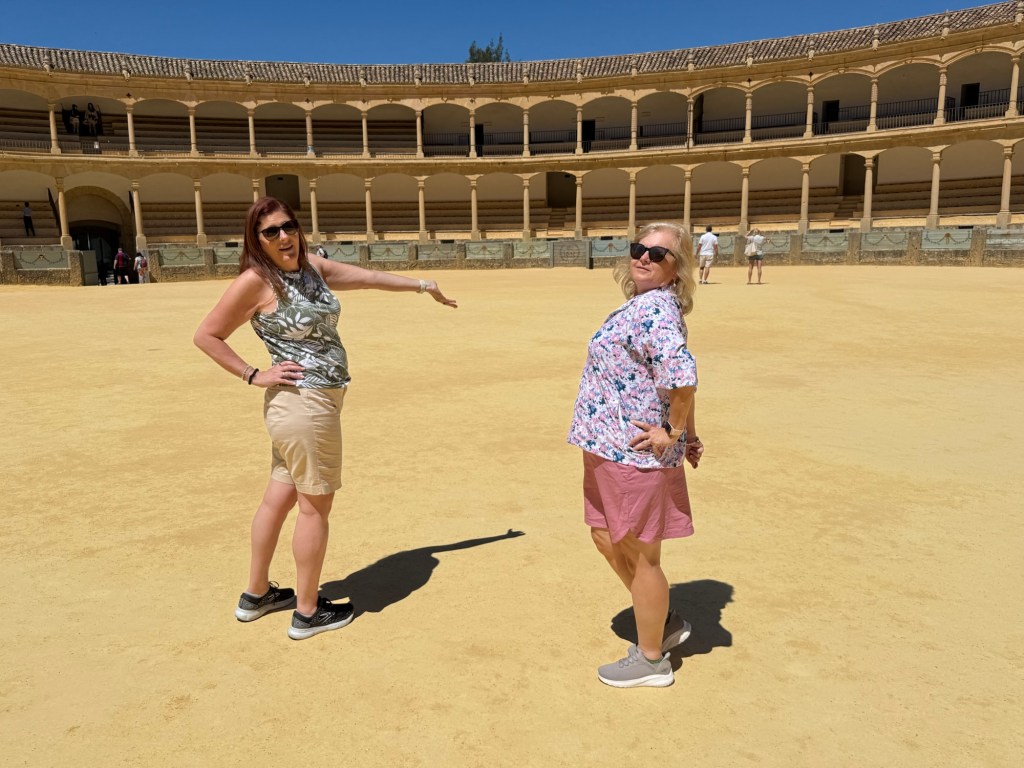
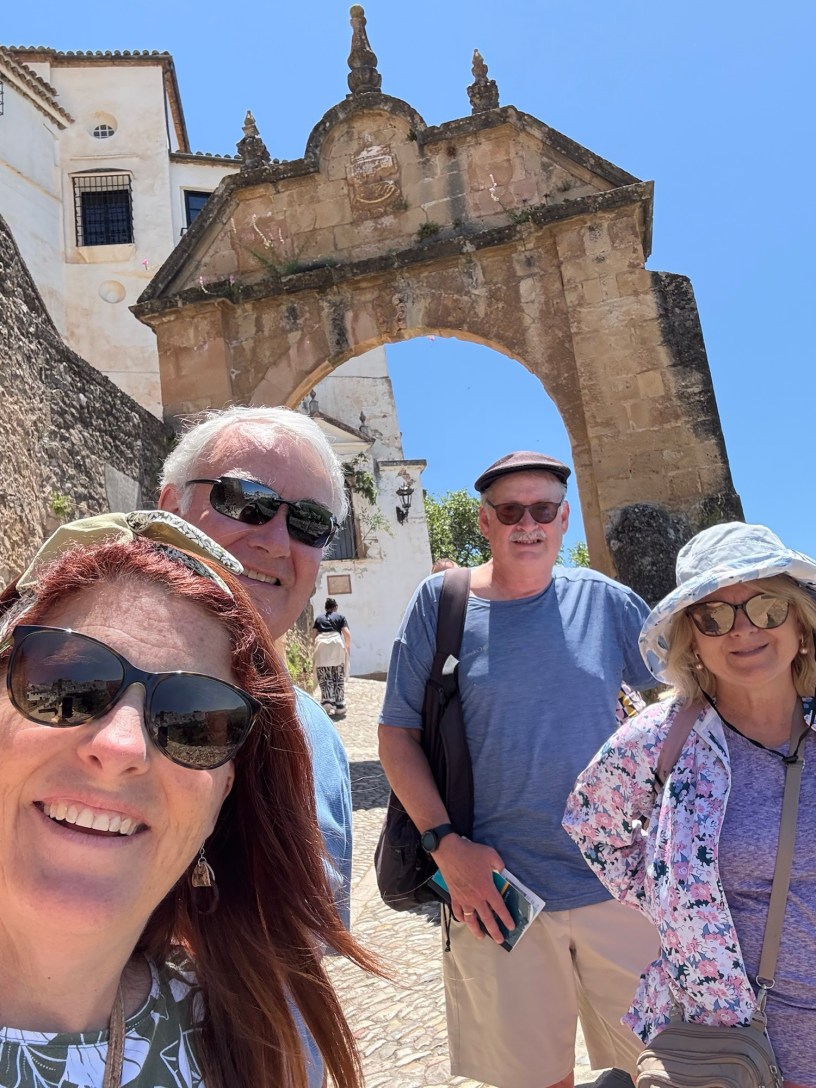
After the tour, we headed to find lunch. We started at the top of town, heading towards the “new” bridge, along the way enjoyed the overlooks. It offered incredible views of El Tajo Gorge, the whitewashed buildings perched along the edge, and the rolling countryside below.
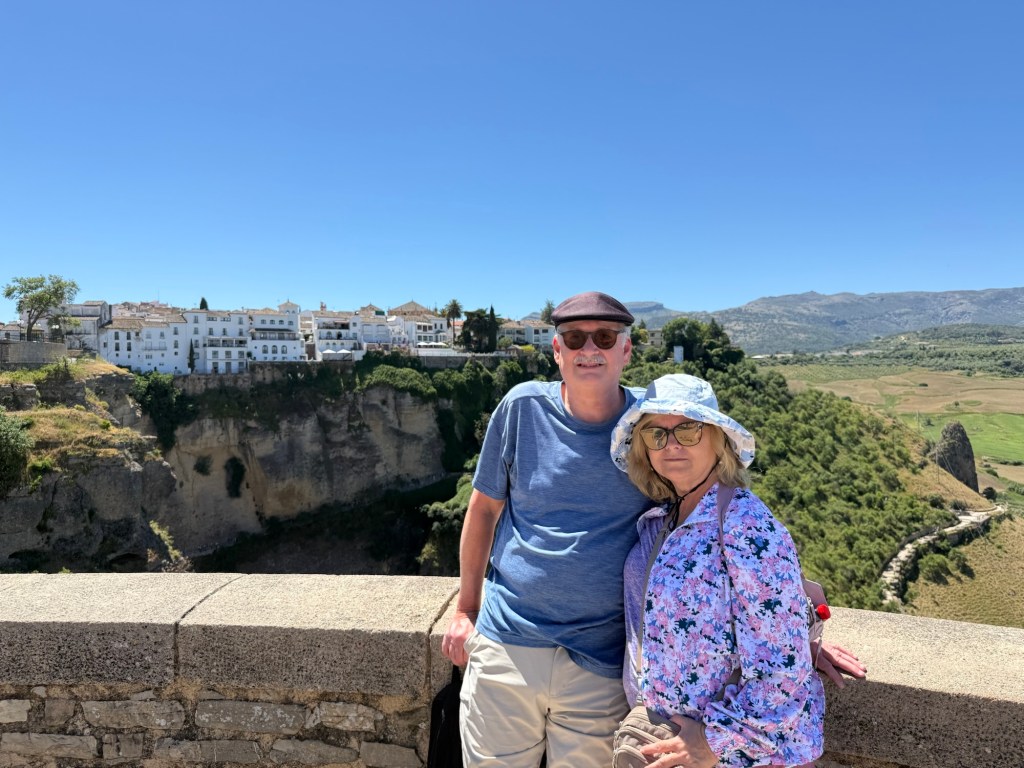
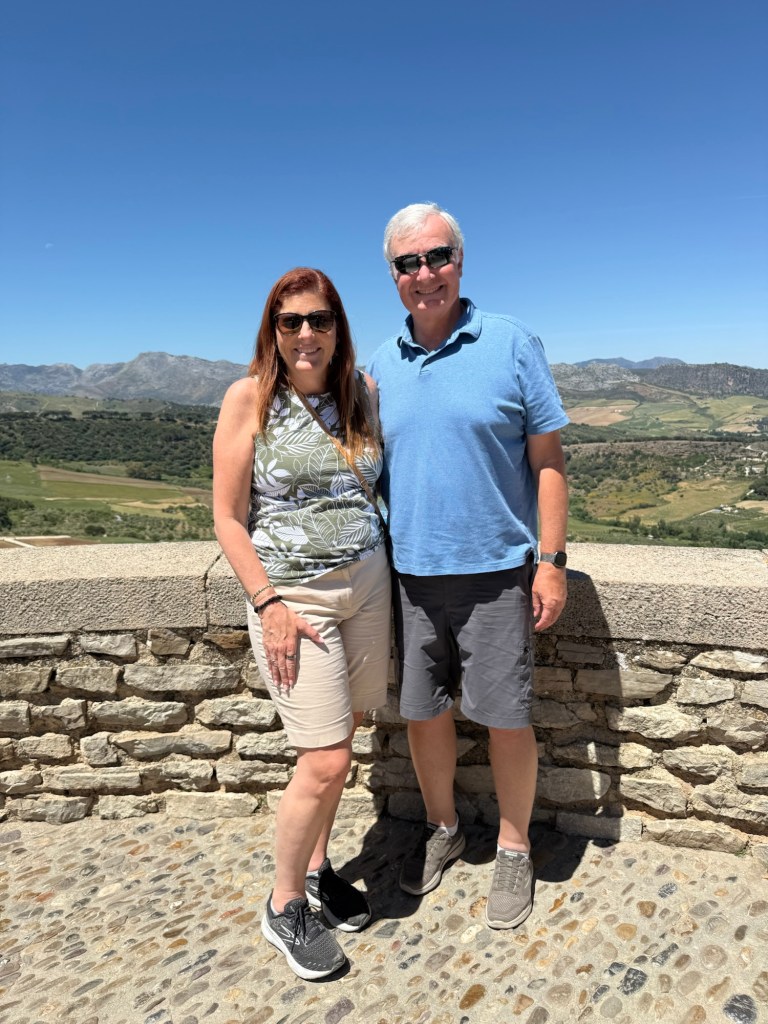

From there, we continued toward the showstopper: the Puente Nuevo (“New Bridge”), completed in 1793 after more than 40 years of construction. Spanning nearly 100 meters above the gorge, it links Ronda’s two halves—the older Moorish Quarter, with its winding streets, and the newer Mercadillo Quarter, built after the Christian Reconquest. The views from every angle were spectacular.


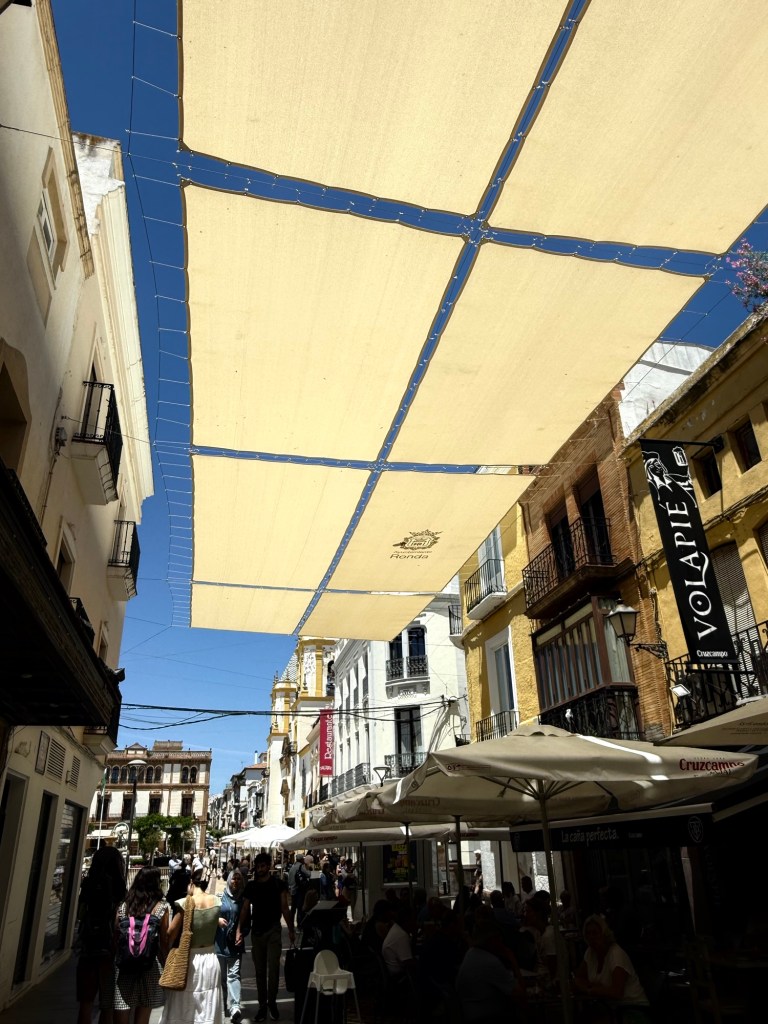
Once we reached the other side, we stopped for lunch at Tabanco Los Arcos, a cozy little spot tucked just off the plaza. I ordered one perfectly seasoned meatball—yes, just one—but it was rich, flavorful, and exactly what I needed after the walk. Barb and I both ordered sangrias, which hit the spot on a warm Andalusian afternoon. Cold, fruity, and just strong enough to make us forget we still had stairs ahead.


This ceramic mural, titled “Ronda a los Viajeros Románticos” (“Ronda to the Romantic Travelers”), is a tribute to the 18th- and 19th-century writers and artists who were inspired by Ronda’s dramatic beauty. It features a colorful tiled map of the town, surrounded by quotes from famous visitors like Rilke and Hemingway, capturing the wonder and emotion Ronda stirred in them. The mural honors Ronda’s legacy as a place of artistic and poetic inspiration.

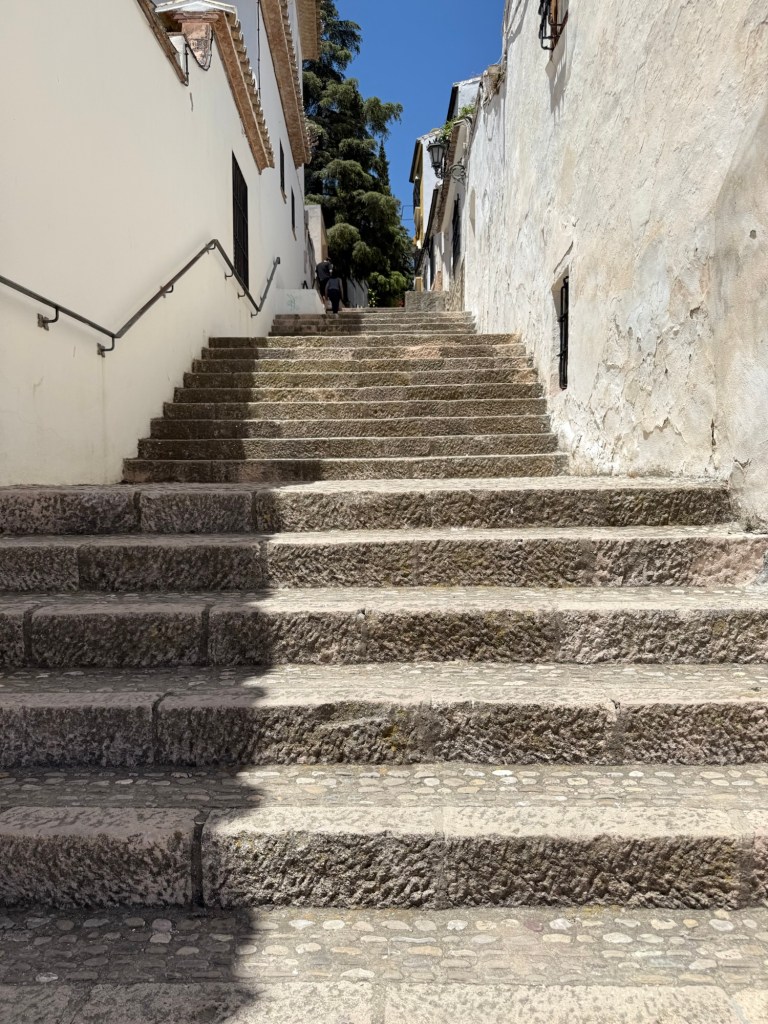
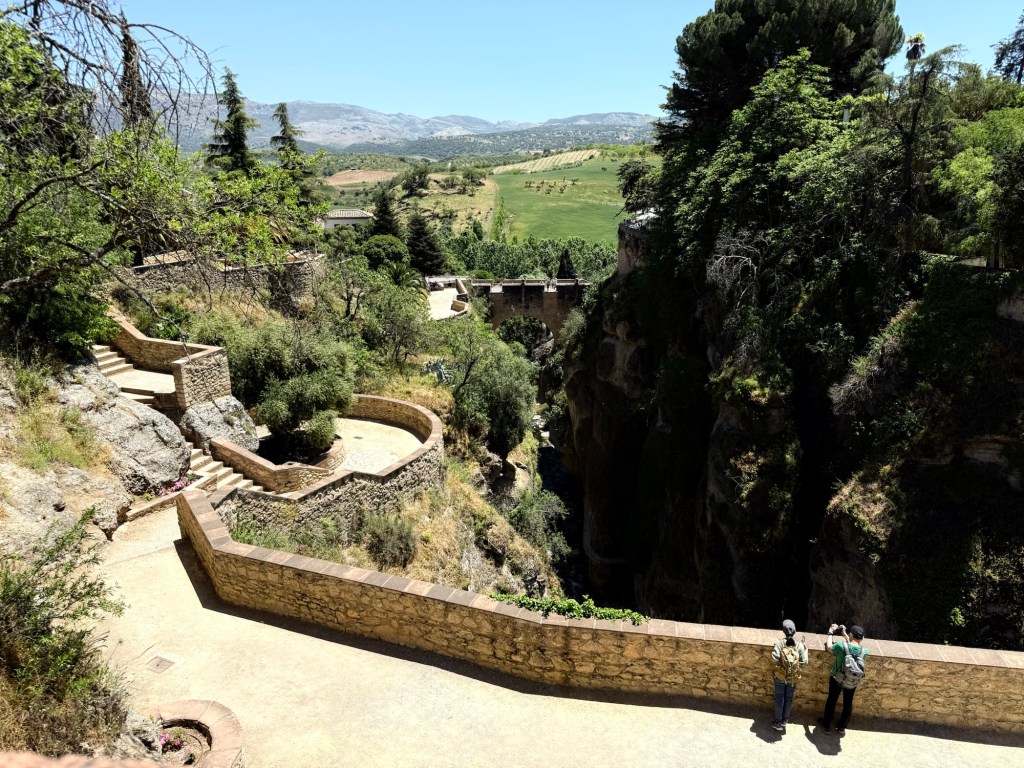
We took the gentler path, working our way down gradually toward the Puente Viejo (“Old Bridge”), dating back to 1616.
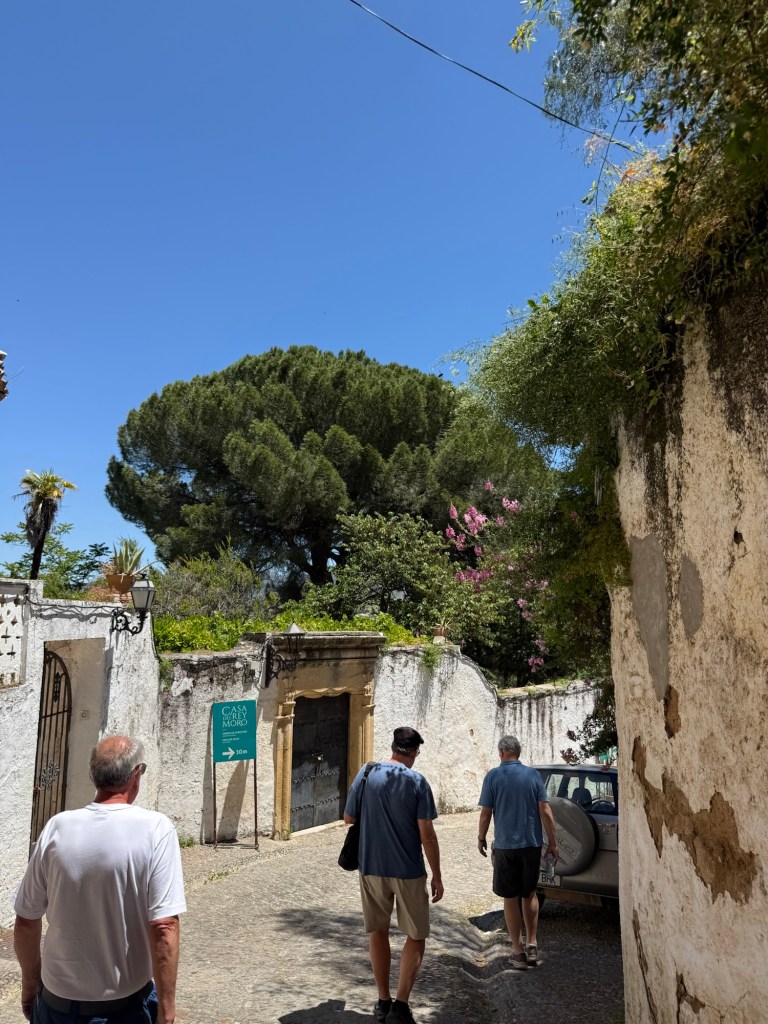
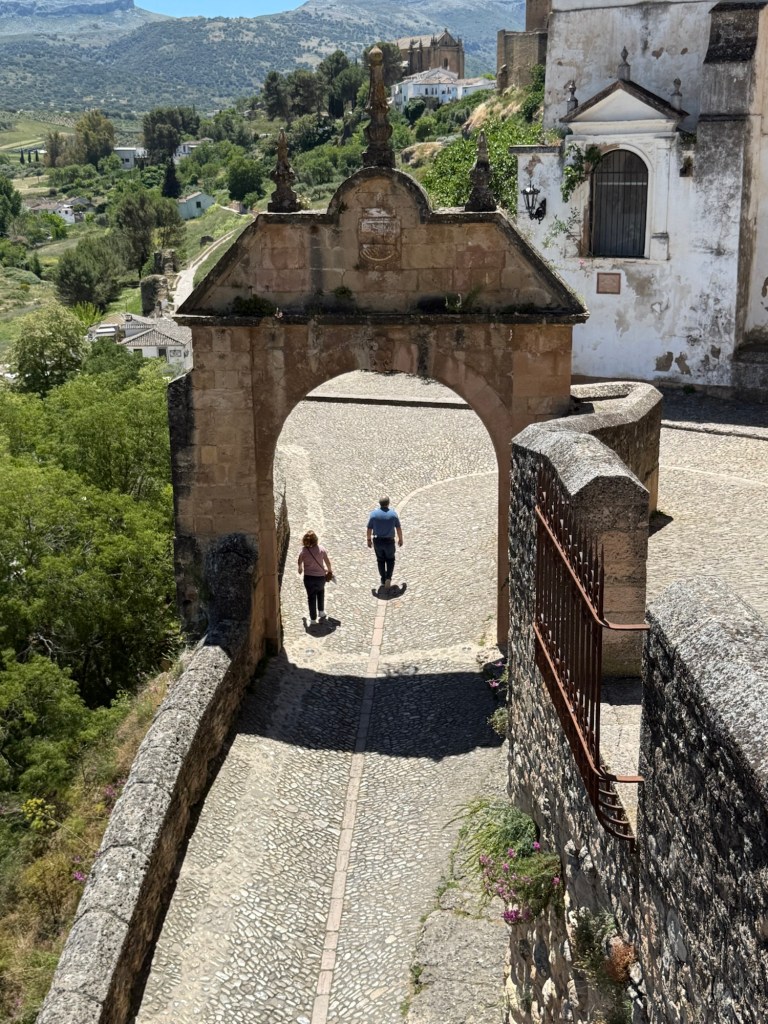
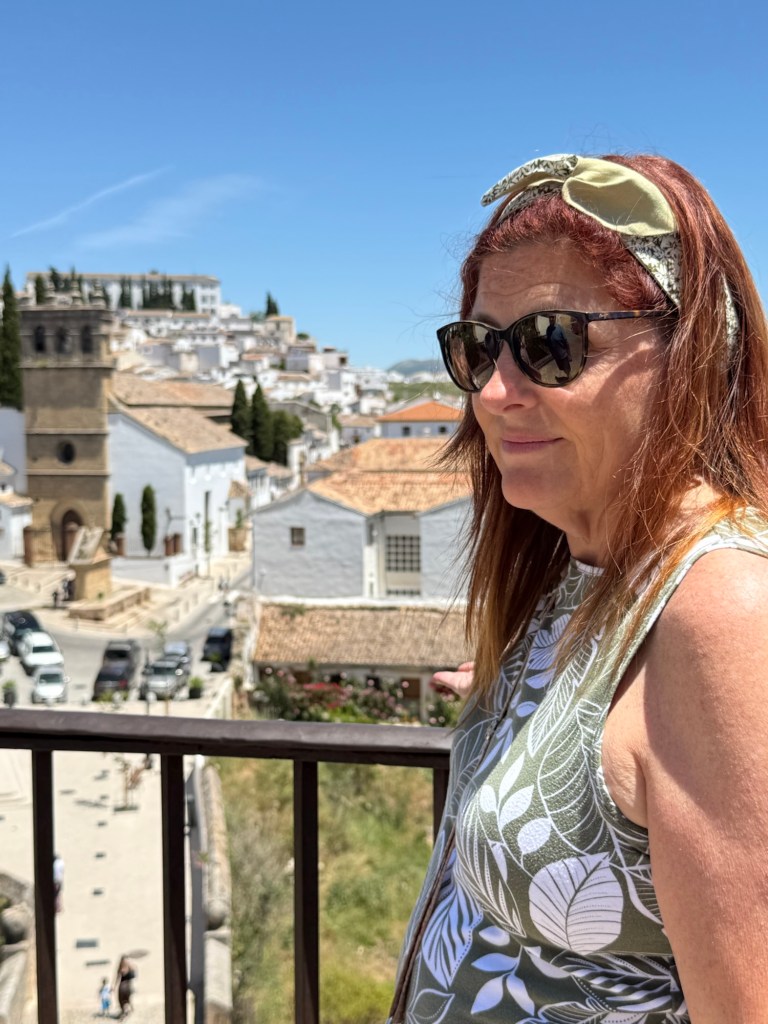
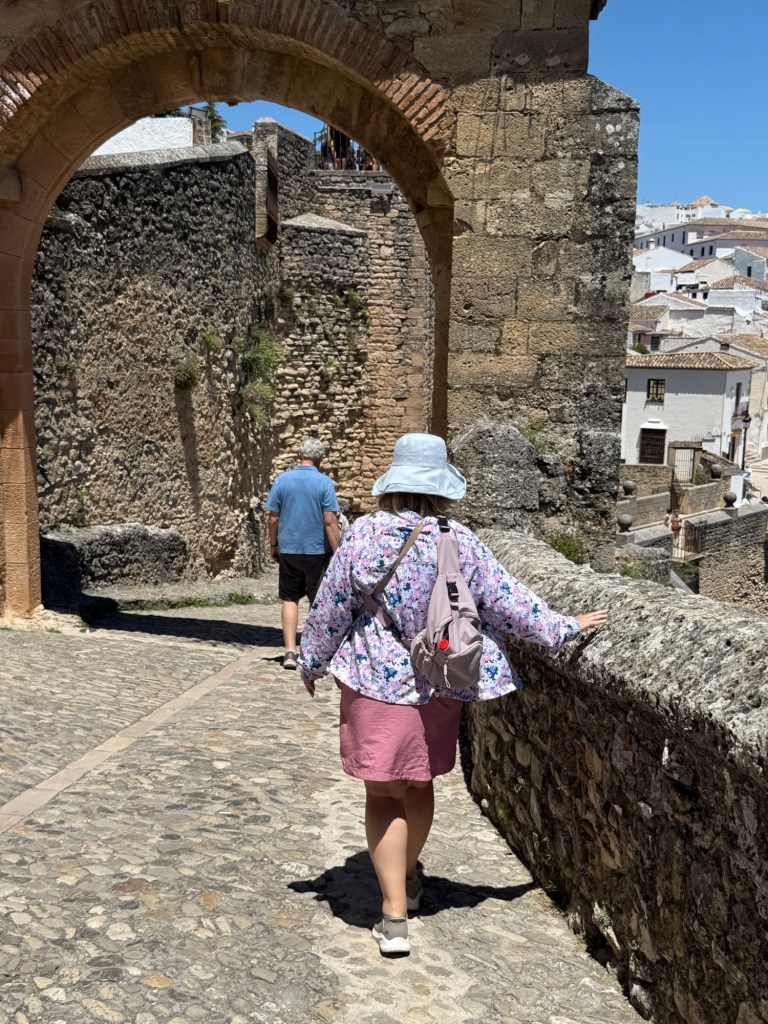
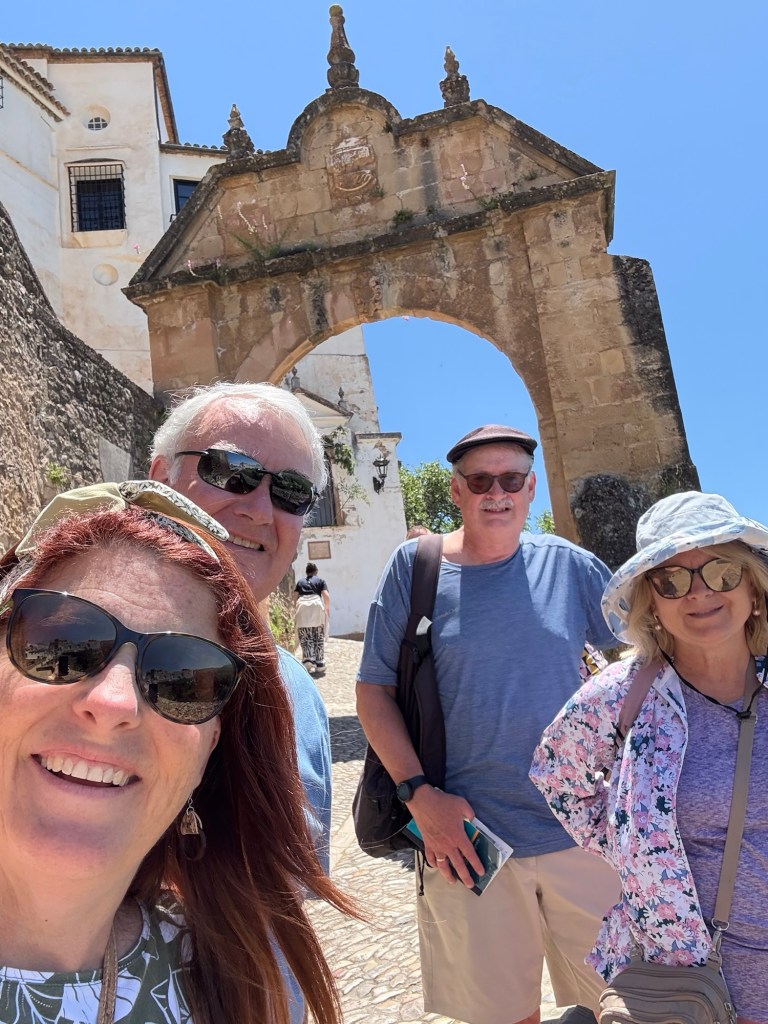
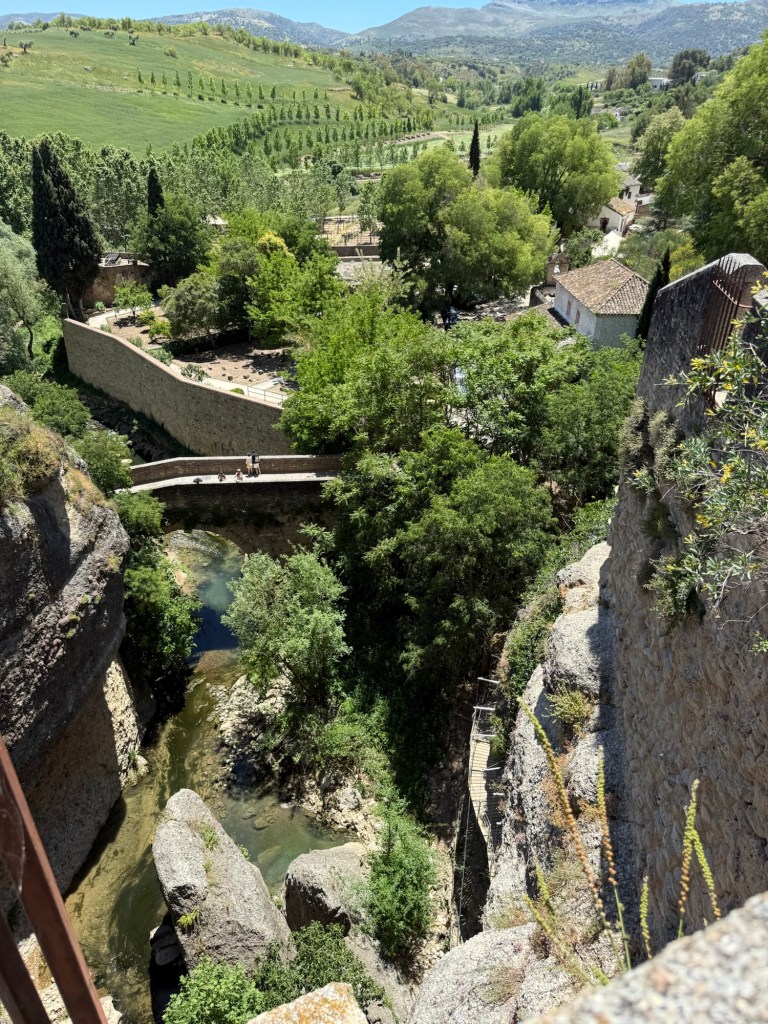
Ronda is one of Spain’s oldest towns, with roots tracing back to Roman times. Its natural cliffside defenses made it nearly impossible to conquer, and it remained an Islamic stronghold for centuries until falling to Christian forces in the late 1400s. Later, it inspired Romantic writers like Hemingway and Rilke with its rugged beauty and haunting history. Today, Ronda feels like a place suspended in time—wild, graceful, and unforgettable.
Next up we check into our favorite hotel of the vacation.
 Happiness is Possible