
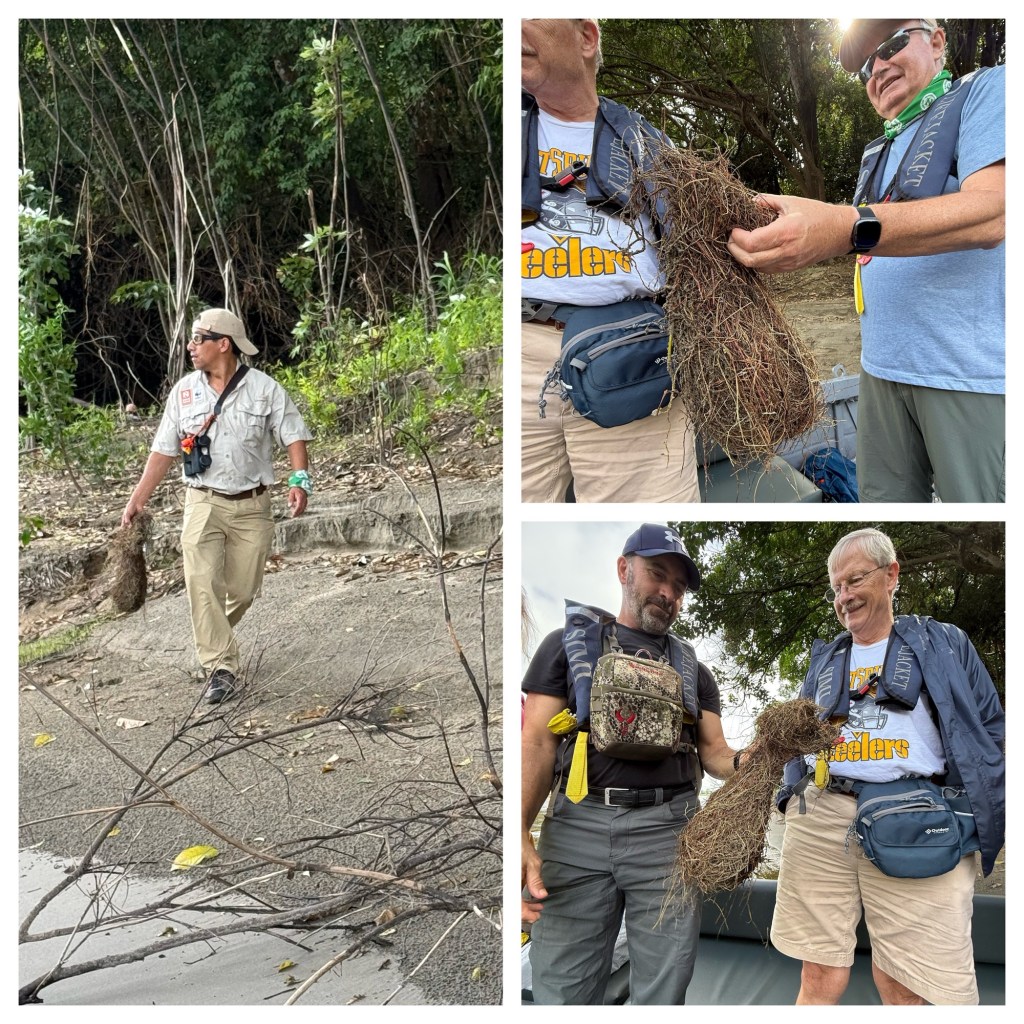
After breakfast just before we shoved off Frankie came up with a nest.
It was a large nest made of tangled roots and river debris, explaining how these clumps form naturally along the Amazon’s shifting banks. Curious, Gary, Jon, and Tim each took a turn examining it, surprised by how heavy and damp it felt. When they handed it back, Wilfredo immediately told them to use hand sanitizer – a good reminder that in the Amazon, even something as ordinary as a root ball can be teeming with hidden insects or microorganisms.
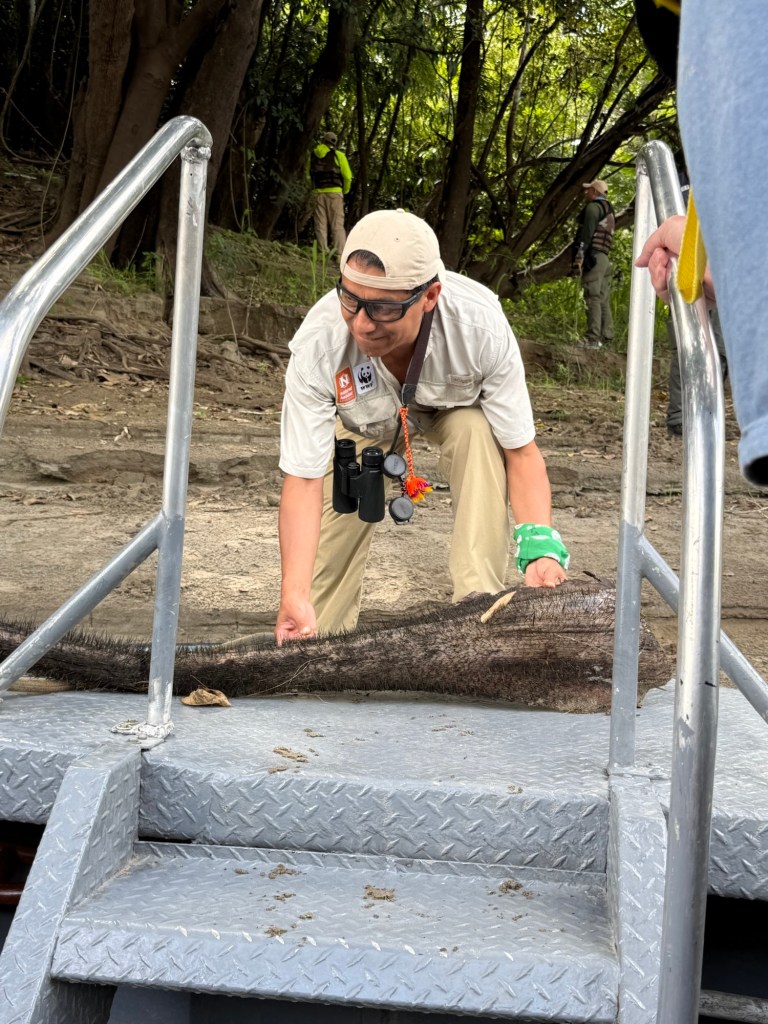
Frankie showed us another object he found on the bank.
Frankie showed us a massive tree root which was part of a palm root system covered in long, sharp spines. Frankie hauled it up to the boat’s steps to give everyone a closer look, explaining how these roots help anchor trees during floods and shifting water levels. The texture and spikes were fascinating—but definitely not something anyone wanted to touch!
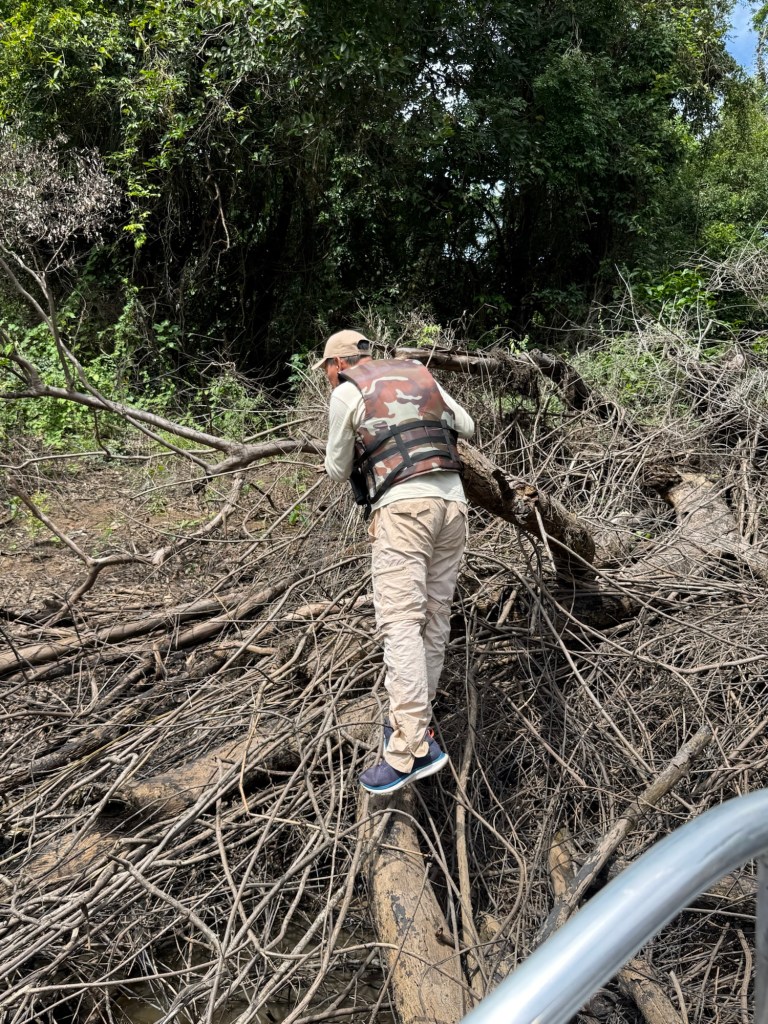
We shoved off, continuing to explore. Roger asked what we wanted to see and we were curious about Anacondas, but came up empty handed. They generally hide in limbs on the riverbank.
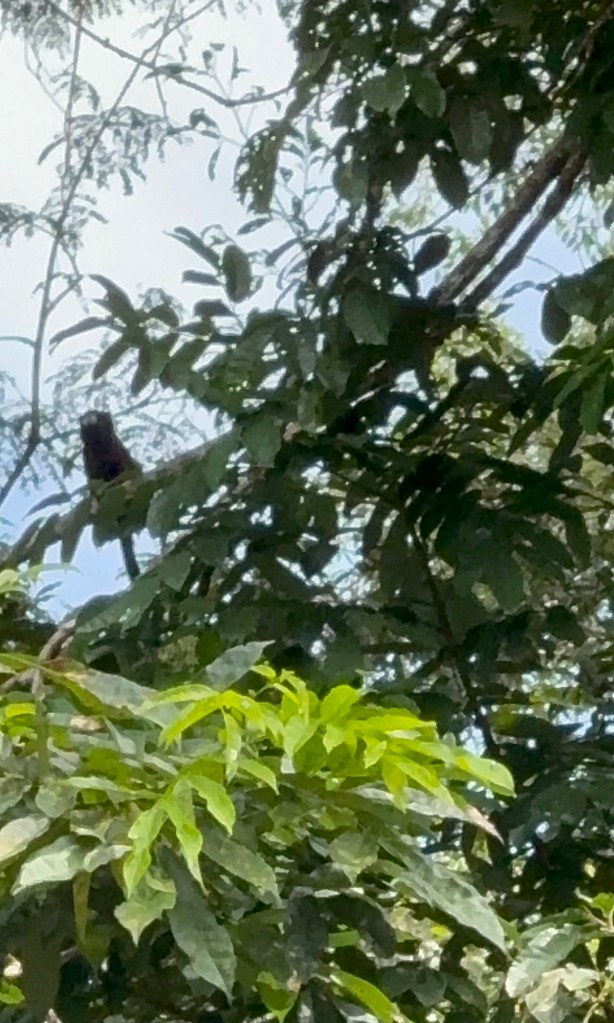
After we realized we weren’t going to find these large snakes, we continued down the river. Suddenly our naturalist heard monkeys. We stopped and found a Black-capped Capuchin. Recognizable by its dark cap, expressive face, and long tail, it’s one of the most intelligent primates in South America—often using tools to crack nuts or dig for insects. These agile monkeys travel in social groups through the upper canopy, feeding on fruit, leaves, and small creatures.
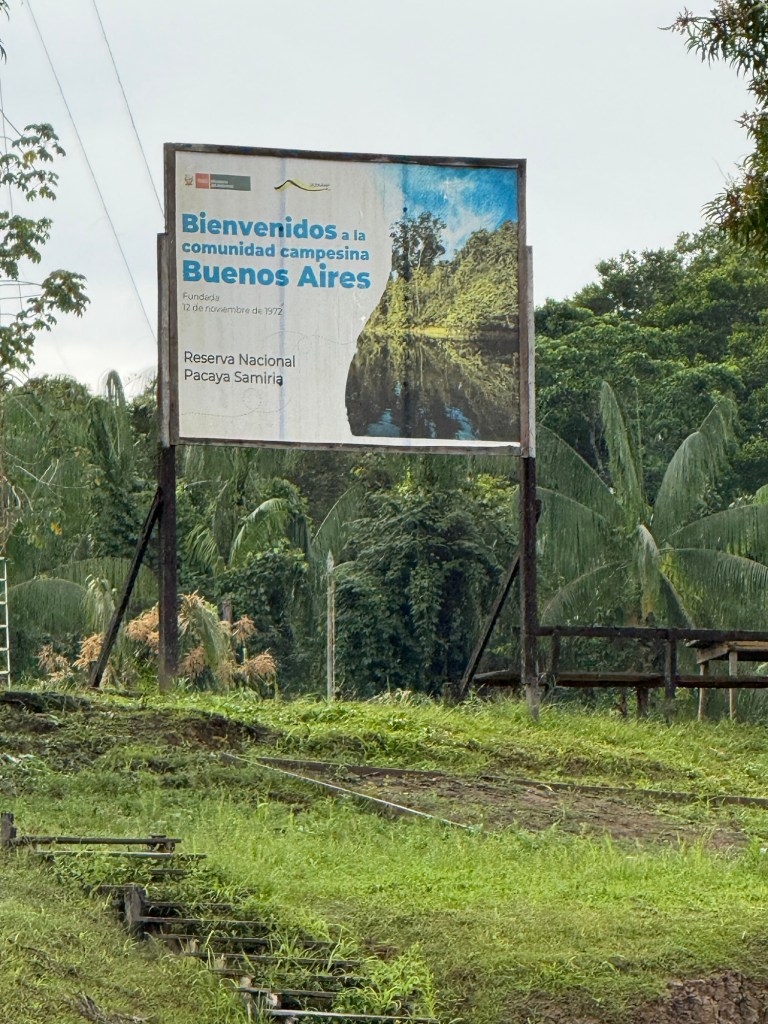
Next up we head to our conservation projects. The first one we visited was Buenos Aires where they conserve turtles.
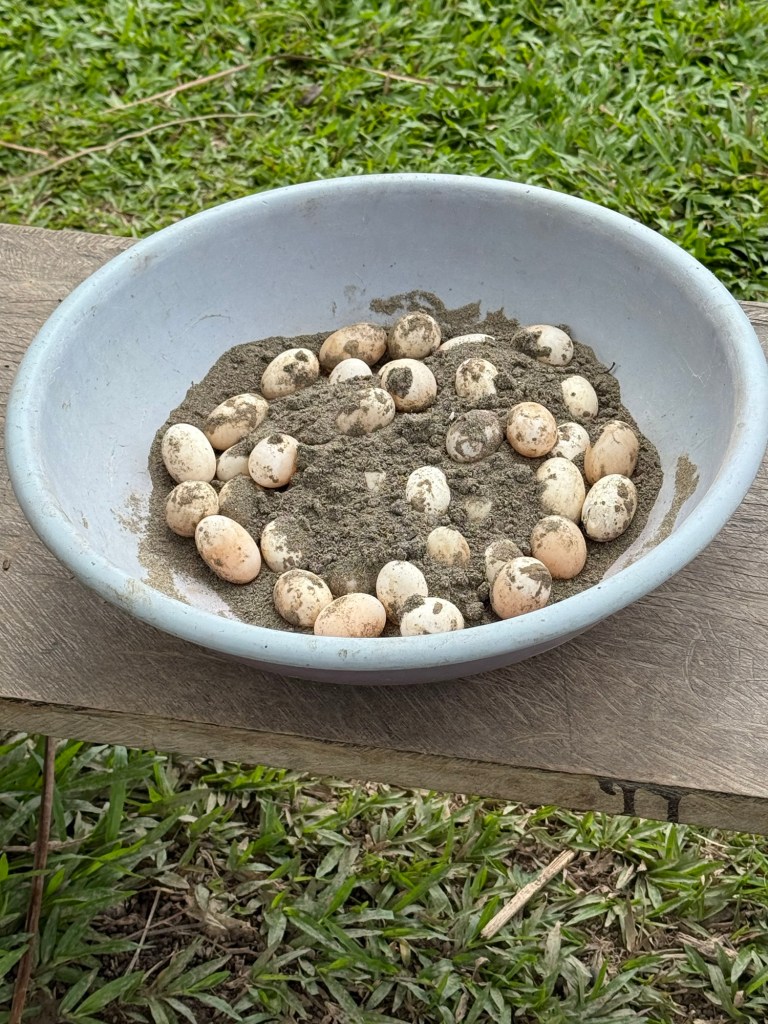
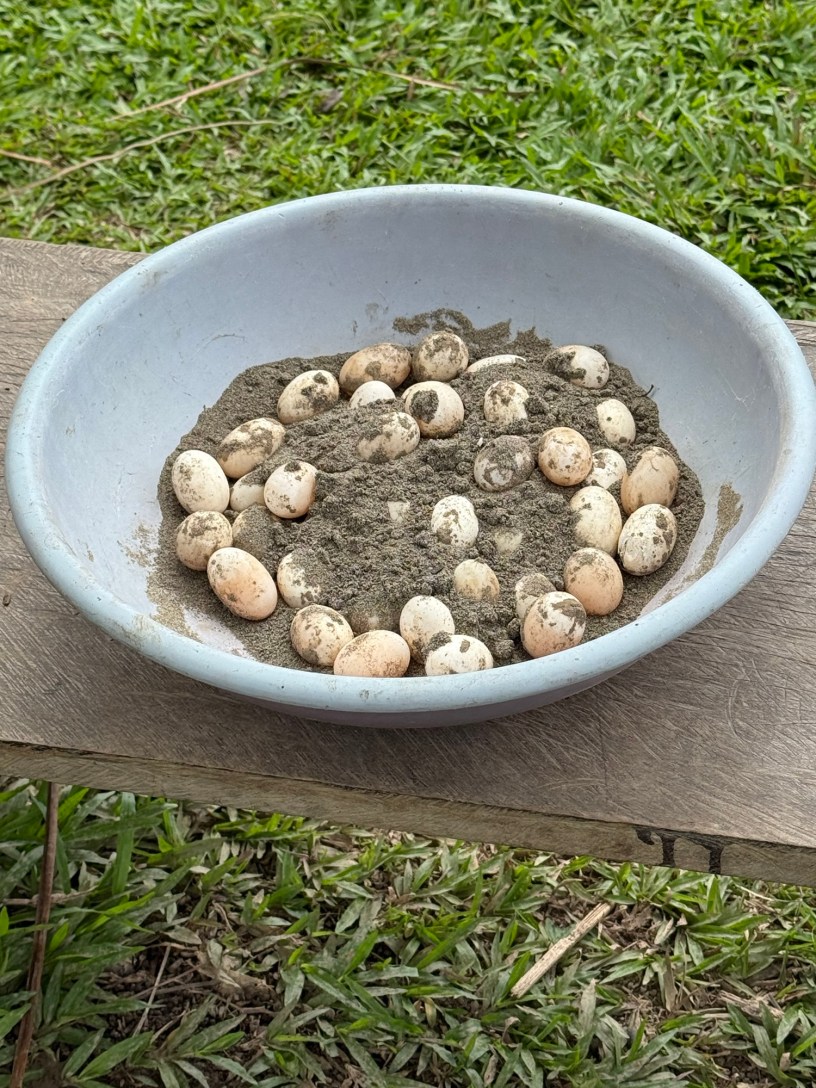
These eggs were taricaya, or yellow-spotted river turtle, a species that has long been threatened by overharvesting. Each egg is carefully collected from the riverbank and protected until hatching, when the tiny turtles are released back into the wild.
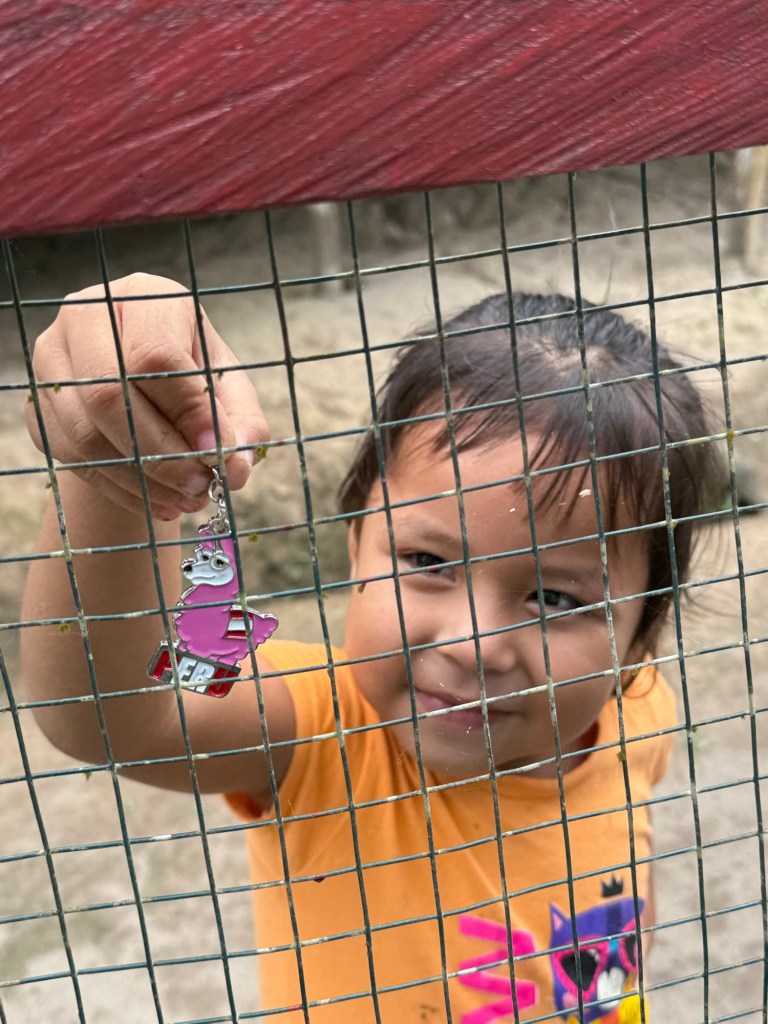
My friend Lana had this very keychain on her backpack and it fell off, she just bought it when exploring Lima earlier in the vacation. The little girl was trying to give it back but wasn’t able to force it through the fence. When Lana saw her enjoying the keychain, she just let her keep it.
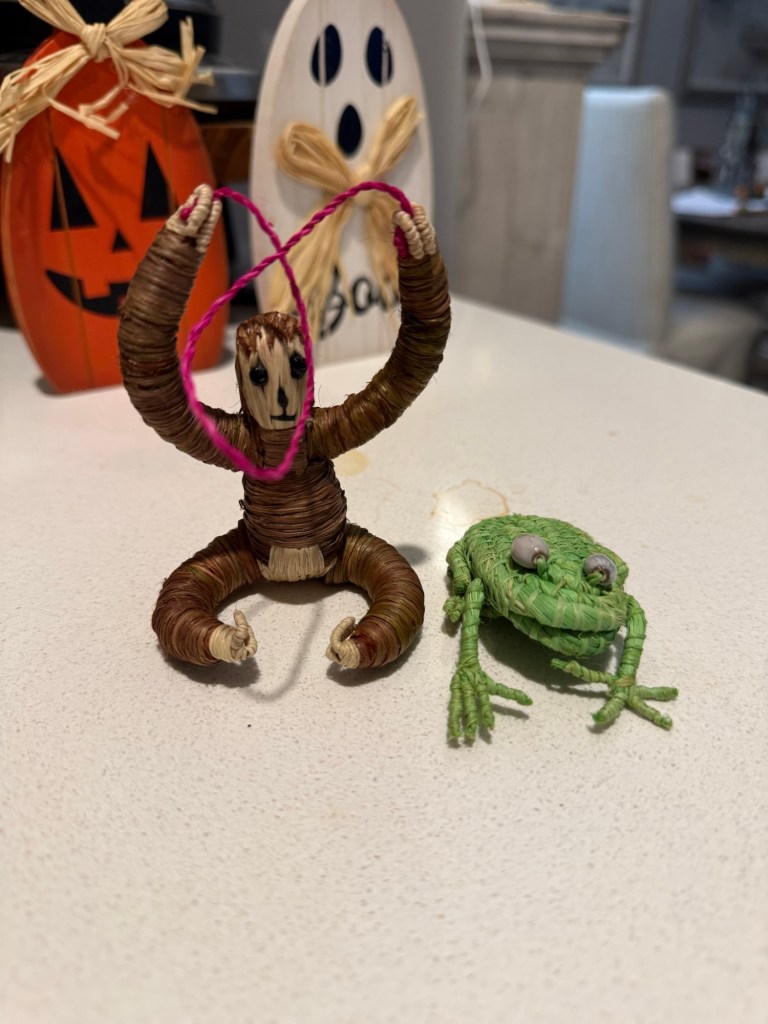
Then we stopped to shop, still on the lookout for “toys for children,” as my grandson, Jack had asked me to find for him on the trip. The small market was filled with handmade crafts, not toys, but I found a sloth made from dyed cords. Thankfully, Danli spotted me a few soles when I realized I didn’t have enough cash.
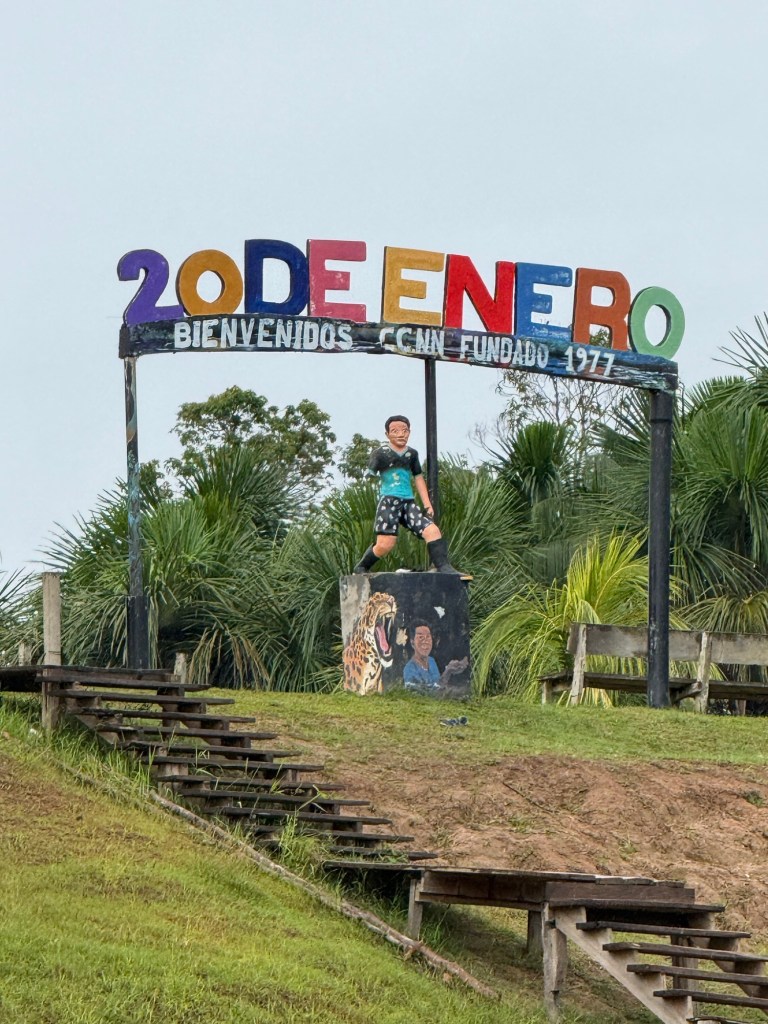
Next up we headed to another village San Pedro.
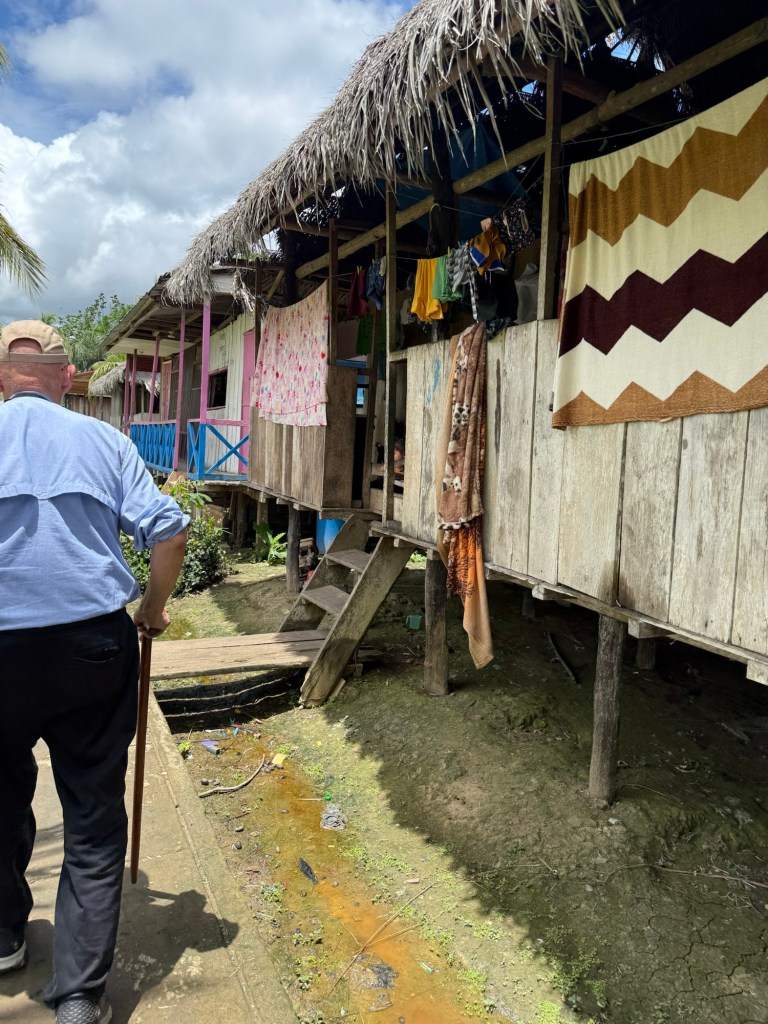
We walked behind the main houses to an open area once used for farming but now depleted from years of clearing. Here, we helped plant native trees like capirona, known for its smooth, peeling bark, and cedro, a valuable hardwood. The goal was to rebuild the canopy and restore balance to the land.
As you may have noticed I am usually behind the camera so I handed my phone to Tim to video me planting this tree. Enjoy my prize video memory. 🤣

At this point it’s super hot and time to head back to the ship!
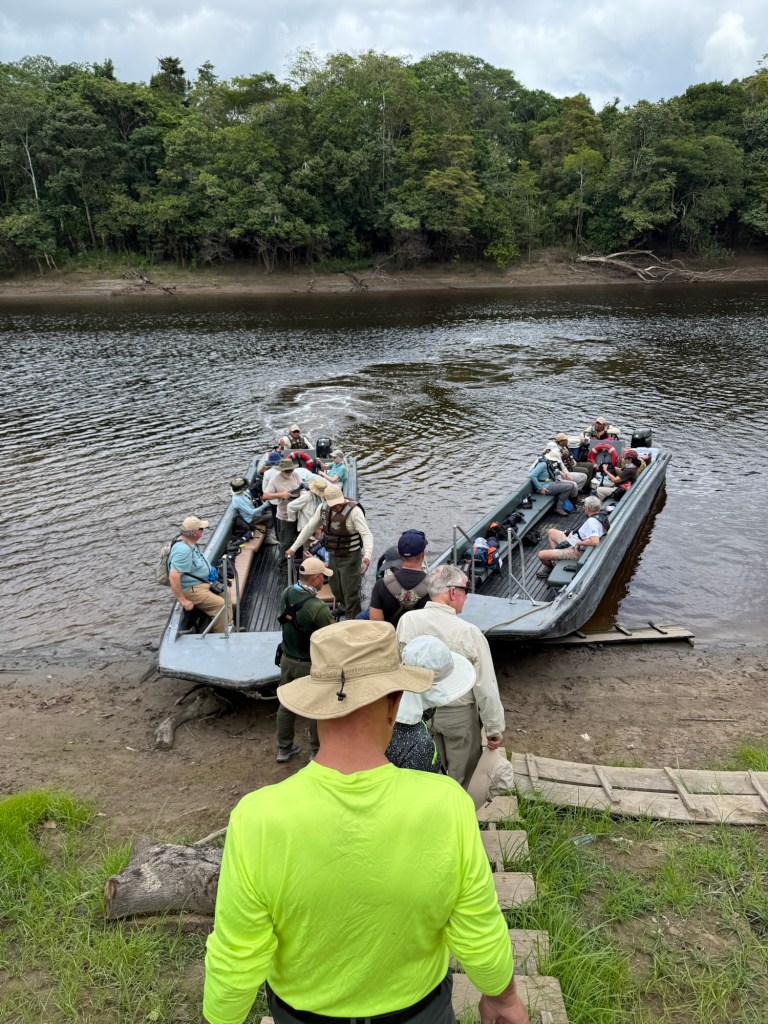
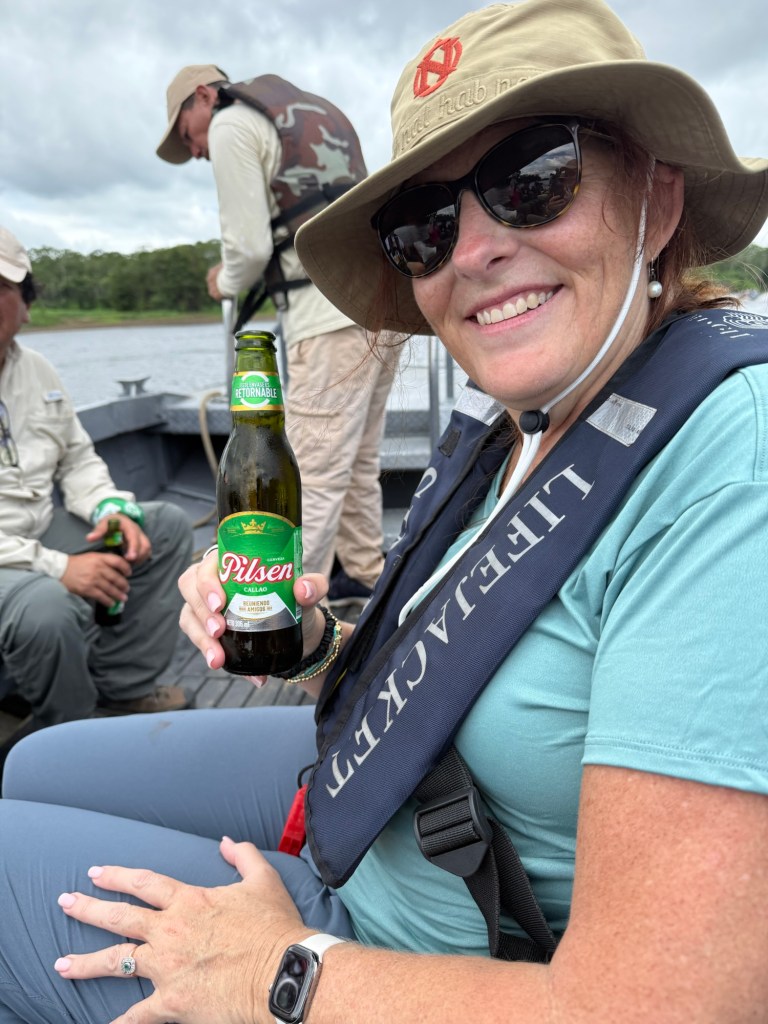
We went back out to Kayak or swim. Jack chose to swim (no photos) and we chose to kayak.
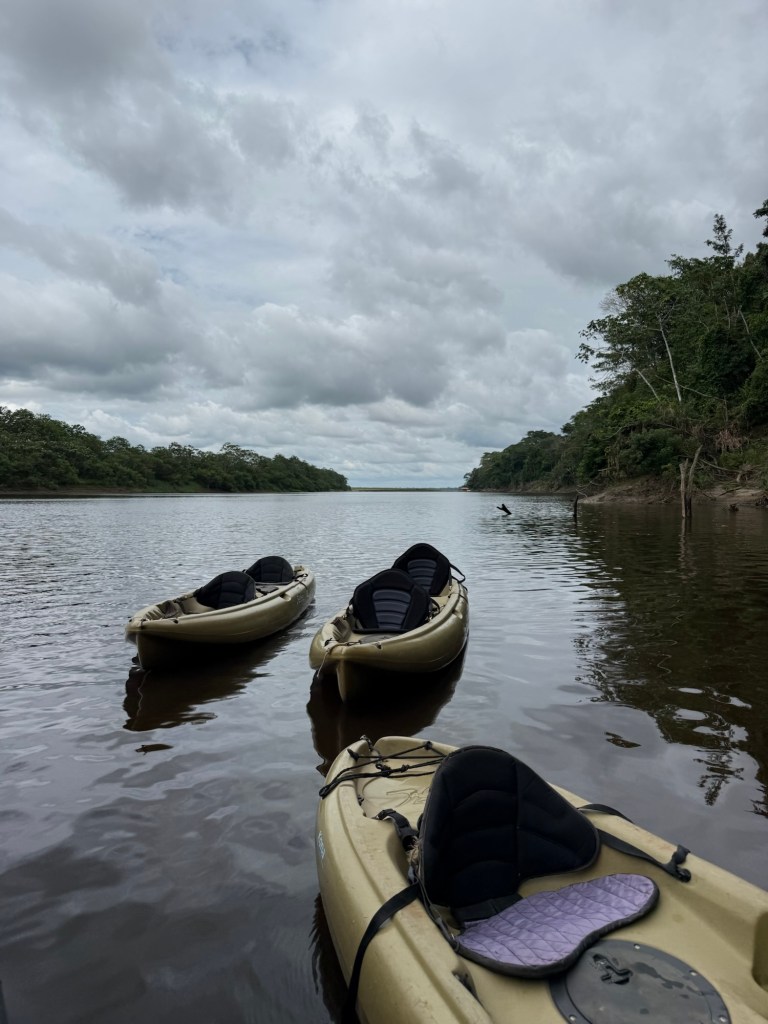
Rest time on the upper deck!
Next we had a presentation by a Shamaness.
The shamaness came aboard our ship carrying a few pieces of bark, vines, and handmade bracelets. Her long black hair and calm expression immediately drew everyone’s attention. She spoke softly in Spanish, with our guide translating, and explained that her grandfather had been a shaman who recognized her gift as a healer. At fourteen, she and two other apprentices were sent to live alone in the forest for five years as part of their initiation, which lasted nine years in total. She is now the only woman in her lineage known to carry the gift. Her training focused on listening to the sounds of nature, observing plants, and learning how each could heal the body or spirit. She eventually married and had children, while the two other trainees did not survive their isolation. She said her hardest patients are those who believe in dark magic. During her visit, she showed us a small vial of red liquid called Dragon’s Blood—a natural resin from the Croton lechleri tree found deep in the Amazon. When she rubbed a few drops between her hands, the dark red color turned light, forming a milky, lotion-like layer on her skin. Locals use it for its healing properties, especially for cuts, burns, and insect bites. It’s part of traditional Amazonian medicine, passed down through generations of healers who spend years studying plants in solitude. When she finished, she blessed our group—a quiet, powerful moment that left everyone deeply moved.
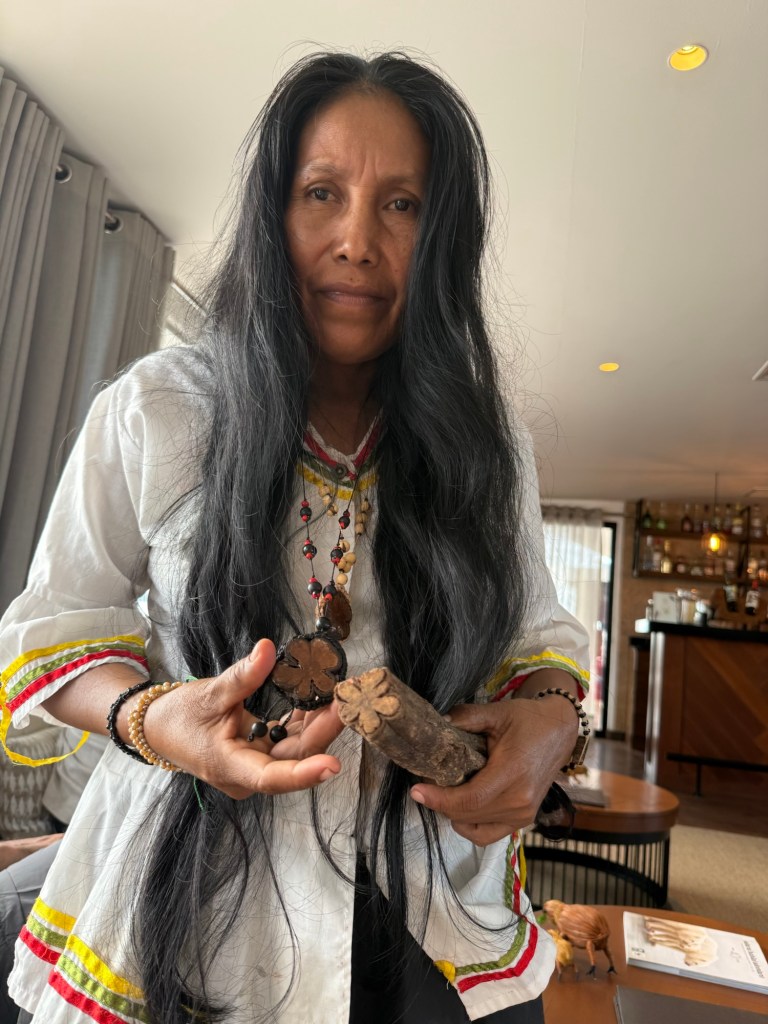
In her hands, she held a piece of ayahuasca vine, showing us the flower-shaped pattern inside and explaining that it’s used in traditional healing. She also brought bracelets she had woven from tree fibers, each one representing strength and balance. I bought one of these bracelets.
After she left, our group went to visit another village to learn about daily life along the river. Like a true princess, I decided to stay behind and have a massage instead. Later, Lana told me about their visit — how the people there live simply but comfortably, with everything they need provided by the land and water around them. The women rise early each morning to sweep their yards, not just for tidiness but to keep snakes and insects away.
They keep the baby chickens close by to protect them from predators because they are like money to them. They trade them in markets for good and other food items.
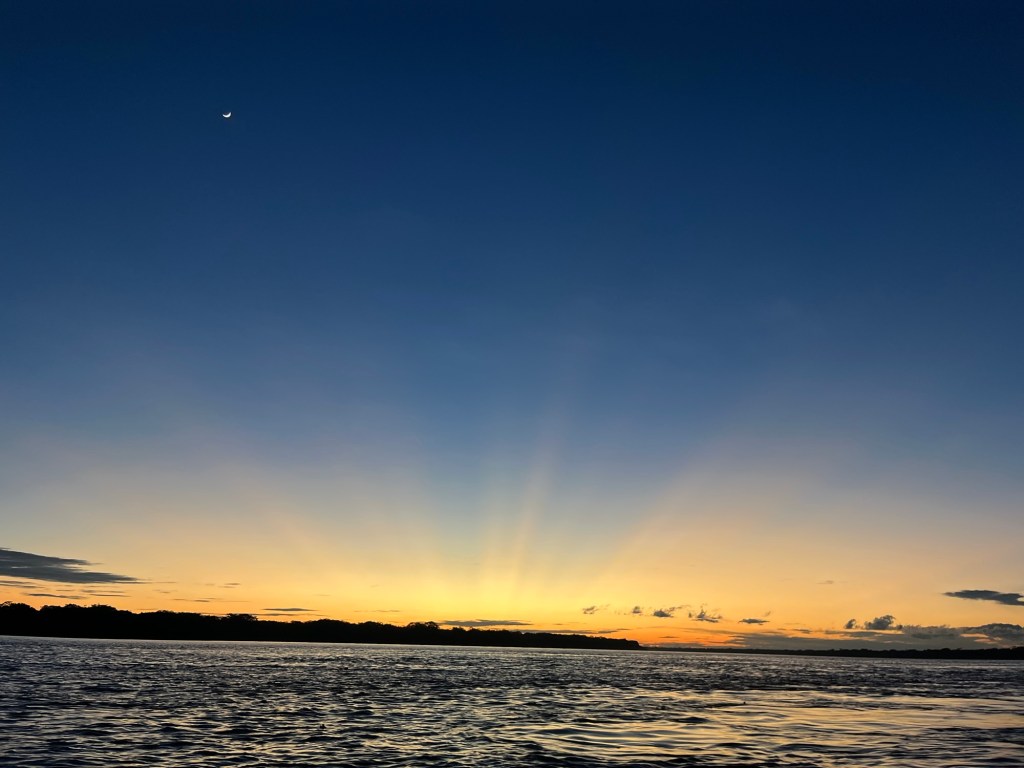
Before dinner we met in the lounge to hear their band called the Rolling Stones!
This song, heard everywhere — that same song playing in nearly every village and market we visited. The song settled into my head and refused to leave. I caught myself humming it on the skiff, during meals, even while trying to fall asleep. It became part of the soundtrack of the trip, a cheerful reminder of the people and places that had already started to feel familiar.
El Condor Pasa is one of Peru’s most beloved traditional songs. It was originally written in the early 1900s and is often played on the pan flute, a hallmark of Andean music. The melody honors the condor, a sacred bird in Andean culture that symbolizes freedom and the connection between the earth and the heavens. When Paul Simon adapted it, he added English lyrics, but the heart of the song remains deeply Peruvian — a tribute to the strength and spirit of the people who live close to the land and sky.
They played more songs and everyone got up to dance!
By the end of the day, everyone was ready to crash. It had been a long, full day — pink & gray dolphins, birds, monkeys, conservation projects, and meeting the shamaness — all in one.
Tomorrow we are fishing for piranhas and hiking in the jungle.
 Happiness is Possible