

Our guide, Max, picked us up at 8:30 a.m. and said we’d be picking up three more guests. That was a surprise because when I spoke with the tour company owner on Friday, he said, “As of right now, you’re the only guests.” So off we went to the Bellagio to collect a family — a mother, father, and daughter — who were joining the tour.
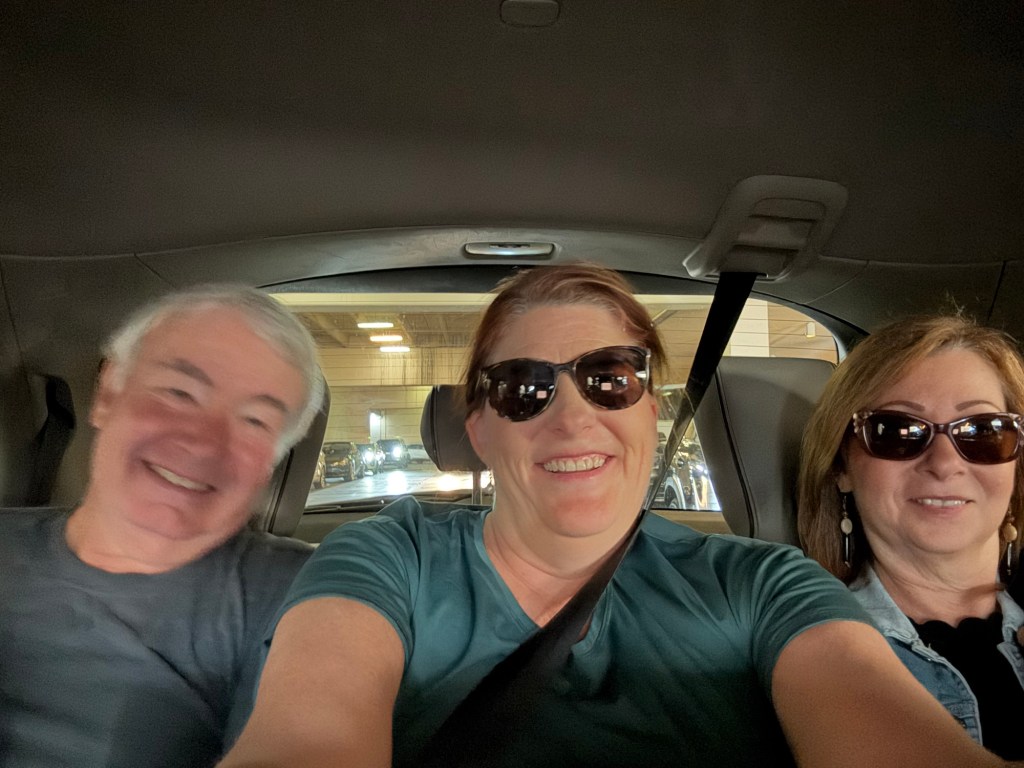
The seating was tight from the start. The van’s maximum capacity should have been five passengers, not seven. Tim, Tracie, and I were shoved into the third row, which was so narrow we were shoulder to shoulder. The middle seat was tiny, barely the size of a baby car seat, and climbing in and out was a challenge. We also barely had room for our feet. The Bellagio guests, who were younger, didn’t interact with us at all. All they did was try to recline their seats farther back, which made our space even tighter. Later, I learned from the tour operator that we were actually supposed to have the middle row and the new guests should’ve taken the back. The middle row was overall wider and more legroom.
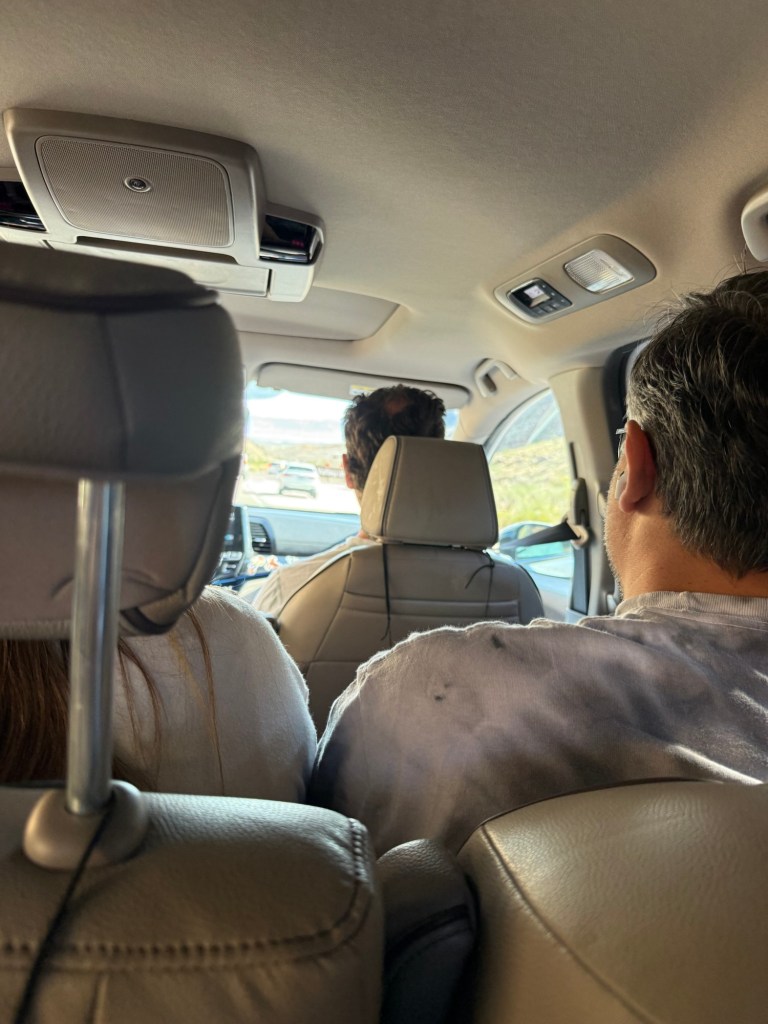
Max stayed chatty until we got on the interstate. That’s when he placed both hands on the wheel and said, “I’m going to drive now, so I won’t be able to talk.” We weren’t encouraged to ask questions, and the ride became oddly quiet except for background music.
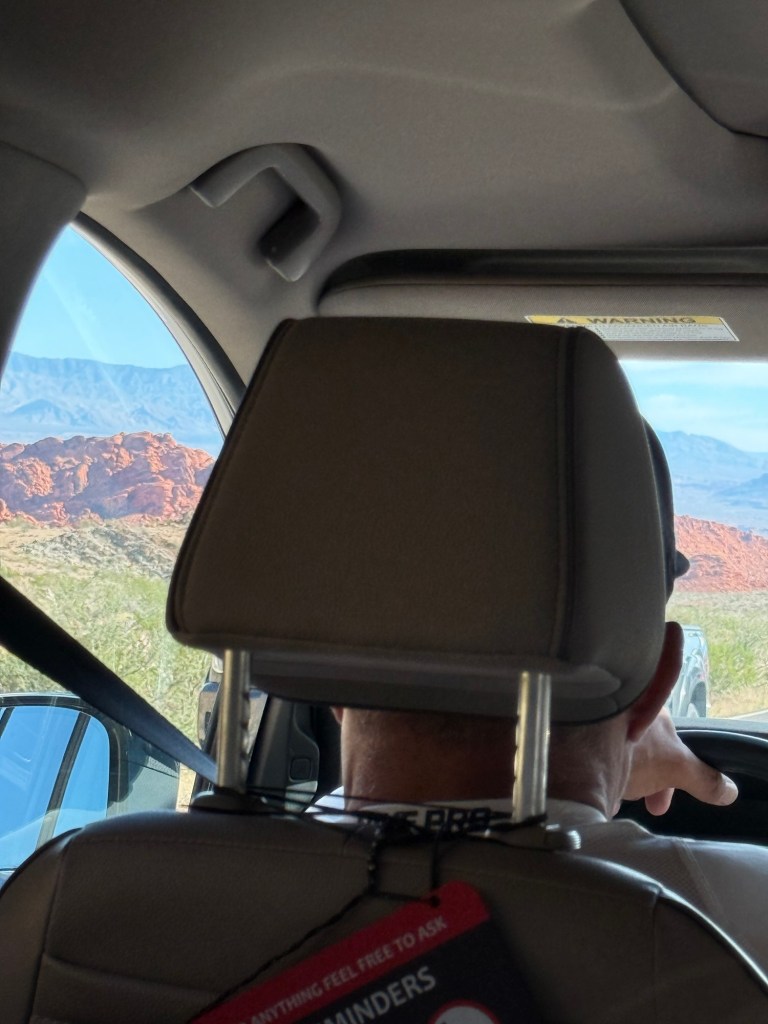
We had rules. All we could do was drink water in the van. No eating allowed. Around 9:45 a.m., about an hour and fifteen minutes into the drive, we stopped to use the restroom and grab what Max called our “lunch.” It was called the Moapa Paiute Travel Plaza — the last place to buy food before entering the park. The stop had a gift shop, casino, bar, and a small mini-mart with limited options, so Tracie and I ended up with Lunchables and protein bars. We kept them in the bag until we could “picnic”.
After we got out at the first stop inside the park, Glenn turned asked if we’d noticed how fast Max had been driving. He said he’d been watching the speedometer and saw it hit about ninety miles per hour on the way there. I hadn’t realized it, but I did remember how he kept jerking the wheel from time to time, which had already made me uneasy.
As we entered the park, Max gave a short overview of the rocks and colors around us. His was basic with flaws, here is what we need to know: Valley of Fire’s landscape formed about 150 million years ago from massive shifting sand dunes during the age of the dinosaurs. Over millions of years, these dunes compressed into what’s known as the Aztec Sandstone, and the brilliant red color comes from iron oxide (rust) that stained the rock. In contrast, some lighter layers appear yellow or white where the iron leached away, leaving nearly pure silica sandstone—most visible at Silica Dome. The older gray and tan mountains in the distance are made of limestone from an ancient seabed, dating back roughly 300 to 500 million years, when this entire region was under a warm, shallow ocean.
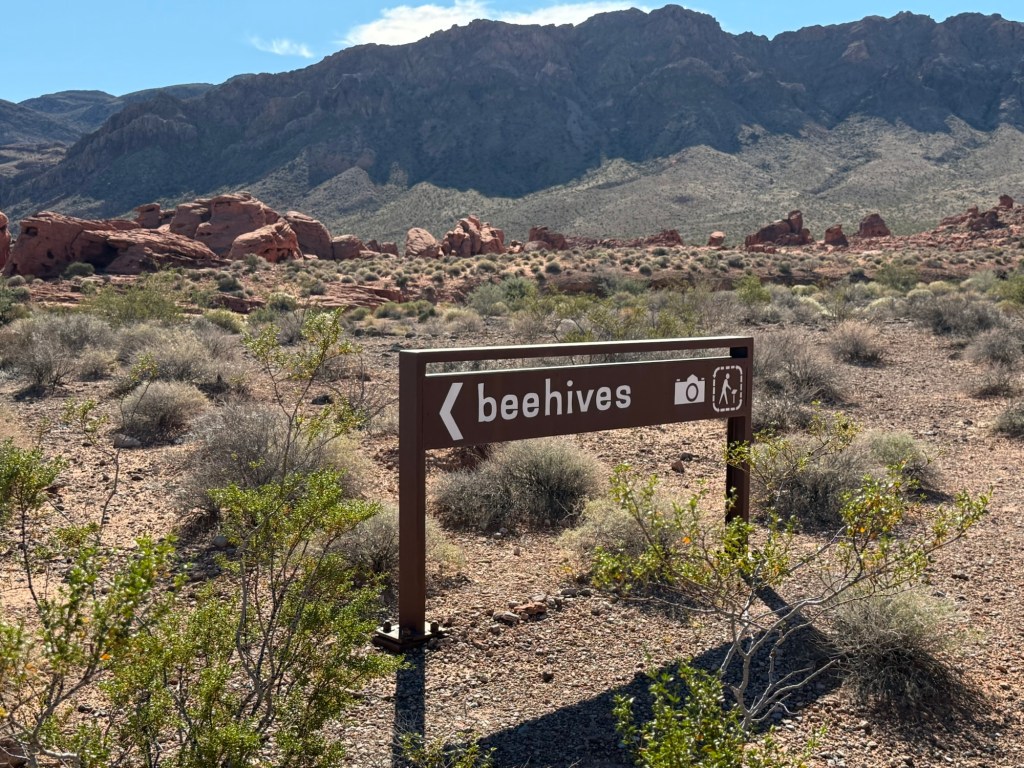
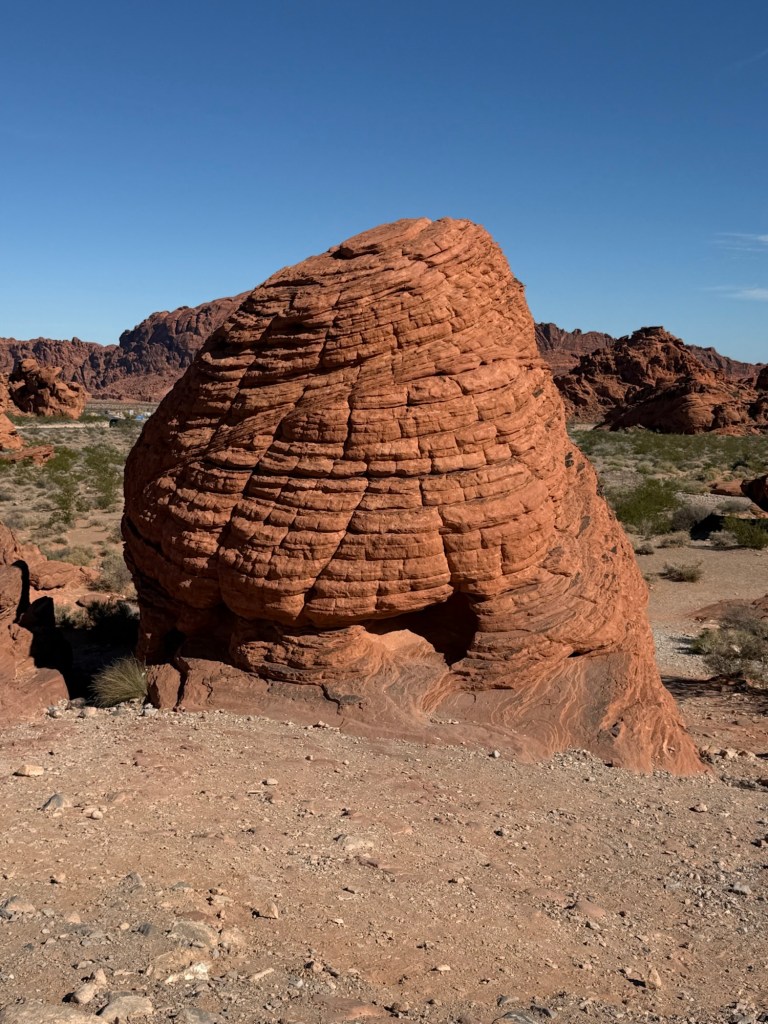
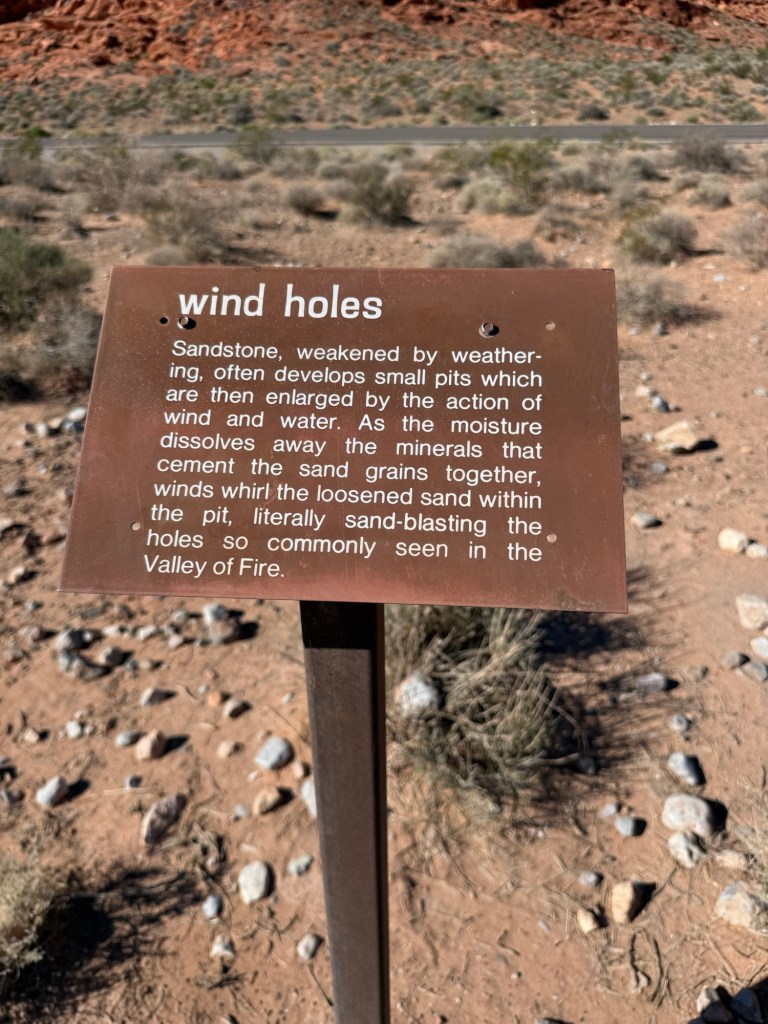
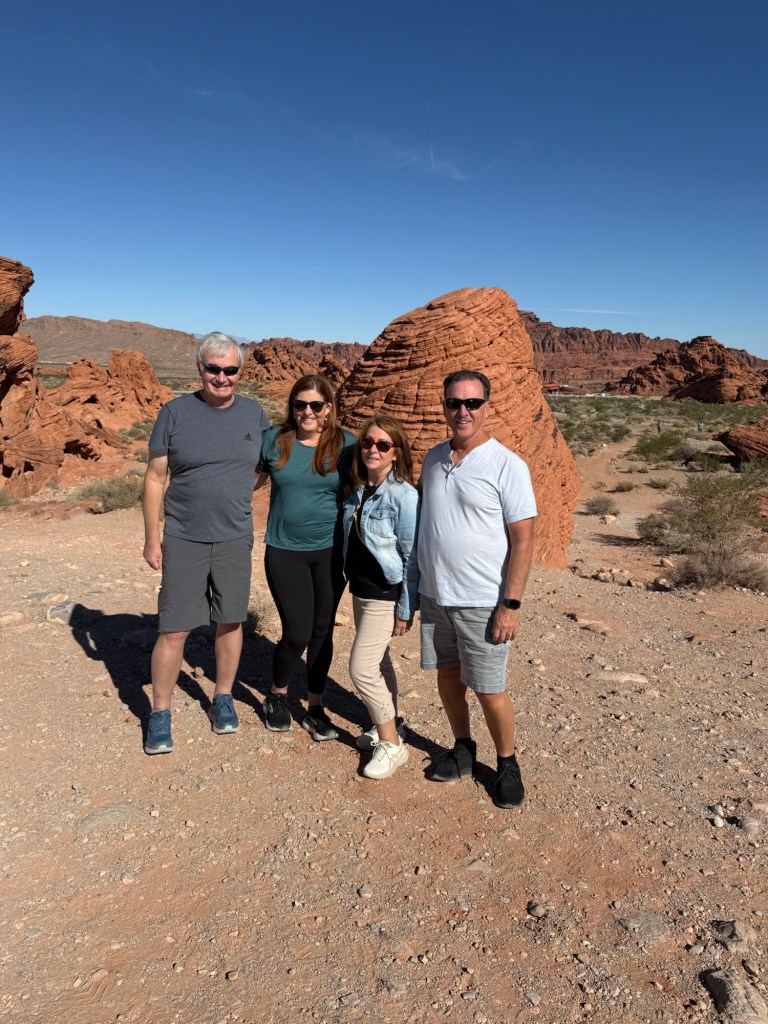
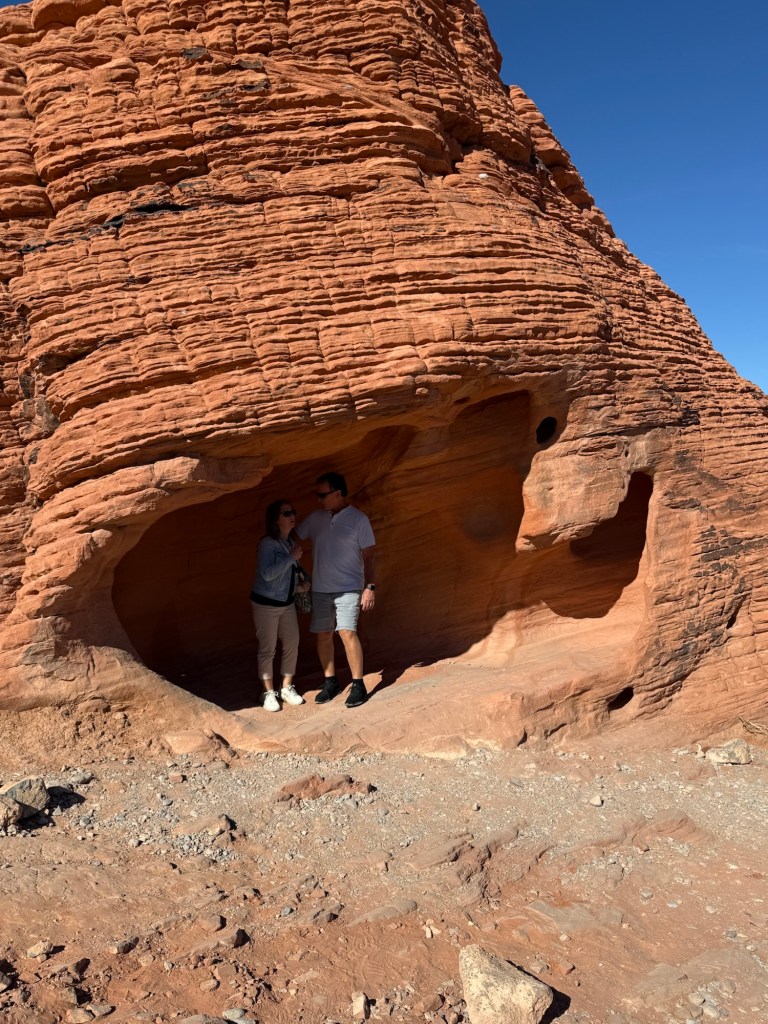
Once we arrived, the day followed a predictable rhythm. Max would pull over, share a few sentences about where we were, and tell us we had twenty minutes at each stop. The first was the Beehive Rock Formations, where wind and water had sculpted the sandstone into rounded domes that looked like giant hives.
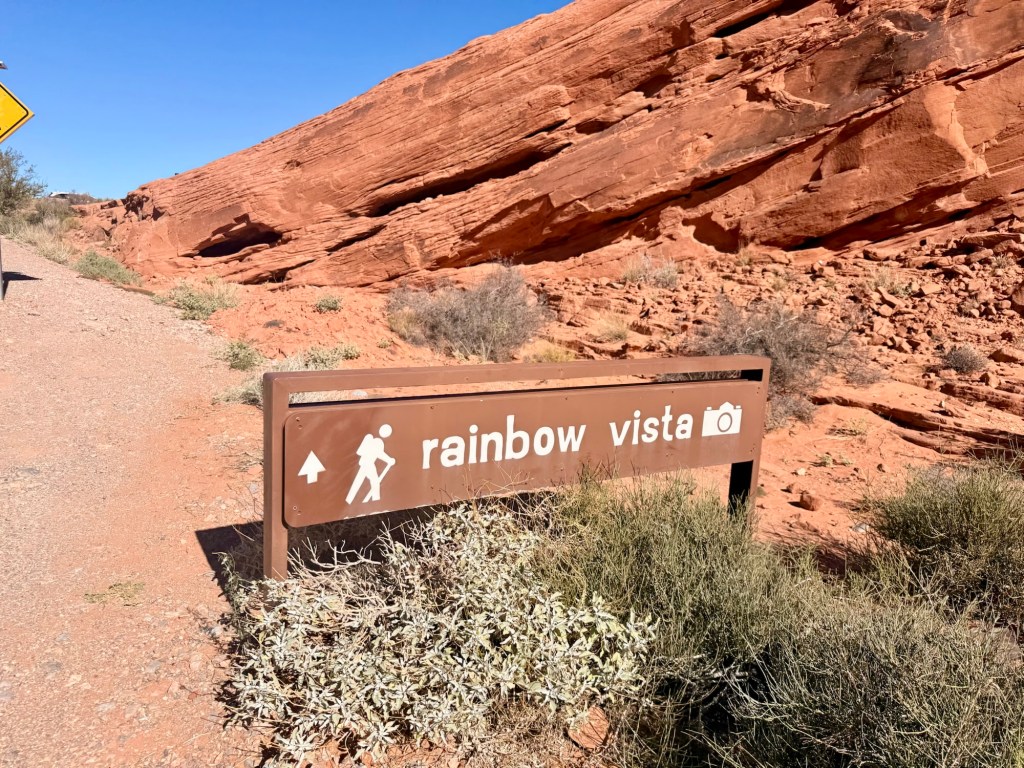
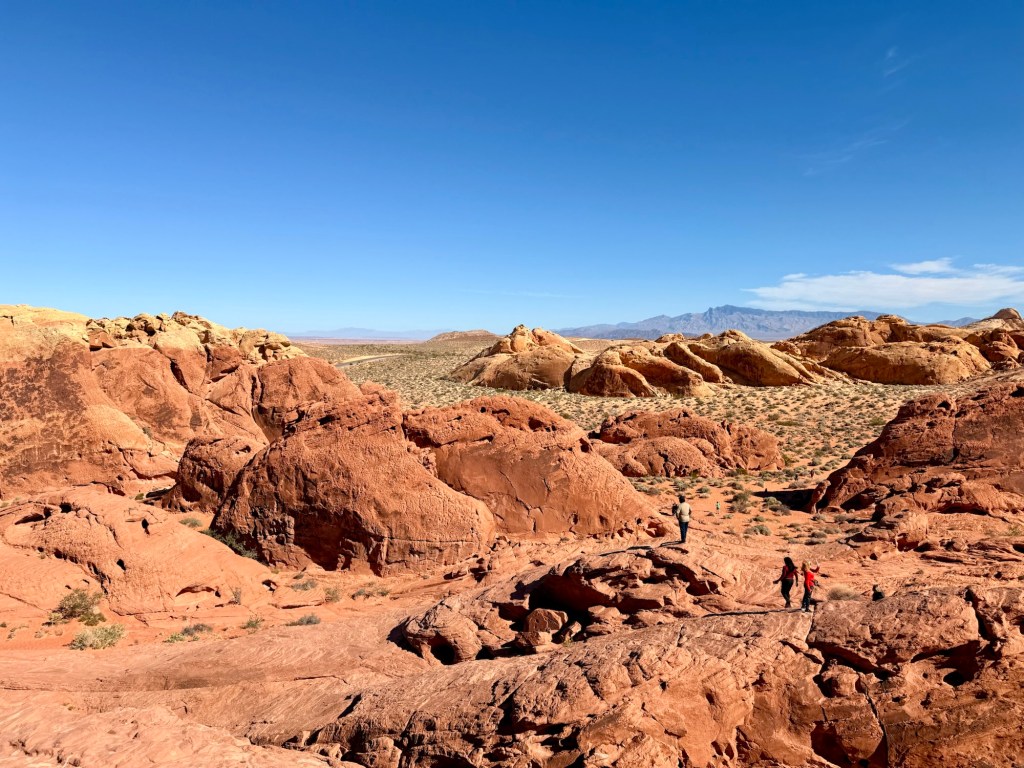
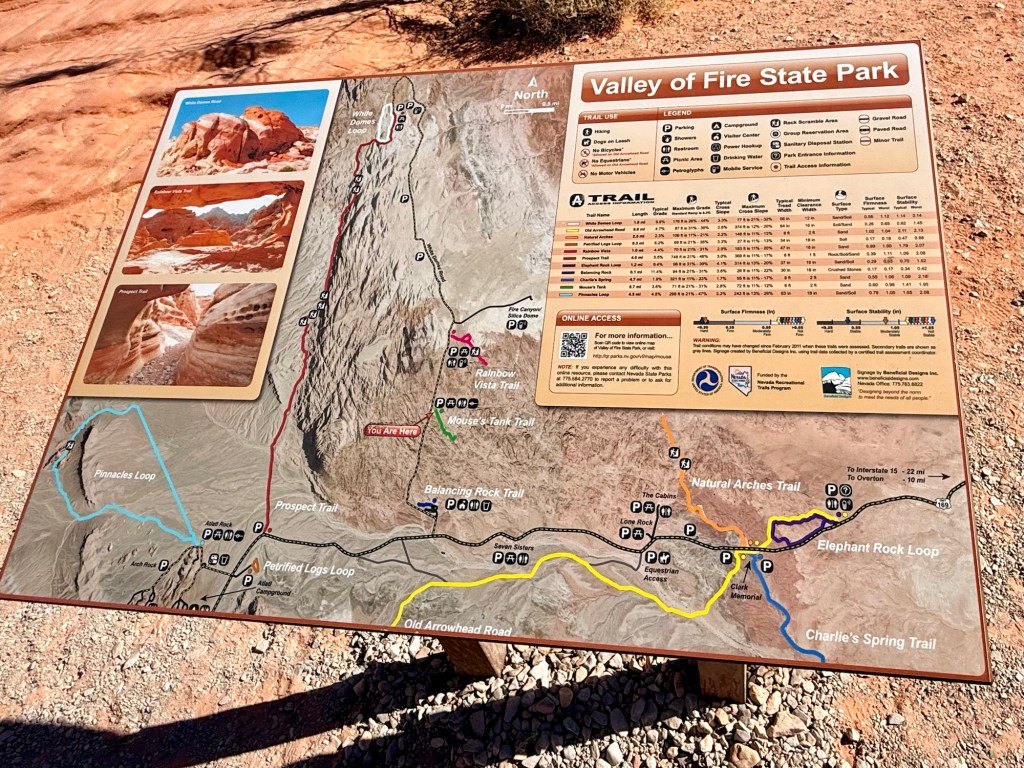
Next was Rainbow Vista, a vast landscape of red, yellow, and purple layers created by minerals oxidizing in the rock. Except I struggled to see purple.

On the way to our next spot we drove past the seven sisters, a popular wedding spot.

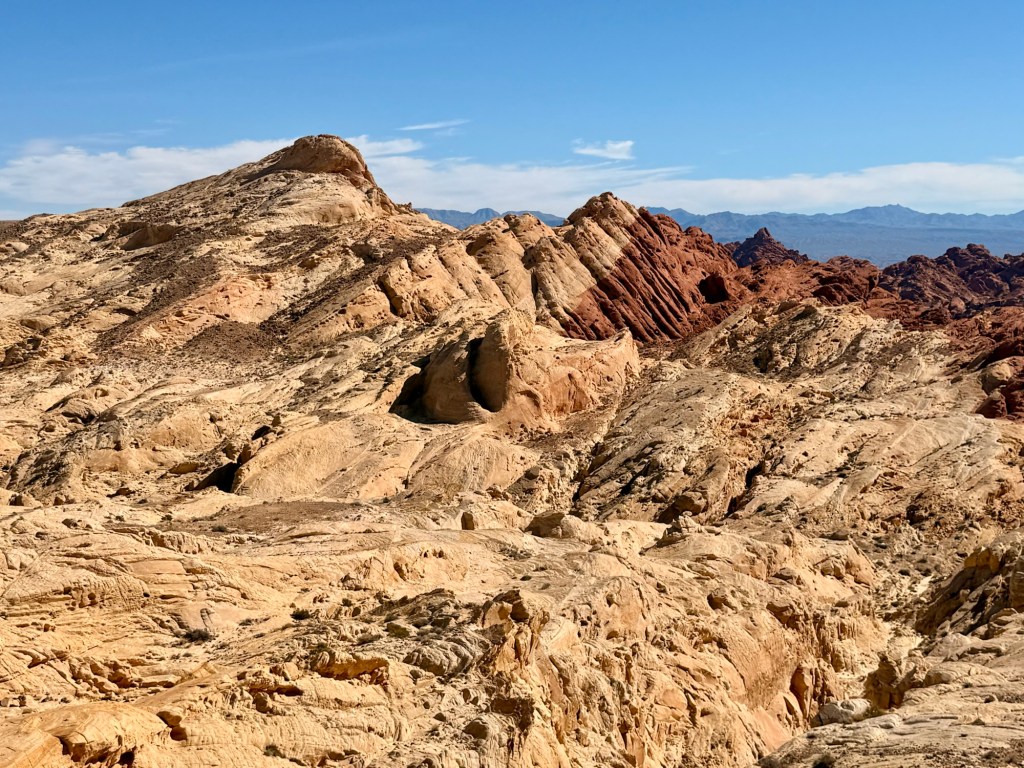
Then came Fire Canyon and Silica Dome—my favorite stop of the day. The overlook revealed a sweeping view of red sandstone cliffs with pale, creamy rock rising among them. That lighter section, called Silica Dome, is made of almost pure silica sandstone, which gives it its white color.
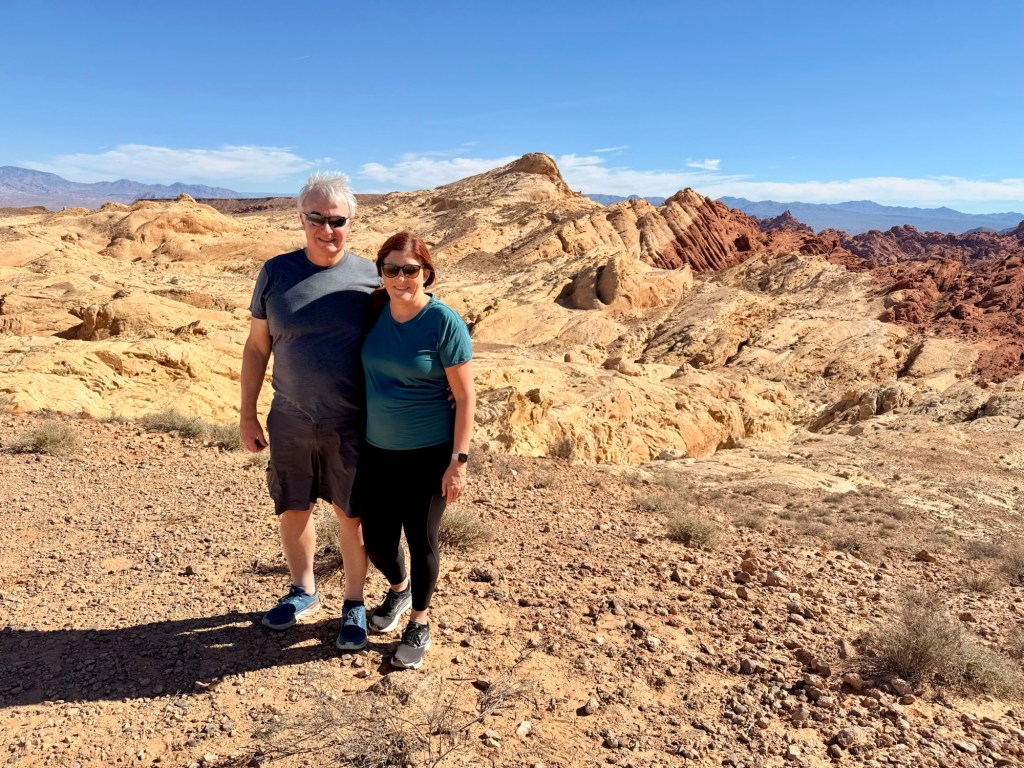
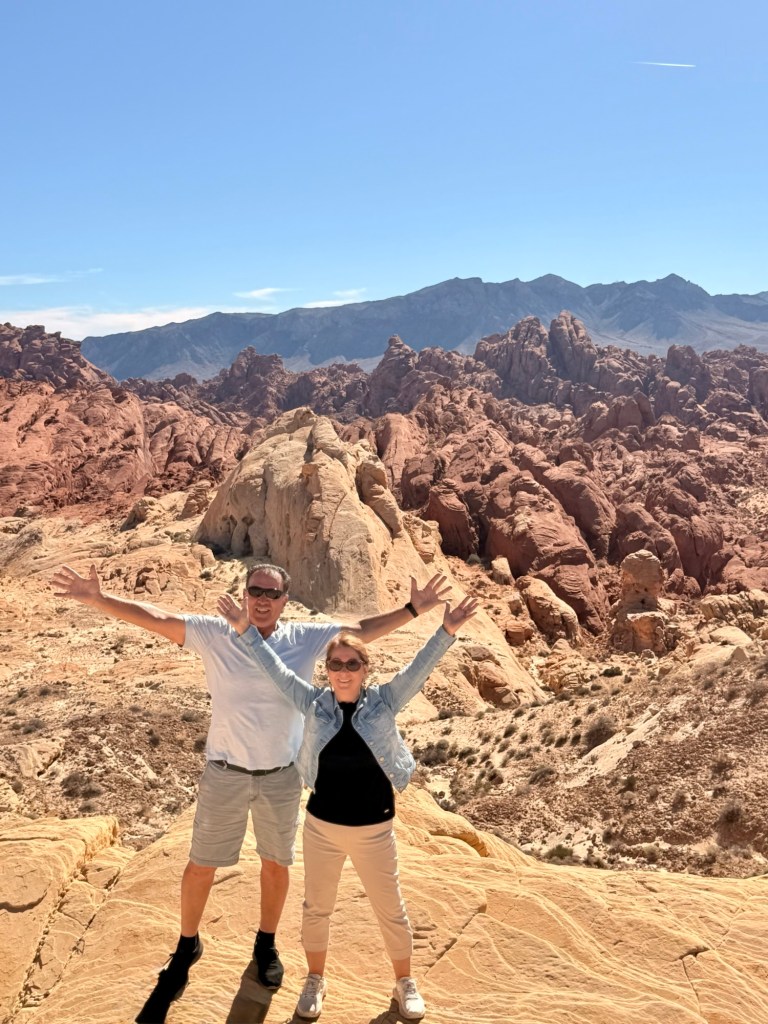
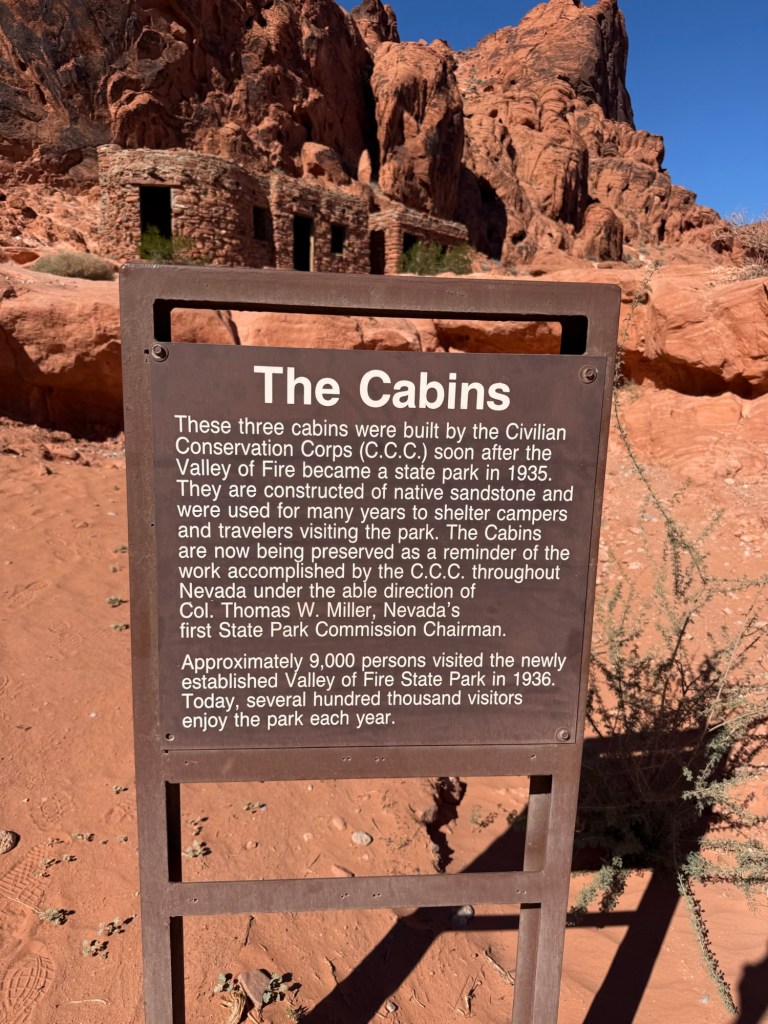
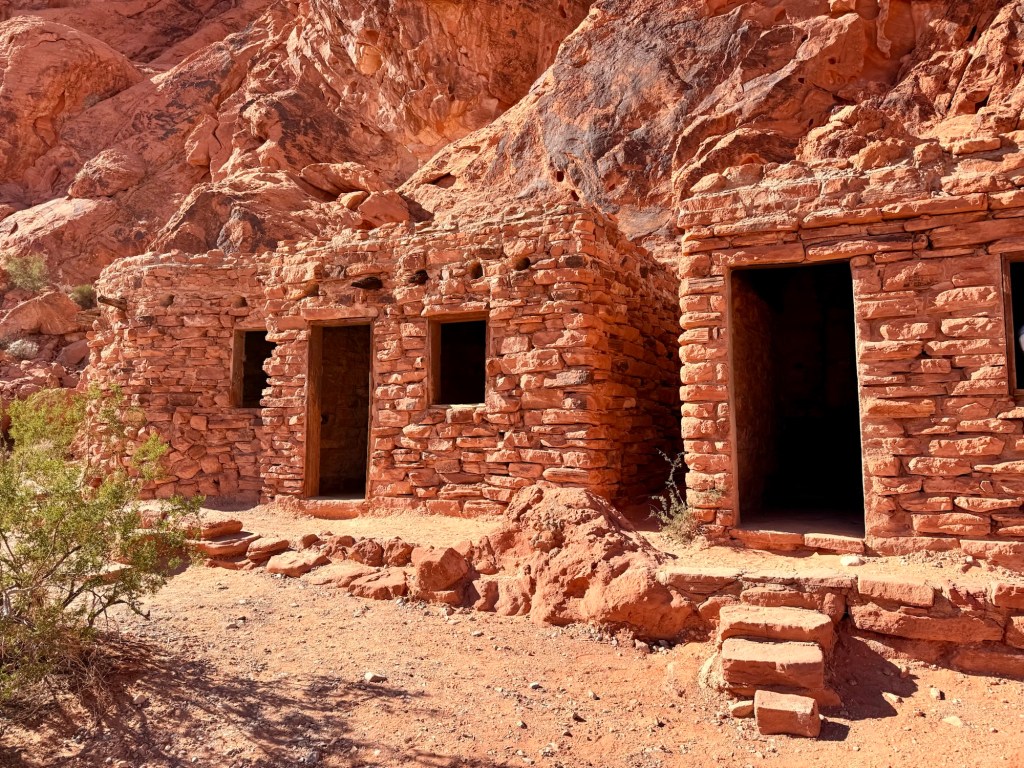
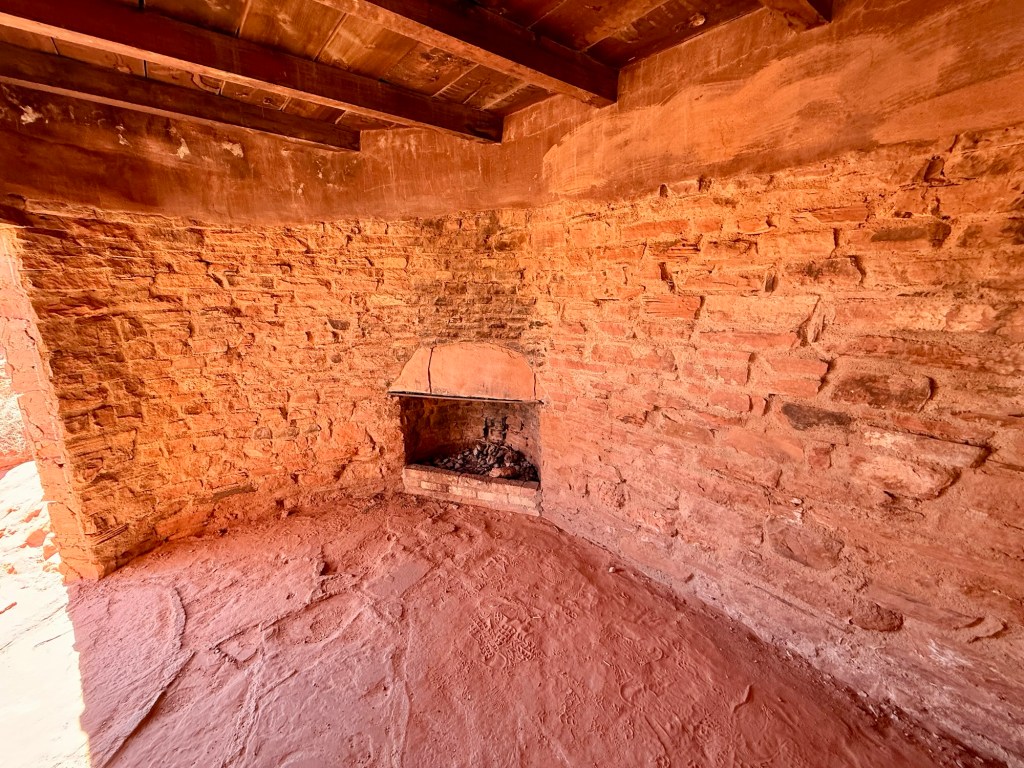
From here we move to visit “The Cabins. They were built in the 1930s by the Civilian Conservation Corps, we decided to sit at the picnic tables and finally eat our “lunch.”
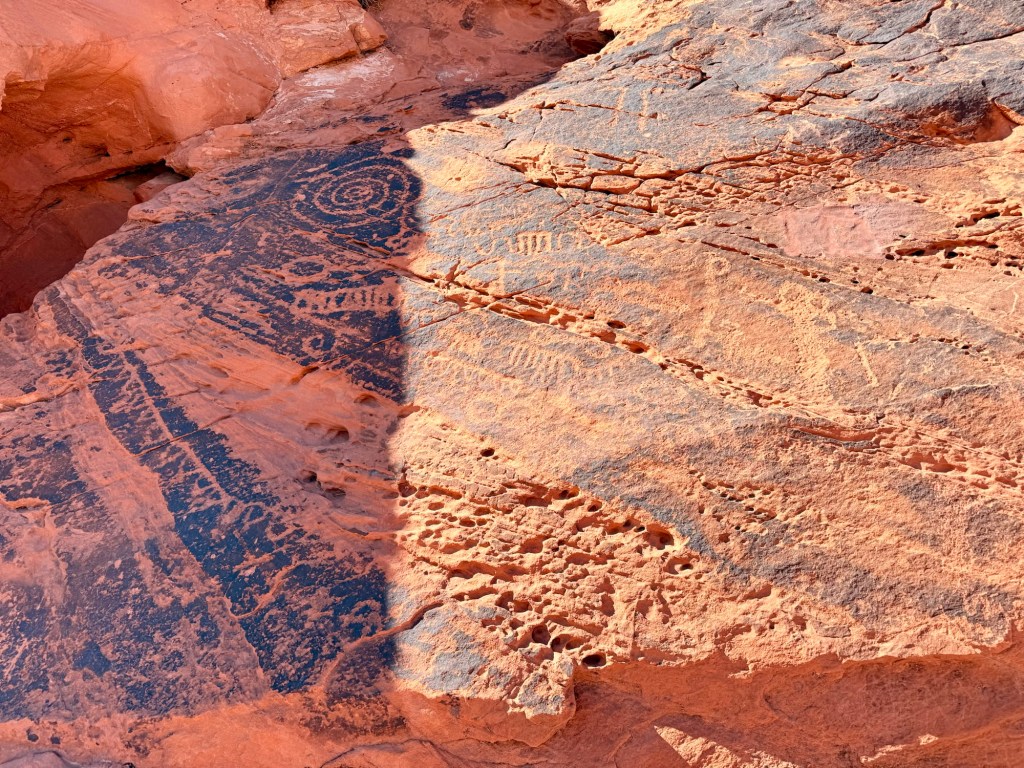
Thankfully Tim followed Max to learn about cabins, he pointed out ancient petroglyphs carved into the darker rock walls. The dark coating on the rock is called desert varnish, a thin layer made up of manganese, iron, clay, and even microbes that builds up over thousands of years. Ancient peoples chipped away at this surface to reveal the lighter rock beneath, creating their carvings. Some designs were easy to recognize, like the one representing water, while others were more abstract and open to interpretation.
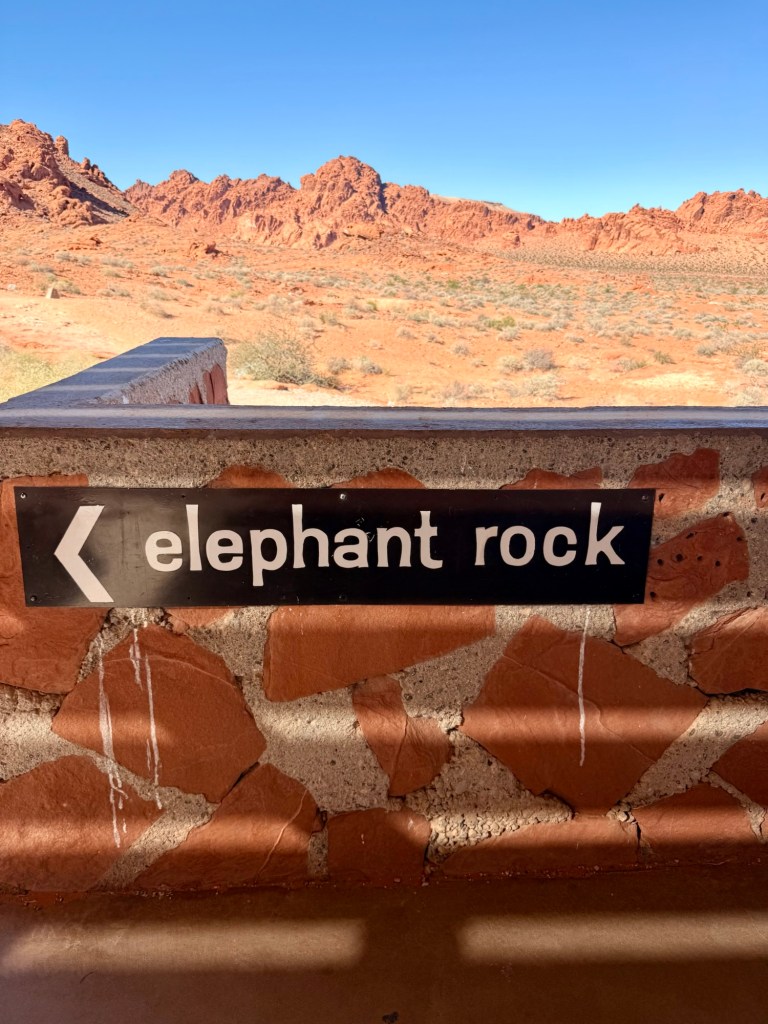
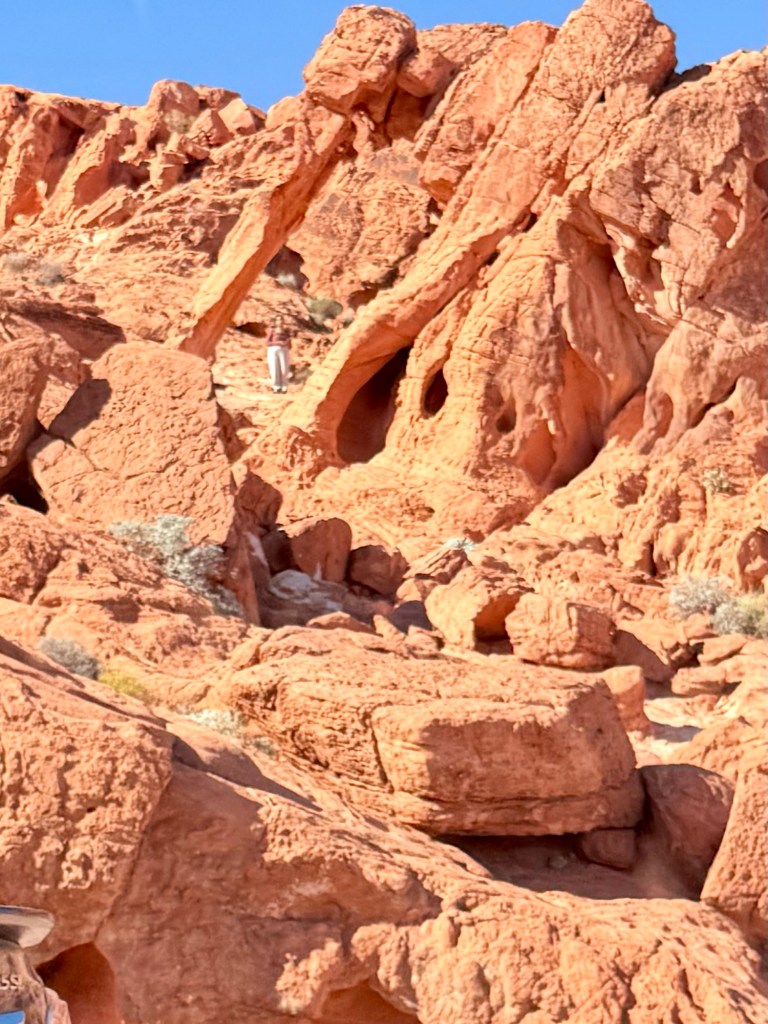
Our last stop was near Elephant Rock, where there was a second “Valley of Fire” sign. Max lined us up for a quick group photo, but there wasn’t enough time to hike to see the famous rock up close. As the van pulled away, I managed to snap a photo through the window — a small victory after a rushed stop.
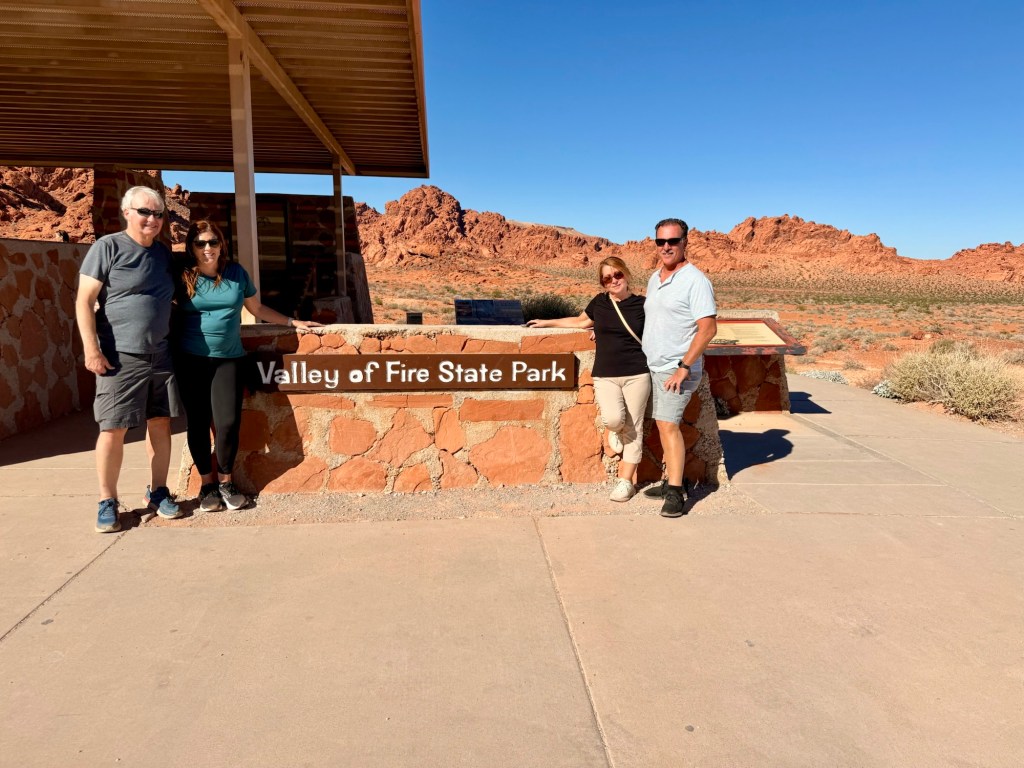
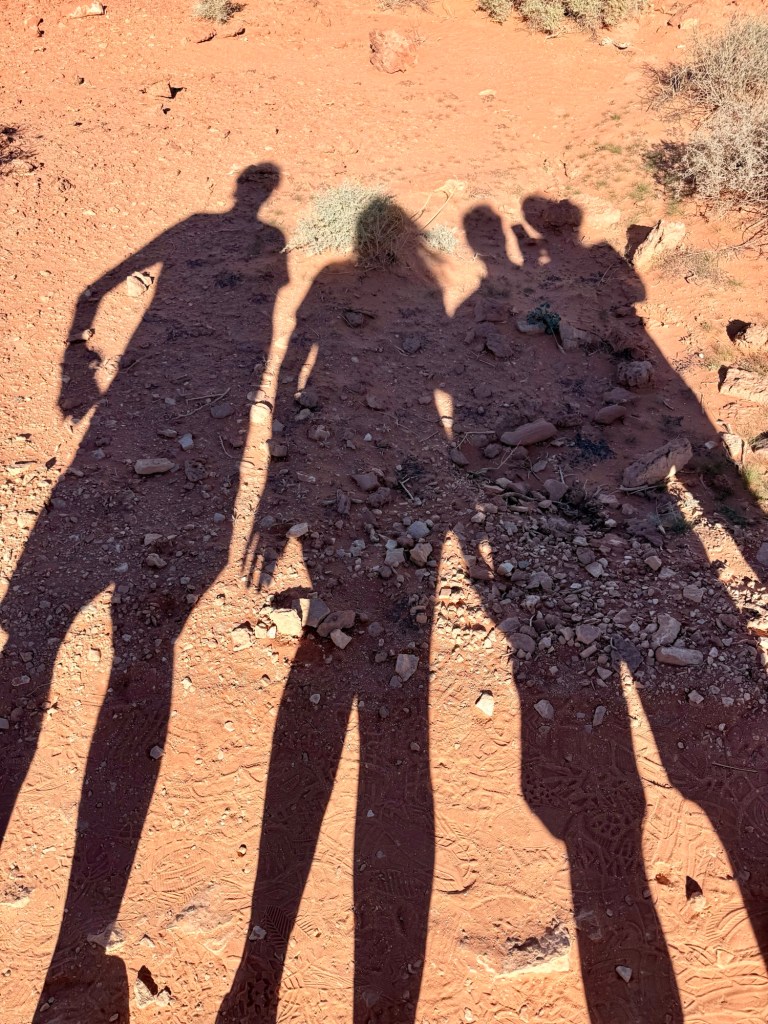

From there, the drive home turned into its own adventure. Tim and Glenn switched seats, and Tracie and I swapped places.
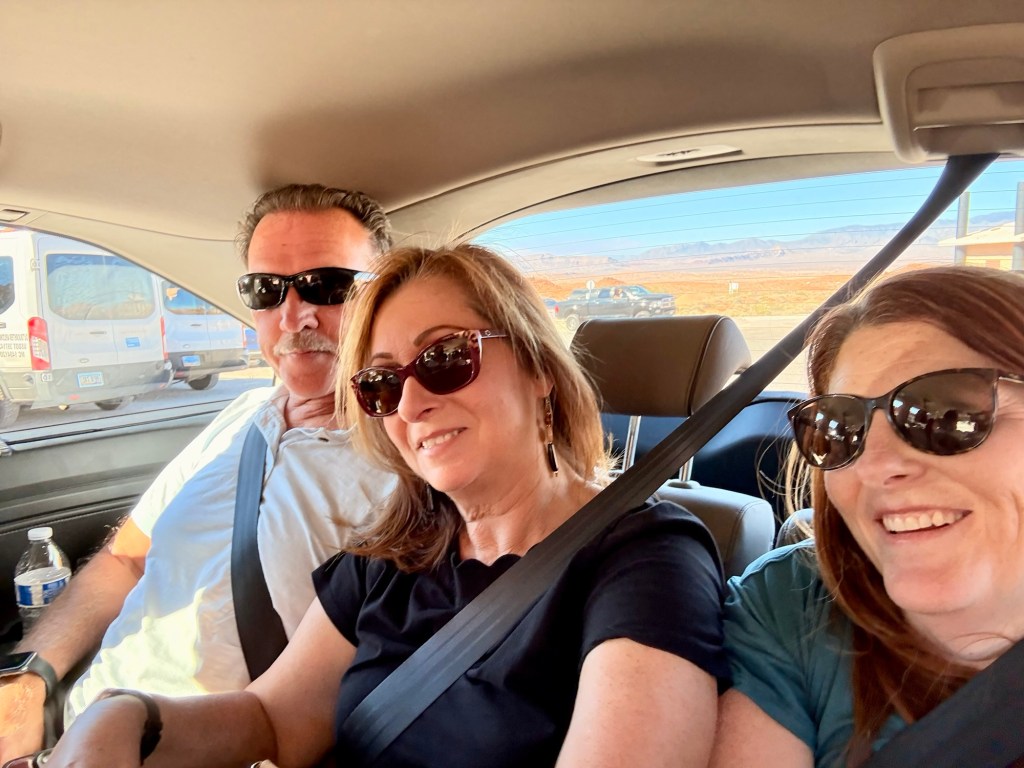
Before leaving the park, Max mentioned that Las Vegas actually has its own ski resort — something few people realize. He said it was about an hour from the city, up in the mountains, where people go to escape the desert heat. That’s Lee Canyon, located in the Spring Mountains about 45 minutes northwest of the Strip, with elevations ranging from roughly 8,600 to 11,000 feet. It’s a popular winter ski area and a cool mountain retreat in summer, where temperatures can be forty degrees lower than in the valley.
Right after that, one of the other passengers — the dad — asked what the elevation was where we were in Valley of Fire. Max just shrugged and said, “Not much.” The guest ended up Googling it to give us the answer: between 1,500 and 3,000 feet above sea level.
The education was minimal so I decided to update this blog with more information so we can learn more later.
My new seat gave me a clear view of the speedometer. That’s when I saw what Glenn was talking about! Max was driving unbelievably fast, always at least fifteen miles over the speed limit, passing every single car, on two-lane road with rolling hills. Every time he pulled out to pass, my heart skipped a beat. On the highway he drove even faster, I took a photo showing the speedometer at one hundred miles an hour.
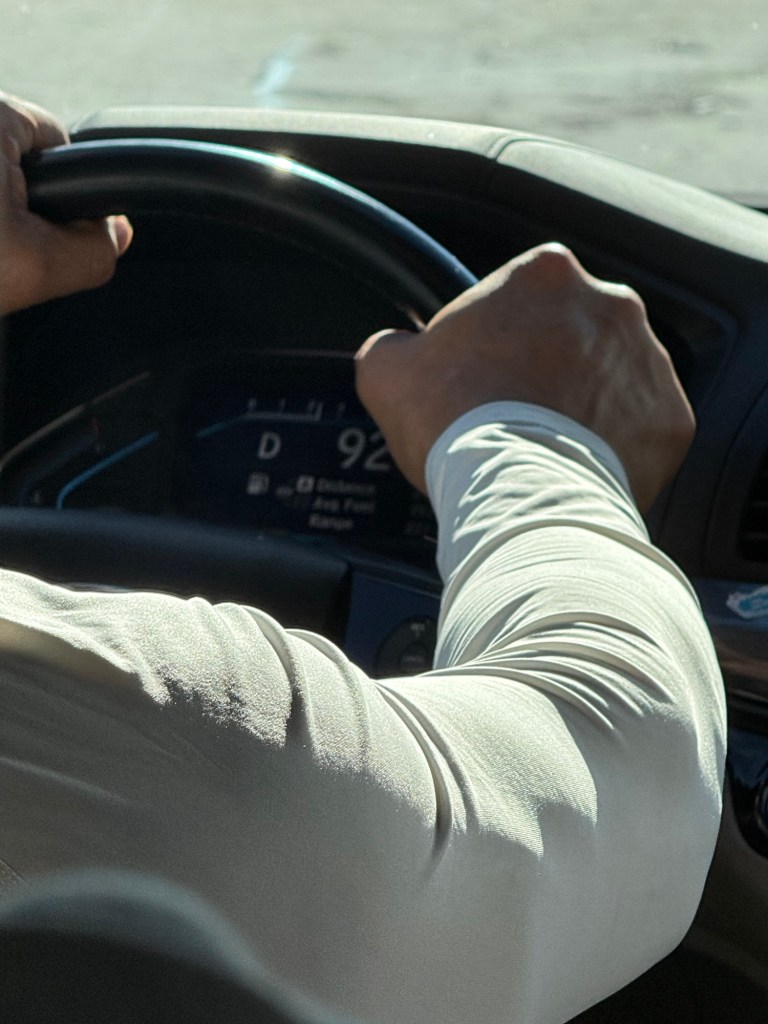

One of the rules for this trip was that passengers weren’t allowed to eat in the van—only water was permitted. Yet there was Max eating chips, and at one point I saw him glance down after dropping one. All I could think was, please, just keep your eyes on the road. I felt nervous watching him eat and by the time we reached our drop-off point, we were relieved to be back on solid ground.
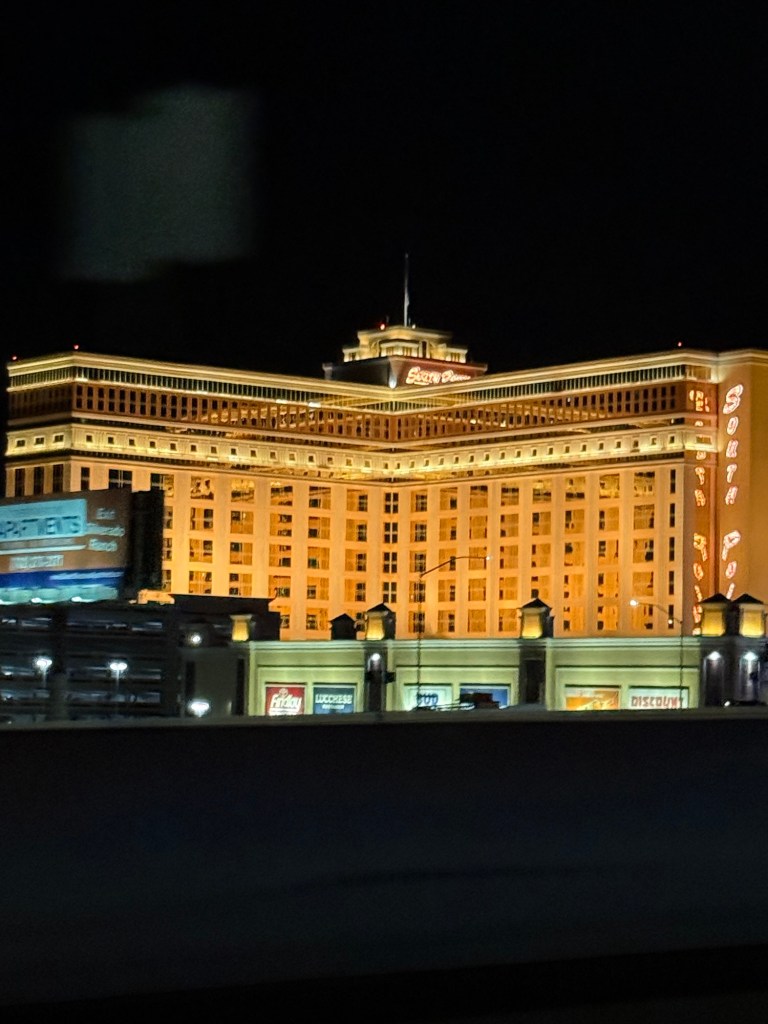
What made it even stranger was that he refused to return us to our hotel where we’d been picked up. Instead, he dropped everyone off at Treasure Island, saying it was because of the upcoming F1 race—we even said can we pay you extra to drive us back to The Grandview and the answer was NO! It meant a thirty-dollar Uber ride to get back to our place. When we got out, Glenn was ready to tip but paused and said, “I didn’t like the way you drove.” Max didn’t respond—not even a glance—and Glenn handed him the smallest tip possible, and we all regretted tipping after that drive.
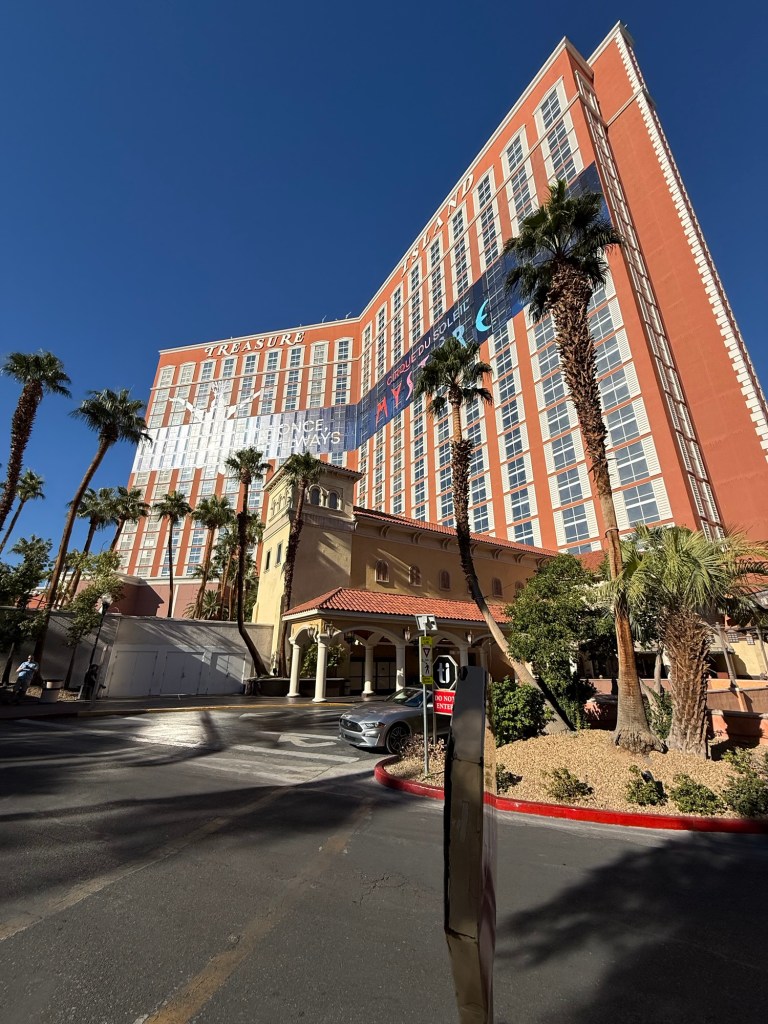
After a day of 100-mile-an-hour desert driving, we decided it was time for a calmer thrill — cocktails and a speakeasy hunt in the Fremont Street area.
We made it back to our hotel, regrouped, and found a great option for dinner – Triple George Grill.
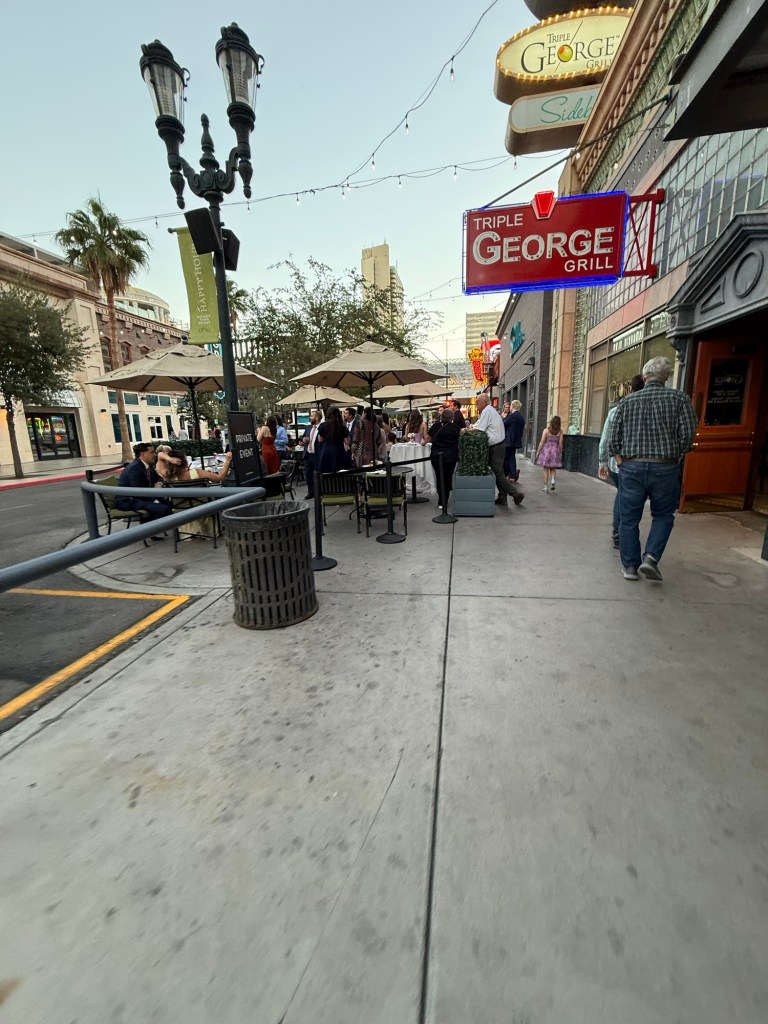
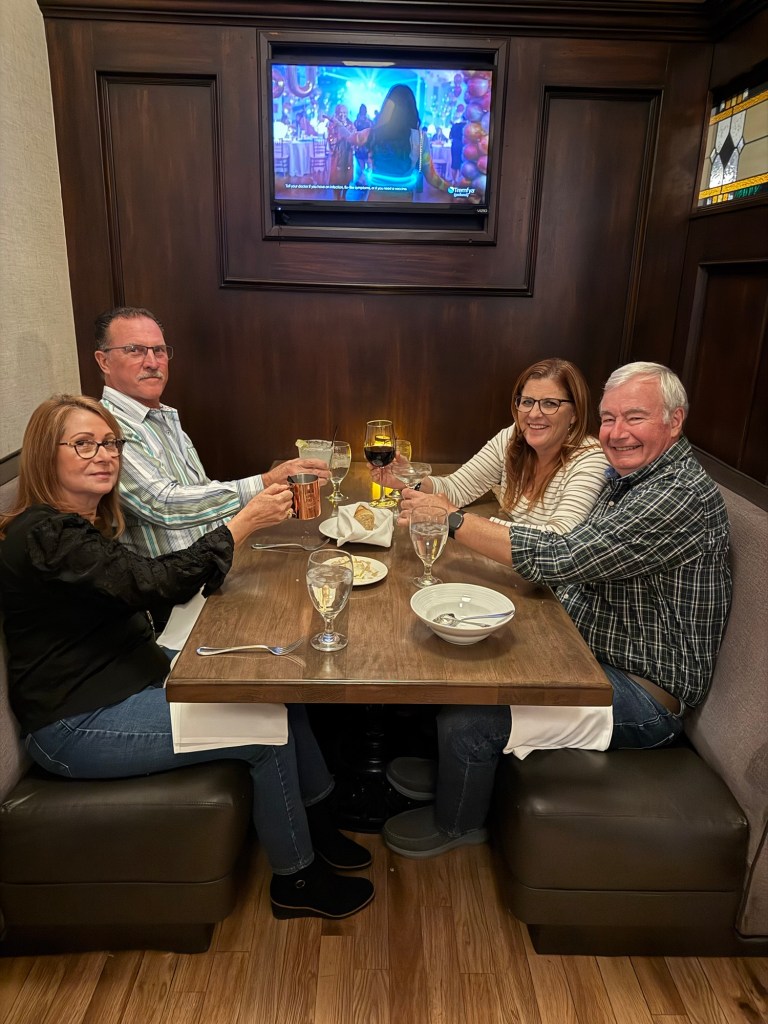
The restaurant, located downtown near the Fremont Street Experience, had that classic old-Vegas feel — dark wood, and a lively yet comfortable atmosphere. The food was excellent, & the service was impeccable. The booths were separated by private walls, you could actually hear yourself think, which was what we needed after our wild day.
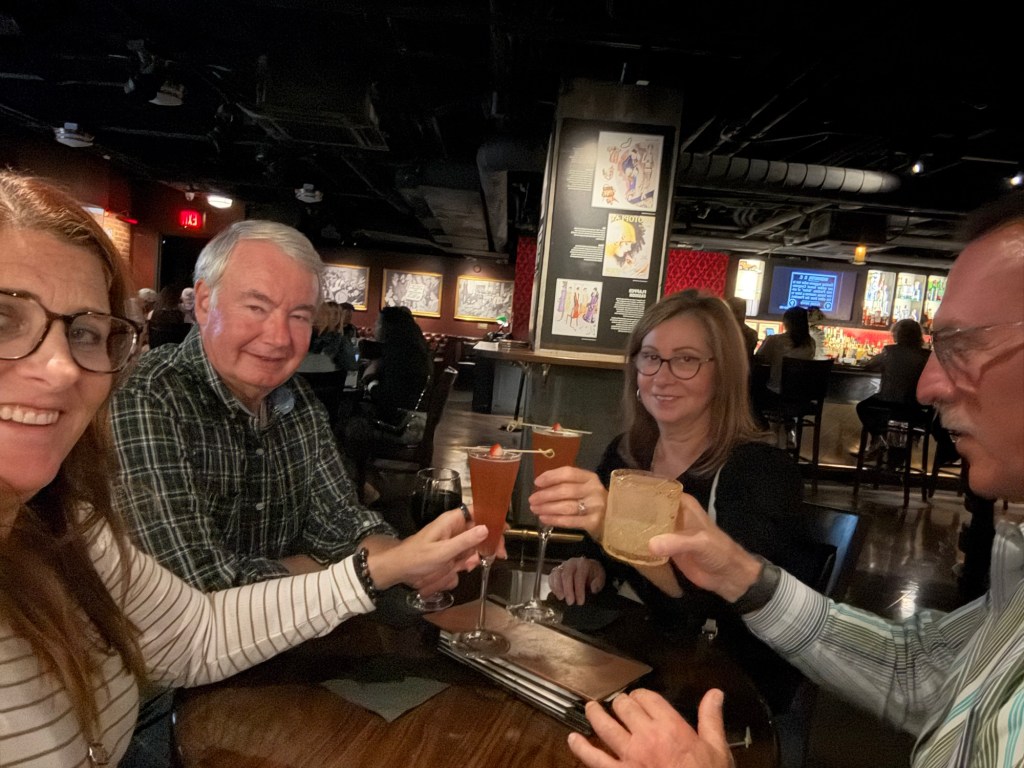
Our first stop after dinner was “The Underground Speakeasy” hidden beneath the Mob Museum. The museum itself sits in the old U.S. Post Office and Courthouse, built in 1933, and its basement houses a speakeasy that recreates the secret bars of the Prohibition era. We went into the museum to ask for directions, and the staff told us to turn by the barrel and head down the stairs. At the bottom, a host greeted us and had us wait in the hall for a few minutes before seating us at a table. To get in, you give the password of the night — Izzy and Mo — the names of two real Prohibition agents. The bar was dimly lit, lined with wood and vintage accents, and it was much louder than expected, full of chatter and music.

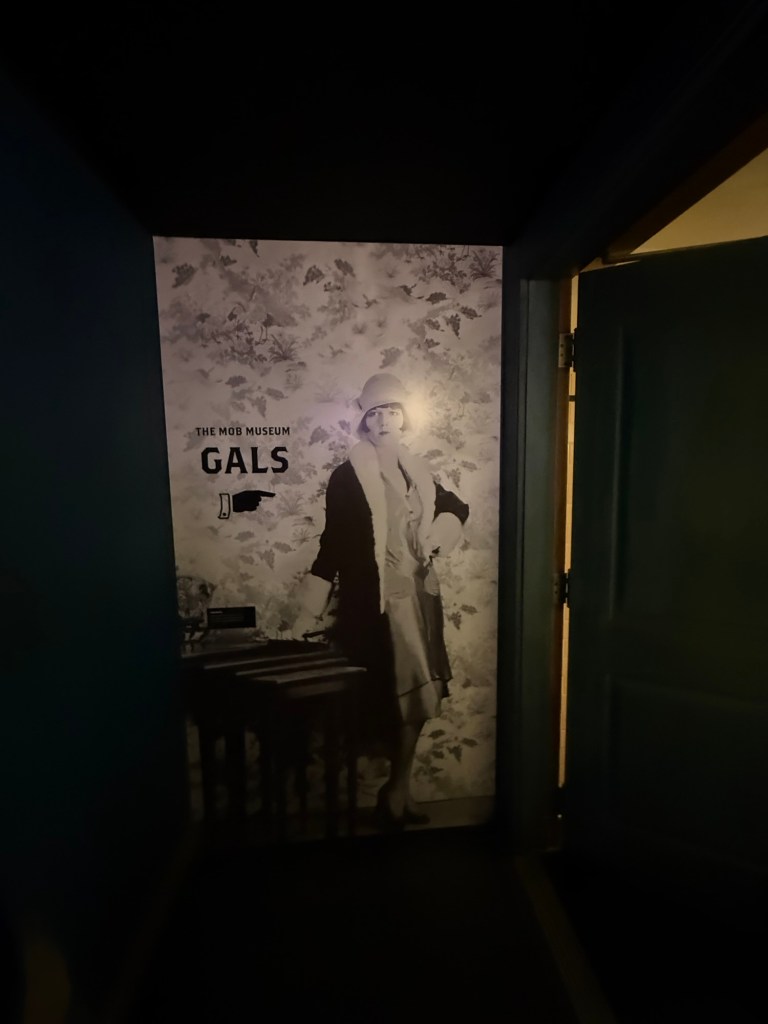
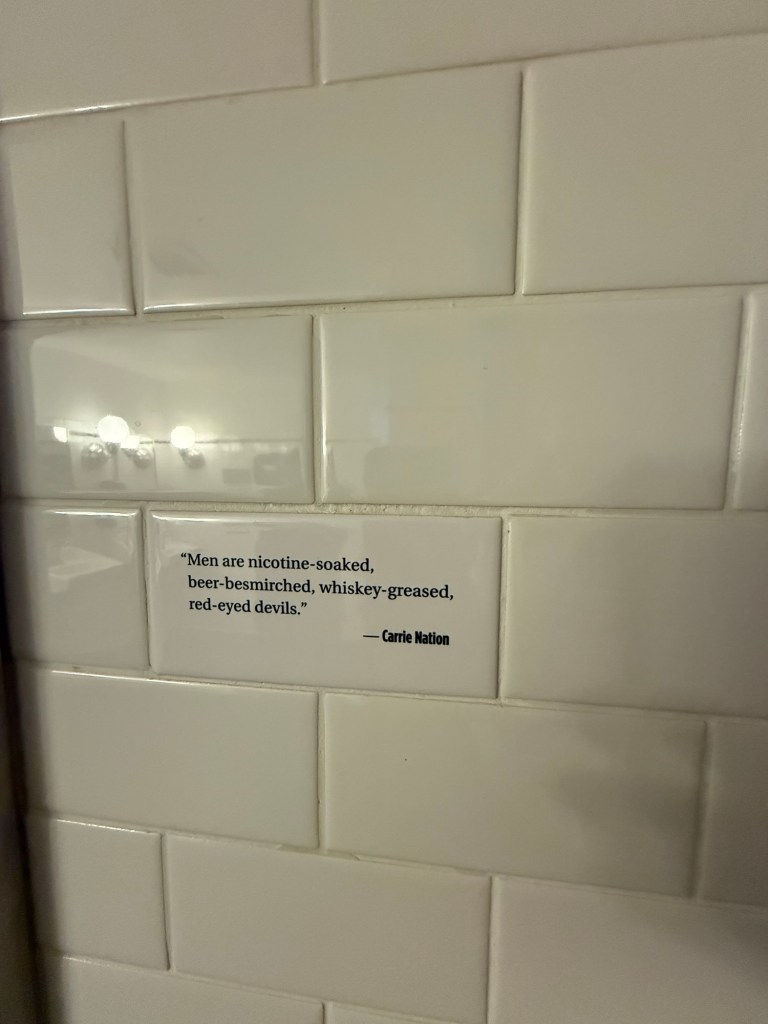
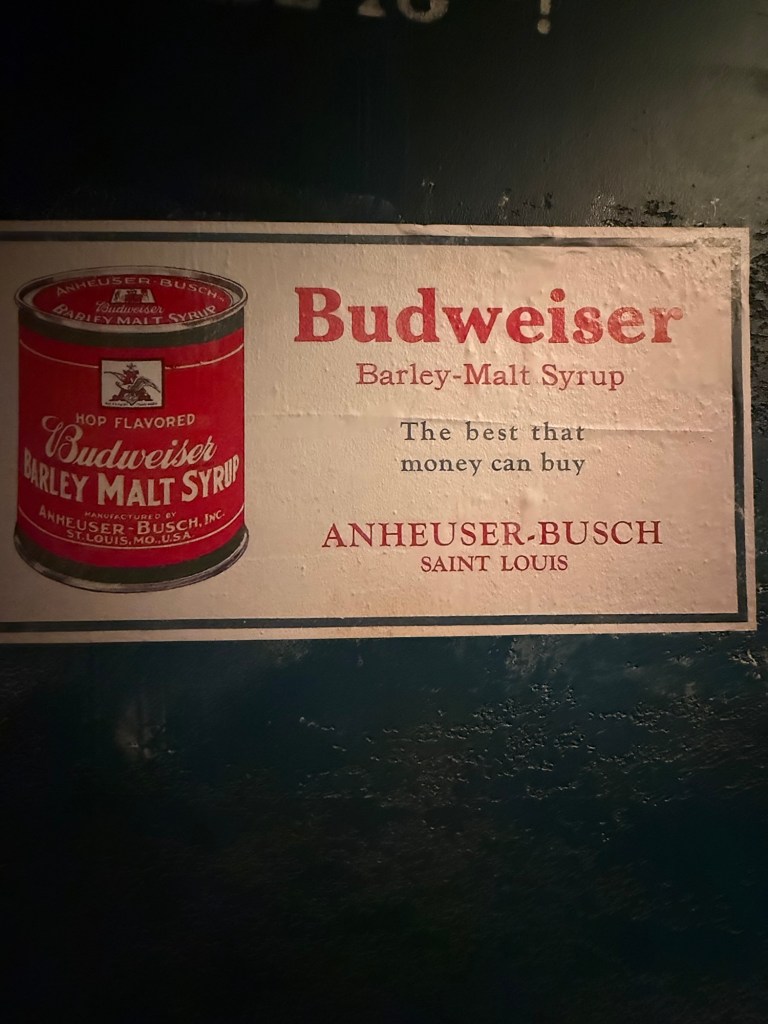

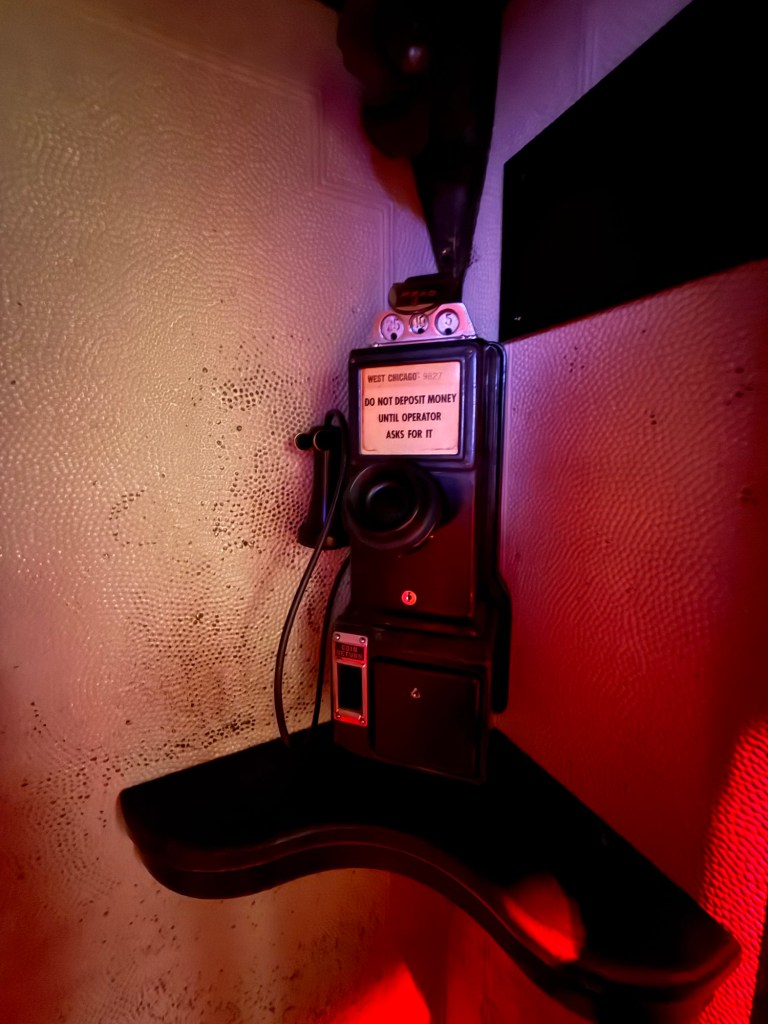
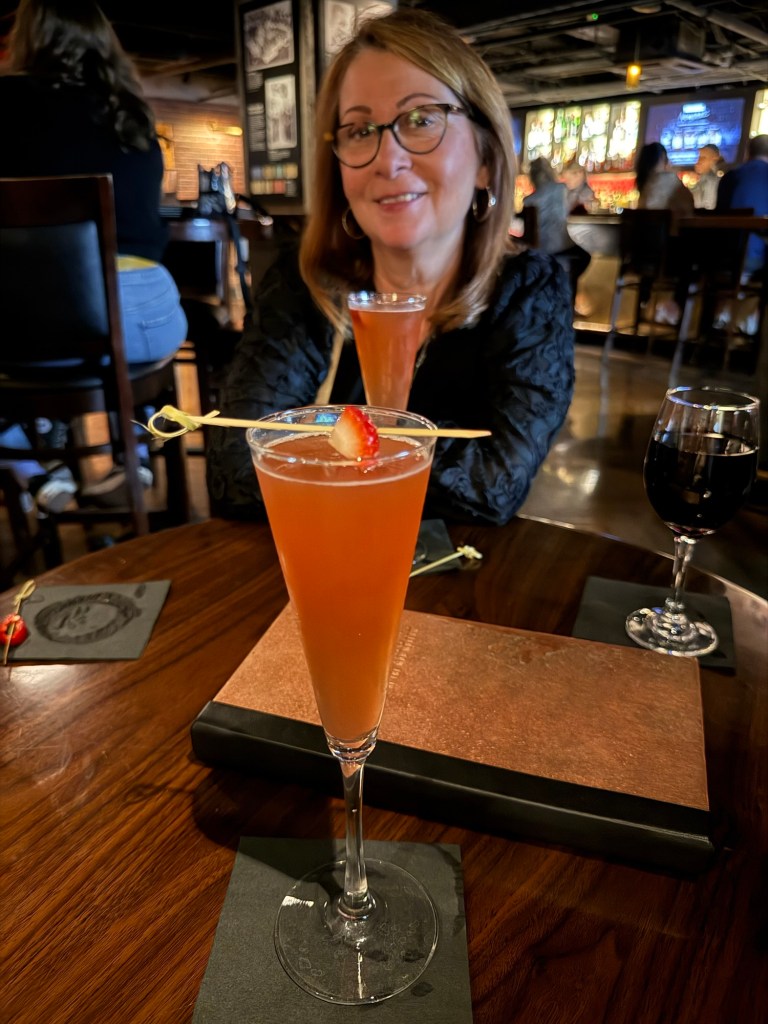
They finally called our name to get seated. Tracie and I ordered Giggle Juice, a citrusy cocktail that lived up to its name. Glenn had a margarita, and Tim ordered wine. Even with the noise, the place had charm and character.
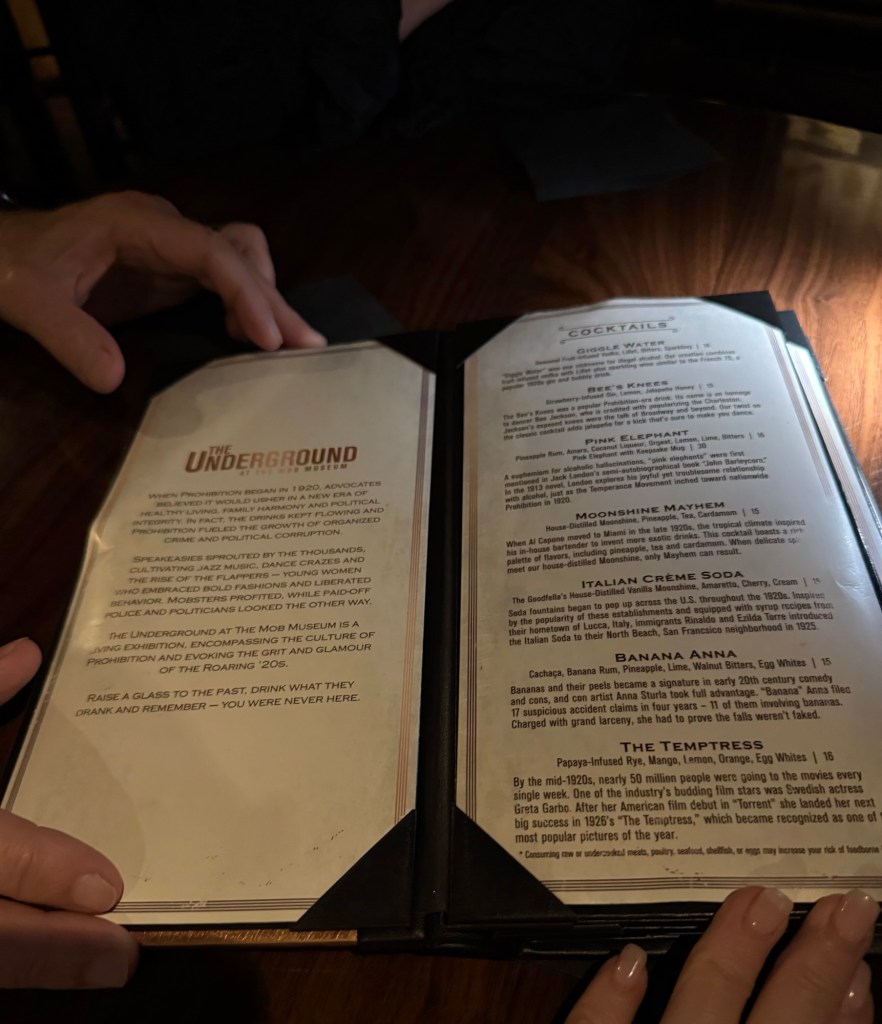

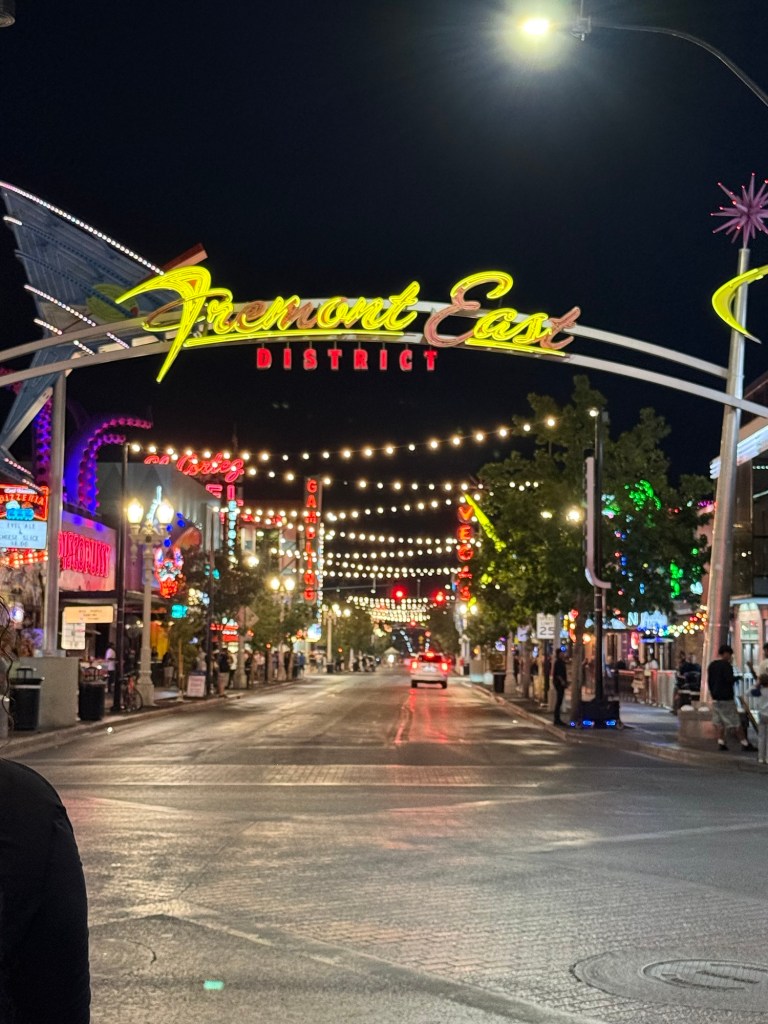
After one round, we decided to move on and look for GSB, another speakeasy rumored to be hidden somewhere in the Fremont area. We left the Mob Museum, turned left on 3rd Street, walked one block to Fremont, and turned left again. They say GSB is the hardest door to find in all of Fremont, and I believe it. We walked past The Griffin Bar, thinking maybe the entrance was nearby, but nothing looked right.

I finally pulled up Google Maps — only to see the words “Permanently Closed.” That answered our question.
From there, we followed the directions toward The Laundry Room, which is tucked inside Commonwealth Bar just down the street. When we arrived, we noticed there was a private event that night, however I asked the hostess who told me so we it only seats eleven people anyway, so it would’ve been impossible without a reservation. Another miss — but at least we tried.
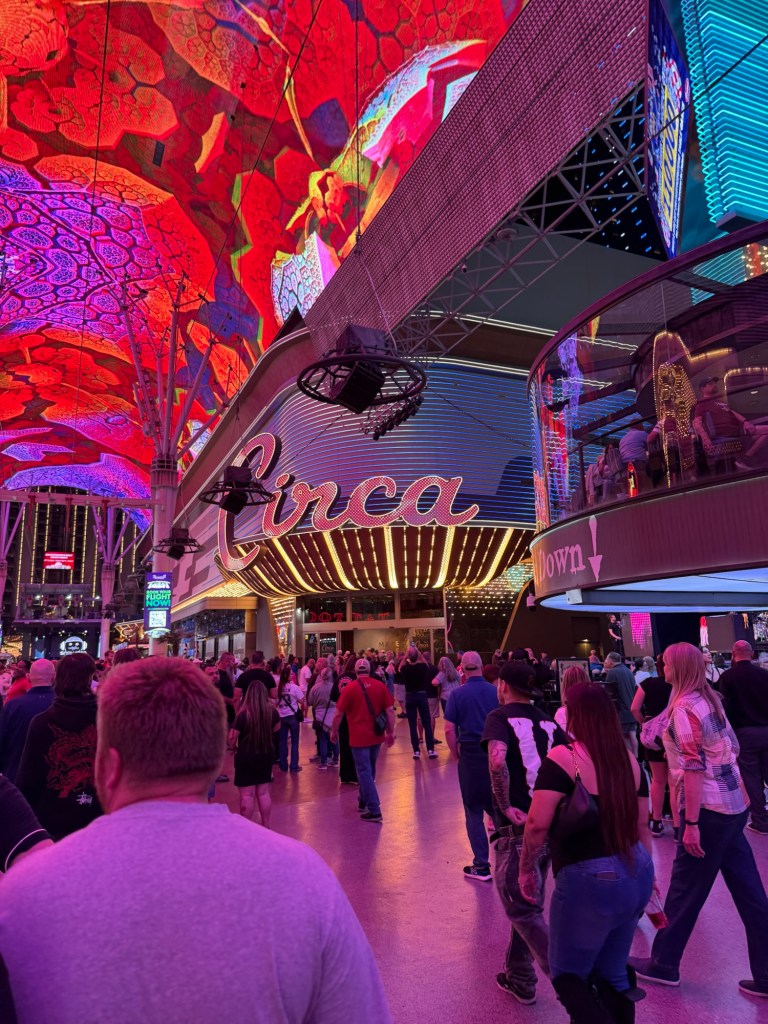
From there, we followed our steps to find the last speak easy, and headed toward Circa Resort, just a short walk from Commonwealth along Fremont Street.
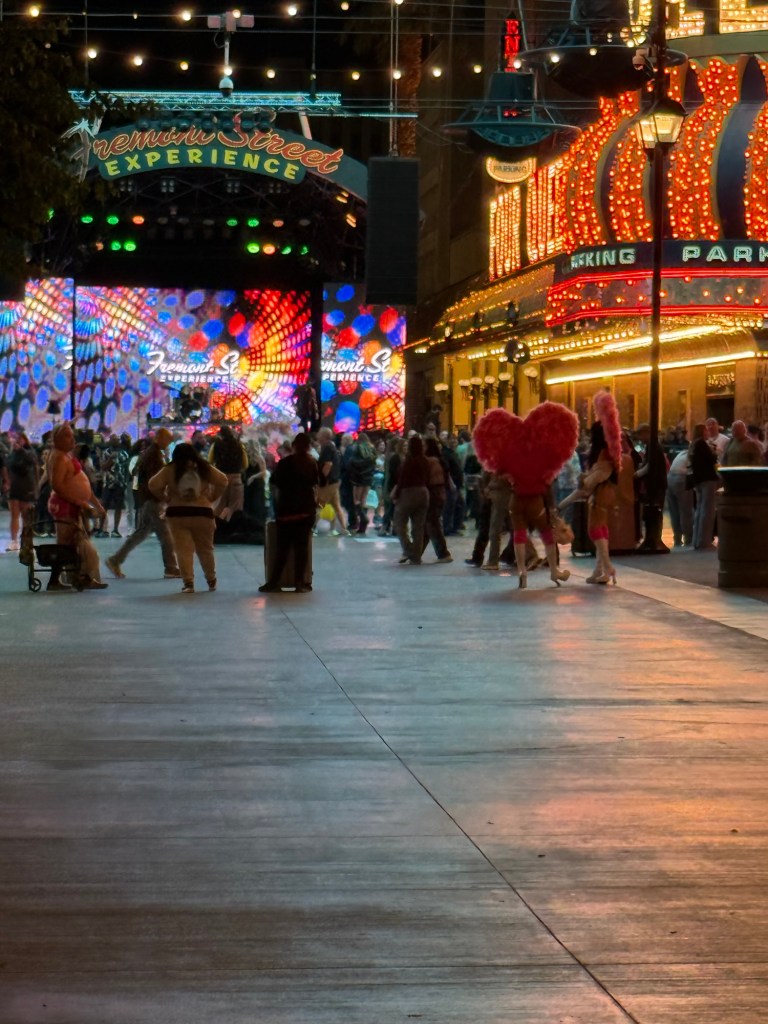
Fremont Street is the vibrant heart of old Las Vegas — a pedestrian-friendly entertainment district bursting with neon lights, live music, street performers, and energy around the clock. Once the city’s main casino drag before the Strip took over, it’s now home to the Fremont Street Experience, a massive LED canopy that stretches several blocks, flashing dazzling light shows set to music each night. Beneath it, visitors zipline overhead while crowds pack into open-air bars, stages, and iconic casinos like the Golden Nugget, Circa, and Binion’s.

It’s a mix of nostalgia and spectacle — where vintage Vegas meets modern nightlife. You can catch tribute bands, pose with showgirls, grab street food or craft cocktails, and feel like you’ve stepped into a live, electric time capsule of everything that makes Vegas larger than life.

The next stop on our list was the 1923 Prohibition Bar, which was supposed to be inside Circa. The directions said to enter through the main doors, take the escalator or elevator down one level, and look for a hidden bookcase with a small “1923” plaque. We searched everywhere but quickly realized that this location didn’t exist. The real 1923 Prohibition Bar is actually at Mandalay Bay on the Strip, not downtown. ChatGPT made a mistake in our plan.
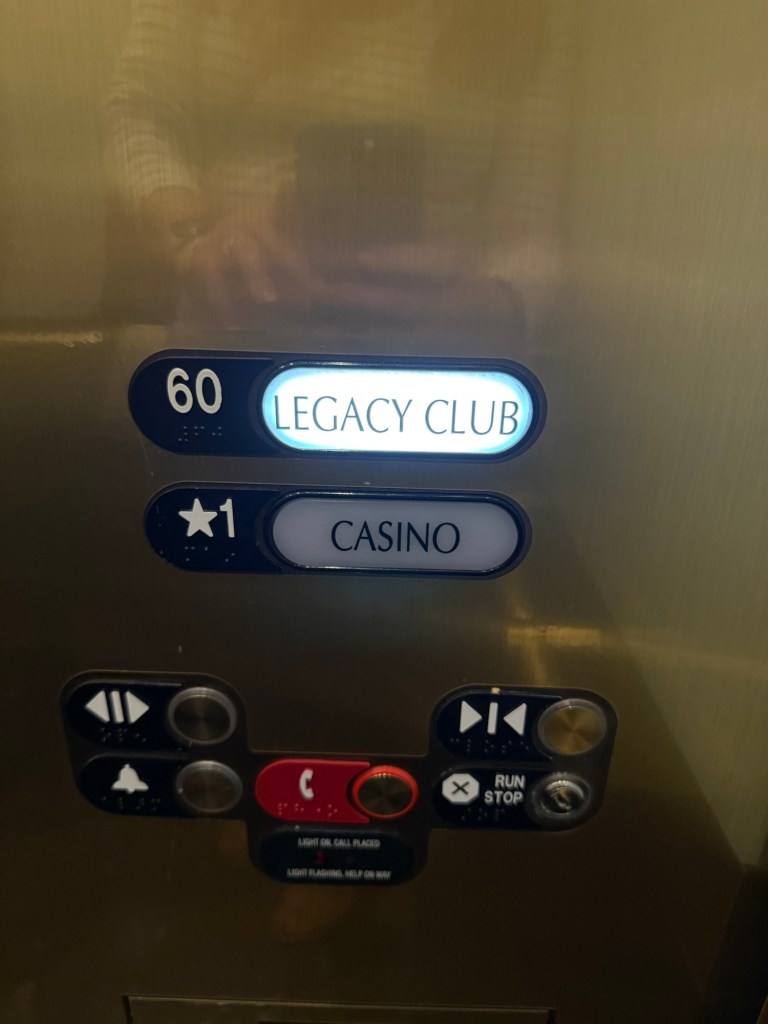
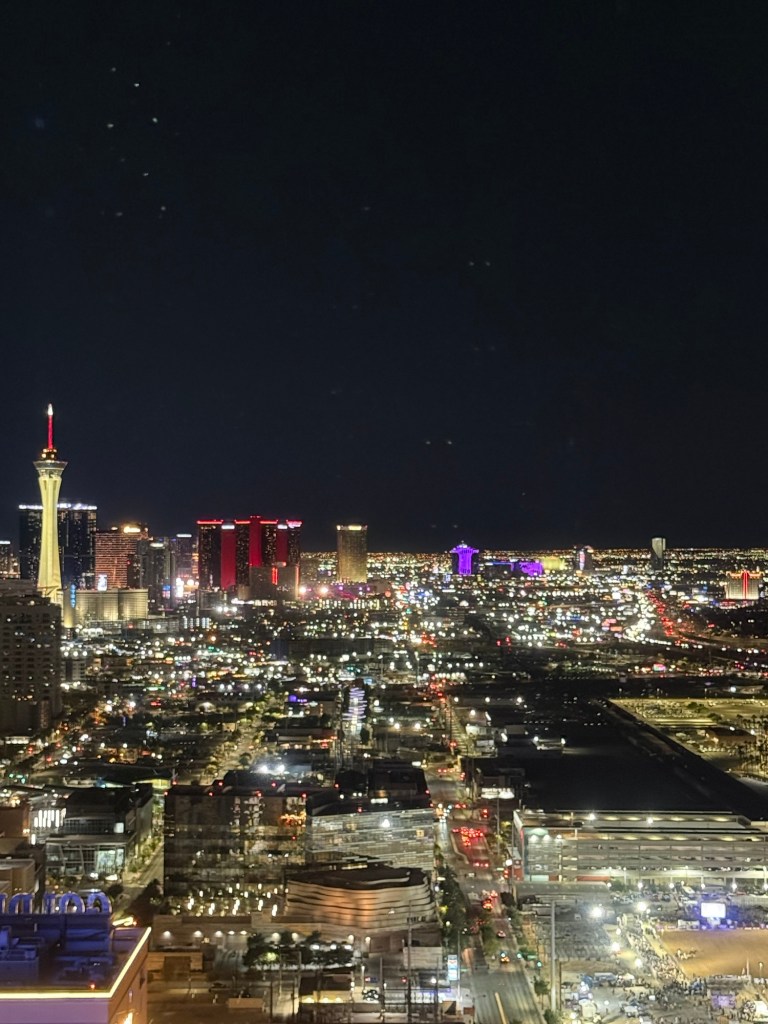
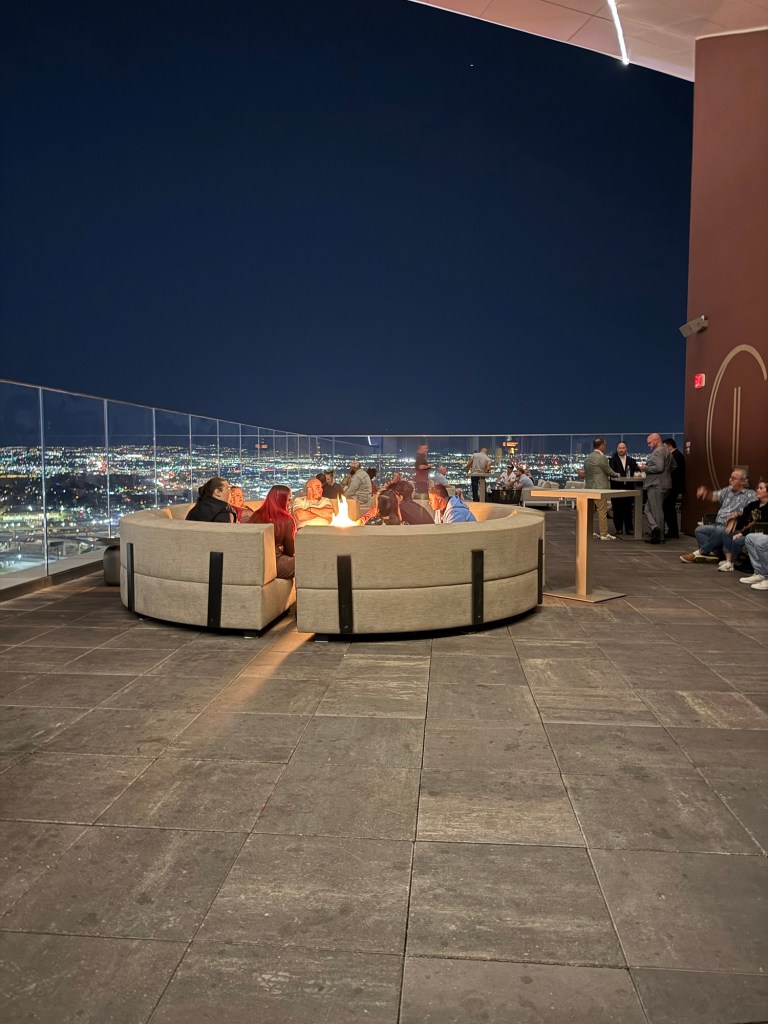
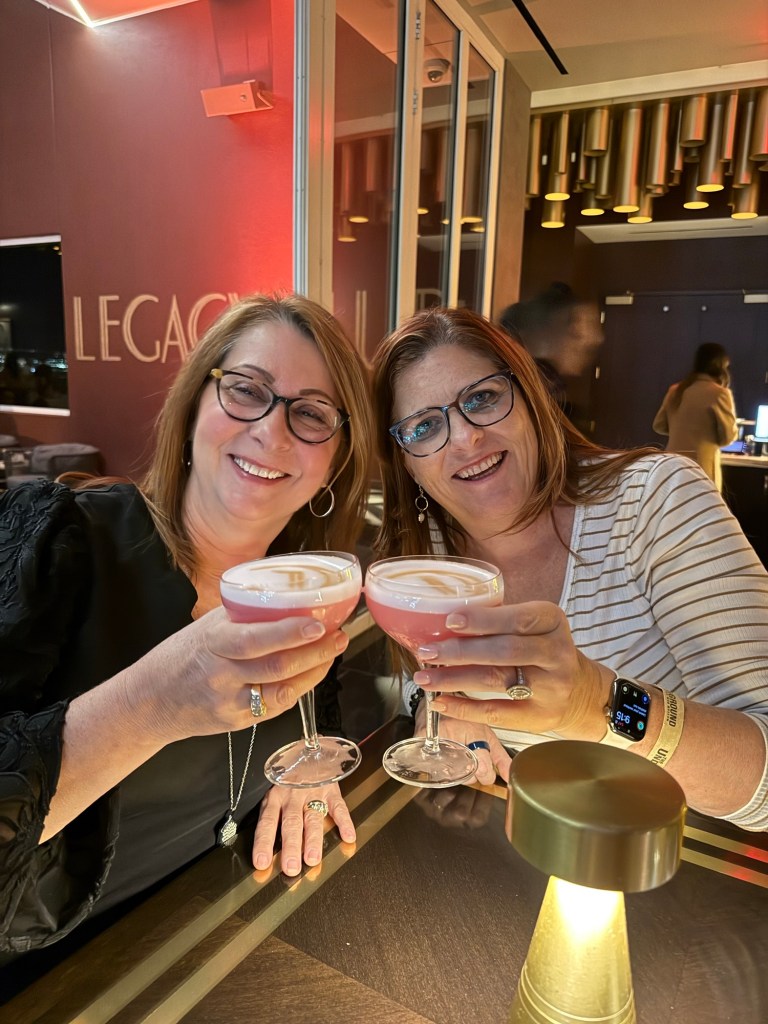
Since we were already inside Circa, we decided to go upstairs instead. We took the elevator up to the Legacy Club, Circa’s rooftop bar overlooking downtown Las Vegas. This made up for all our fails!
Circa is the first new resort built on Fremont Street in forty years, designed as a modern nod to old-school Vegas. The Legacy Club sits on the 60th floor with fire pits, gold accents, and a glittering skyline view. The night air was perfect, the lights below stretched endlessly, and it felt like a world away from that harrowing desert drive earlier in the day. It wasn’t a speakeasy, but it was the perfect way to end the night—with laughter, good drinks, and the kind of memories that make every twist of a trip worth it.


Today started crazy and ended on a good note!

 Happiness is Possible