We slept in. Earned it. Then down for breakfast and we scored the Caffè Crema again. Two for two.
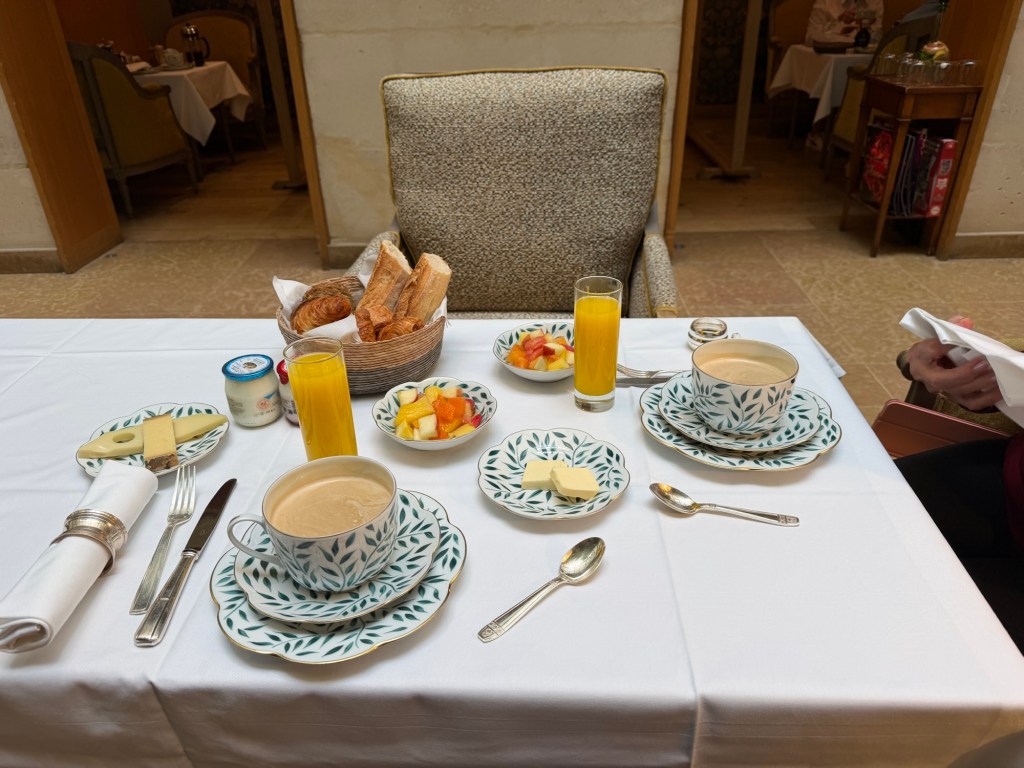
We both ordered scrambled eggs. Rabea, our breakfast lady, asked “cheese?” and I said yes. After she walked away, Mom said quietly, “I don’t like cheese on eggs.” The eggs came back. Mom took a bite and said, “These are the best eggs I have ever had.” I said, “It’s the cheese she added.”
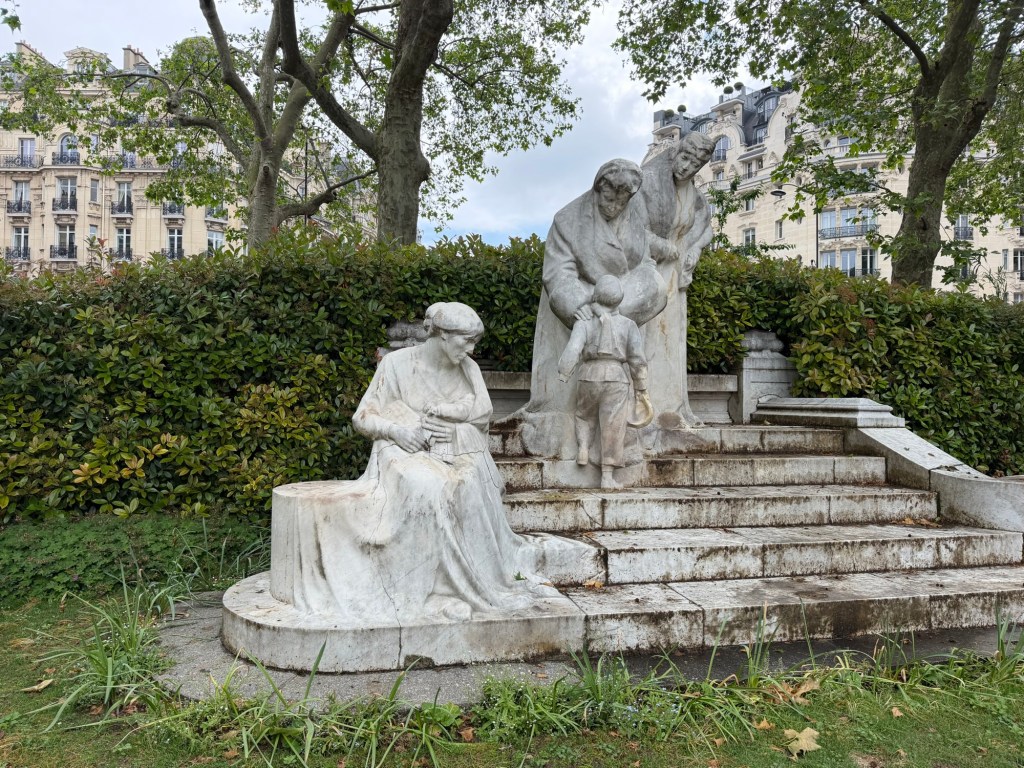
On the way to Bon Marché we walked through Square Boucicaut, the little park right across from the store. Both are named after Aristide Boucicaut. The park has a marble statue dedicated to his wife Marguerite, who ran the store after he died and was a famous philanthropist.
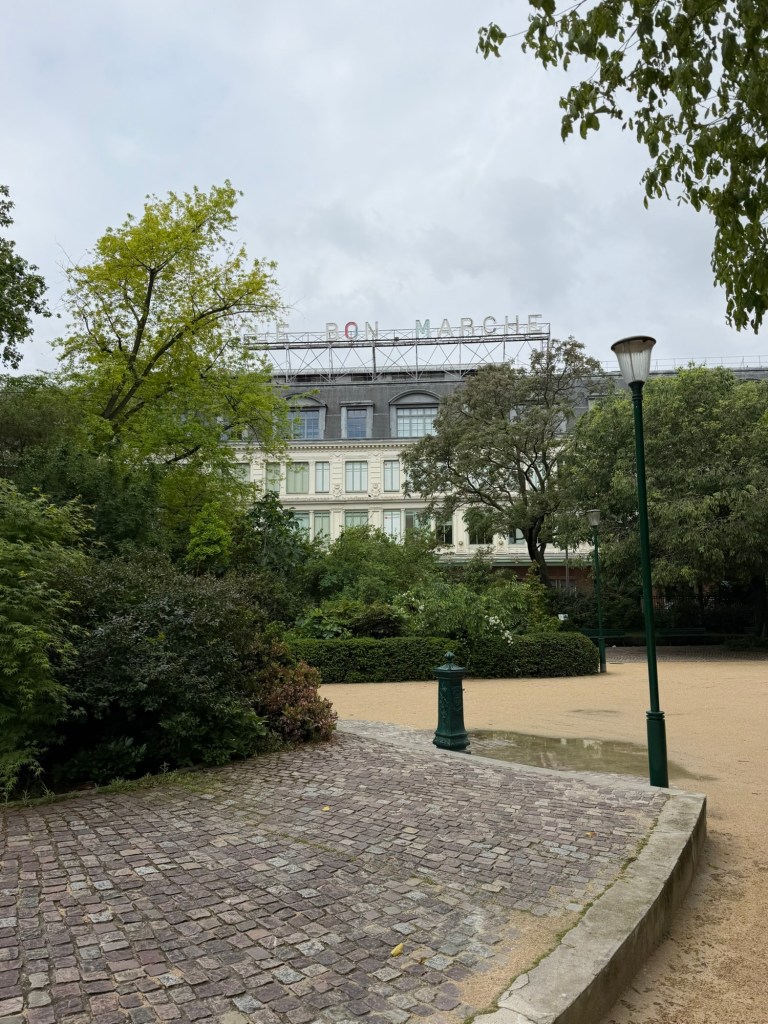
I love a department store with personality and Bon Marché has it. Fun fact: it is the world’s first department store, opened in 1852 by Aristide and Marguerite Boucicaut. They invented things we now take for granted, like fixed prices, returns, and mail order.
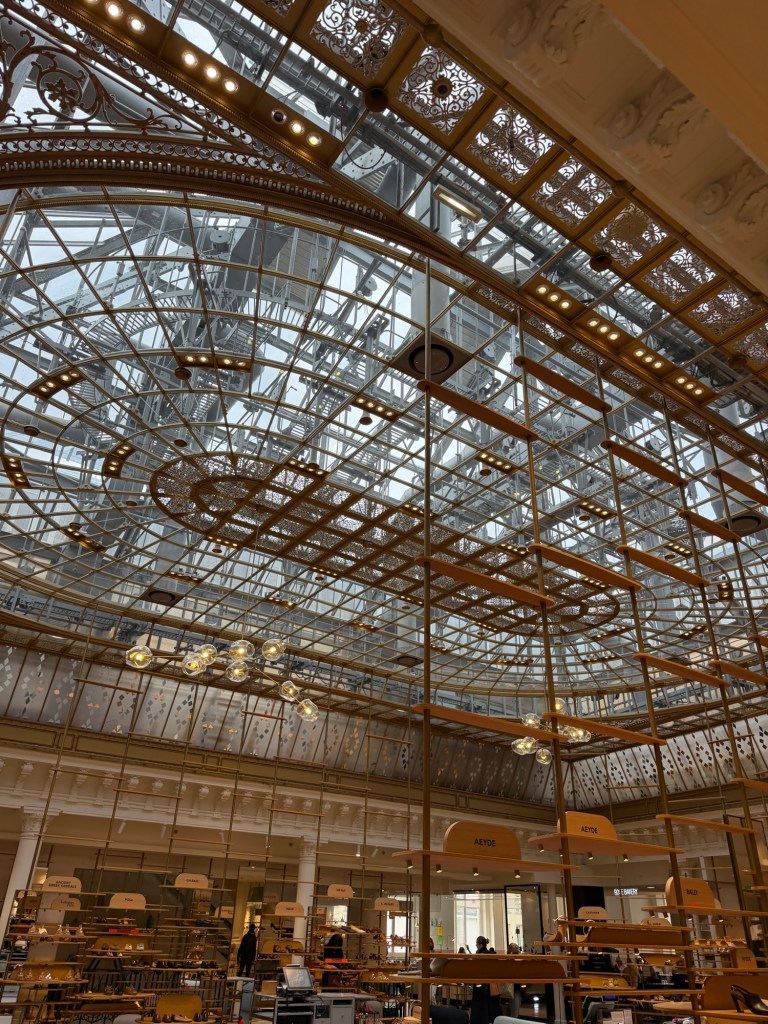
The first thing you notice walking in is the ceiling. Gustave Eiffel helped design the expansion of the building, and his iron and glass dome soars over the central atrium. It is gorgeous.
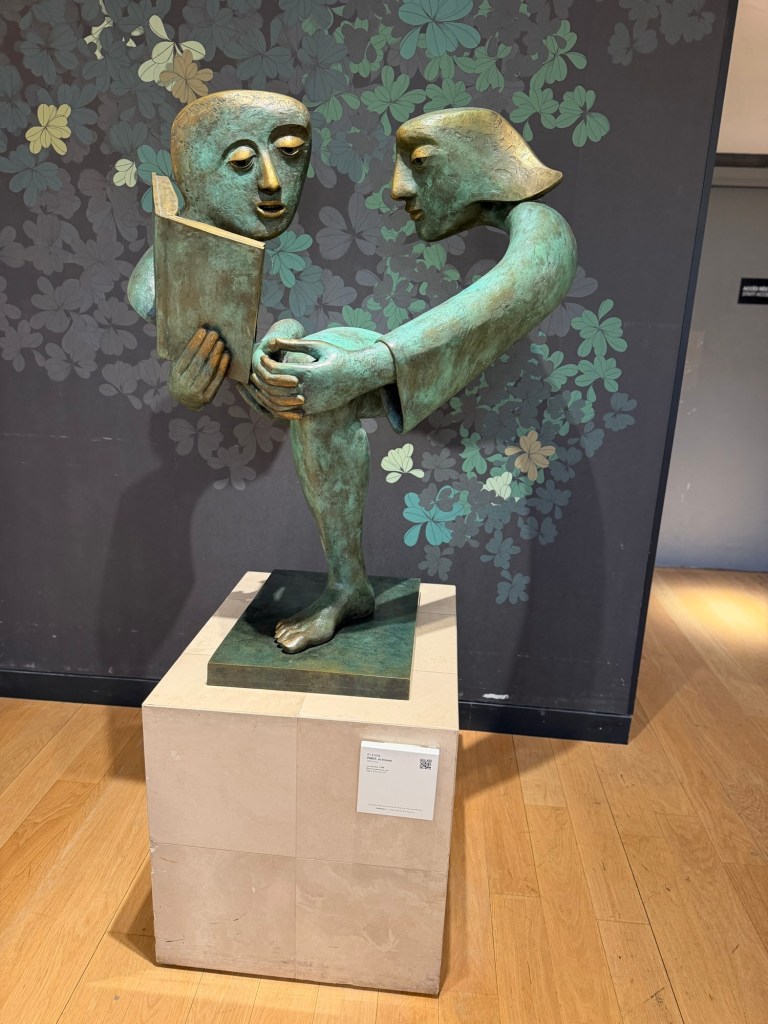
Then we ran into the art. The store is dotted with sculptures and rotating installations. We stopped at a beautiful bronze of two figures reading a book together. “La Lecture” (The Reading) was made in 1989 by Étienne Pirot, a French sculptor who went by just “Étienne.” He worked almost entirely in bronze, paring his subjects down to the essentials to celebrate simple human moments. Love, motherhood, friendship, faith.
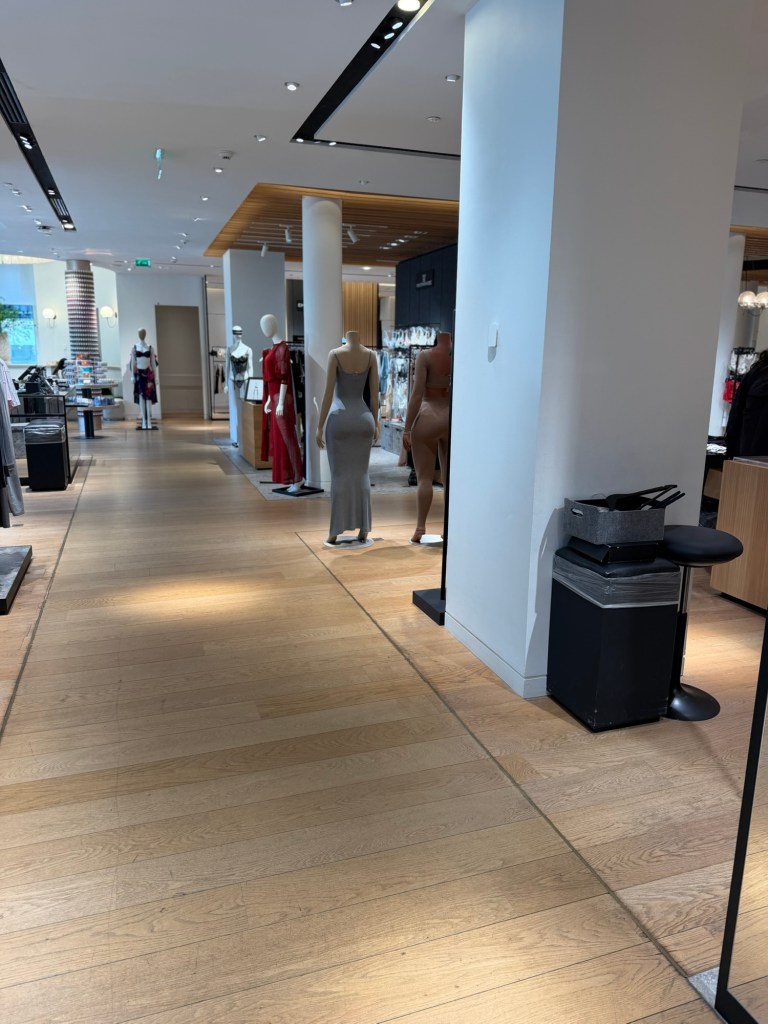
Then we got to the women’s clothing section. The oddest thing we noticed were the mannequins. They had Kim Kardashian-shaped rears. Funny because French women look nothing like that. They eat fresh food and they walk everywhere. American women look completely different. We have preservatives. We eat in our cars. We rush.
We shopped and wandered for a couple of hours.
We also stopped back into Le Petit Bateau and found the same clerk who helped us last year. Sweet little reunion.
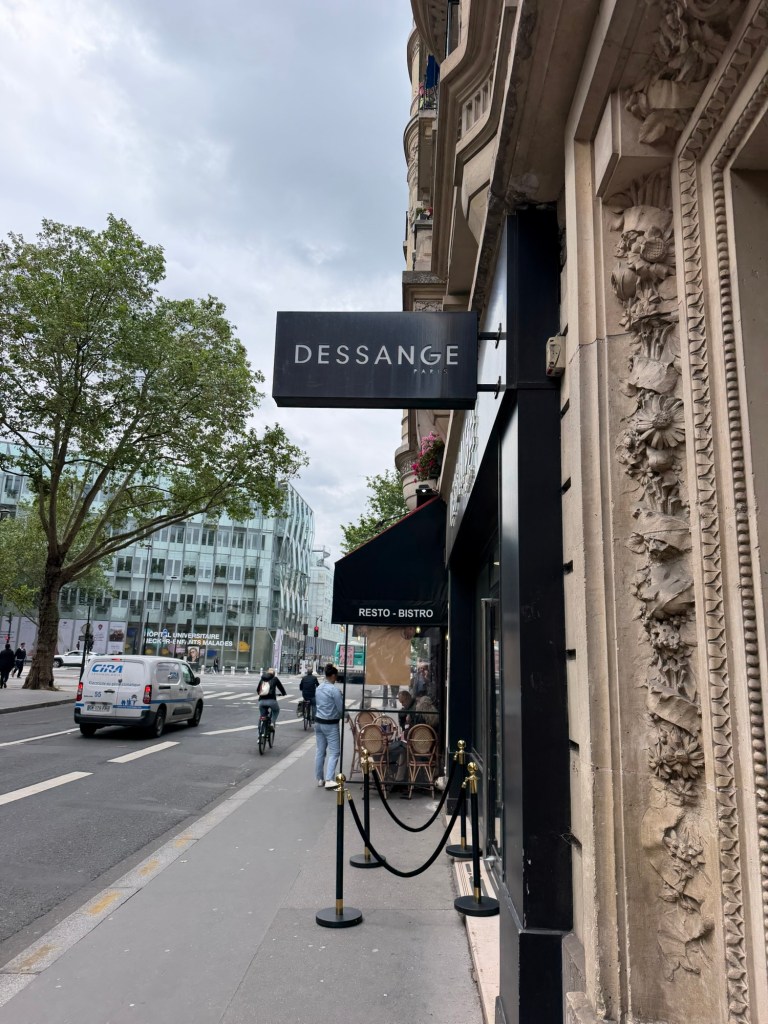
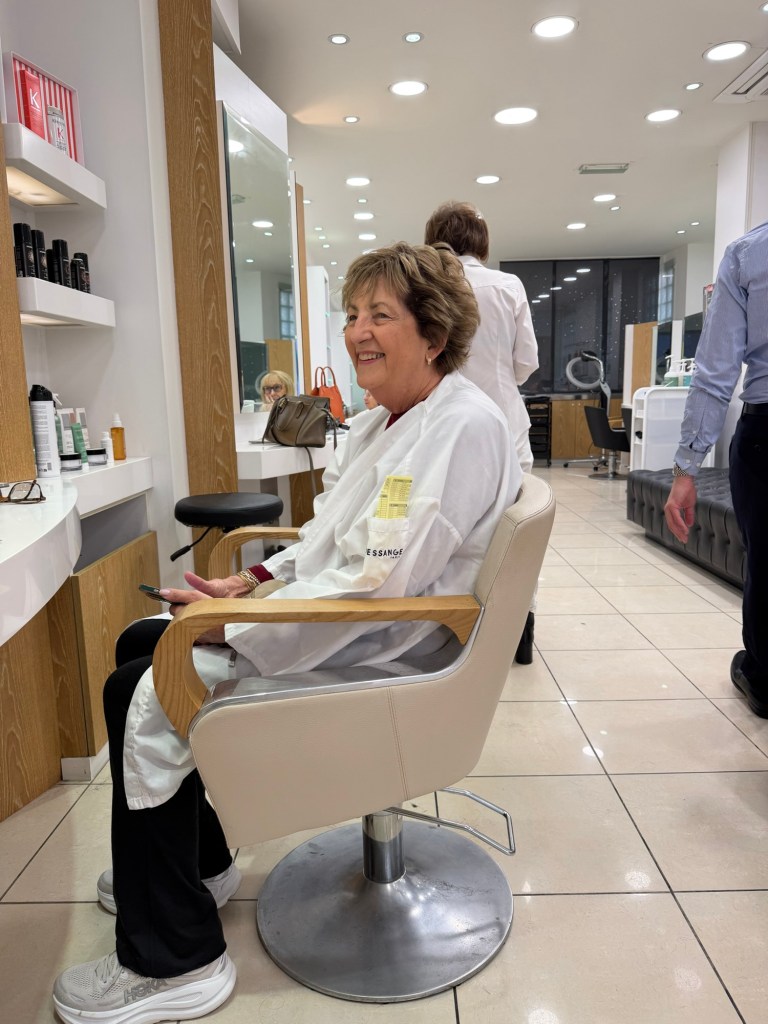
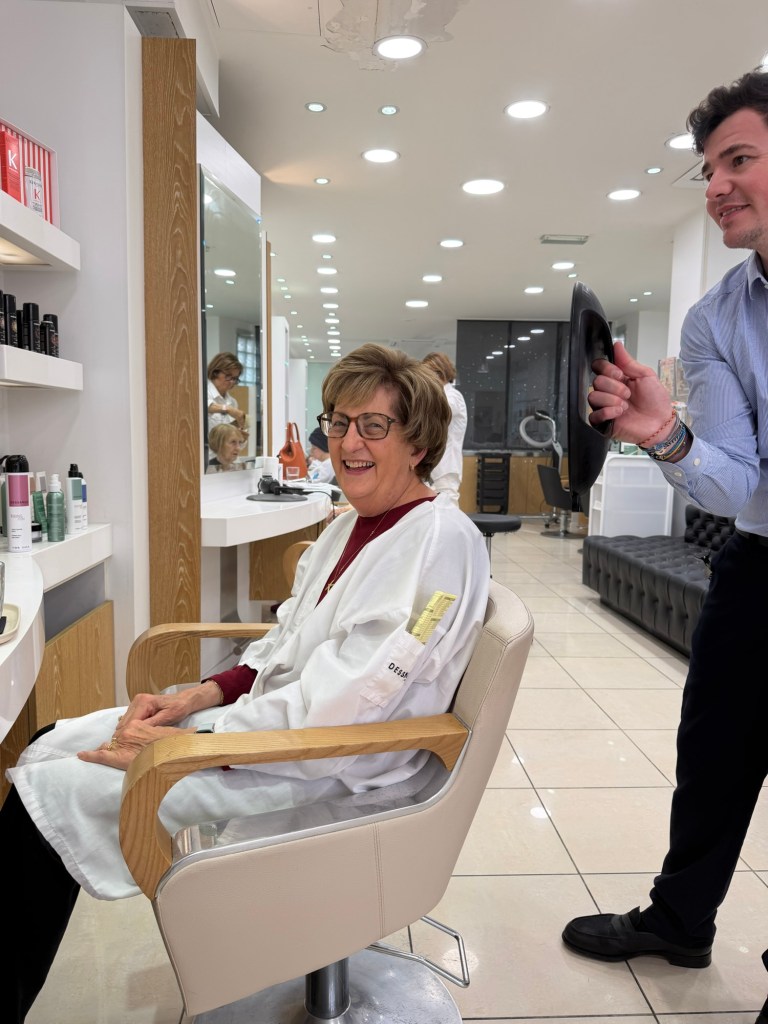
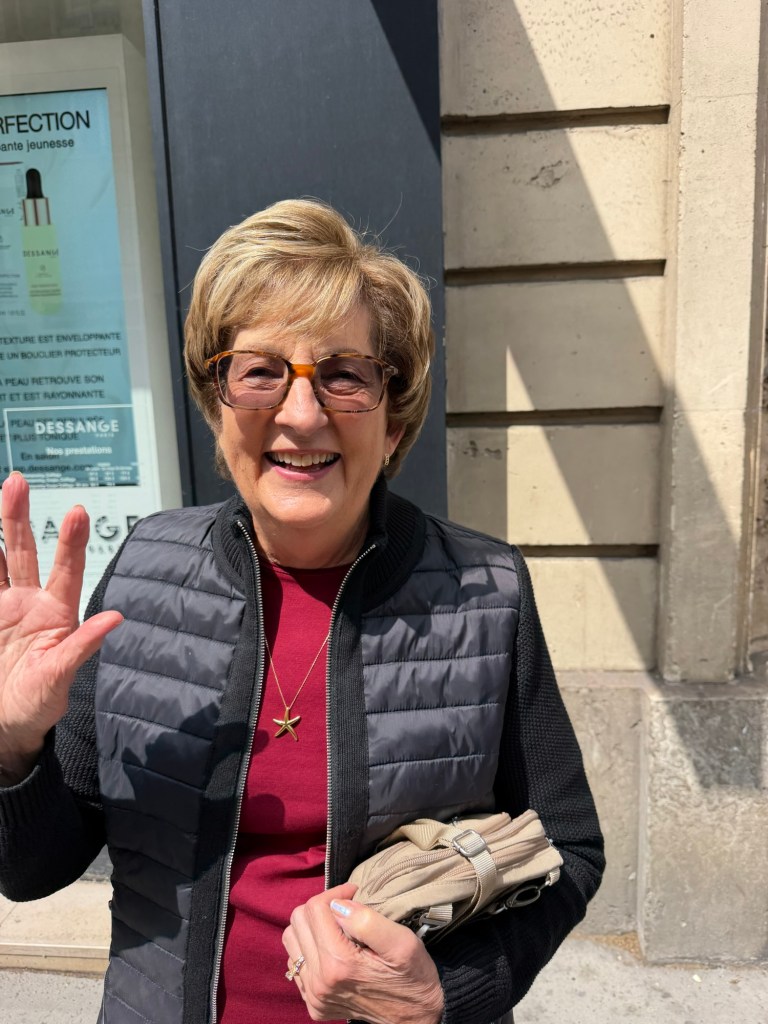
Mom’s hair appointment was at 1:30 at Dessange Coiffure Paris on Rue de Sèvres. They massage your hair, neck, and shoulders while they work. It is awesome. Mom brought a photo of what she wanted and they got it close. She was real happy. She walked out feeling like a million bucks.
We had eggs for breakfast and didn’t want a big lunch. Le Sèvres was perfect for that. I had an omelette and Mom had a salad. The food was just okay. Then they accidentally packed our food to take with us. Again. We are batting two for two on bistro doggy bag misunderstandings this trip. We ate at the table anyway and laughed about it.

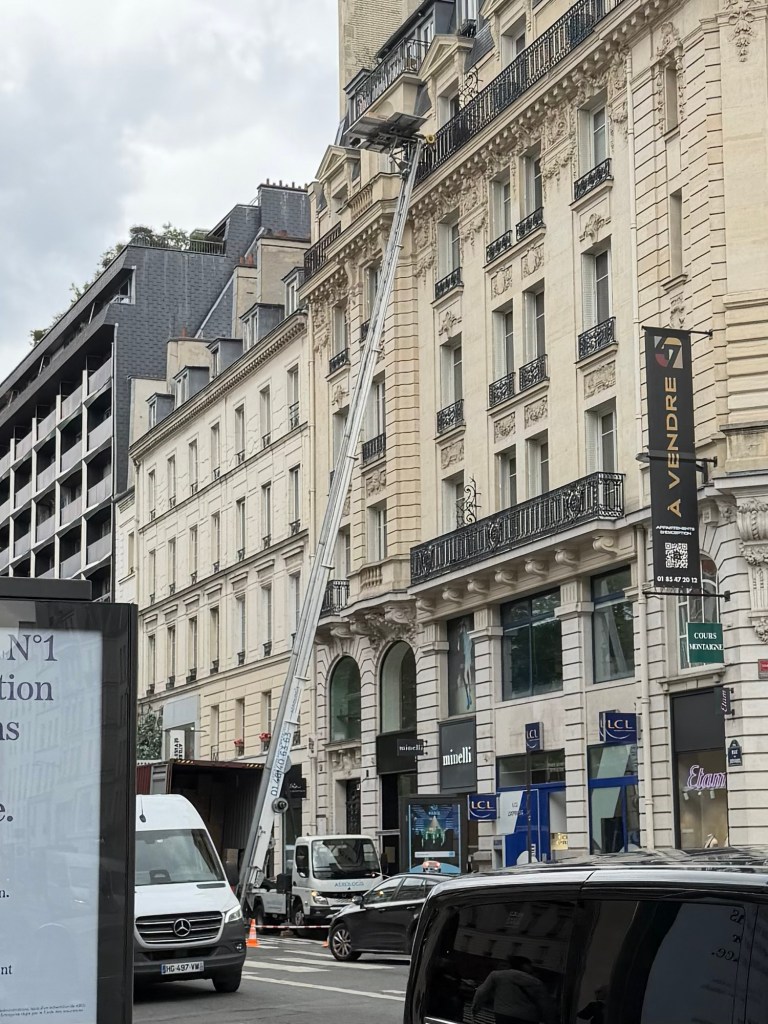
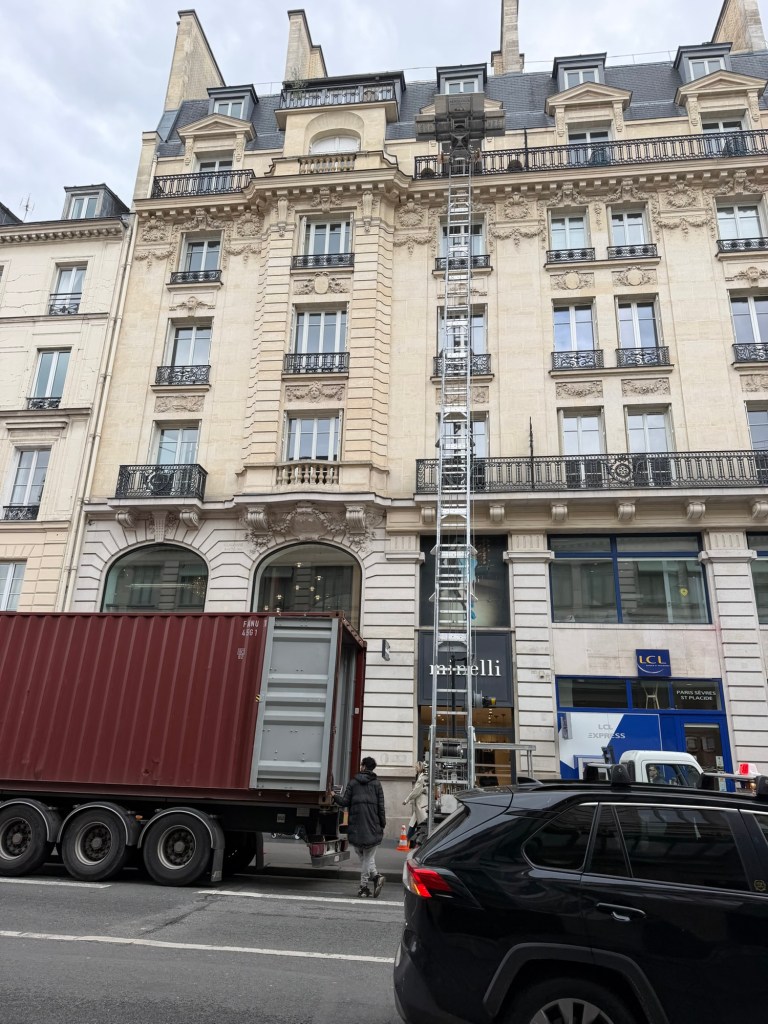
On our walk back to the hotel after lunch we noticed someone moving out of an apartment. Nothing like what we are used to. The movers had a crane set up in the street and boxes were riding down a ladder mounted to the outside of the building. Apparently French staircases are too narrow for furniture, so it all goes through the window. A very efficient way to move. Very Parisian.
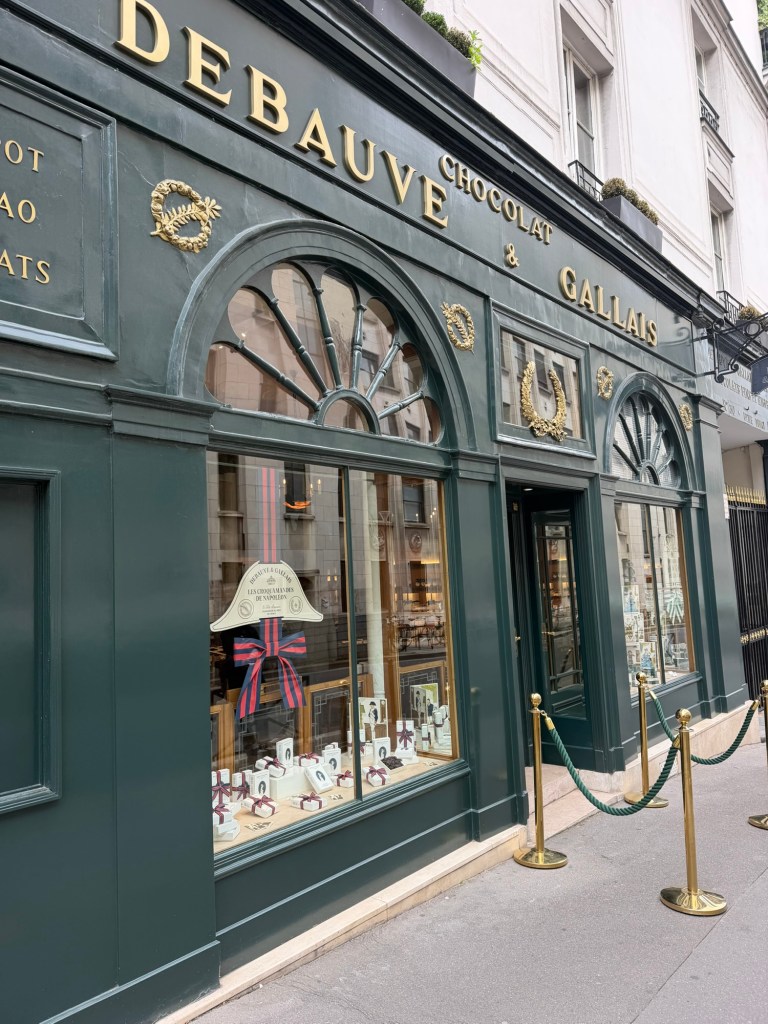
After lunch we walked over to Debauve & Gallais, the chocolate shop our tour guide from last year’s private Paris at Night tour had recommended. It is one of the oldest chocolate shops in Paris, opened in 1800 by Sulpice Debauve, who used to be Marie Antoinette’s pharmacist. He started making chocolate as medicine. The shop is tiny and looks more like a jewelry store inside. We bought way more than we should have.
Then back to the hotel to rest up before the main event, the Mysteries of the Palais Garnier tour at 5 PM.
We went on a Wednesday on purpose, because there were no shows that night and we knew that meant we might actually get to go inside the auditorium.
The Palais Garnier is one of those buildings where every surface has something going on. It was commissioned by Napoleon III in 1860 after an assassination attempt outside the old opera house. He wanted somewhere safer and grander. The design competition went to Charles Garnier, a 35-year-old unknown who beat out 170 other architects. Construction took fourteen years.
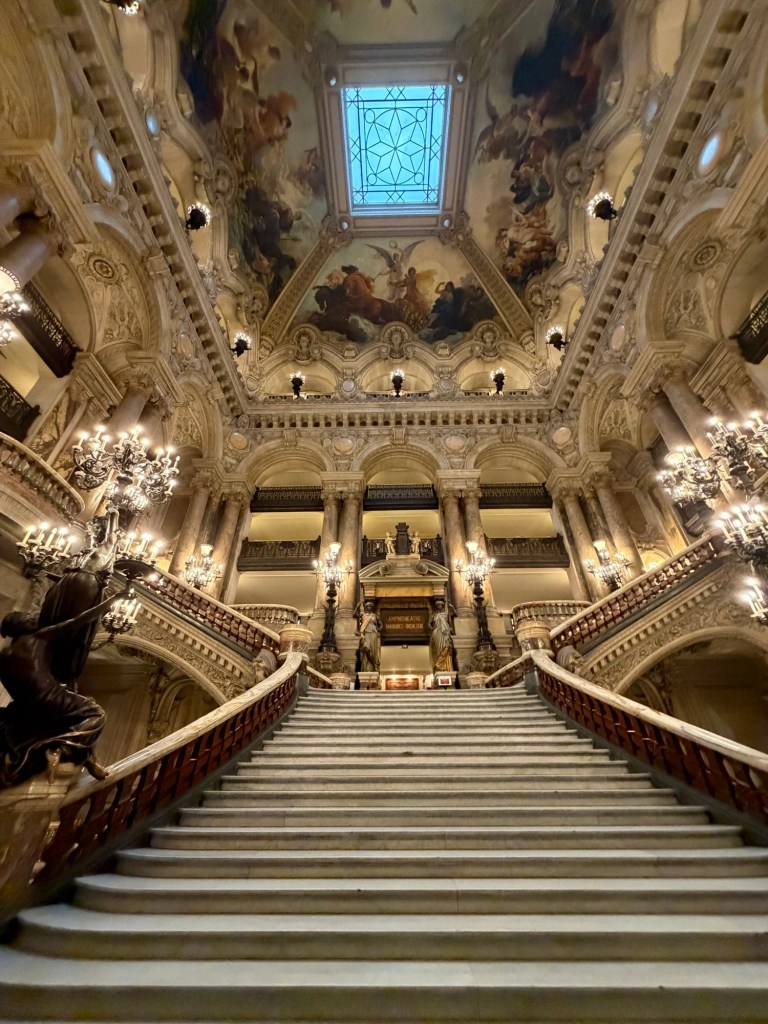
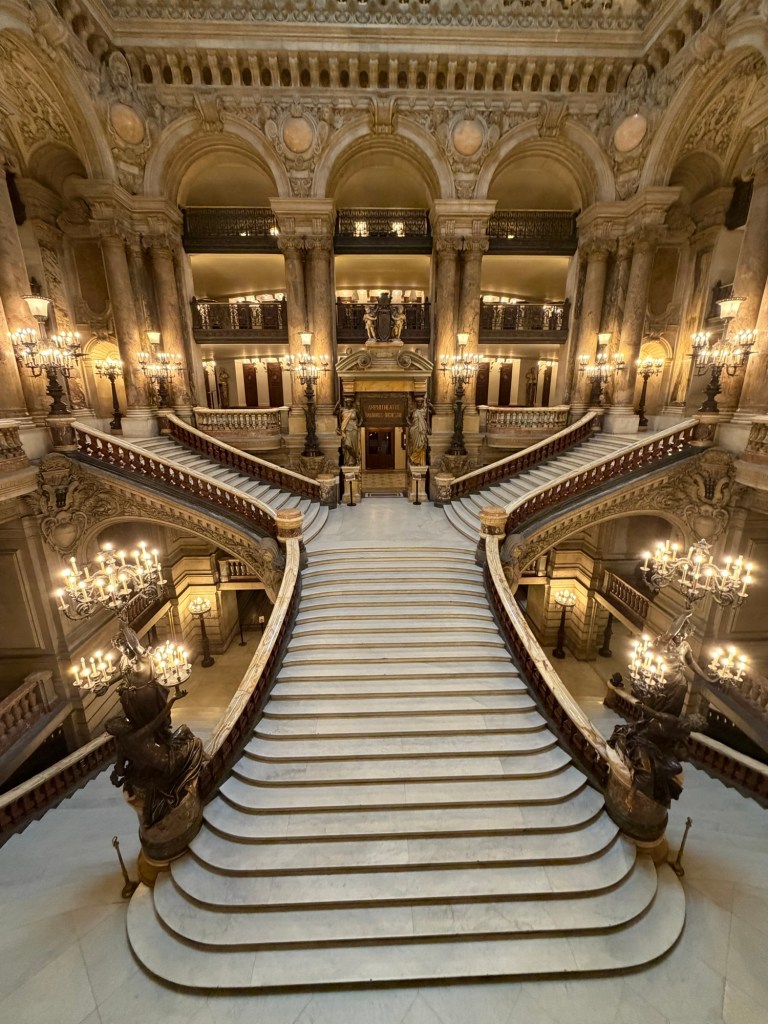
The Grand Staircase is unbelievable. White marble, green and red marble railings, rising through three stories. Iron lyres are tucked everywhere because the lyre is the symbol of opera.
We stood at Box 5, the Phantom’s Box. By tradition the opera company keeps it marked for the ghost.
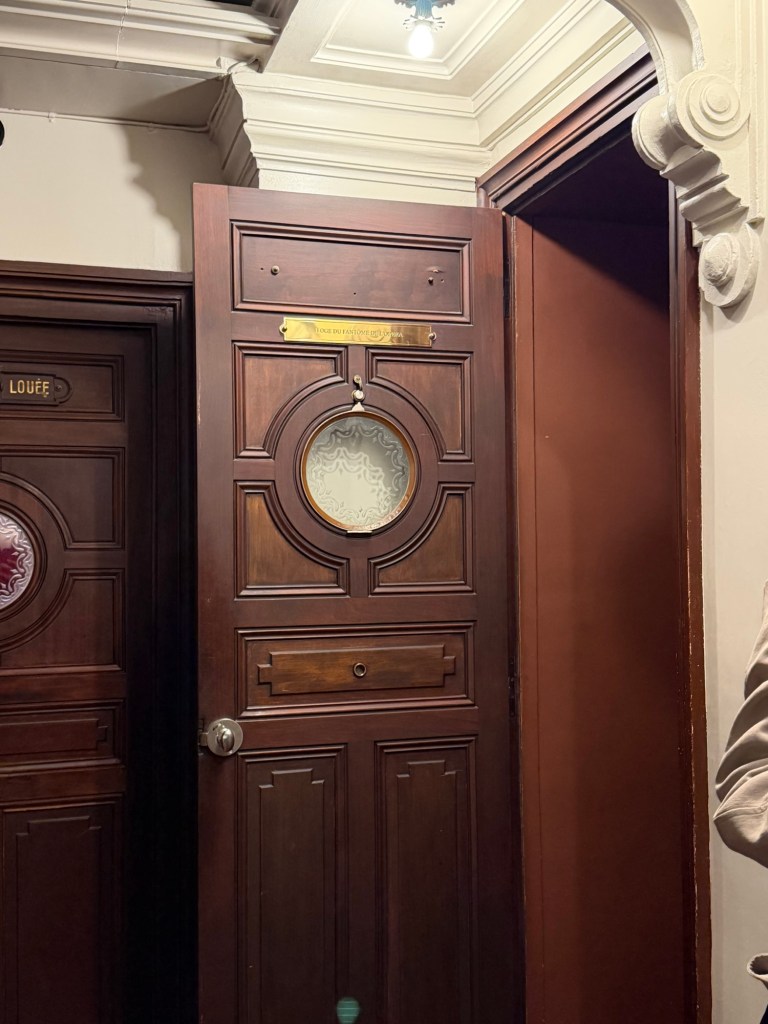
The death, the artist, and the phantom.
The death came in 1896. During a performance of Faust, one of the chandelier’s counterweights came loose and crashed through the ceiling. It killed a woman sitting in seat 13. The artist came earlier, in 1873, when the original Paris Opera, the Salle Le Peletier, burned down. A ballerina died in the fire. Her fiancé, a piano prodigy at the company, survived but was so disfigured by the burns they called him faceless. Legend says he followed the company to the brand-new Palais Garnier and lived underground in the cistern, coming out only at night. They called him Ernest. The phantom came when journalist Gaston Leroux pulled it all together. Ernest, the chandelier, the cistern, and a long list of unsolved opera house oddities, like a stagehand found hanged without a rope and a mysterious man who reserved Box 5 every night and was never seen. He blended fact and fiction into one of the great Paris legends.
About that cistern. During construction, Garnier hit groundwater so deep he could not get rid of it. So instead of fighting the water, he built a giant cistern under the building to hold it and stabilize the foundation. It is still down there. Today it holds about 10,000 cubic meters of water and a population of carp. The Paris fire department uses it for low-visibility dive training.
Here is something fun. The Opera was built in the 1860s and 70s. The Paris Métro did not come along until 1900. So when the engineers came to build the train lines, they had a problem. The Opera was already there, with its giant cistern still sitting underneath, and Garnier was not about to let them dig under his masterpiece. They had to engineer around it. They sank a twenty-one-meter masonry well to anchor everything. They used compressed air and concrete caissons to fight off the same groundwater Garnier had wrestled with decades earlier. And the Métro entrances near the Opera were built in marble instead of the iconic green iron Art Nouveau ones you see everywhere else, because Garnier himself had written to the minister of public works that the Métro must be “a work of art” and not turn Paris into a factory.
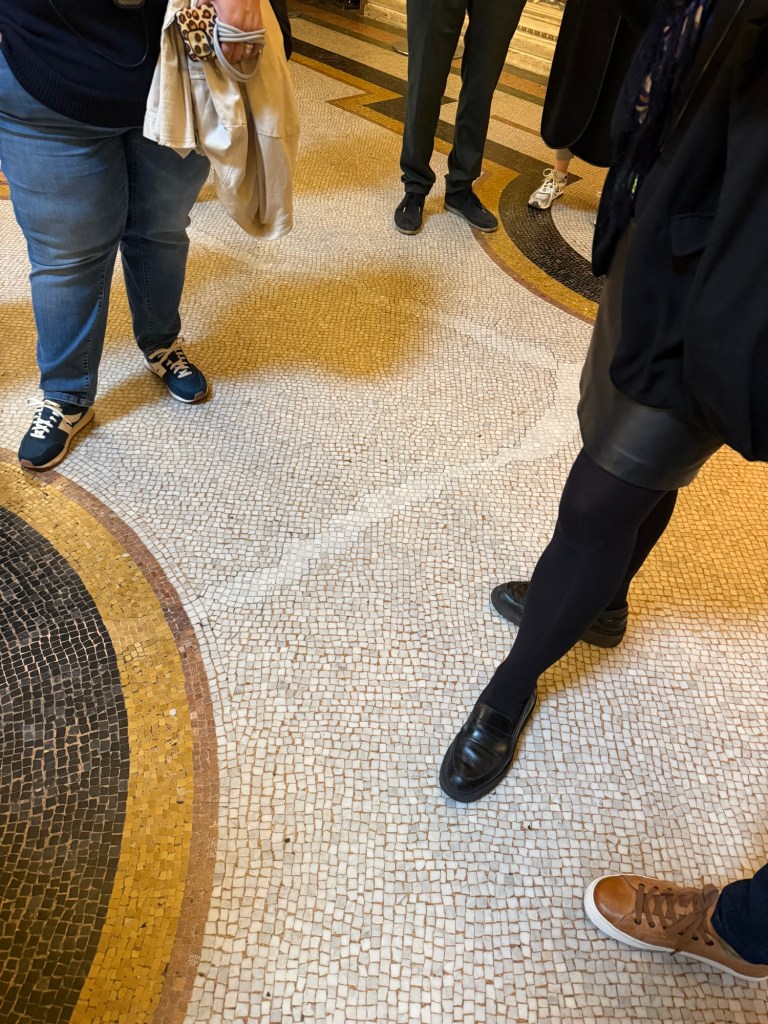
Three Métro lines now cross under the Place de l’Opéra in what they call a “well.” The Opera didn’t move for the train. The train moved for the Opera. Even so, the vibrations have left their mark. Our guide pointed out the cracks in the marble floor of the foyer, caused by the daily rumble of the trains running underneath.
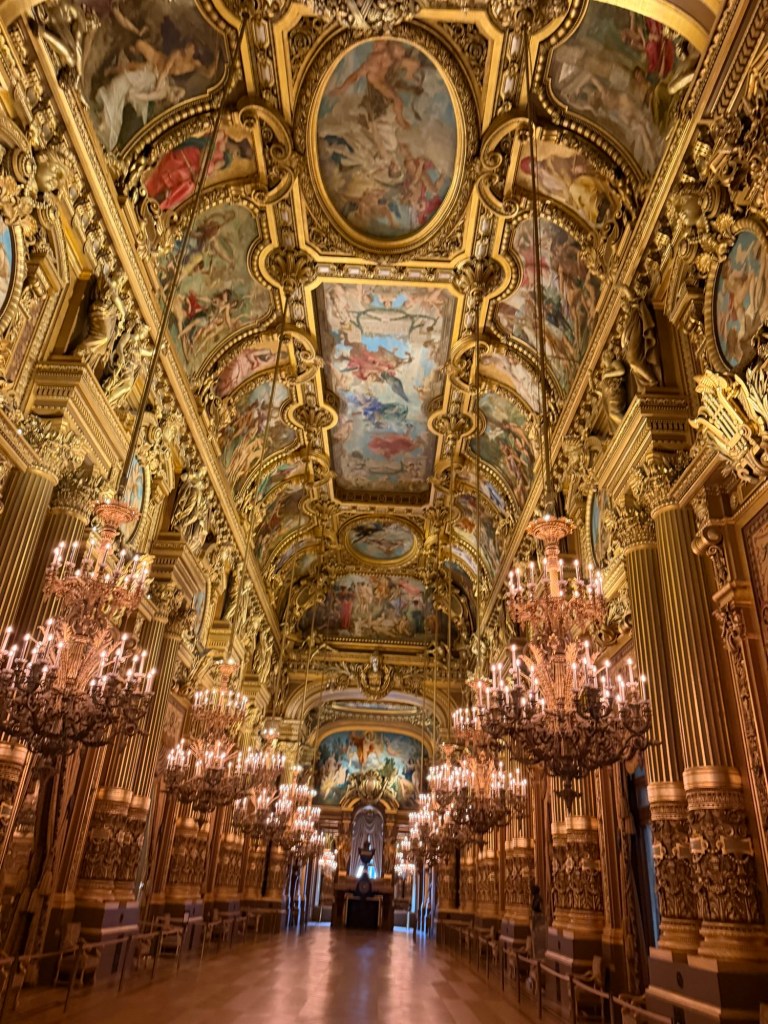
We walked through the waiting areas too, all gold and red velvet and mirrors. You could feel why this is the Paris of postcards.
For the finale, our guide took us into the auditorium and let us sit down. This is the part you rarely get to see. The decorative panels around the room go way higher into the ceiling than you would imagine, all the way up into the dome. We sat in the back and just looked up for a while.
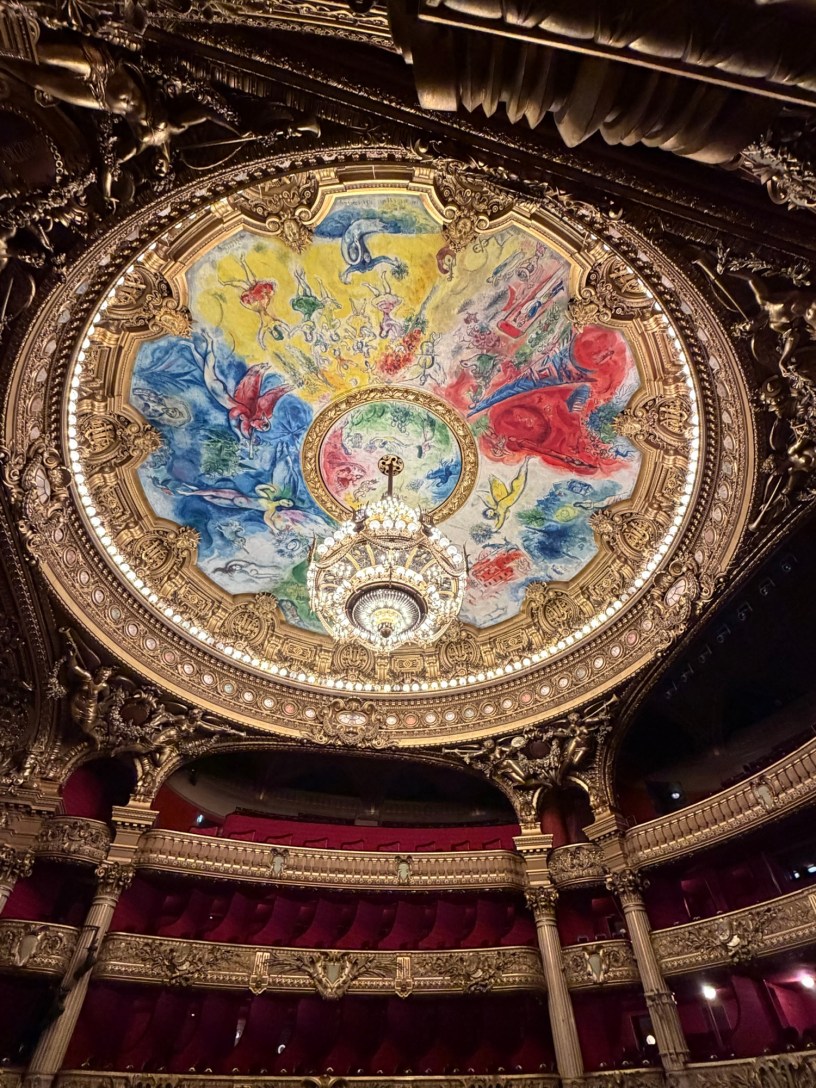
About that ceiling. The original was painted in 1872 by Jules-Eugène Lenepveu, Napoleon III’s favorite painter. In 1964, Marc Chagall was commissioned to repaint it. Big drama. People hated the idea of covering up a 19th-century original with a modernist work. The compromise was clever. Chagall’s ceiling was painted on a separate canvas and hung above the original. The Lenepveu is still under there.
And there it was, hanging right above us. The chandelier. Seven tons of bronze and crystal, three stories tall. The electrical wiring is hidden up inside the dome. The Palais Garnier was actually the first electrified opera house in the world. The original gas lighting was replaced in 1881, just a few years after the building opened. After hearing the whole story of the 1896 counterweight crash, sitting beneath it was its own quiet moment.
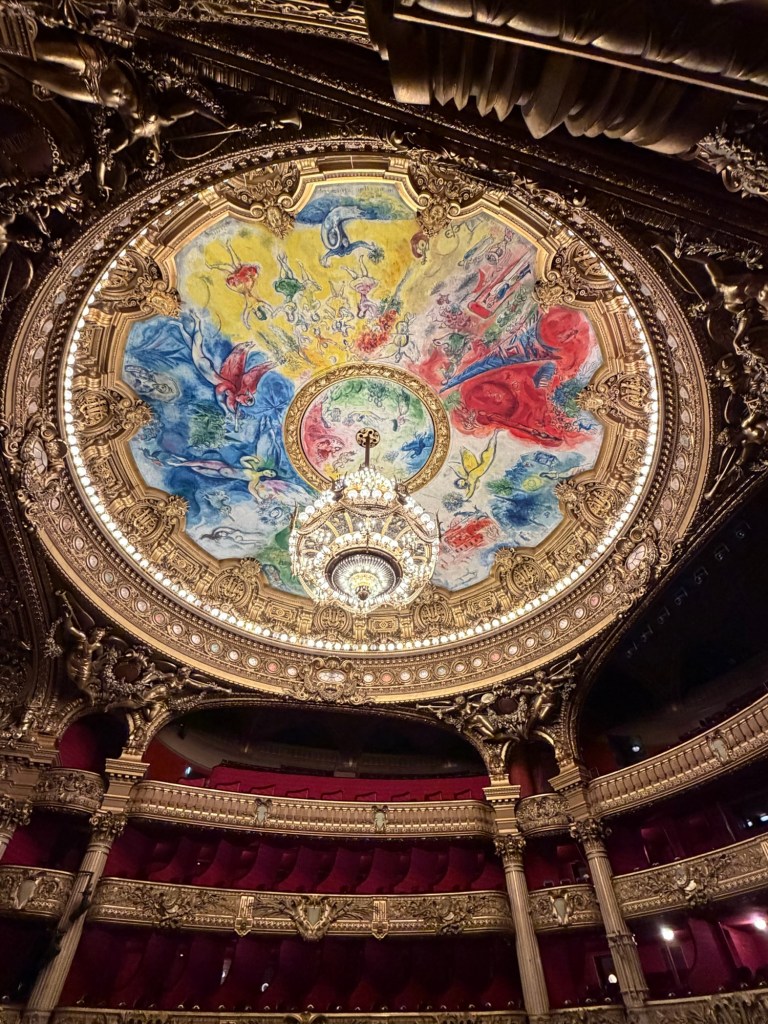
After the accident they replace the ceiling you see today over the old one with a gap. It’s very controversial and remains this way today.
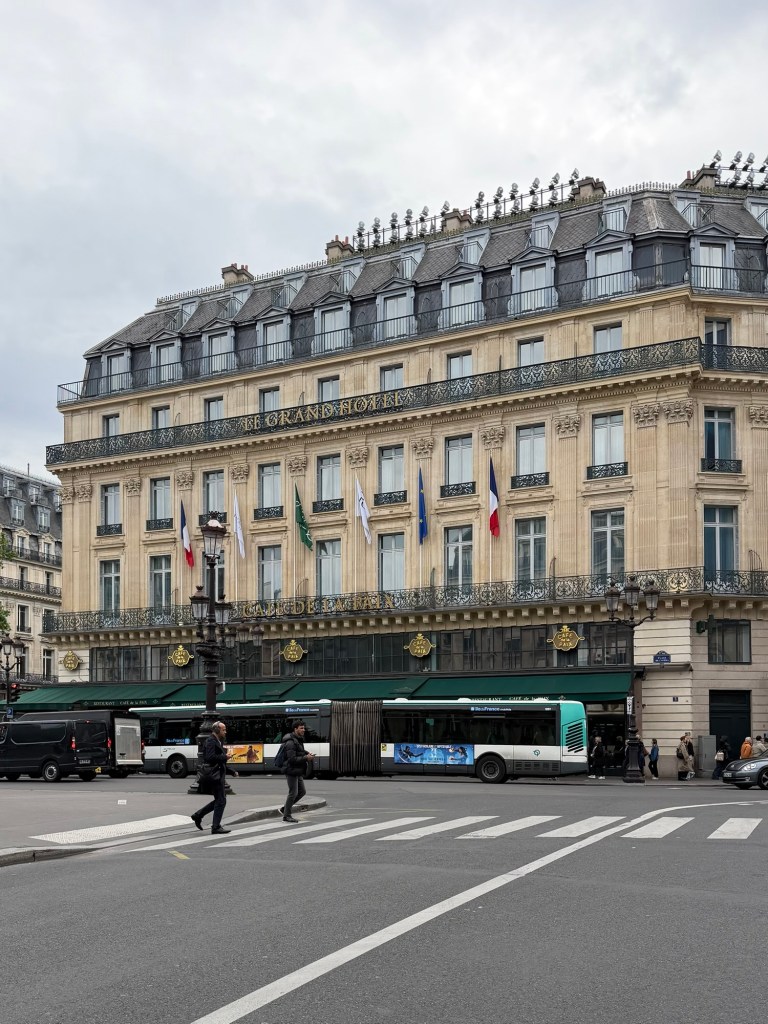
When we walked out of the opera house, I started looking around for our dinner spot. Then I saw it. Literally feet away. I burst out laughing and pointed it out to Mom. Café de la Paix is right there on the corner of the square, basically the front porch of the Palais Garnier.
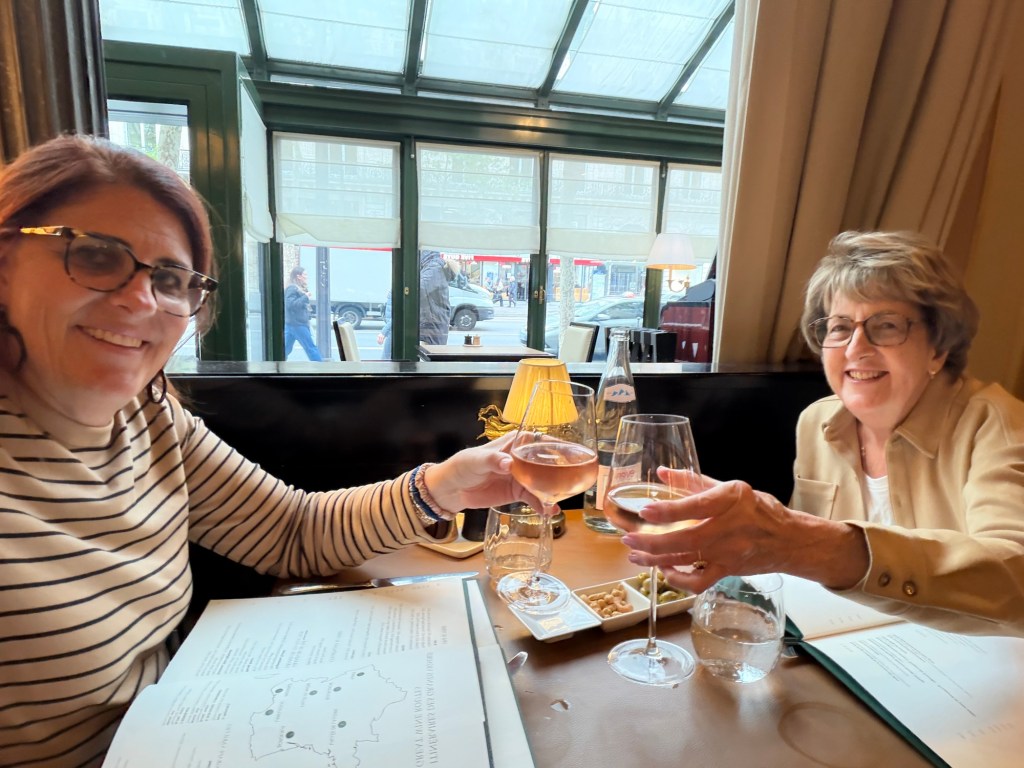
This was our favorite meal of the week. Our waiter was the kind of waiter you remember. He was thrilled we were not in a rush. He helped us figure out exactly what to order. He brought tons of little apps to start. He helped us flavor our water with cucumber, lime, and lemon. Just so joyful and present.
We had a rosé from Provence, very dry and delicious.
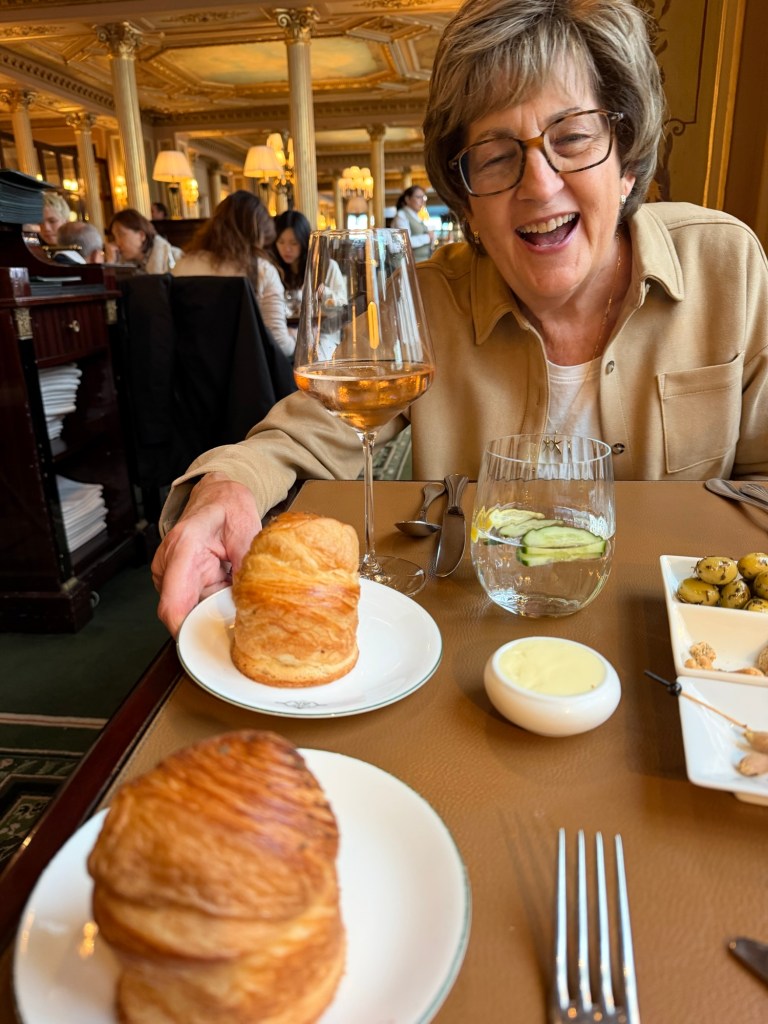
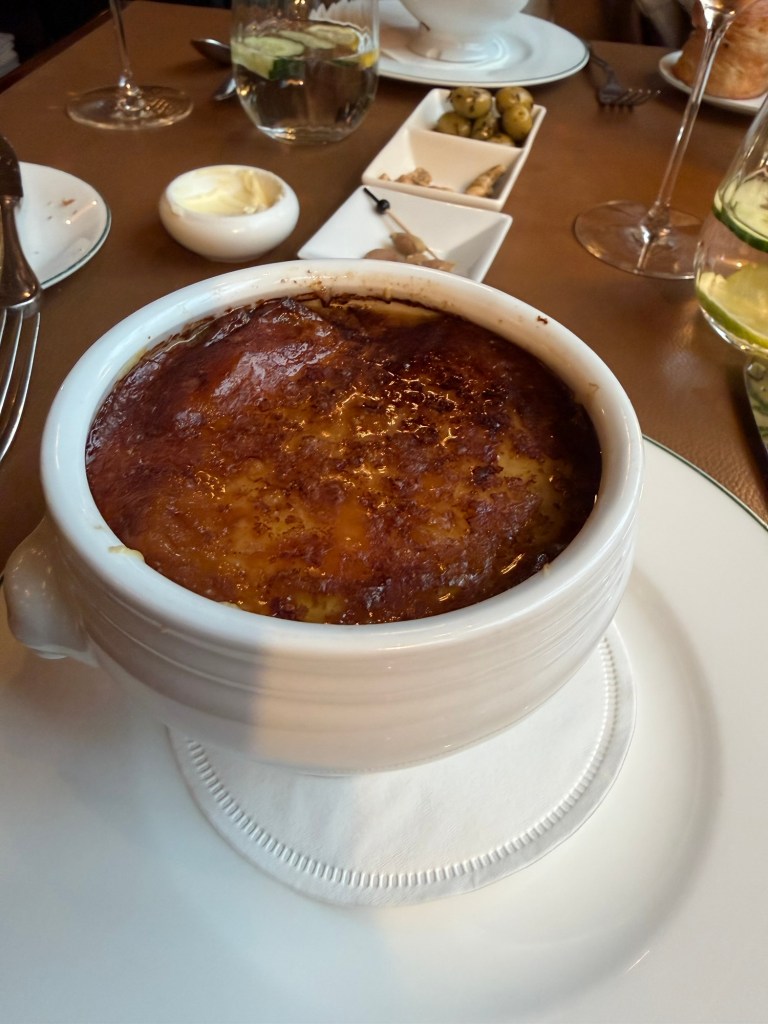
Mom started with the French onion soup.
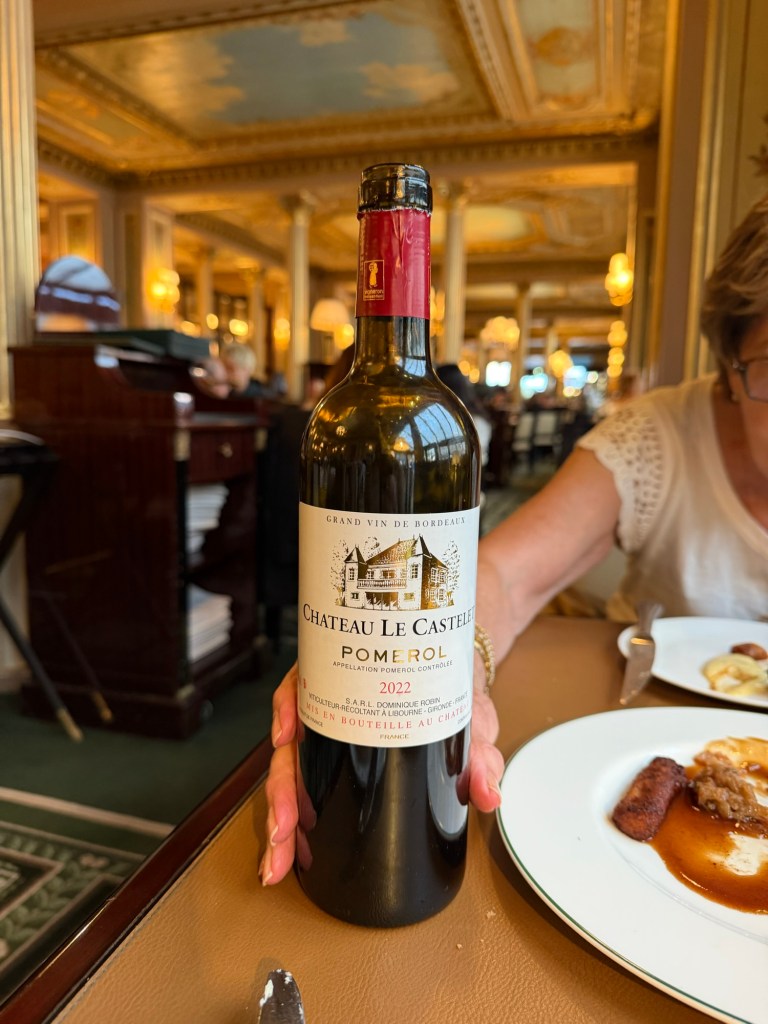
We shared a filet for the main, and I asked for a glass of red to go with it. It was the best glass of red I have had in a long time.
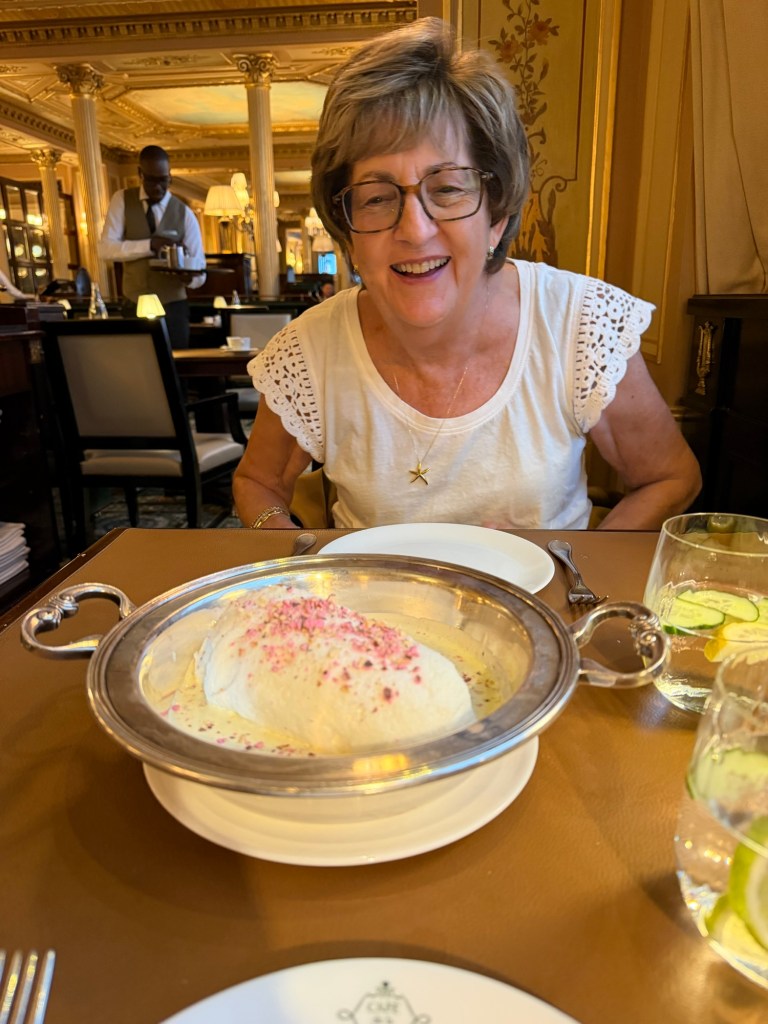
For dessert, the menu encouraged us to try something different. He recommended the floating island. It is a cloud of meringue floating on a sea of crème anglaise with crushed red candied pistachios on top. Wow.
Three hours later we got up. We will be back.