

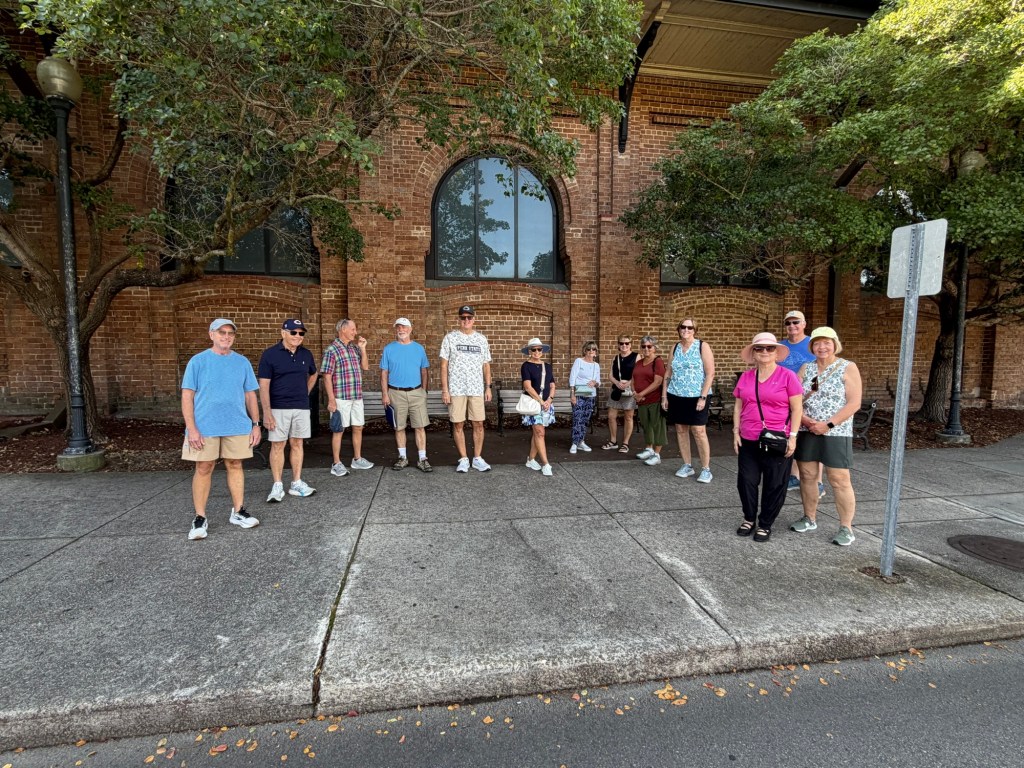
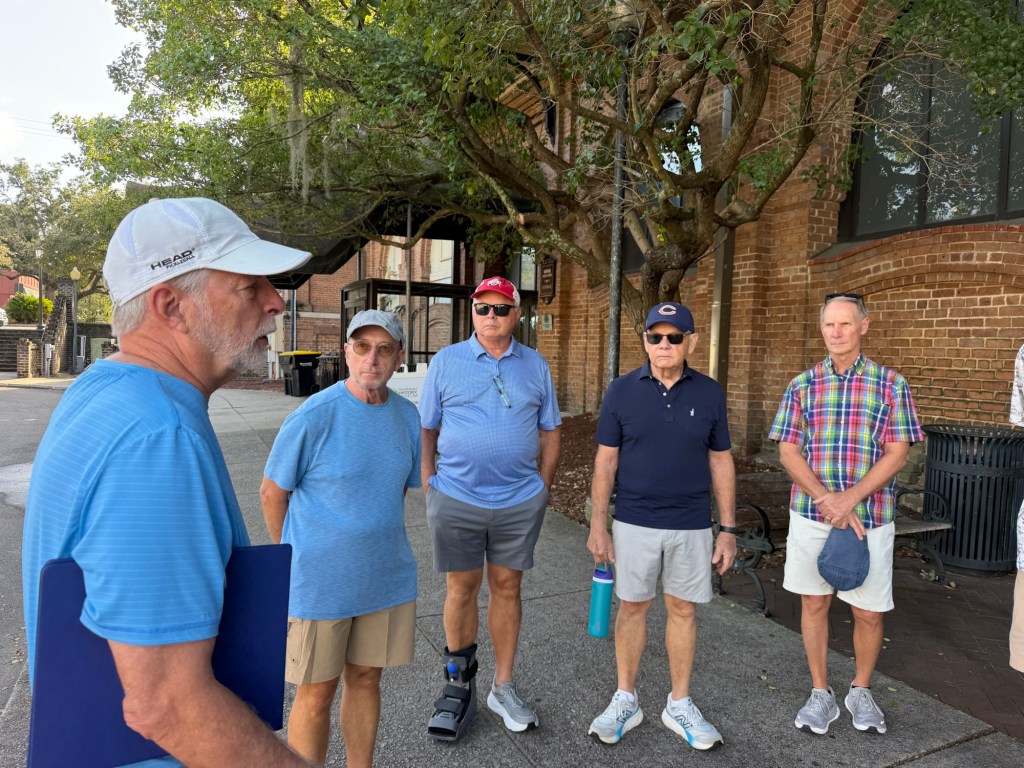
The best way to meet Savannah is on foot. It turned out to be a warm and humid day, very unusual for November, but our group laced up our walking shoes, grabbed plenty of water and set out to see as many of the city’s famous squares as our legs would allow. Thank goodness for all that shade from the live oaks!
How the Squares Work
Savannah was planned before it was built. In 1733, General James Oglethorpe laid the city out in neighborhoods called wards, and every ward follows the same pattern:
- The square in the middle. An open green space at the heart of each ward, used for gathering, markets and, in the early days, a safe place for settlers in case of attack.
- Trust lots on the east and west sides. Four lots reserved for public buildings like churches, shops and meeting halls. That’s why so many of the grand churches and mansions we saw sit right on the squares.
- Tything lots on the north and south sides. Homes for the colonists. Each tything was a group of ten families who lived side by side and shared responsibilities, including standing guard for the town.
Ellis Square was the city’s market square, where people came to buy and sell. The pattern repeated as the city grew, and Savannah eventually had 24 squares. Twenty two survive today.
The Visitor Center
We started at the old Central of Georgia Railway depot, begun in 1860 and finished in 1876 after the Civil War delayed it. Trains ran here until 1971. Today it’s the Visitor Center and the Savannah History Museum.
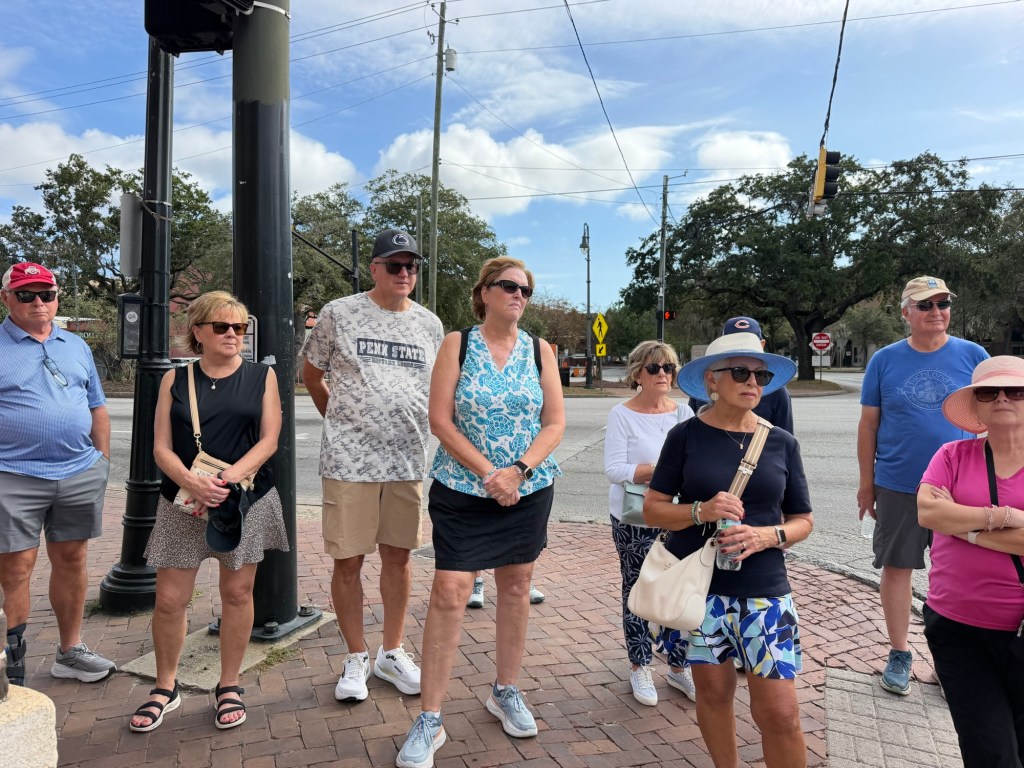
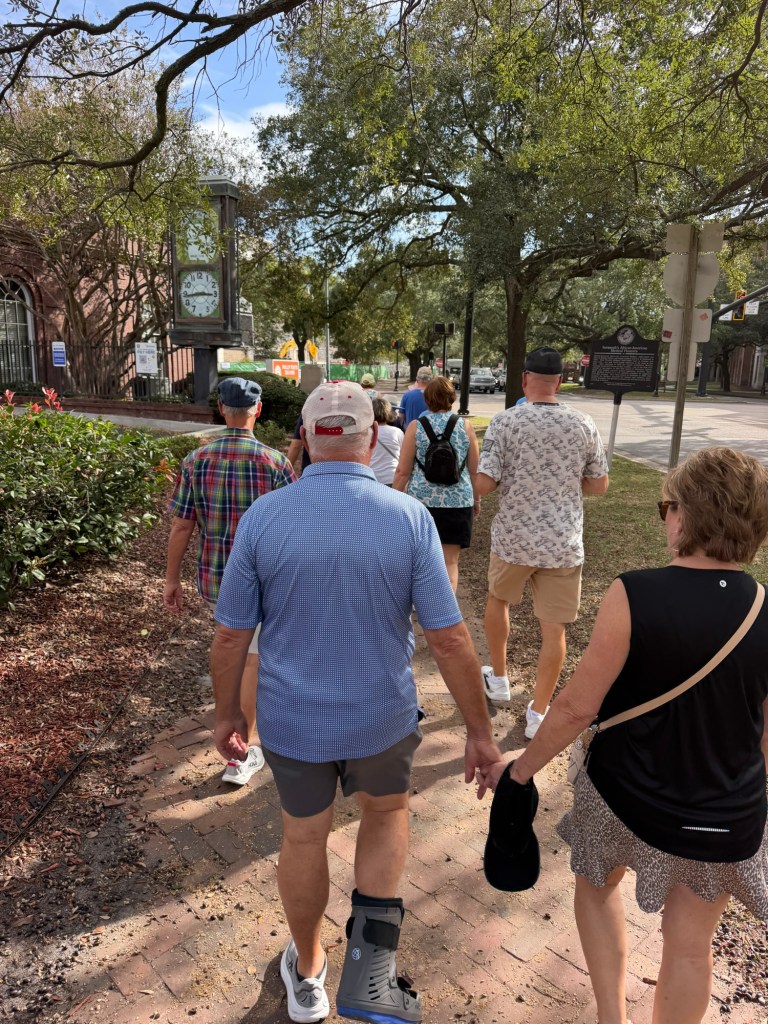
1. Elbert Square
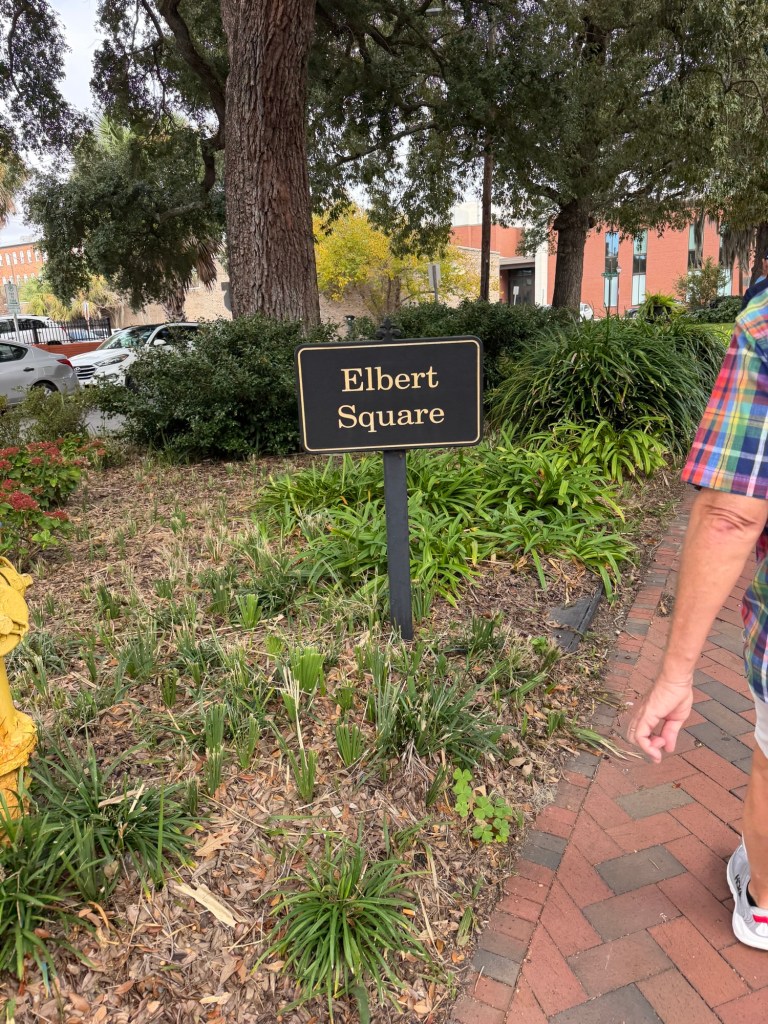
Laid out in 1801, this is one of Savannah’s two “lost” squares. A highway and the Civic Center swallowed it, so only a strip of grass remains. The good news is that a city redevelopment plan could bring part of it back.
2. Liberty Square
Savannah’s other lost square, likely named for the Sons of Liberty. Montgomery Street now runs right through it.
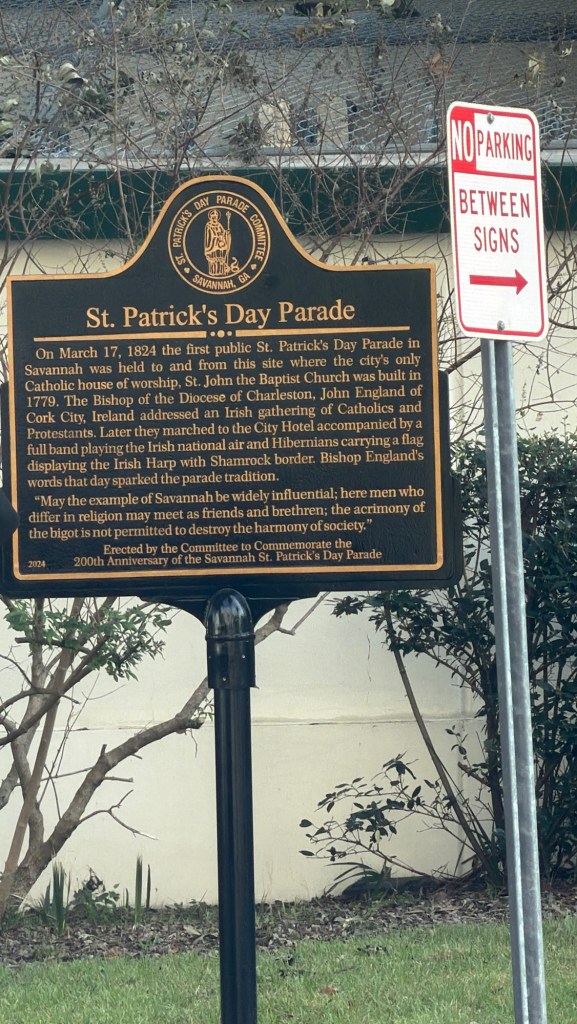
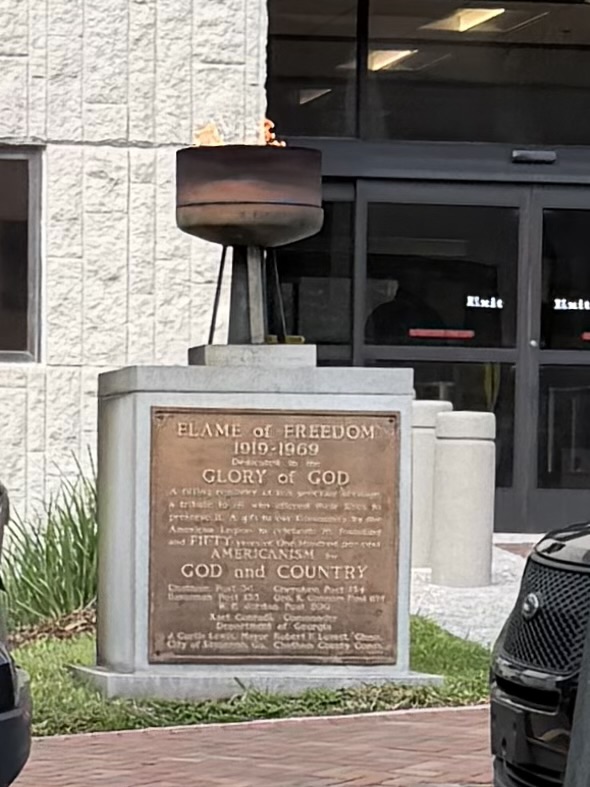
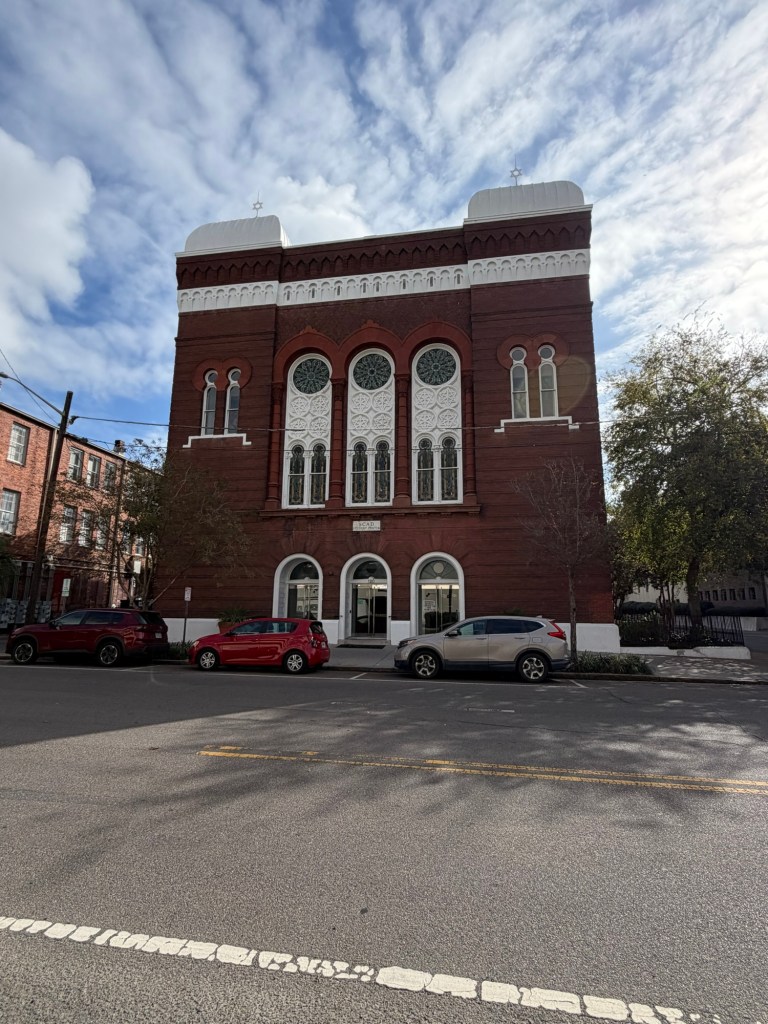
Don’t miss: The new marker for the very first St. Patrick’s Day Parade, held here in 1824. With my Irish roots, I had to read every word! Look for the Flame of Freedom honoring veterans too, and the beautiful 1909 synagogue that’s now SCAD’s Student Center.
3. Franklin Square
A shady little square named for Benjamin Franklin, restored in the 1980s.
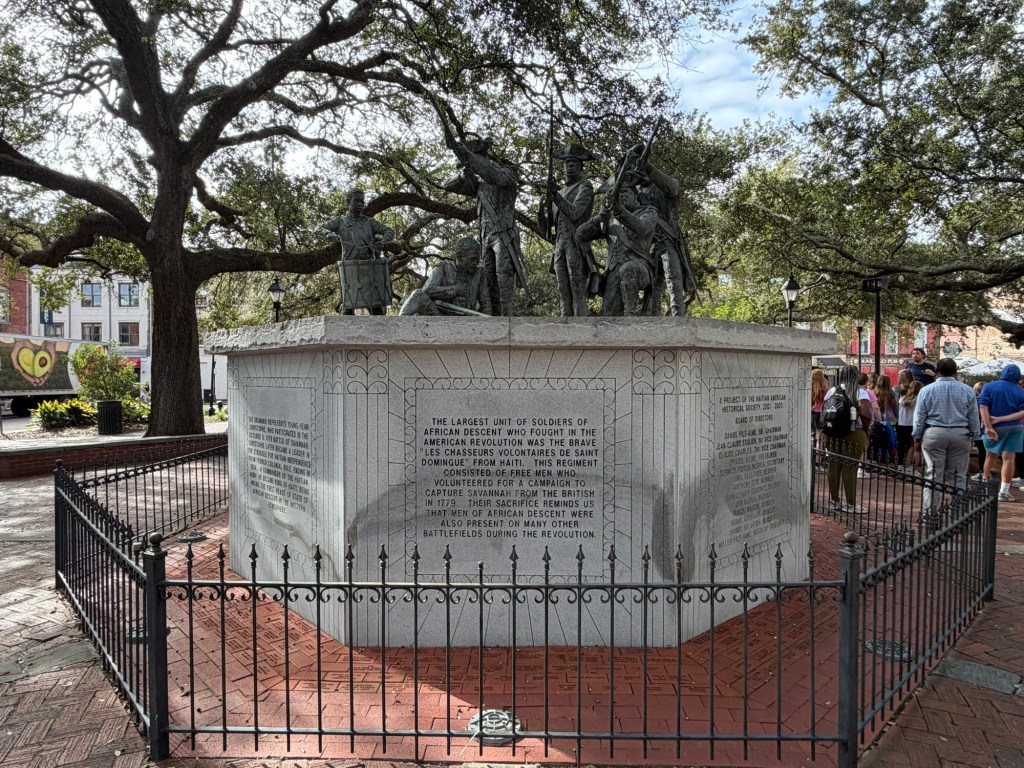
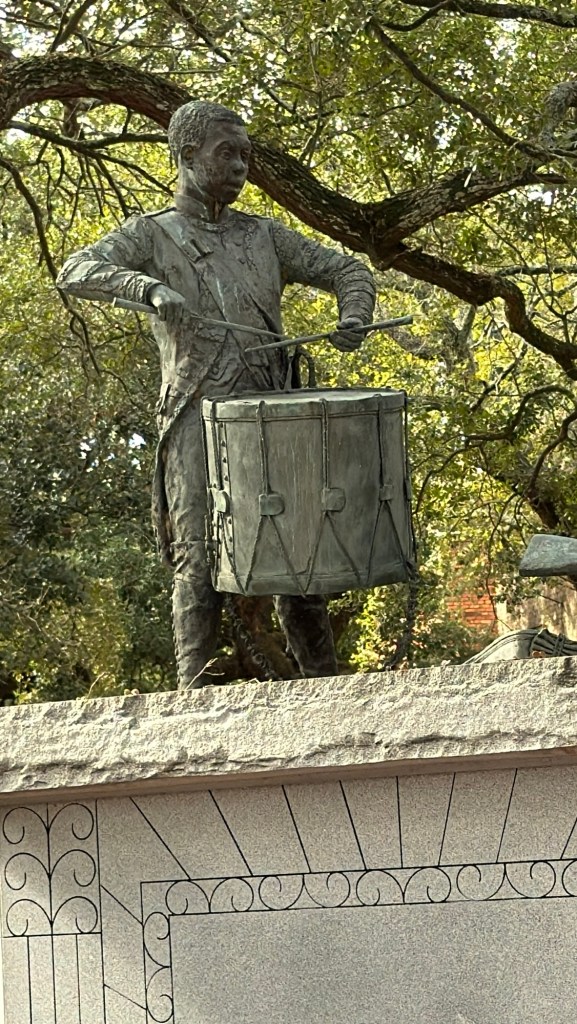
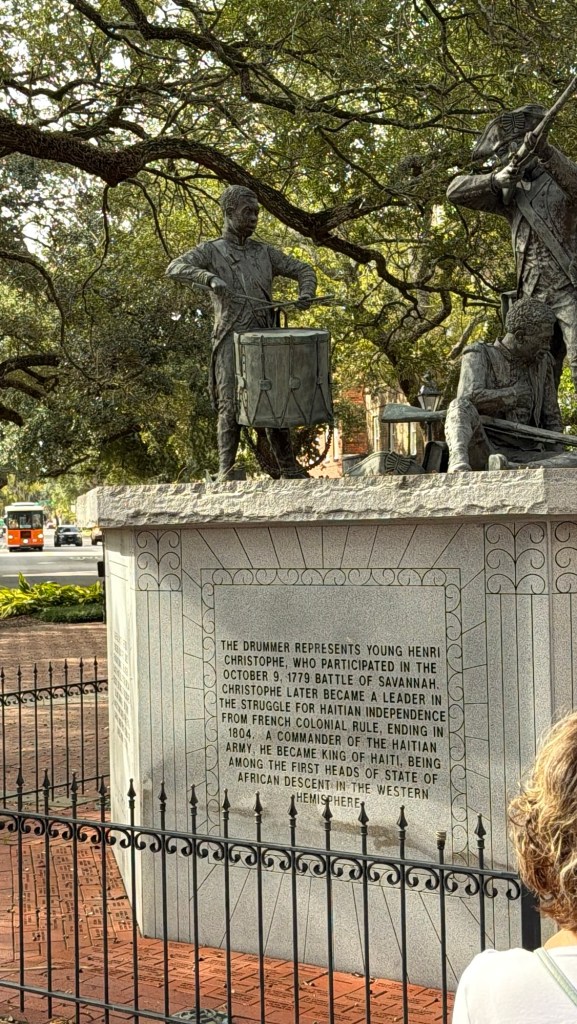
Don’t miss: The Haitian Monument, honoring more than 500 free Black Haitian soldiers who fought here in 1779. The drummer boy is Henri Christophe, who later became King of Haiti.
This is the First African Baptist Church, founded by enslaved people in 1773 and considered the oldest Black church in North America. They built it at night by lamplight after long days on the plantations. Tradition says it was an Underground Railroad stop, hiding runaways under the floor, with a tunnel to the river. The holes in the floor form the Kongo Cosmogram, an African spiritual symbol that disguised them as decoration rather than breathing holes. The Nine Patch Quilt design on the ceiling is said to mark it as a safe house. The tunnel has never been found, though the floor holes are real and the church offers tours.
City Market
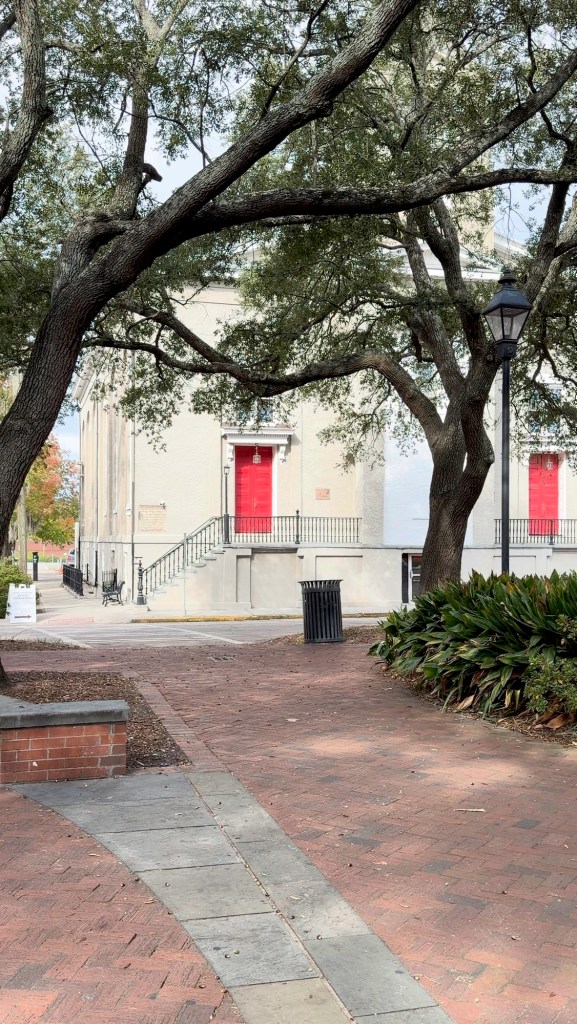
City Market’s four blocks of shops and galleries were once the commercial heart of old Savannah, and the slave trade ran right through them. This is where sales closed and where newly arrived Africans were given their slave names. For generations, Black Savannahians remembered it as the most evil place in the city.
4. Ellis Square
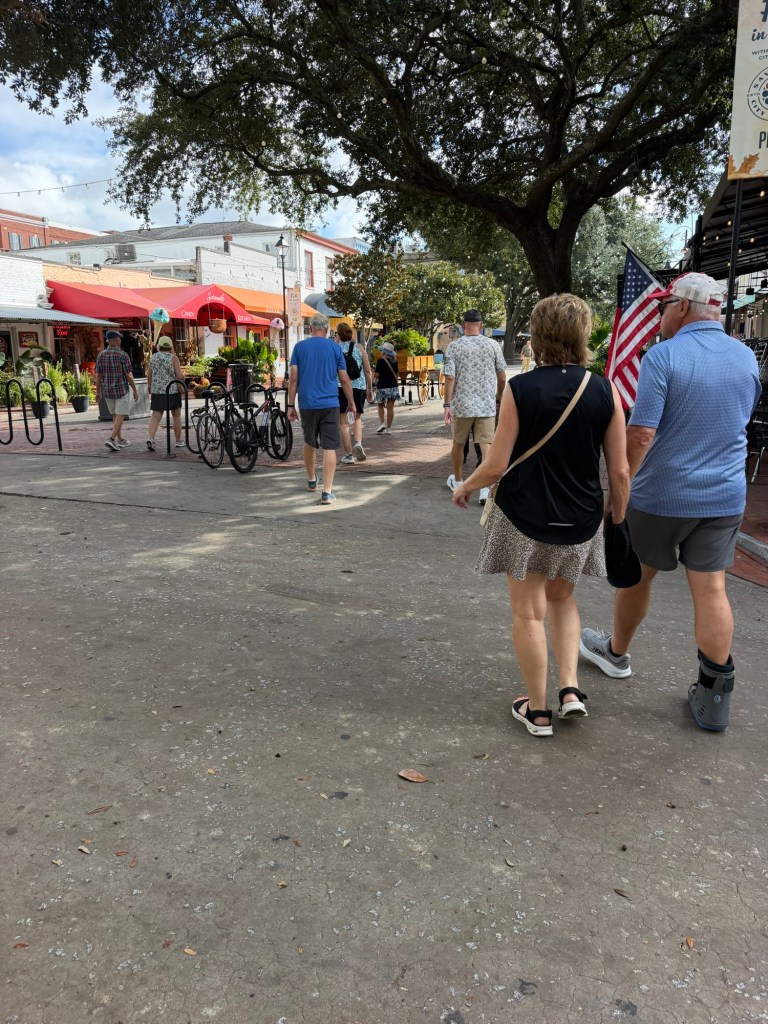
The comeback kid! Ellis was Savannah’s market square from 1733 until a parking garage replaced it in 1954. That loss sparked Savannah’s preservation movement, and the square reopened in 2010.
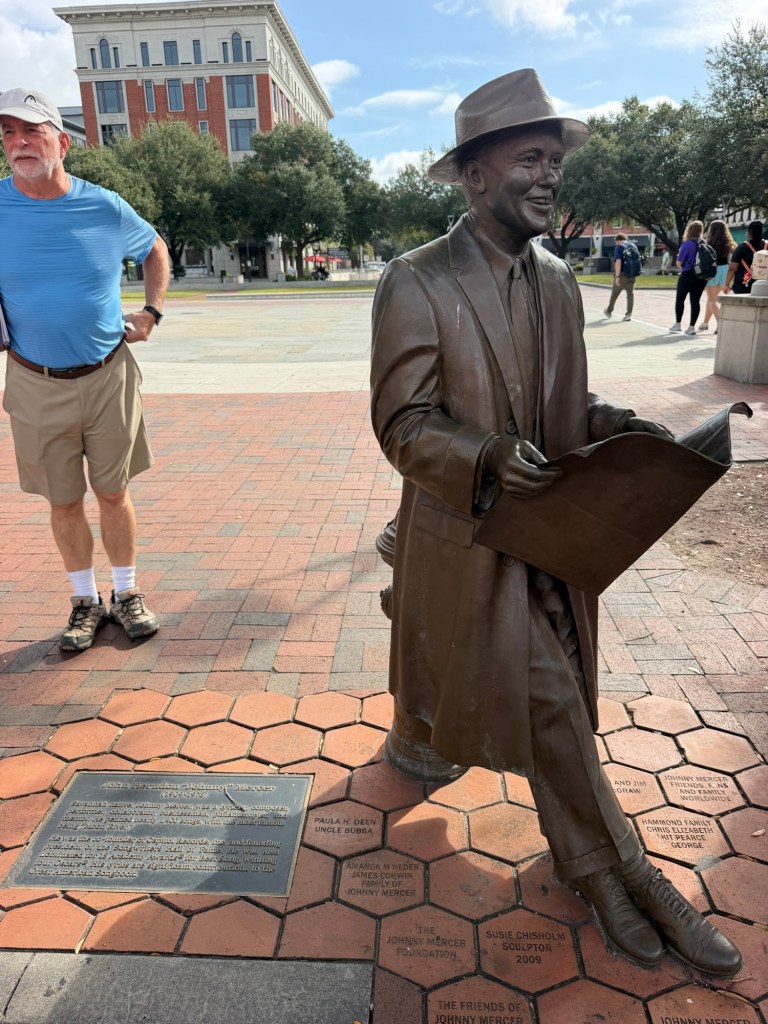
Don’t miss: The life size Johnny Mercer statue. Savannah’s favorite son wrote the lyrics to “Moon River” and more than 1,400 other songs. Of course we all posed with him!
5. Johnson Square
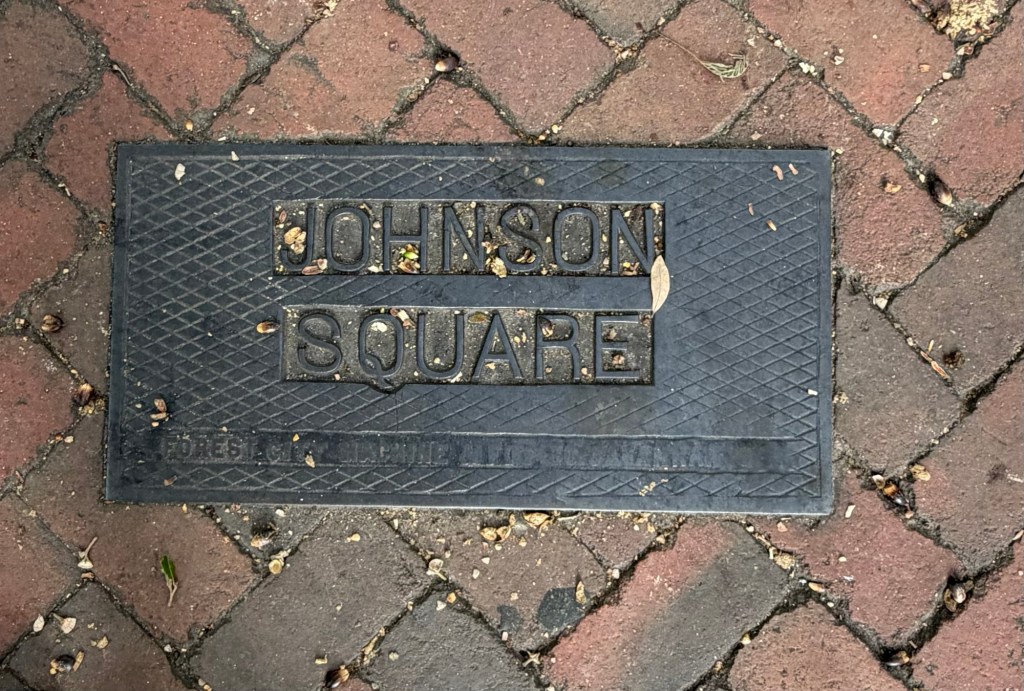
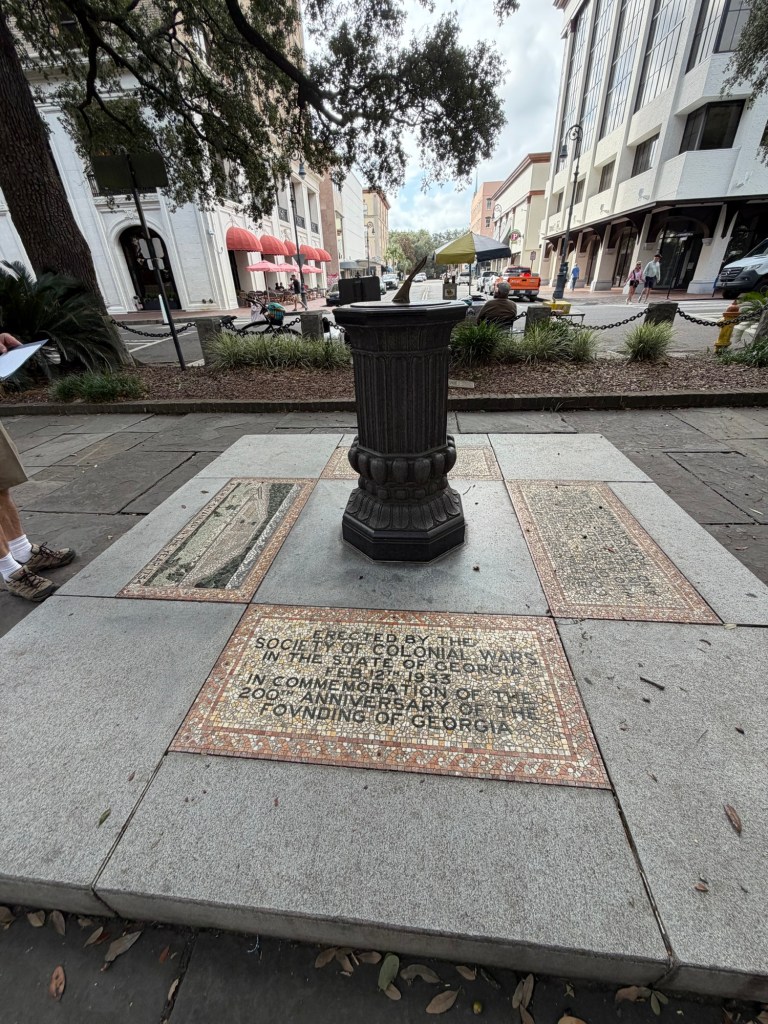
Savannah’s very first square, laid out by Oglethorpe in 1733. The Declaration of Independence was read aloud here in 1776.
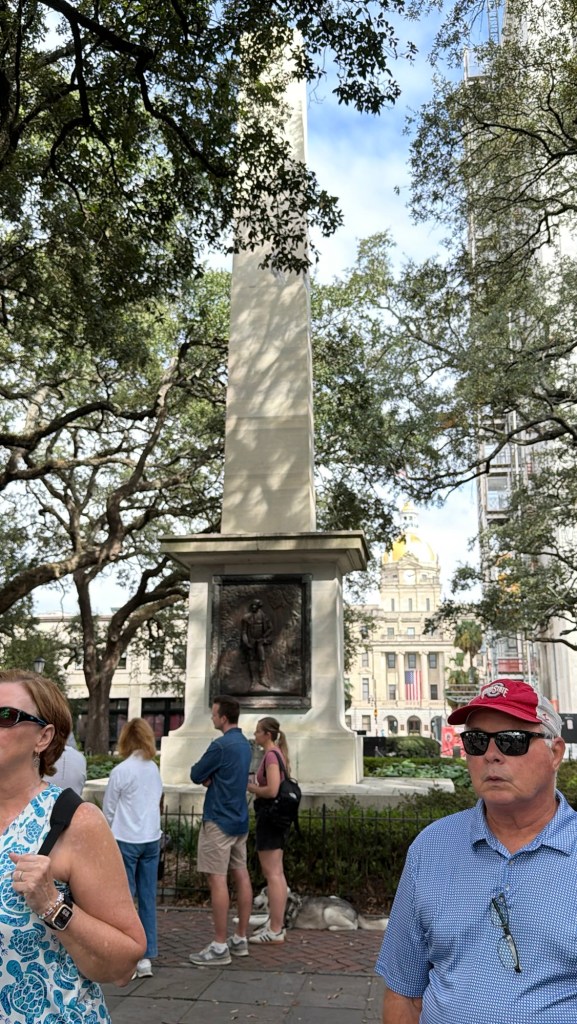
Don’t miss: The 50 foot Nathanael Greene Monument. Lafayette laid its cornerstone in 1825, and Greene is buried beneath it. Look north for the gold dome of City Hall glowing through the oaks.
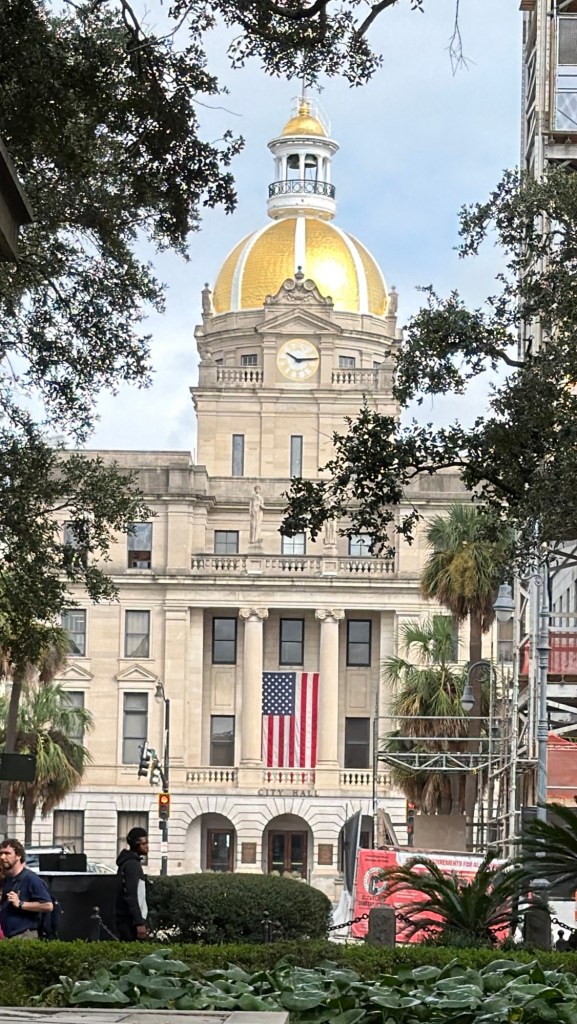
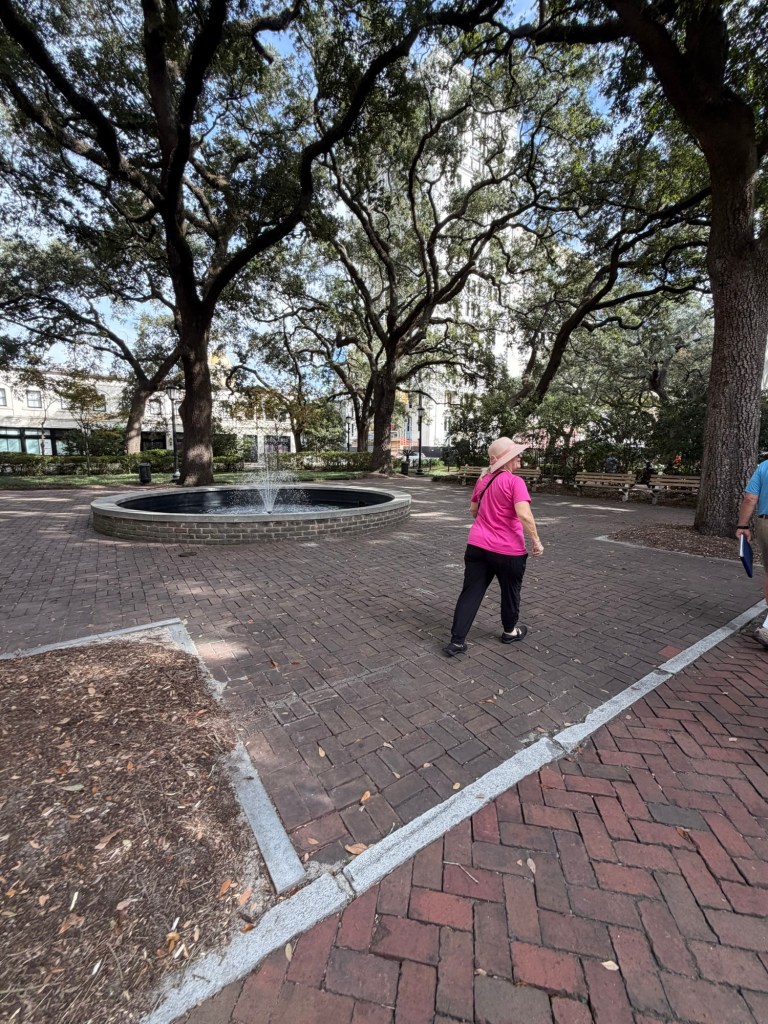
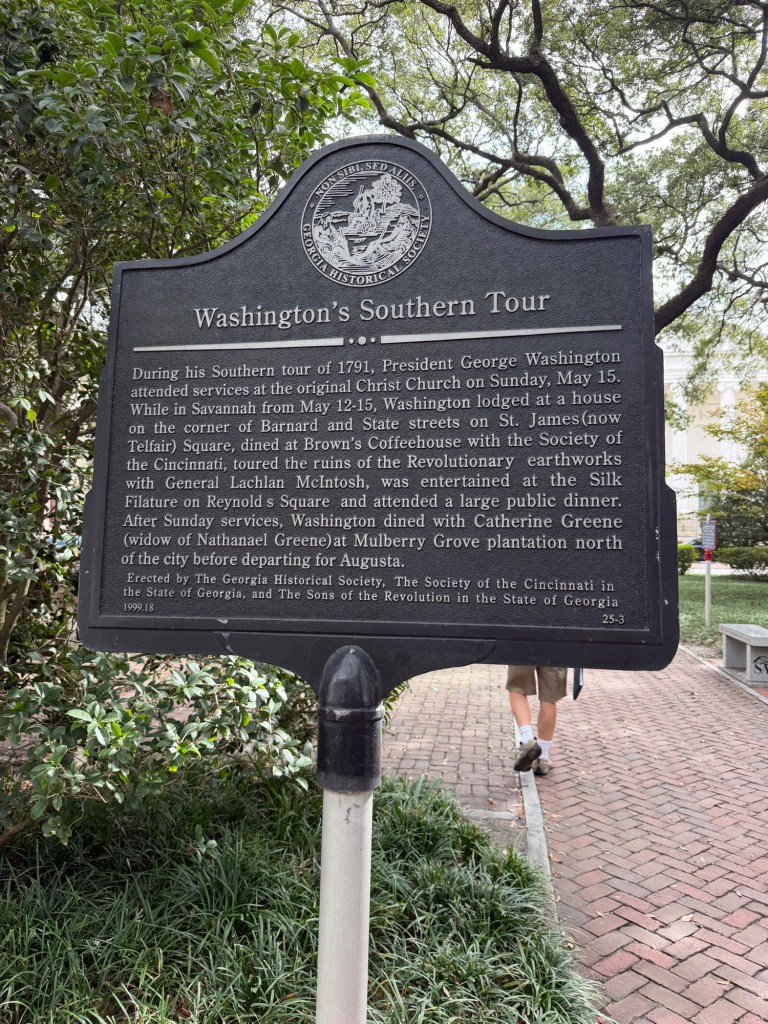
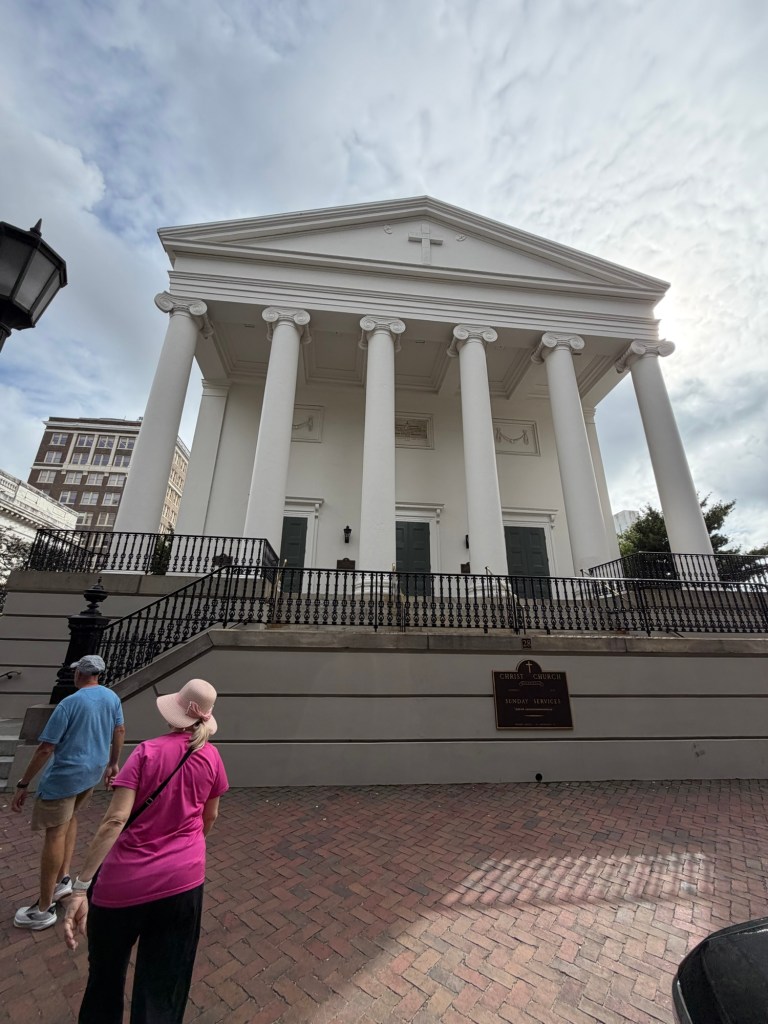
George Washington worshipped at the original Christ Church across the square on May 15, 1791, during his only visit to Savannah.
6. Reynolds Square
One of the original six squares, laid out in 1734.
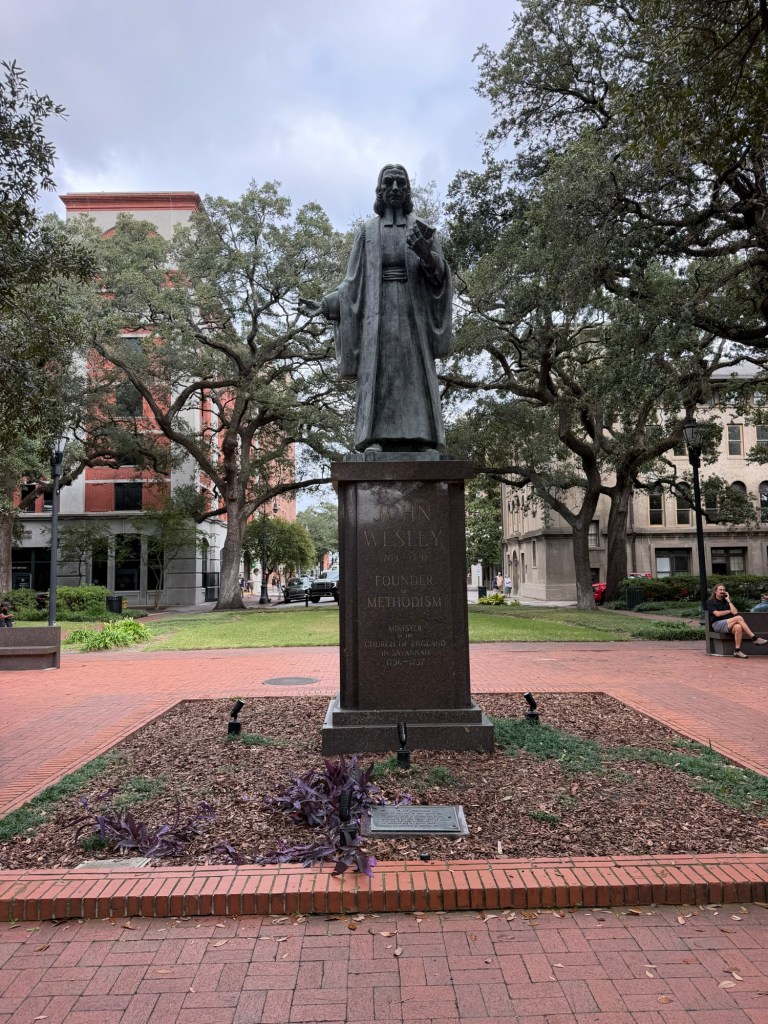
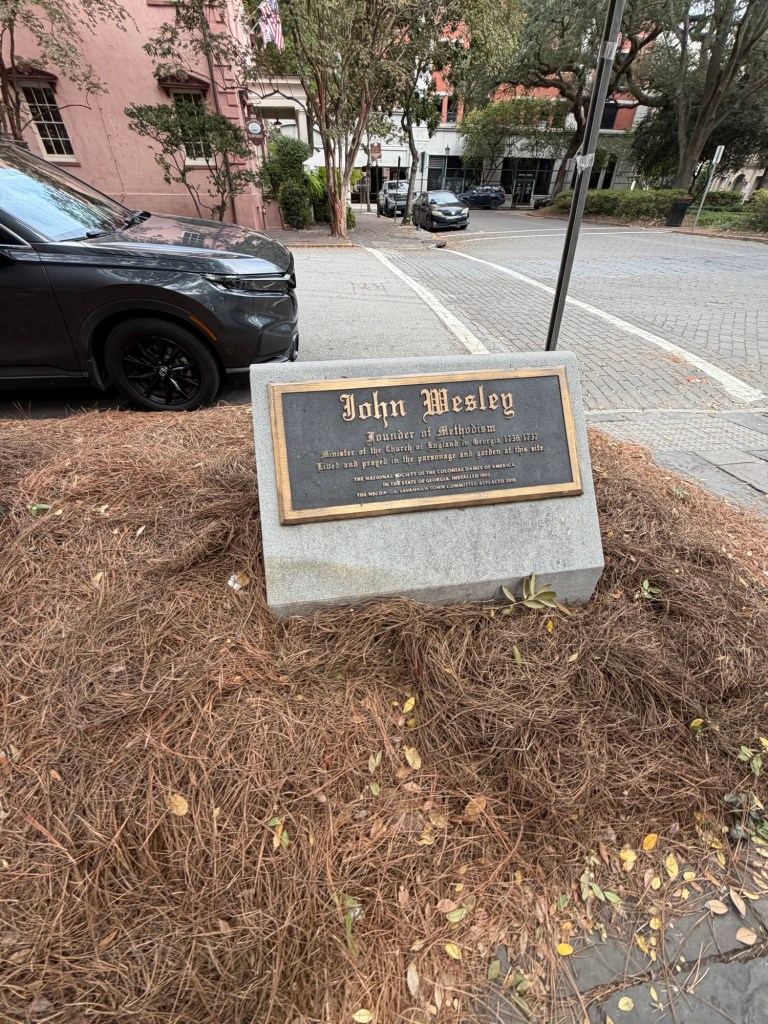
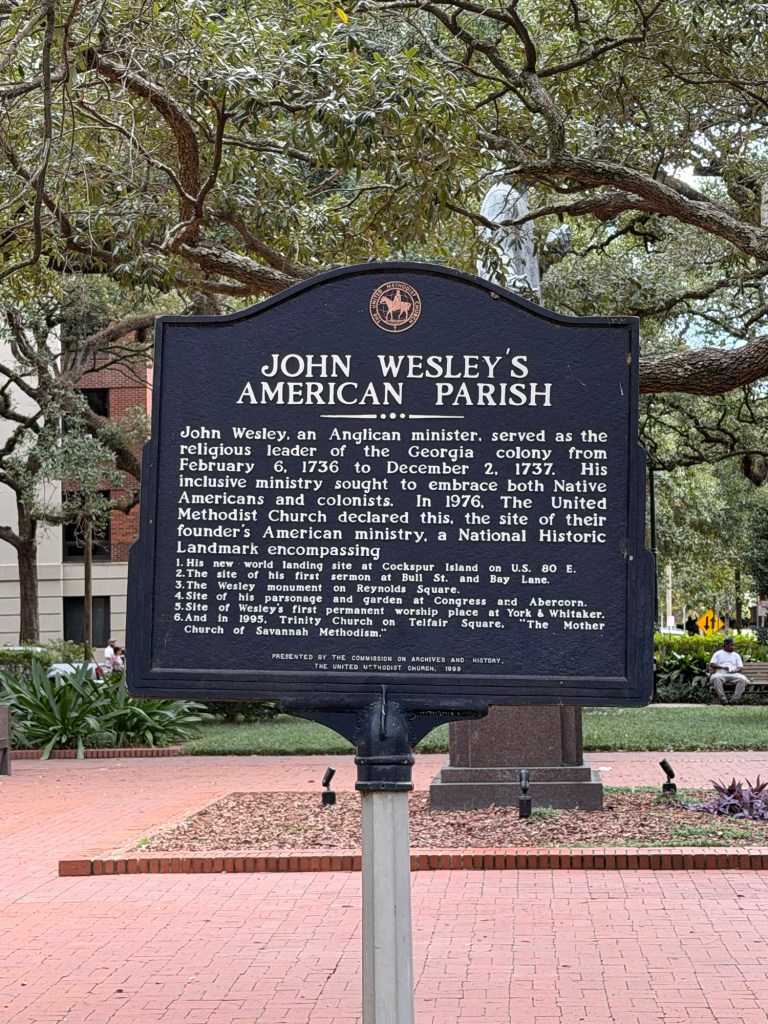
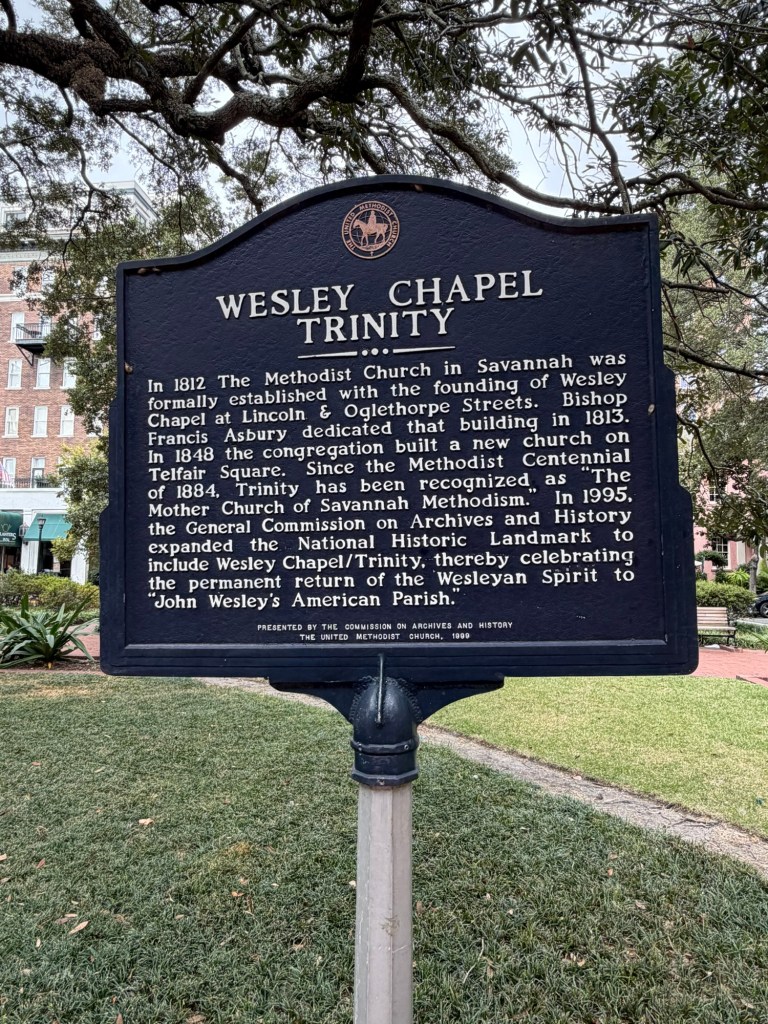
The statue here is John Wesley, the founder of Methodism, whose time in Savannah ended in scandal. He arrived in 1736 as a young priest and fell for Sophia Hopkey, niece of the colony’s chief magistrate. He took too long to propose, so she married another man. Months later, Wesley refused her communion in front of the whole congregation. Her husband sued, a grand jury indicted Wesley, and he fled back to England in 1737, less than two years after arriving.
7. Warren Square
Laid out in 1791, this is one of Savannah’s quieter residential squares. It’s named for General Joseph Warren of Massachusetts, a Revolutionary War hero killed at Bunker Hill, though he had no ties to Savannah. There are no monuments here, just shade and some of the oldest houses in the Historic District, including the Spencer Woodbridge House from 1790.
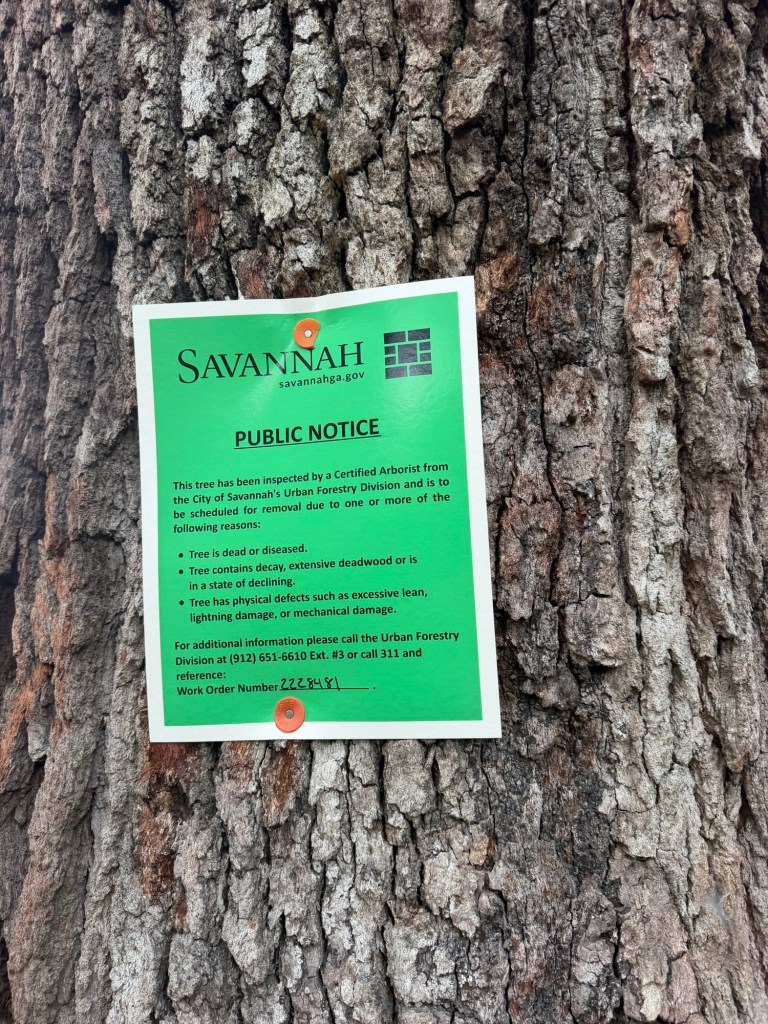
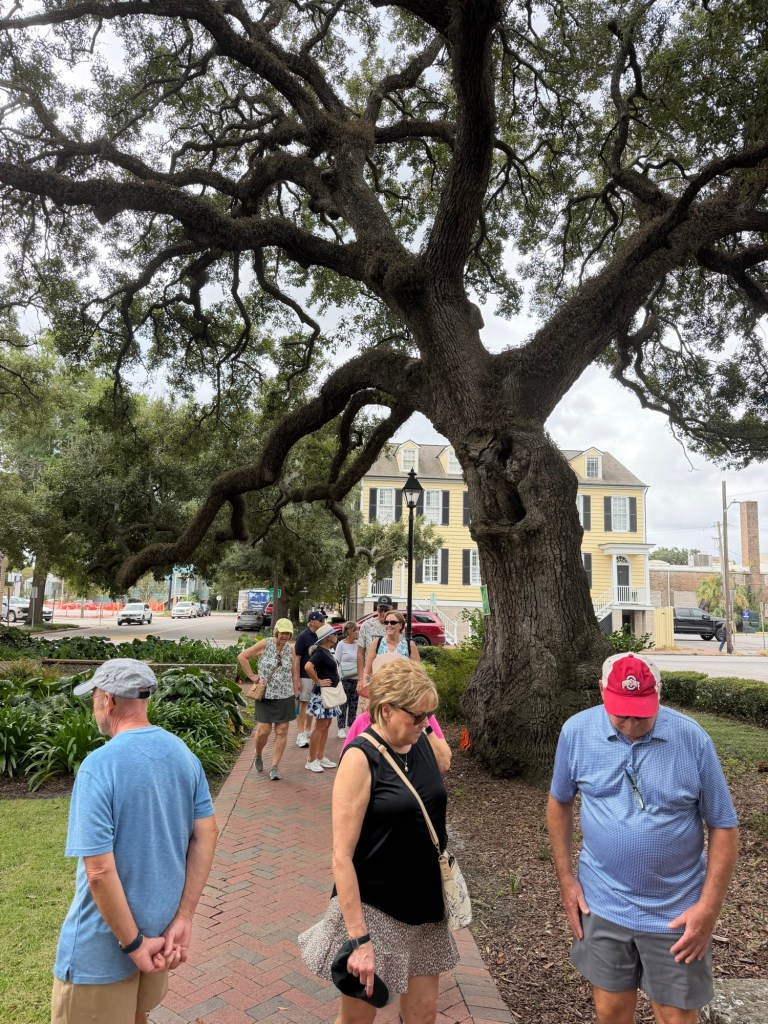
Don’t miss: The giant corner oak. Sadly, a city notice on its trunk says it’s scheduled for removal, so we were glad we got to stand under it.
8. Greene Square
Once the heart of Savannah’s African American community.
Don’t miss: Second African Baptist Church, founded in 1802. In 1865, Sherman’s “40 acres and a mule” order was announced here, and Dr. Martin Luther King Jr. later preached from its pulpit.
📷 The square sign; the York Street brick building; the Hermitage brick sign
9. Columbia Square
One of my favorites! The fountain in the center came from Wormsloe Plantation.
Don’t miss: The plaque honoring seven women who saved the 1820 Davenport House from demolition in 1955. Their efforts started the Historic Savannah Foundation, so every pretty square we saw owes something to them.
📷 The sign; the fountain with the Davenport House; the plaque; the blue house nearby
10. Oglethorpe Square
The last of the original six squares, laid out in 1742. Funny enough, there’s no statue of Oglethorpe here!
Don’t miss: The Owens Thomas House, where Lafayette stayed in 1825. It was wrapped in construction fencing during our visit.
📷 The brick path; the iron plate; the group by the banner; the marker; the admission window
11. Chippewa Square
Here’s where you’ll find Oglethorpe! The square dates to 1815, and his 9 foot bronze statue is by Daniel Chester French, who also sculpted the Lincoln Memorial statue. He faces south toward Spanish Florida, sword ready.
Don’t miss: The spot where Forrest Gump sat on his bench. Don’t go looking for the bench itself, though. It was a movie prop, and they moved it. The spot where it stood on the north side of the square is now a garden. We made do with the long stone bench in the shade while our guide read to us from his trusty binder.
📷 The sign; the garden with the theater marquee; Oglethorpe close up; the group on the bench; our guide
12. Orleans Square
Our final square, named for the Battle of New Orleans in 1815.
Don’t miss: The fountain honoring Savannah’s early German immigrants, a lovely spot to cool off and catch our breath.
📷 The fountain clip
Lunch at The Crystal
Twelve squares works up an appetite! The Crystal Beer Parlor is Savannah’s oldest restaurant, serving legally since 1933 and maybe a few years before that. Al Capone once stopped in. After all that heat, a cold drink never tasted so good. Afterward, the ladies found the gift shop next door and came out proudly holding up our bags.
📷 Walking up to The Crystal; the beer menu; the shopping bag pose; the group with bags
Back Where We Started
We ended at the old train station, where Leopold’s ice cream was the perfect cure for a hot, sticky afternoon. The rest of us put our tired feet up on the benches. As for Forrest’s bench, it was moved to the Savannah History Museum, right inside the building where we started. If you have young kids along, the Children’s Museum is just a short walk away. The day came full circle.
Twelve squares, a few hundred years of history, one great lunch and some very happy feet. Savannah, you were worth every step.
📷 The ice cream break; the guys on the bench; the group on the outside benches

